Oedipus Rex

Oedipus Rex, also known by its Greek title, Oedipus Tyrannus, or Oedipus the King, is an Athenian tragedy by Sophocles that was first performed around 429 BC. Originally, to the ancient Greeks, the title was simply Oedipus , as it is referred to by Aristotle in the Poetics. It is thought to have been renamed Oedipus Tyrannus to distinguish it from Oedipus at Colonus. In antiquity, the term “tyrant” referred to a ruler, but it did not necessarily have a negative connotation.[
Electra complex
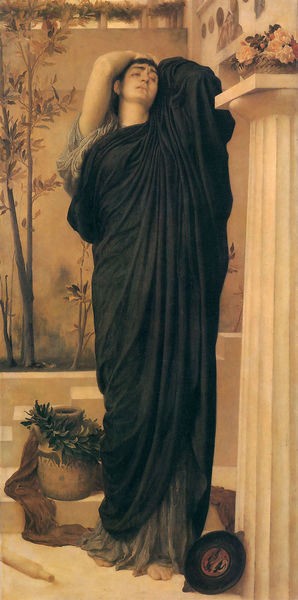
In Neo-Freudian psychology, the Electra complex, as proposed by Carl Gustav Jung, is a girl's psychosexual competition with her mother for possession of her father. In the course of her psychosexual development, the complex is the girl's phallic stage; formation of a discrete sexual identity, a boy's analogous experience is the Oedipus complex. The Electra complex occurs in the third—phallic stage (ages 3–6)—of five psychosexual development stages: (i) the Oral, (ii) the Anal, (iii) the Phallic, (iv) the Latent, and (v) the Genital—in which the source libido pleasure is in a different erogenous zone of the infant’s body.
Oedipus complex
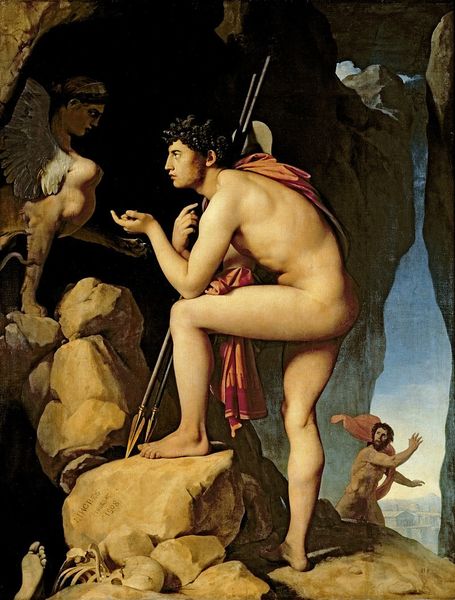
In psychoanalysis, the Oedipus complex (or, less commonly, Oedipal complex) is a child's desire, that the mind keeps in the unconscious via dynamic repression, to have sexual relations with the parent of the opposite sex (i.e. males attracted to their mothers, and females attracted to their fathers).
The Oedipus complex occurs in the third—phallic stage (ages 3–6)—of the five psychosexual development stages: (i) the oral, (ii) the anal, (iii) the phallic, (iv) the latent, and (v) the genital—in which the source of libidinal pleasure is in a different erogenous zone of the infant's body. The Oedipal complex originally refers to the sexual desire of a son for his mother and does not have to be reciprocated.
The school of Athens-Raphael
The School of Athens (Italian: Scuola di Atene) is one of the most famous frescoes by the Italian Renaissance artist Raphael. It was painted between 1509 and 1511 as a part of Raphael's commission to decorate the rooms now known as the Stanze di Raffaello, in the Apostolic Palace in the Vatican. The Stanza della Segnatura was the first of the rooms to be decorated, and The School of Athens, representing Philosophy, was probably the second painting to be finished there, after La Disputa (Theology) on the opposite wall, and the Parnassus (Literature). The picture has long been seen as "Raphael's masterpiece and the perfect embodiment of the classical spirit of the Renaissance".
Dionysus-God of Wine
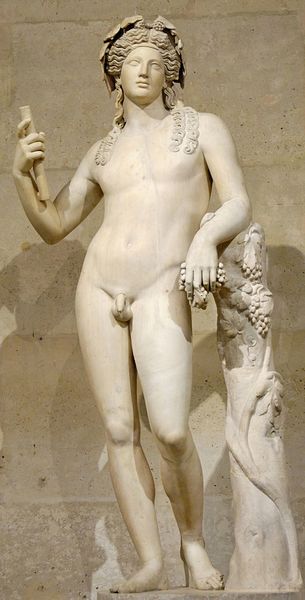
Dionysus is the god of the grape harvest, winemaking and wine, of ritual madness, fertility,theatre and religious ecstasy in ancient Greek religion and myth. Wine played an important role in Greek culture, and the cult of Dionysus was the main religious focus for its unrestrained consumption.
Orchestra
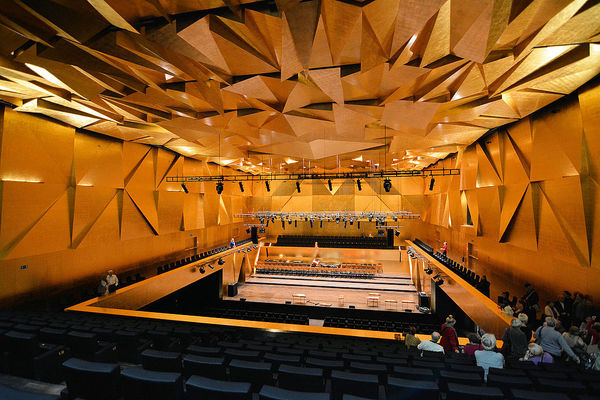
An orchestra is a large instrumental ensemble typical of classical music, which features string instruments such as violin, viola, cello and double bass, as well as brass, woodwinds, and percussion instruments, grouped in sections. Other instruments such as the piano and celesta may sometimes appear in a fifth keyboard section or may stand alone, as may the concert harp and, for performances of some modern compositions, electronic instruments.
Iphigenia
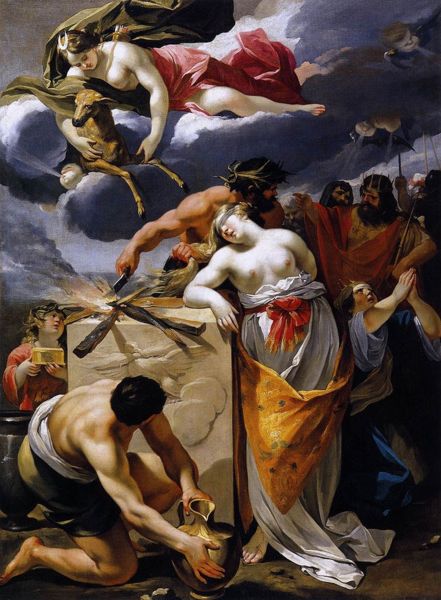
In Greek mythology, Iphigenia was a daughter of King Agamemnon and Queen Clytemnestra, and thus a princess of Argos.Agamemnon offends the goddess Artemis, who retaliates by commanding him to kill Iphigenia as a sacrifice so his ships can sail to Troy. In some versions, Iphigenia is sacrificed at Aulis, but in others, Artemis rescues her. In the version where she is saved, she goes to the Taurians and meets her brother Orestes.
Prophet
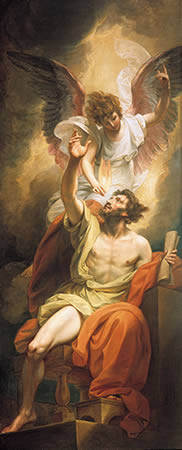
In religion, a prophet is an individual who has claimed to have been contacted by the supernatural or the divine, and to speak for them, serving as an intermediary with humanity, delivering this newfound knowledge from the supernatural entity to other people.The message that the prophet conveys is called a prophecy, which transports —at least in Judaism— a message beyond mere pagan soothsaying, augury, divination, or forecasting, and, most prominently in the neviim of the Tanakh, often comprises issues of social justice.
Pythia
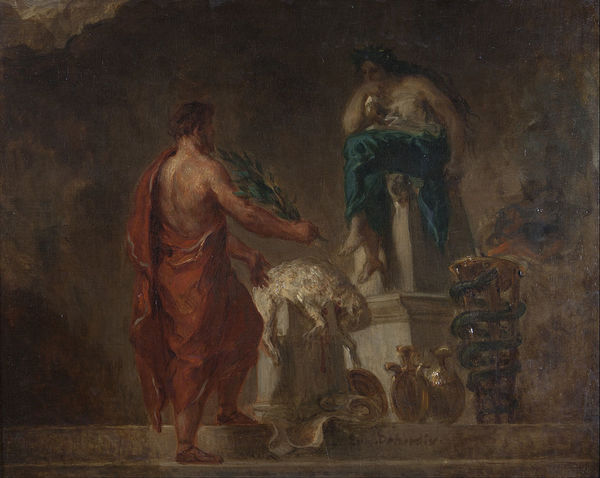
The Pythia, commonly known as the Oracle of Delphi, was the name given to the High Priestess of the Temple of Apollo at Delphi who also served as the oracle.
The name Pythia is derived from Pytho, which in myth was the original name of Delphi. In etymology the Greeks derived this place name from the verb, πύθειν (púthein) "to rot", which refers to the sickly sweet smell of the decomposition of the body of the monstrous Python after he was slain by Apollo.Pythia was the House of Snakes.
Titanic

Titanic is a 1997 American historical epic romance-disaster film directed, written, co-produced, and co-edited by James Cameron. A fictionalized account of the sinking of the RMS Titanic, it stars Leonardo DiCaprio and Kate Winslet as members of different social classes who fall in love aboard the ship during its ill-fated maiden voyage.
限會員,要發表迴響,請先登入


