*vir/ ver: truth
ex. Virgil Vergil virtual reality
*acqui-: take for granted
Acquire
Electoral college
President elect inauguration
The President-elect of the United States is the apparent winner, as ascertained by the General Services Administration Administrator, following the general election on Election Day in November,and the finalized winner when the votes cast in December by the Electoral College are counted by a joint session of Congress in early January.
The Secret Garden

The Secret Garden is a novel by Frances Hodgson Burnett. It was initially published in serial form beginning in 1910, and first published in its entirety in 1911. It is now one of Burnett's most popular novels, and considered a classic of English children's literature. Several stage and film adaptations have been made.
King James version

Cholorea
Indigenous
*gen-: generation
The Divine Comedy
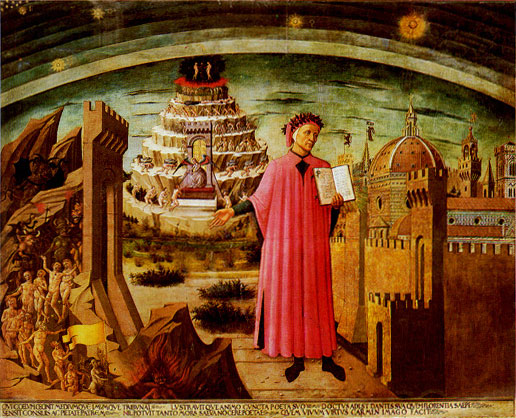
The Divine Comedy (Italian: Divina Commedia) is a poem by Dante Alighieri, begun c. 1308 and completed 1320, a year before his death in 1321. It is widely considered the preeminent work of Italian literature and is seen as one of the greatest works of world literature. The poem's imaginative vision of the afterlife is representative of the medieval world-view as it had developed in the Western Church by the 14th century. It helped establish the Tuscan language, in which it is written, as the standardized Italian language.[3] It is divided into three parts: Inferno, Purgatorio, and Paradiso.
*de-: to divide one into two
Joan of Arc

Joan of Arc, nicknamed "The Maid of Orléans" (French: La Pucelle d'Orléans), is considered a heroine of France for her role during the Lancastrian phase of the Hundred Years' War, and was canonized as a Roman Catholic saint. Joan of Arc was born to Jacques d'Arc and Isabelle Romée, a peasant family, at Domrémy in north-east France. Joan said she received visions of the Archangel Michael, Saint Margaret, and Saint Catherine of Alexandria instructing her to support Charles VII and recover France from English domination late in the Hundred Years' War. The uncrowned King Charles VII sent Joan to the siege of Orléans as part of a relief mission. She gained prominence after the siege was lifted only nine days later. Several additional swift victories led to Charles VII's coronation at Reims. This long-awaited event boosted French morale and paved the way for the final French victory.
pen name pseudo fake
*-cast:
*tele-:
ex. outcast telecast telescope binoculars
“w”sound is pronounced in “v” sound in German
confidant
Fido dido

au bon pain
*obs-:
obstetrics and gene
1100 Vocabularies WEEK 8
1. afflict (v.) late 14c., "to cast down" (a sense now obsolete), from Old French aflicter, from Latin afflictare "to damage, harass, torment," frequentative of affligere (past participle afflictus) "to dash down, overthrow," from ad "to" (see ad-) + fligere (past participle flictus) "to strike," from PIE root *bhlig- "to strike" (source also of Greek phlibein "to press, crush," Czech blizna "scar," Welsh blif "catapult").
The weakened or transferred meaning "to trouble in body or mind, harass, distress," is attested from 1530s. Related: Afflicted; afflicting.
2. ascend (v.) late 14c., from Latin ascendere "to climb up, mount, ascend," figuratively "to rise, reach," from ad- "to" (see ad-) + scandere "to climb" (see scan (v.)). Also in 15c. used with a sense "to mount (a female) for copulation." Related: Ascended; ascending. An Old English word for it was stigan.
3. besiege (v.) c. 1300, from be- + siege. Related: Besieged; besieging.
4. emaciated (adj.) 1660s, past participle adjective from emaciate.
5. excruciating (adj.) "extremely painful," 1590s, present participle adjective from excruciate. Related: Excruciatingly.
6. fretful (adj.) 1590s, "gnawing; disposed to fret," from fret (n.) (see fret (v.)) + -ful. Related: Fretfully; fretfulness.
7. harbinger (n.) late 15c., herbengar "one sent ahead to arrange lodgings" (for a monarch, an army, etc.), alteration of Middle English herberger "provider of shelter, innkeeper" (late 12c.), from Old French herbergeor "one who offers lodging, innkeeper," agent noun from herbergier "provide lodging," from herber "lodging, shelter," from Frankish *heriberga "lodging, inn" (cognate with Old Saxon, Old High German heriberga "army shelter"), from Germanic compound *harja-bergaz "shelter, lodgings," which is also the source of harbor (n.). Sense of "forerunner, that which precedes and gives notice of the coming of another" is mid-16c. The unetymological -n- is from 15c. (see messenger). As a verb, from 1640s (harbinge "to lodge" is late 15c.).
8. malignant (adj.)
1560s, in reference to diseases, from Middle French malignant and directly from Late Latin malignantem (nominative malignans) "acting from malice," present participle of malignare "injure maliciously" (see malign (v.)). Earlier in the church malignant "followers of the antichrist," from Latin ecclesiam malignantum in early Church writing, applied by Protestant writers to the Church in Rome (1540s). As an adjective, Middle English used simple malign (early 14c.). Related: Malignantly.
9. malnutrition (n.) 1843, from mal- + nutrition.
10. privation (n.) mid-14c., "action of depriving," from Old French privacion and directly from Latin privationem (nominative privatio) "a taking away," noun of action from past participle stem of privare "deprive" (see private (adj.)). Meaning "want of life's comforts or of some necessity" is attested from 1790.
11. remote (adj.) mid-15c., from Middle French remot or directly from Latin remotus "afar off, remote, distant in place," past participle of removere "move back or away" (see remove (v.)). Related: Remotely; remoteness. Remote control "fact of controlling from a distance" is recorded from 1904; as a device which allows this from 1920.
12. respite (n.) mid-13c., from Old French respit "delay, respect" (Modern French répit), from Latin respectus "consideration, recourse, regard" (see respect (n.)).
13. reverberate (v.) 1570s, "beat back, drive back, force back," from Latin reverberatus, past participle of reverberare "strike back, repel, cause to rebound" (see reverberation). Meaning "re-echo" is from 1590s. Earlier verb was reverberen (early 15c.). Related: Reverberated; reverberating.
14. sanctuary (n.) early 14c., "building set apart for holy worship," from Anglo-French sentuarie, Old French saintuaire "sacred relic, holy thing; reliquary, sanctuary," from Late Latin sanctuarium "a sacred place, shrine" (especially the Hebrew Holy of Holies; see sanctum), also "a private room," from Latin sanctus "holy" (see saint (n.)).
Since the time of Constantine and by medieval Church law, fugitives or debtors enjoyed immunity from arrest in certain churches, hence transferred sense of "immunity from punishment" (late 14c.). Exceptions were made in England in cases of treason and sacrilege. General (non-ecclesiastical) sense of "place of refuge or protection" is attested from 1560s; as "land set aside for wild plants or animals to breed and live" it is recorded from 1879.
15. sinister (adj.) early 15c., "prompted by malice or ill-will, intending to mislead," from Old French senestre, sinistre "contrary, false; unfavorable; to the left" (14c.), from Latin sinister "left, on the left side" (opposite of dexter), of uncertain origin. Perhaps meaning properly "the slower or weaker hand" [Tucker], but Klein and Buck suggest it's a euphemism (see left (adj.)) connected with the root of Sanskrit saniyan "more useful, more advantageous." With contrastive or comparative suffix -ter, as in dexter (see dexterity).
The Latin word was used in augury in the sense of "unlucky, unfavorable" (omens, especially bird flights, seen on the left hand were regarded as portending misfortune), and thus sinister acquired a sense of "harmful, unfavorable, adverse." This was from Greek influence, reflecting the early Greek practice of facing north when observing omens. In genuine Roman auspices, the augurs faced south and left was favorable. Thus sinister also retained a secondary sense in Latin of "favorable, auspicious, fortunate, lucky."
Meaning "evil" is from late 15c. Used in heraldry from 1560s to indicate "left, to the left." Bend (not "bar") sinister in heraldry indicates illegitimacy and preserves the literal sense of "on or from the left side" (though in heraldry this is from the view of the bearer of the shield, not the observer of it).
16. succumb (v.) late 15c., from Old French succomber "succumb, die, lose one's (legal) case," and directly from Latin succumbere "submit, surrender, yield, be overcome; sink down; lie under; cohabit with," from assimilated form of sub "under, beneath" (see sub-) + -cumbere "take a reclining position," related to cubare "lie down" (see cubicle). Originally transitive; sense of "sink under pressure" is first recorded c. 1600. As a euphemism for "to die," from 1849. Related: Succumbed; succumbing.
17. surge (v.) 1510s, "to rise and fall," from surge (n.), or from Middle French surgir "rise, ride (as a ship does a wave), spring up, arrive." Meaning "rise high and roll forcefully" is from 1560s. Related: Surged; surging.
surge (n.) late 15c., "fountain, stream," of uncertain origin, probably from Middle French sourge-, stem of sourdre "to rise, swell," from Latin surgere "to rise, arise, get up, mount up, ascend; attack," contraction of surrigere, from assimilated form of sub "up from below" (see sub-) + regere "to keep straight, guide" (see regal). Meaning "high, rolling swell of water" is from 1520s; figurative sense of "excited rising up" (as of feelings) is from 1510s.
18. thwart (v.)
"oppose, hinder," mid-13c., from thwart (adv.). Related: Thwarted; thwarting.
thwart (adv.) c. 1200, from a Scandinavian source, probably Old Norse þvert "across," originally neuter of thverr (adj.) "transverse, across," cognate with Old English þweorh "transverse, perverse, angry, cross," from Proto-Germanic *thwerh- "twisted, oblique" (source also of Middle Dutch dwers, Dutch dwars "cross-grained, contrary," Old High German twerh, German quer, Gothic þwairhs "angry"), altered (by influence of *thwer- "to turn") from *therkh-, from PIE *terkw- "to twist" (source also of Latin torquere "to twist," Sanskrit tarkuh "spindle," Old Church Slavonic traku "band, girdle," Old High German drahsil "turner," German drechseln "to turn on a lathe"), possibly a variant of *twerk- "to cut." From mid-13c. as an adjective.
19. tranquil (adj.) mid-15c., a back-formation from tranquility or else from Latin tranquillus "quiet, calm, still." Related: Tranquilly.
20. ubiquitous (adj.) "being, existing, or turning up everywhere," 1800, from ubiquity + -ous. The earlier word was ubiquitary (c. 1600), from Modern Latin ubiquitarius, from ubique (see ubiquity). Related: Ubiquitously; ubiquitousness.

限會員,要發表迴響,請先登入


