Colonial period: article about religious or meditation
Anne Bradstreet : tenth muse → she has eight children but she still have the time on writing.
Revolutionary period: 小寶的廣告片-富蘭克林坦伯頓-Time Is Money!!
The Romanic period: American Renaissance
Washington Irving→ Rip Van Winkle (取笑Dutch的穿著)
課本
p.658
Henry Wadsworth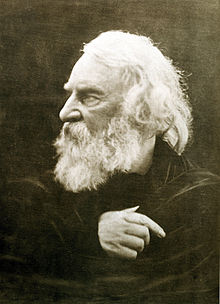
A psalm of life
Tell me not, in mournful numbers,
Life is but an empty dream!
For the soul is dead that slumbers,
And things are not what they seem.
Life is real! Life is earnest!
And the grave is not its goal;
Dust thou art, to dust returnest,
Was not spoken of the soul.
Not enjoyment, and not sorrow,
Is our destined end or way;
But to act, that each to-morrow
Find us farther than to-day.
Art is long, and Time is fleeting,
And our hearts, though stout and brave,
Still, like muffled drums, are beating
Funeral marches to the grave.
In the world’s broad field of battle,
In the bivouac of Life,
Be not like dumb, driven cattle!
Be a hero in the strife!
Trust no Future, howe’er pleasant!
Let the dead Past bury its dead!
Act,— act in the living Present!
Heart within, and God o’erhead!
Lives of great men all remind us
We can make our lives sublime,
And, departing, leave behind us
Footprints on the sands of time;
Footprints, that perhaps another,
Sailing o’er life’s solemn main,
A forlorn and shipwrecked brother,
Seeing, shall take heart again.
Let us, then, be up and doing,
With a heart for any fate;
Still achieving, still pursuing,
Learn to labor and to wait.
p.663
My lost youth 致青春
Often I think of the beautiful town
That is seated by the sea;
Often in thought go up and down
The pleasant streets of that dear old town,
And my youth comes back to me.
And a verse of a Lapland song
Is haunting my memory still:
"A boy's will is the wind's will,
And the thoughts of youth are long, long thoughts."
I can see the shadowy lines of its trees,
And catch, in sudden gleams,
The sheen of the far-surrounding seas,
And islands that were the Hesperides
Of all my boyish dreams.
And the burden of that old song,
It murmurs and whispers still:
"A boy's will is the wind's will,
And the thoughts of youth are long, long thoughts."
I remember the black wharves and the slips,
And the sea-tides tossing free;
And Spanish sailors with bearded lips,
And the beauty and mystery of the ships,
And the magic of the sea.
And the voice of that wayward song
Is singing and saying still:
"A boy's will is the wind's will,
And the thoughts of youth are long, long thoughts."
I remember the bulwarks by the shore,
And the fort upon the hill;
The sunrise gun, with its hollow roar,
The drum-beat repeated o'er and o'er,
And the bugle wild and shrill.
And the music of that old song
Throbs in my memory still:
"A boy's will is the wind's will,
And the thoughts of youth are long, long thoughts."
I remember the sea-fight far away,
How it thundered o'er the tide!
And the dead captains, as they lay
In their graves, o'erlooking the tranquil bay,
Where they in battle died.
And the sound of that mournful song
Goes through me with a thrill:
"A boy's will is the wind's will,
And the thoughts of youth are long, long thoughts."
I can see the breezy dome of groves,
The shadows of Deering's Woods;
And the friendships old and the early loves
Come back with a Sabbath sound, as of doves
In quiet neighborhoods.
And the verse of that sweet old song,
It flutters and murmurs still:
"A boy's will is the wind's will,
And the thoughts of youth are long, long thoughts."
I remember the gleams and glooms that dart
Across the school-boy's brain;
The song and the silence in the heart,
That in part are prophecies, and in part
Are longings wild and vain.
And the voice of that fitful song
Sings on, and is never still:
"A boy's will is the wind's will,
And the thoughts of youth are long, long thoughts."
There are things of which I may not speak;
There are dreams that cannot die;
There are thoughts that make the strong heart weak,
And bring a pallor into the cheek,
And a mist before the eye.
And the words of that fatal song
Come over me like a chill:
"A boy's will is the wind's will,
And the thoughts of youth are long, long thoughts."
Strange to me now are the forms I meet
When I visit the dear old town;
But the native air is pure and sweet,
And the trees that o'ershadow each well-known street,
As they balance up and down,
Are singing the beautiful song,
Are sighing and whispering still:
"A boy's will is the wind's will,
And the thoughts of youth are long, long thoughts."
And Deering's Woods are fresh and fair,
And with joy that is almost pain
My heart goes back to wander there,
And among the dreams of the days that were,
I find my lost youth again.
And the strange and beautiful song,
The groves are repeating it still:
"A boy's will is the wind's will,
And the thoughts of youth are long, long thoughts." (考ID)
講義p.68
Grant wood's Paul Revere's Ride
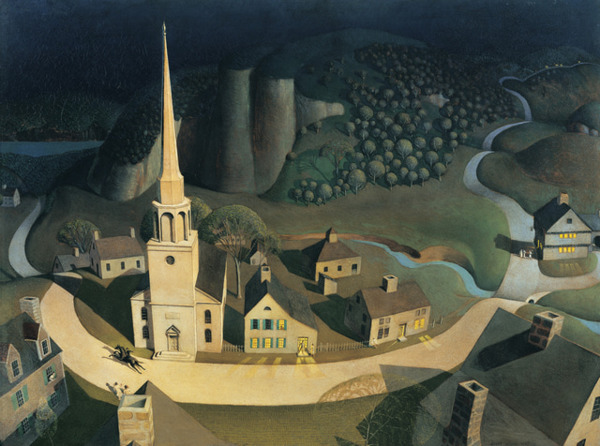
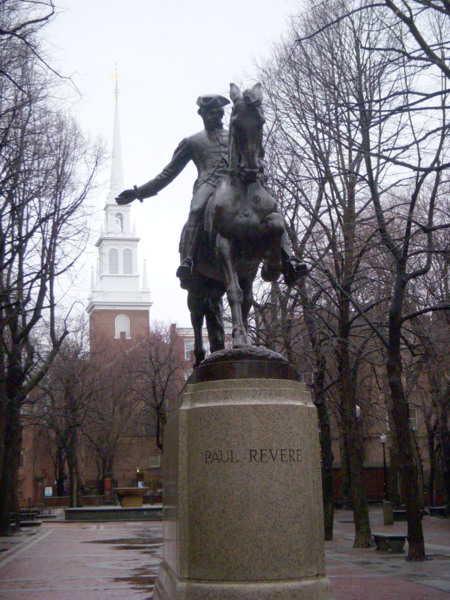
2. Make way for duckling
p.581
Ralph Waldo Emerson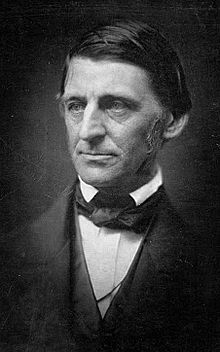
Each and all
Little thinks, in the field, yon red-cloaked clown,
Of thee from the hill-top looking down;
The heifer that lows in the upland farm,
Far-heard, lows not thine ear to charm;
The sexton, tolling his bell at noon,
Deems not that great Napoleon
Stops his horse, and lists with delight,
Whilst his files sweep round yon Alpine height;
Nor knowest thou what argument
Thy life to thy neighbor's creed has lent.
All are needed by each one;
Nothing is fair or good alone.
I thought the sparrow's note from heaven,
Singing at dawn on the alder bough;
I brought him home, in his nest, at even;
He sings the song, but it pleases not now,
For I did not bring home the river and sky; —
He sang to my ear, — they sang to my eye.
The delicate shells lay on the shore;
The bubbles of the latest wave
Fresh pearls to their enamel gave;
And the bellowing of the savage sea
Greeted their safe escape to me.
I wiped away the weeds and foam,
I fetched my sea-born treasures home;
But the poor, unsightly, noisome things
Had left their beauty on the shore,
With the sun, and the sand, and the wild uproar.
The lover watched his graceful maid,
As 'mid the virgin train she stayed,
Nor knew her beauty's best attire
Was woven still by the snow-white choir.
At last she came to his hermitage,
Like the bird from the woodlands to the cage; —
The gay enchantment was undone,
A gentle wife, but fairy none.
Then I said, "I covet truth;
Beauty is unripe childhood's cheat;
I leave it behind with the games of youth:" —
As I spoke, beneath my feet
The ground-pine curled its pretty wreath,
Running over the club-moss burrs;
I inhaled the violet's breath;
Around me stood the oaks and firs;
Pine-cones and acorns lay on the ground;
Over me soared the eternal sky,
Full of light and of deity;
Again I saw, again I heard,
The rolling river, the morning bird; —
Beauty through my senses stole;
I yielded myself to the perfect whole.
Sara teacher's blog
Hillary's America Dream and Carly Simon's Let the River Run
America Dream- The Great Gatsby (last paragraph)
Most of the big shore places were closed now and there were hardly any lights except the shadowy, moving glow of a ferryboat across the Sound. And as the moon rose higher the inessential houses began to melt away until gradually I became aware of the old island here that flowered once for Dutch sailors’ eyes — a fresh, green breast of the new world. Its vanished trees, the trees that had made way for Gatsby’s house, had once pandered in whispers to the last and greatest of all human dreams; for a transitory enchanted moment man must have held his breath in the presence of this continent, compelled into an aesthetic contemplation he neither understood nor desired, face to face for the last time in history with something commensurate to his capacity for wonder.
And as I sat there brooding on the old, unknown world, I thought of Gatsby’s wonder when he first picked out the green light at the end of Daisy’s dock. He had come a long way to this blue lawn, and his dream must have seemed so close that he could hardly fail to grasp it. He did not know that it was already behind him, somewhere back in that vast obscurity beyond the city, where the dark fields of the republic rolled on under the night.
Gatsby believed in the green light, the orgastic future that year by year recedes before us. It eluded us then, but that’s no matter — to-morrow we will run faster, stretch out our arms farther. . . . And one fine morning ——
So we beat on, boats against the current, borne back ceaselessly into the past.
下一則: week4 Ralph Waldo Emerson's Nature


