Bob Dylan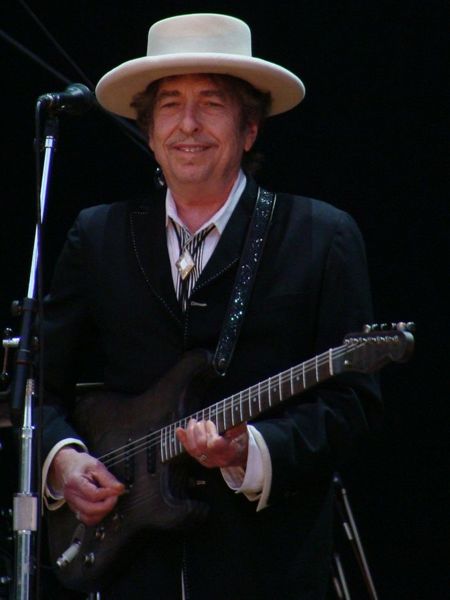
He is an American musician, singer-songwriter, artist, and writer. He has been an influential figure in popular music and culture for more than five decades. A number of Dylan's early songs, such as "Blowin' in the Wind" and "The Times They Are a-Changin'", became anthems for the US civil rights and anti-war movements. His recordings employing electric instruments attracted denunciation and criticism from others in the folk movement.
African-American Civil Rights Movement(1954-1968)
The African-American Civil Rights Movement encompasses social movements in the United States whose goal was to end racial segregation and discrimination against black Americans and enforce constitutional voting rights to them. This article covers the phase of the movement between 1954 and 1968, particularly in the South.
Beat Generation 垮掉的一代
The Beat Generation was a group of American post-World War II writers who came to prominence in the 1950s, as well as the cultural phenomena that they both documented and inspired. Central elements of "Beat" culture included rejection of received standards, innovations in style, experimentation with drugs, alternative sexualities, an interest in religion, a rejection of materialism, and explicit portrayals of the human condition.
Allen Ginsberg's Howl (1956), William S. Burroughs's Naked Lunch (1959) and Jack Kerouac's On the Road (1957) are among the best known examples of Beat literature.
(Daniel Radcliffe在Equu裡面飾演Allen Ginsberg)
Lost Generation 失落的一代
The "Lost Generation" was the generation that came of age during World War I. The term was popularized by Ernest Hemingway, who used it as one of two contrasting epigraphs for his novel, The Sun Also Rises. In that volume Hemingway credits the phrase to Gertrude Stein, who was then his mentor and patron. In A Moveable Feast, published after Hemingway and Stein's death, Hemingway claims that Stein heard the phrase from a garage owner who serviced Stein's car. This generation included distinguished artists such as F. Scott Fitzgerald, T. S. Eliot, John Dos Passos, Waldo Peirce, Isadora Duncan, Abraham Walkowitz, Alan Seeger, and Erich Maria Remarque.
_____________________________________________________________________
Where Are You Going, Where Have You Been? (text) (IMbD)
"Where Are You Going, Where Have You Been?" is a frequently anthologized short story written by Joyce Carol Oates. Oates said that she dedicated the story to Bob Dylan because she was inspired to write it after listening to his song "It's All Over Now, Baby Blue."
Plot
The main character of Oates' story is Connie, a beautiful, self-absorbed 15-year-old girl, who is at odds with her mother—once a beauty herself–and with her dutiful, "steady", and homely older sister. Without her parents' knowledge, she spends most of her evenings picking up boys at a Big Boy restaurant, and one evening captures the attention of a stranger in a gold convertible covered with cryptic writing. While her parents are away at her aunt's barbecue, two men pull up in front of Connie's house and call her out. She recognizes the driver, Arnold Friend, as the man from the drive-in restaurant, and is initially charmed by the smooth-talking, charismatic stranger. He tells Connie he is 18 and has come to take her for a ride in his car with his sidekick Ellie. Connie slowly realizes that he is actually much older, and grows afraid. When she refuses to go with them, Friend becomes more forceful and threatening, saying that he will harm her family, while at the same time appealing to her vanity, saying that she is too good for them. Connie is compelled to leave with him and do what he demands of her. The story ends as Connie leaves her front porch; her eventual fate is left ambiguous.
gold convertible 金色敞篷車
smooth-talking 讓女生放軟的對話
_____________________________________________________________________
She and that girl and occasionally another girl went out several times a week, and the rest of the time Connie spent around the house—it was summer vacation—getting in her mother s way and thinking, dreaming about the boys she met. But all the boys fell back and dissolved into a single face that was not even a face but an idea, a feeling, mixed up with the urgent insistent pounding of the music and the humid night air of July. Connie's mother kept dragging her back to the daylight by finding things for her to do or saying suddenly, 'What's this about the Pettinger girl?"
She drew her shoulders up and sucked in her breath with the pure pleasure of being alive, and just at that moment she happened to glance at a face just a few feet from hers. It was a boy with shaggy black hair, in a convertible jalopy painted gold. He stared at her and then his lips widened into a grin. Connie slit her eyes at him and turned away, but she couldn't help glancing back and there he was, still watching her. He wagged a finger and laughed and said, "Gonna get you, baby," and Connie turned away again without Eddie noticing anything. .. It was an open jalopy, painted a bright gold that caught the sunlight opaquely. Her heart began to pound and her fingers snatched at her hair, checking it, and she whispered, "Christ. Christ," wondering how bad she looked. The car came to a stop at the side door and the horn sounded four short taps, as if this were a signal Connie knew.
She went into the kitchen and approached the door slowly, then hung out the screen door, her bare toes curling down off the step. There were two boys in the car and now she recognized the driver: he had shaggy, shabby black hair that looked crazy as a wig and he was grinning at her.
dragging her back to the daylight 讓她回到正常生活
jalopy= decrepit car 破銅爛鐵車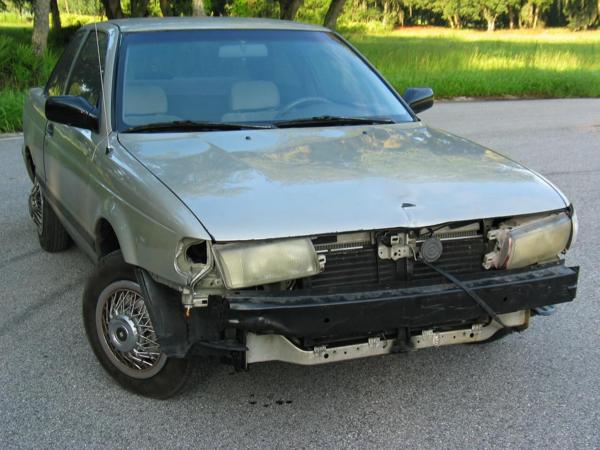
shaggy and shabby 髒髒亂亂沒有型
文章中出現的fly代表想不清楚的思緒、媽媽嘮嘮叨叨、自己招來的bad fly
____________________________________________________________________________
external link很厲害
The Secret Garden (text)( Bildungsroman(溫馨勵志/成長療癒小說)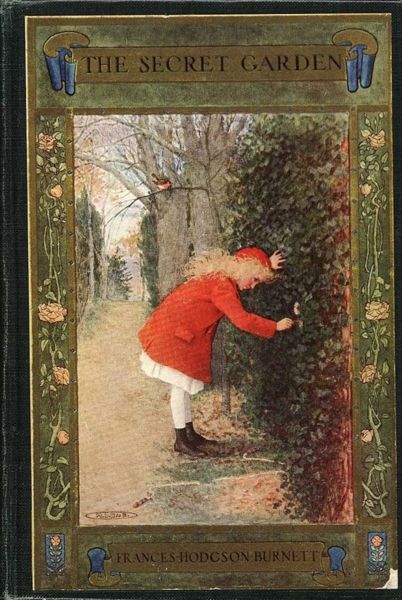
sour expression 臭酸臉
下一則: week12 Joyce Carol Oates' “Where Are You Going, Where Have You Been?”


