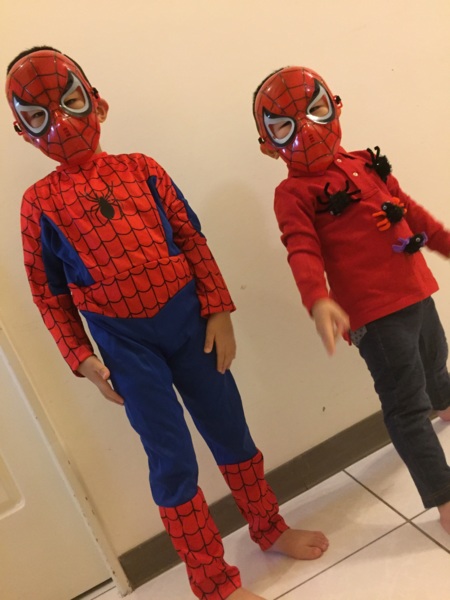
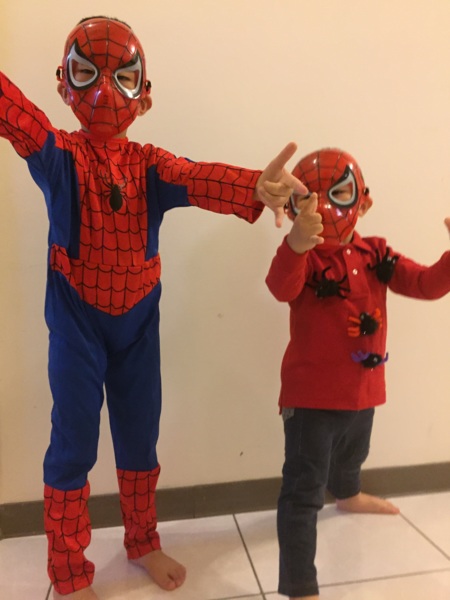
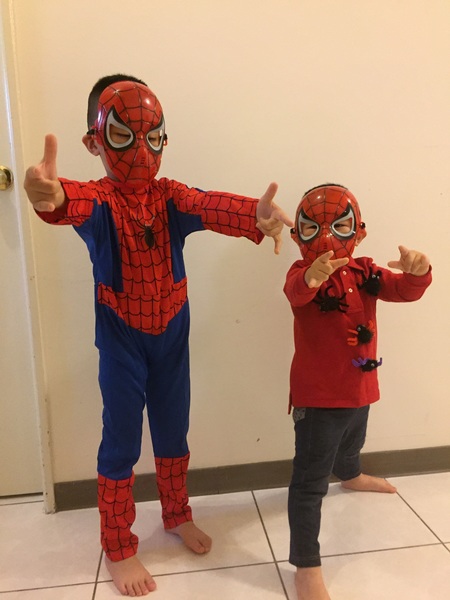
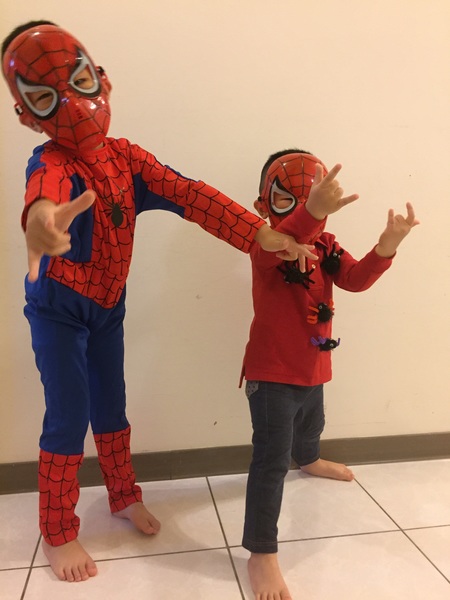
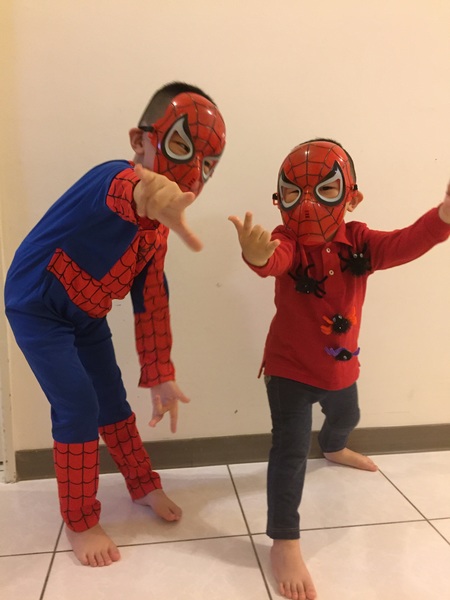
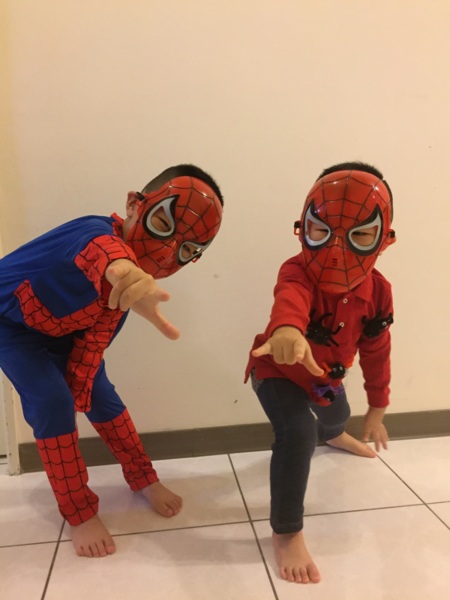
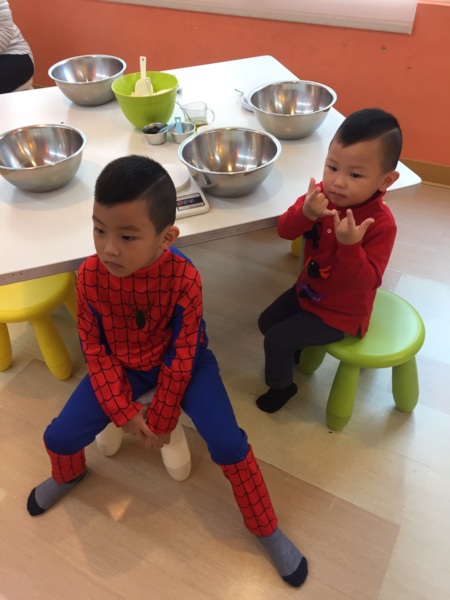
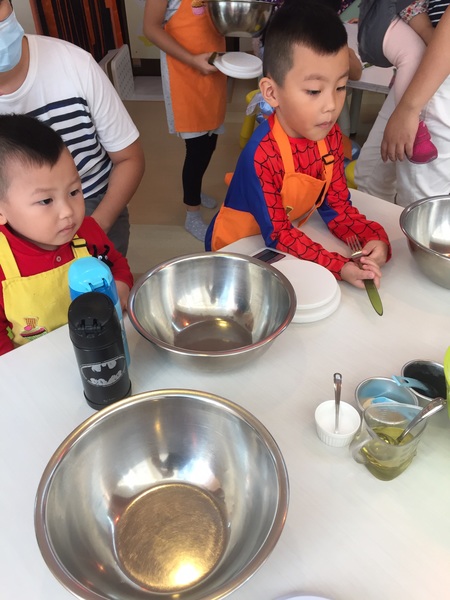
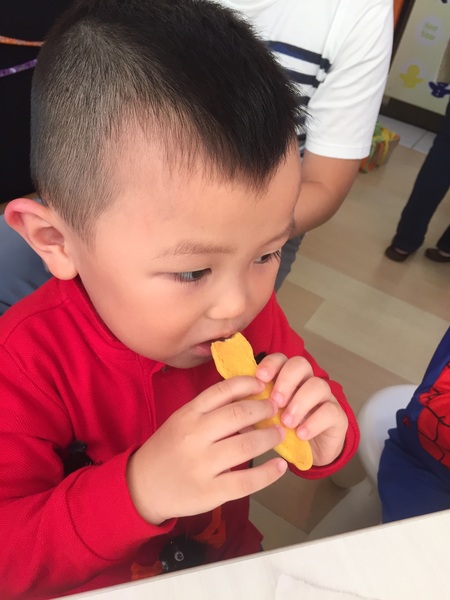
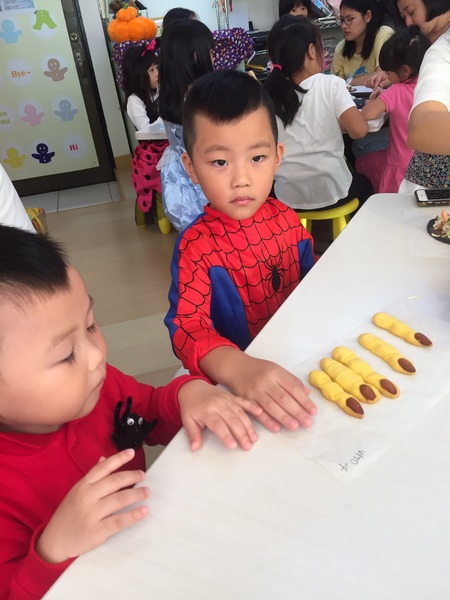
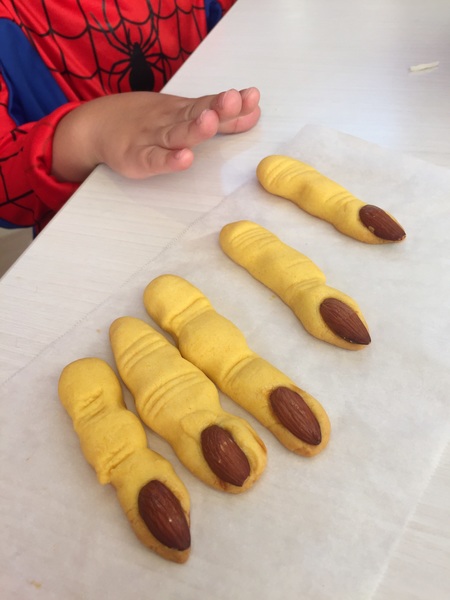
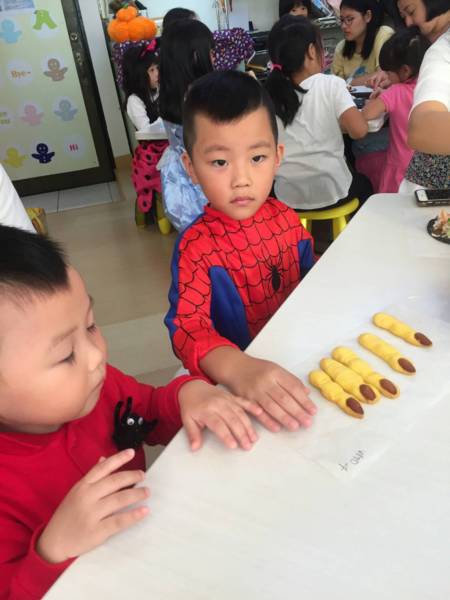
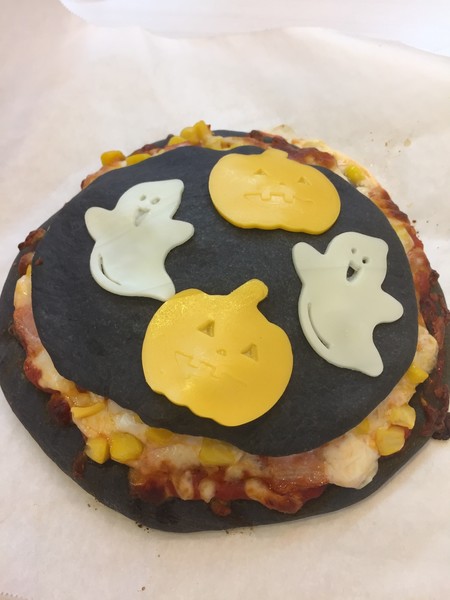
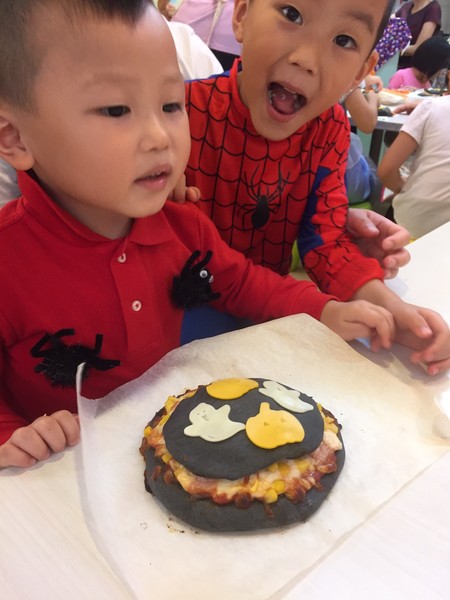
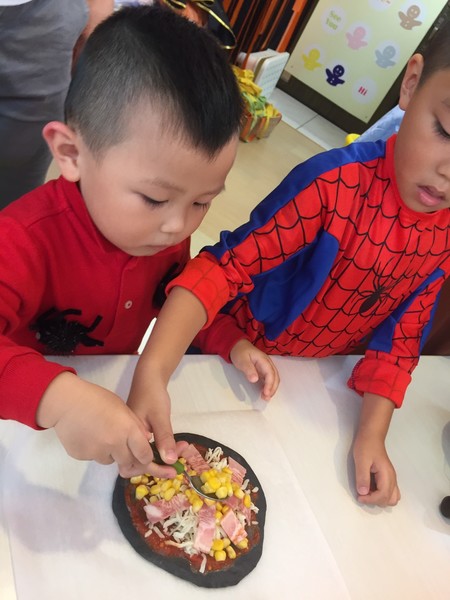
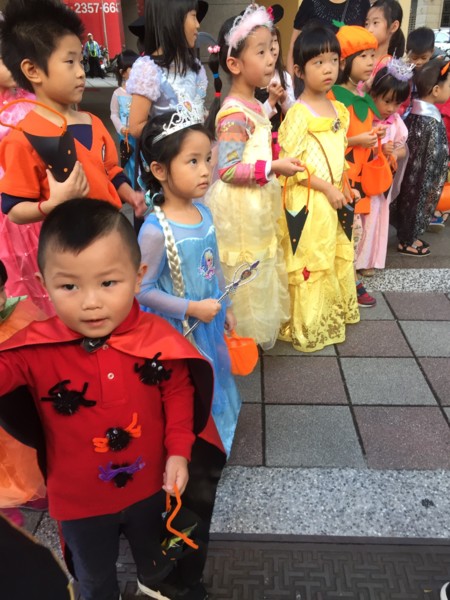
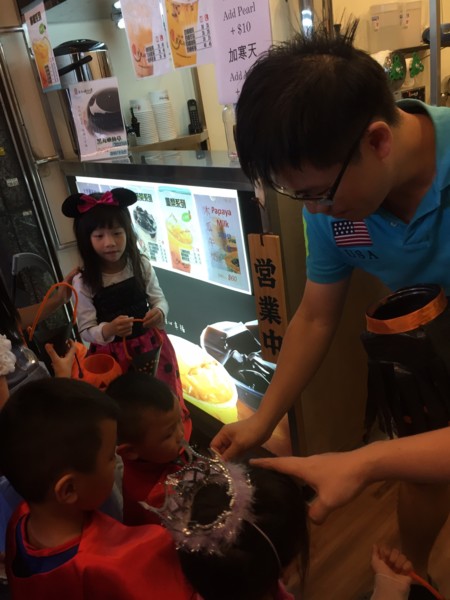
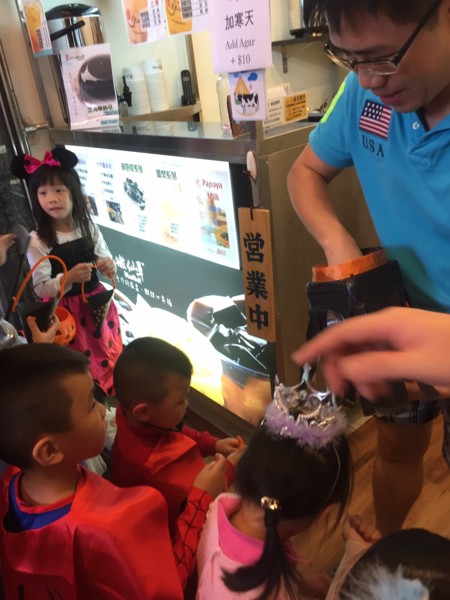
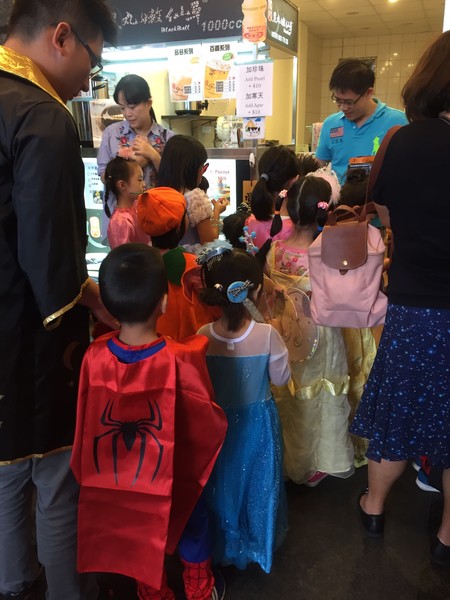
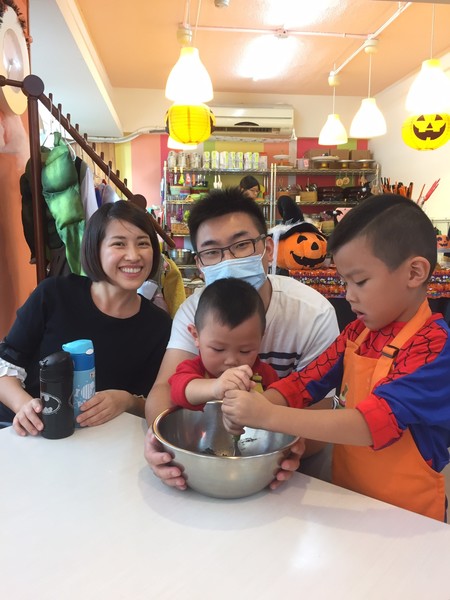
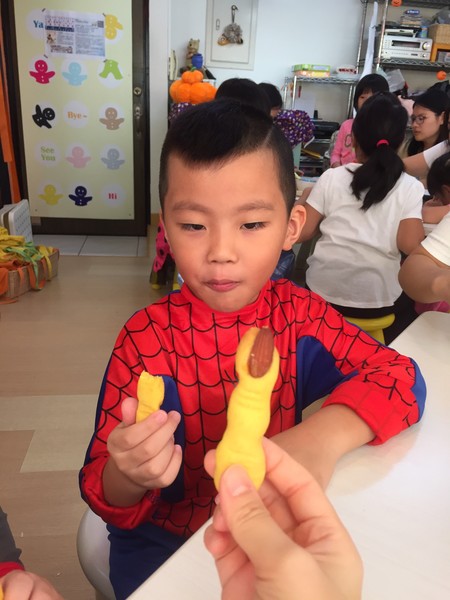
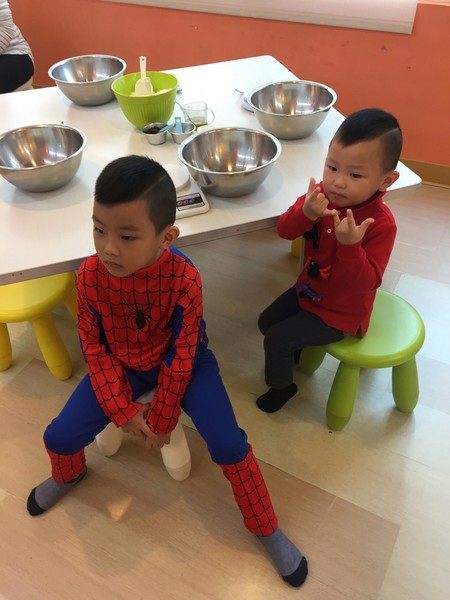
萬聖節(每年10年31日的晚上)還沒到,但小朋友們已開始有了一些trick-or-treating 的活動。女兒和女婿一向很重視小娃們的假日休閒活動,尤其是節慶時慶,有機會都會帶兩兄弟去體驗一番。本週日他們在家吃了午餐,就匆忙趕回台北參加已報名的萬聖節「變裝」及「不給糖就搗蛋」的活動。Vito 和 Vic 打扮成蜘蛛人,還擺個武林高手、耀武揚威的姿勢,好可愛啊!
※以下有關Halloween及Trick-or-treating 的訊息來自維基百科
Halloween is a celebration in remembrance of the dead that occurs annually on the evening of October 31. The name Halloween (sometimes spelled Hallowe'en) is a contraction of All Hallows' Even(ing), meaning All Saints' Evening, as it is celebrated on the evening before All Saints' Day, also known as All Hallows' Day. Saints have historically been known as hallows, derived from the Old English word hālig and related to the German word heilig, meaning holy.
Halloween is a mixture of customs of pagan and Christian origins. It originated from an ancient Celtic seasonal festival, known as Samhain, to mark the end of the harvest and to remember the dead that is celebrated from sunset on October 31 to sunset on November 1.
While not an official holiday, it is observed in a number of countries around the world, primarily in the West (North America and Europe) but also increasingly in Asian countries, as it provides commercial opportunities. In the United States, it is estimated to be the festival with the second-highest amount of consumer spending after Christmas.
Halloween is followed by All Saints' Day (for which it is the vigil) on November 1 and All Souls' Day on November 2. Together the three days of remembrance of the dead form the triduum (a religious observance lasting three days) of Hallowtide. People traditionally visit the graves of deceased relatives during this time. It is related to the Mexican holiday Day of the Dead.
Trick-or-treating is a Halloween custom for children in many countries. Children in costumes travel from house-to-house, asking for treats with the phrase "Trick or treat". The "treat" is usually some form of candy, although, in some cultures, money is used instead. The "trick" is a usually idle threat to perform mischief on the homeowners or their property if no treat is given. Trick-or-treating usually occurs on the evening of October 31. Some homeowners signal that they are willing to hand out treats by putting up Halloween decorations outside their doors; others simply leave treats available on their porches for the children to take freely.
In North America, trick-or-treating has been a Halloween tradition since the late 1920s. In Britain and Ireland the tradition of going house-to-house collecting food at Halloween goes back at least as far as the 16th century, as had the tradition of people wearing costumes at Halloween. In 19th century Britain and Ireland, there are many accounts of people going house-to-house in costume at Halloween, reciting verses in exchange for food, and sometimes warning of misfortune if they were not welcomed.[1] The Scottish Halloween custom of "guising" – children disguised in costume going from house to house for food or money – is first recorded in North America in 1911 in Ontario, Canada.[2] While going house-to-house in costume has remained popular among Scots and Irish, the custom of saying "trick or treat" has only recently become common. The activity is prevalent in the United States, Canada, the United Kingdom, the Republic of Ireland, Puerto Rico, and northwestern and central Mexico. In the latter, this practice is called calaverita (Spanish for "sugar skull"), and instead of "trick or treat", the children ask ¿me da mi calaverita? ("can you give me my sugar skull?") where a calaverita is a small skull made of sugar or chocolate.
短片1: https://www.youtube.com/watch?v=Jj537fY0_4A (0:49)
(20171029 Vito & Vic 萬聖節變裝蜘蛛超人領糖果)