Shall I compare thee to a summer’s day? (Sonnet 18)
Shall I compare thee to a summer’s day? Thou art more lovely and more temperate. Rough winds do shake the darling buds of May, And summer’s lease hath all too short a date. Sometime too hot the eye of heaven shines, And often is his gold complexion dimmed; And every fair from fair sometime declines, By chance, or nature’s changing course, untrimmed; But thy eternal summer shall not fade, Nor lose possession of that fair thou ow’st, Nor shall death brag thou wand’rest in his shade, When in eternal lines to Time thou grow’st. So long as men can breathe, or eyes can see, So long lives this, and this gives life to thee.
Monotheism is defined by the Encyclopædia Britannica as belief in the existence of one god or in the oneness of God. The Oxford Dictionary of the Christian Church gives a more restricted definition: "belief in one personal and transcendent God", as opposed to polytheism and pantheism. A distinction may be made between exclusive monotheism, and both inclusive monotheism and pluriform monotheism which, while recognising many distinct gods, postulate some underlying unity.
In philosophy, religion, mythology, and fiction, the afterlife (also referred to as life after death or the Hereafter) is the concept of a realm, or the realm itself (whether physical or transcendental), in which an essential part of an individual's identity or consciousness continues to exist after the death of the body in the individual's lifetime.
Reincarnation Jewish mystics who believed in reincarnation accepted it as a divine reality.
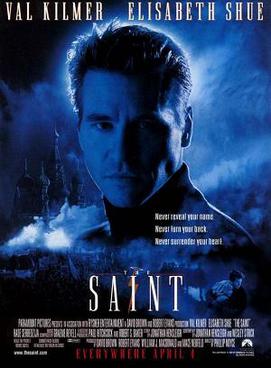
The Saint is a 1997 espionage thriller film, starring Val Kilmer in the title role, with Elisabeth Shue and Rade Šerbedžija, directed by Phillip Noyce and written by Jonathan Hensleigh and Wesley Strick. The title character is a high tech thief and master of disguise, that becomes the antihero while using the moniker of various saints while paradoxically living in the underworld of international industrial theft. The film has a cult following and was a financial success with a worldwide box office of $169.4 million, rentals of $28.2 million, and continuous DVD sales.

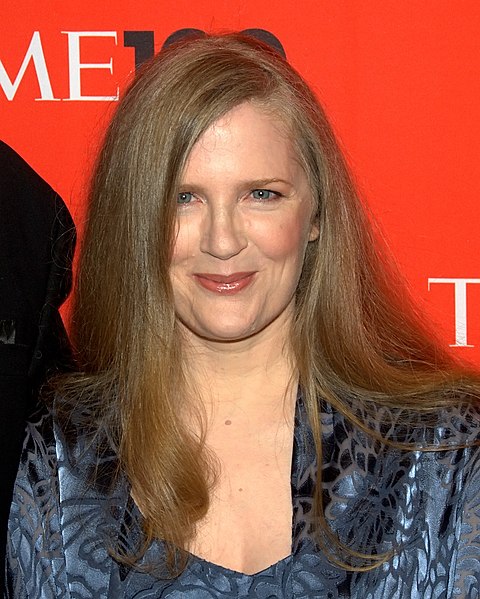
Suzanne Marie Collins (born August 10, 1962) is an American television writer and novelist, best known as the author of The New York Times best selling series The Underland Chronicles and The Hunger Games trilogy.
Survival of the fittest is a phrase that originated in evolutionary theory as an alternative (but less accurate) way of describing the mechanism of natural selection. It is more commonly used today in other contexts, to refer to a supposed greater probability that "fit" as opposed to "unfit" individuals will survive some test.
Allegory


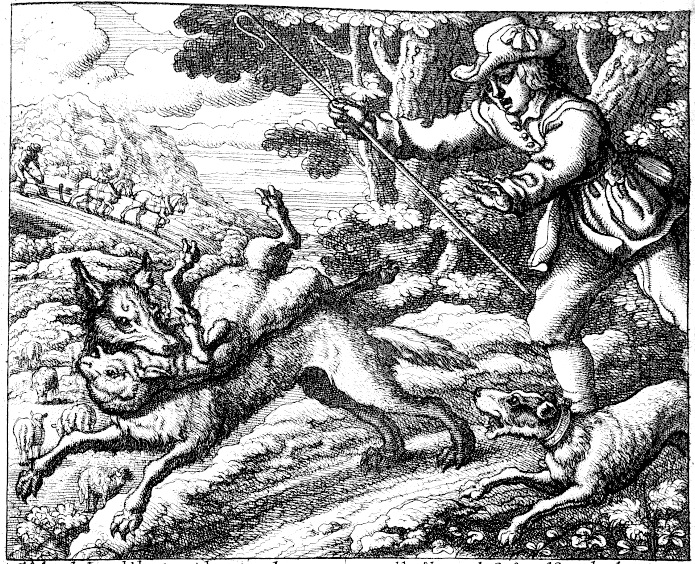
The Boy Who Cried Wolf is one of Aesop's Fables, numbered 210 in the Perry Index. From it is derived the English idiom "to cry wolf", meaning to give a false alarm.
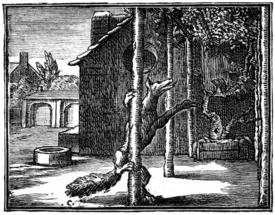
"The Fox and the Grapes" is one of the traditional Aesop's fables and can be held to illustrate the concept of cognitive dissonance
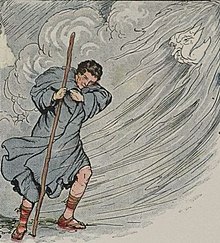
The North Wind and the Sun is one of Aesop's Fables (Perry Index 46). It is type 298 (Wind and Sun) in the Aarne-Thompson folktale classification.

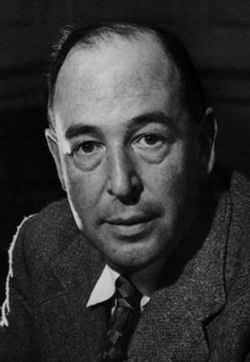
FANTASY: Ursula Kroeber Le Guin, J .R. R. Tolkien, Clive Staples Lewis


Thanks for your patronaize.(謝謝您的惠顧!)