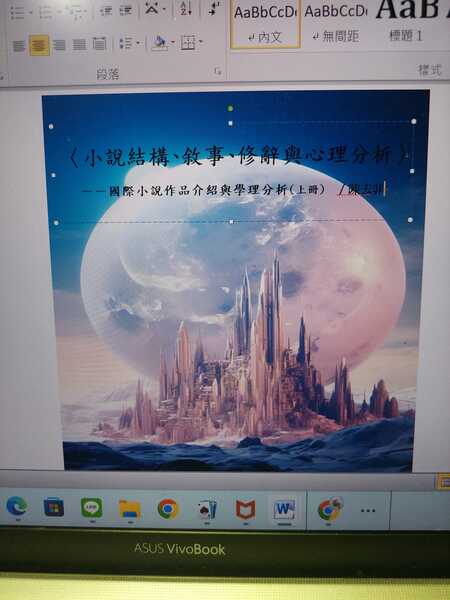
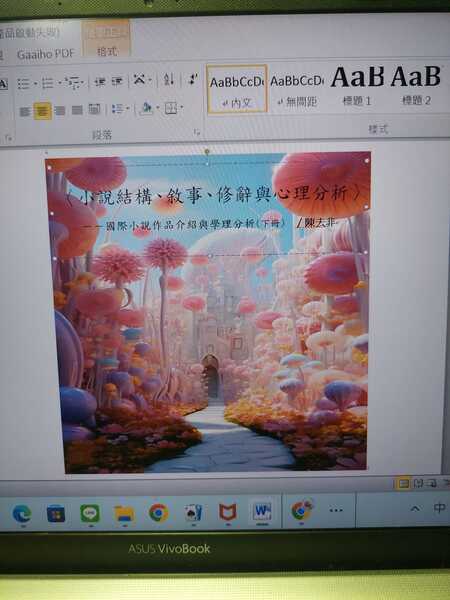
〈Novel Structure, Narration, Rhetoric, and Psychological Analysis〉–– Introduction to International Novel Works and Theoretical Analysis (Volume I) 1
/ Chen Qufei
Table of Contents
Preface: Classification of Novel Types .................................................... 3
Part I: Introduction to Novel Creation Methodology
Chapter 1: Novel Structure ............................................................ 7
Chapter 2: Novel Narratology ..................................................... 14
Chapter 3: Psychological Analysis in Novels ............................. 25
Chapter 4: Rhetoric in Novels ................................................... 34
Part II: Mainstream Novel Creation Theories
Chapter 1: Microfiction ............................................................ 50
Chapter 2: Fantasy Novels ....................................................... 66
Chapter 3: Science Fiction Novels ............................................. 80
Chapter 4: Detective Novels ...................................................... 97
Chapter 5: Adventure Novels .................................................. 113
Chapter 6: Horror Novels ....................................................... 133
Chapter 7: Romance Novels .................................................... 146
Part III: Non-Mainstream Novel Creation Theories
Chapter 1: Juvenile Novels ..................................................... 165
Chapter 2: Women’s Novels and Feminist Literature .................. 176
Chapter 3: Stream-of-Consciousness Novel Writing ................... 193
Chapter 4: Magical Realism Novel Writing ................................ 205
Chapter 5: Martial Arts (Wuxia) Novel Writing .......................... 223
Chapter 6: Historical Novel Writing .......................................... 239
Chapter 7: Legendary Novel Writing ......................................... 254
Chapter 8: Political Novel Writing ........................................... 266
Part IV: Japanese Detective Novel Schools and Representative Authors
Chapter 1: Three Major Schools of Japanese Detective Novels: Honkaku, Suspense, and Social ........................................... 281
Chapter 2: Introduction to Ten Classic Japanese Detective Novels ........................................................ 304
Part I – Preface
Classification of Novel Types
There are many ways to classify novels, based on literary characteristics, themes, narrative techniques, target audience, and other criteria. Below is a commonly used classification along with representative types:
I. By Literary Characteristics
This classification focuses on the novel’s stylistic expression, creative purpose, and artistic value.
- Literary Novels (high literary quality, emphasizing depth of thought and aesthetic value)
- Realist Novels: Depict real social phenomena and human conflicts, e.g., Dream of the Red Chamber (Cao Xueqin), Les Misérables (Victor Hugo)
- Modernist Novels: Emphasize psychological portrayal and stream-of-consciousness, e.g., The Sound and the Fury (Faulkner), In Search of Lost Time (Proust)
- Magical Realism Novels: Blend reality and fantasy, e.g., One Hundred Years of Solitude (García Márquez), One Flew Over the Cuckoo’s Nest (Kesey)
- Existentialist Novels: Explore the absurdity and dilemmas of human existence, e.g., The Stranger (Camus), Waiting for Godot (Beckett)
- Genre Novels (entertaining, with clear plotlines)
- Detective Novels: Focused on mysteries and detectives, e.g., Sherlock Holmes (Conan Doyle), Murder on the Orient Express (Agatha Christie)
- Science Fiction (Sci-Fi): Explore future technologies, e.g., The Three-Body Problem (Liu Cixin), Twenty Thousand Leagues Under the Sea (Verne)
- Fantasy Novels: Imaginary worlds and magical legends, e.g., The Lord of the Rings (Tolkien), Harry Potter (J.K. Rowling)
- Horror Novels: Create a terrifying atmosphere, e.g., The Shining (Stephen King), Cthulhu Mythos (Lovecraft)
- Wuxia (Martial Arts) Novels: Focus on chivalry and jianghu conflicts, e.g., The Legend of the Condor Heroes (Jin Yong), Crouching Tiger, Hidden Dragon (Wang Dulu)
- Historical Novels: Depict historical events or figures, e.g., Romance of the Three Kingdoms (Luo Guanzhong), The Decline and Fall of the Roman Empire (Gibbon)
II. By Theme
Classification based on the core theme explored in the novel:
- Romance Novels
A. Pure Romance: Emphasizes pure love, e.g., Pride and Prejudice (Jane Austen)
B. Romance Novels from a Female Perspective, e.g., Scarlet Heart (Tong Hua)
C. Tragic Love: Emotional entanglement, often tragic, e.g., Romeo and Juliet (Shakespeare) - War Novels
A. Historical War Novels, e.g., War and Peace (Tolstoy)
B. Military Strategy Novels, e.g., Red Sorghum (Mo Yan) - Political and Satirical Novels
A. Social Critique Novels, e.g., 1984, Animal Farm (George Orwell)
B. Dystopian Novels, e.g., Brave New World (Huxley) - Coming-of-Age and Inspirational Novels
A. Bildungsroman: Depicting the protagonist’s growth from childhood to adulthood, e.g., The Catcher in the Rye (Salinger)
B. Inspirational Novels, e.g., The Kite Runner (Khaled Hosseini)
III. By Narrative Technique
Classification according to narrative style and technique:
- Stream-of-Consciousness Novels: Focused on the flow of the character’s inner consciousness, e.g., In Search of Lost Time (Proust)
- Epistolary Novels: Composed of letters, e.g., The Sorrows of Young Werther (Goethe)
- Diary Novels: Presented in diary format, e.g., The Diary of Anne Frank
- Parody and Metafiction: Play with novel forms, e.g., If on a Winter’s Night a Traveler (Calvino)
IV. By Target Audience
- Children’s Literature
A. Fairy Tales, e.g., The Little Prince (Saint-Exupéry)
B. Children’s Fantasy, e.g., The Chronicles of Narnia (C.S. Lewis) - Young Adult (YA) Novels
A. Teen School Stories, e.g., Twilight (Stephenie Meyer)
B. Adventure Novels, e.g., The Hunger Games (Suzanne Collins) - Light Novels (mainly from Japan)
A. Isekai/Reincarnation, e.g., Mushoku Tensei
B. School Romance, e.g., The Melancholy of Haruhi Suzumiya
V. By Literary Era and Movement
The style of novels is influenced by historical era and literary movements:
- Classical Novels
A. Chinese Classical Novels, e.g., Dream of the Red Chamber, Journey to the West
B. Western Classical Novels, e.g., Don Quixote (Cervantes) - Modern Novels
A. Realism, e.g., Crime and Punishment (Dostoevsky)
B. Symbolism, e.g., The Metamorphosis (Kafka) - Contemporary Novels
A. Postmodern Novels, e.g., White Noise (DeLillo)
B. Experimental Narratives, e.g., Ulysses (Joyce)
VI. Special Novel Types
Some novels form unique categories due to specific techniques or styles:
- Short Stories: Limited in scope but concise in narrative, e.g., Chekhov’s Short Stories
- Microfiction (Flash Fiction): Extremely short, e.g., For sale: baby shoes, never worn.
- Web Novels: Serialized online, e.g., The King’s Avatar (Butterfly Blue)
Novels come in a wide variety, each with unique techniques and charm. Whether aimed at entertainment or exploring human nature, novels remain an important artistic form for expressing the world and ideas. This classification aims to help readers gain a deeper understanding of the diversity of novels.
歡迎訂購 上下冊1280元 含郵資
54088rabbit@gmail.com
書寄到後 通知轉帳付款