
1.Dramatic structure:
It is the structure of a dramatic work such as a play or film. Many scholars have analyzed dramatic structure, beginning with Aristotle in his Poetics (c. 335 BC). This article focuses primarily on Gustav Freytag's analysis of ancient Greek and Shakespearean drama.
2.Fantasy:

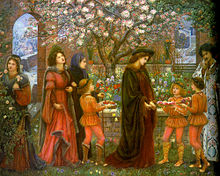
It is a genre of fiction that commonly uses magic and other supernatural phenomena as a primary plot element, theme, or setting. Many works within the genre take place in imaginary worlds where magic and magical creatures are common. Fantasy is generally distinguished from the genres of science fiction and horror by the expectation that it steers clear of scientific and macabre themes, respectively, though there is a great deal of overlap between the three, all of which are subgenres of speculative fiction.
3.Celtic mythology---King Arthur


It is a legendary British leader of the late 5th and early 6th centuries, who, according to medieval histories and romances, led the defence of Britain against Saxon invaders in the early 6th century. The details of Arthur's story are mainly composed of folklore and literary invention, and his historical existence is debated and disputed by modern historians.
Lancelot

He was one of the Knights of the Round Table in the Arthurian legend. He was the most trusted of King Arthur's knights and played a part in many of Arthur's victories. Lancelot is best known for his love affair with Arthur's wife Guinevere and the role he played in the search for the Holy Grail.
Lancelot and Guinevere---courtly love

It was a medieval European conception of nobly and chivalrously expressing love and admiration. Generally, courtly love was secret and between members of the nobility.
Camelot

It is a castle and court associated with the legendary King Arthur. Absent in the early Arthurian material, Camelot first appeared in 12th-century French romances and eventually came to be described as the fantastic capital of Arthur's realm and a symbol of the Arthurian world. The stories locate it somewhere in Great Britain and sometimes associate it with real cities, though more usually its precise location is not revealed. Most scholars regard it as being entirely fictional, its geography being perfect for romance writers.
Holy Grail
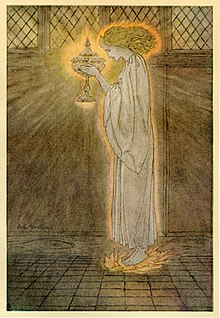
It is a dish, plate, stone, or cup that is part of an important theme of Arthurian literature. A grail, wondrous but not explicitly "holy," first appears in Perceval le Gallois, an unfinished romance by Chrétien de Troyes: it is a processional salver used to serve at a feast. Chrétien's story attracted many continuators, translators and interpreters in the later 12th and early 13th centuries, including Wolfram von Eschenbach, who makes the grail a great precious stone that fell from the sky. The Grail legend became interwoven with legends of the Holy Chalice. The connection with Joseph of Arimathea and with vessels associated with the Last Supper and crucifixion of Jesus, dates from Robert de Boron's Joseph d'Arimathie (late 12th century) in which Joseph receives the Grail from an apparition of Jesus and sends it with his followers to Great Britain. Building upon this theme, later writers recounted how Joseph used the Grail to catch Christ's blood while interring him and how he founded a line of guardians to keep it safe in Britain. The legend may combine Christian lore with a Celtic myth of a cauldron endowed with special powers.
4.Ursula K. Le Guin---A Wizard of Earthsea

H. G. Wells---The Time Machine

J. R. R. Tolkien---The Lord of the Rings

------三大奇幻文學作品
下一則: 兒童文學上課筆記 week3 9/26 Children Literature
限會員,要發表迴響,請先登入


