05/29 青少年小說 Week 15 : Where are you going where have you been & Paul's case
2014/06/15 00:45
瀏覽546
迴響0
推薦0
引用0
- kitchen : 屬於女性的柔軟性、脆弱性
- About Amy Tan
1. Amy Tan (born February 19, 1952) is an American writer whose works explore mother-daughter relationships.
2. Her best-known work is The Joy Luck Club, which has been translated into 35 languages. In 1993, the book was adapted into a commercially successful film.
- About The Joy Luck Club (novel)
1. The Joy Luck Club (1989) is a best-selling novel written by Amy Tan. It focuses on four Chinese American immigrant families in San Francisco who start a club known as The Joy Luck Club, playing the Chinese game of mahjong for money while feasting on a variety of foods.
2. The book is structured somewhat like a mahjong game, with four parts divided into four sections to create sixteen chapters. The three mothers and four daughters (one mother, Suyuan Woo, dies before the novel opens) share stories about their lives in the form of vignettes. Each part is preceded by a parable relating to the game.
- About The Joy Luck Club (film)
1. The Joy Luck Club (喜福會) is a 1993 American film about the relationships between Chinese-American women and their Chinese mothers. Directed by Wayne Wang, the film is based on the eponymous 1989 novel by Amy Tan, who co-wrote the screenplay with Ronald Bass.
2. The film reveals the hidden pasts of the older women and their daughters and how their lives are shaped by the clash of Chinese and American cultures as they strive to understand their family bonds and one another.
- About Where are you going, where have you been?
1.Theme: Sexual mores / Women is struggle over the sexuality.
2. "Where Are You Going, Where Have You Been?" is a frequently anthologized short story written by Joyce Carol Oates.
3. Oates said that she dedicated the story to Bob Dylan because she was inspired to write it after listening to his song "It's All Over Now, Baby Blue."
4. Time background: 1960's Anti-Vietnam War movement & Civil Right movement.
5. "It's not about good or bad, it's about made of the choice"
6. Quote:1. [Connie] had a quick, nervous giggling habit of craning her neck to glance into mirrors or checking other people's faces to make sure her own was all right.
-> self-conscious, about the way others perceive her
2. Connie would [...] look right through her mother, into a shadowy vision of herself as she was right at that moment: she knew she was pretty and that was everything.3. But all the boys fell back and dissolved into a single face that was not even a face but an idea, a feeling, mixed up with the urgent insistent pounding of the music and the humid night of July.
-> sense of self revolves around her beauty rather then any other quality -> this sense of self is "shadowy"
-> unable to express her sexual desires, even to herself, except obliquely or indirectly. Her desire is reduced to a nameless "idea" or "feeling" and associated with sexually suggestive imagery such as "urgent insistent pounding."
- 英國文學19世紀女性小說家:
1. Elaine Showalter : She is an American literary critic, feminist, and writer on cultural and social issues. She is one of the founders of feminist literary criticism in United States academia. She has written and edited numerous books and articles focused on a variety of subjects, from feminist literary criticism to fashion, sometimes sparking widespread controversy, especially with her work on illnesses.
* Works: Sister's choice (美國文學女性小說家的探討)
A literature of their own
2. Jane Austen : [ the female ]
Jane Austen was an English novelist whose works of romantic fiction, set among the landed gentry, earned her a place as one of the most widely read writers in English literature. Her realism, biting irony and social commentary have gained her historical importance among scholars and critics.
Austen's works critique the novels of sensibility of the second half of the 18th century and are part of the transition to 19th-century realism. Her plots, though fundamentally comic, highlight the dependence of women on marriage to secure social standing and economic security.
* Work: last novel: "Persuasion" 男主角 Wentworth
=> 禮運大同篇,男耕女織
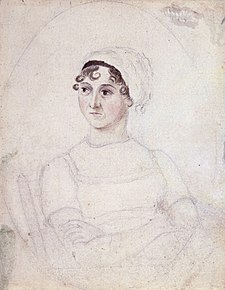
3. Charlotte Bronte [ the feminist]
Charlotte Brontë (21 April 1816 – 31 March 1855) was an English novelist and poet, the eldest of the three Brontë sisters who survived into adulthood and whose novels are English literature standards. She wrote Jane Eyre under the pen name Currer Bell.
*Work: Jane Eyre
4. George Eliot [ the feminine ]
Mary Ann Evans (22 November 1819 – 22 December 1880; alternatively "Mary Anne" or "Marian"), known by her pen name George Eliot, was an English novelist, journalist, translator and one of the leading writers of the Victorian era.
She used a male pen name, she said, to ensure her works would be taken seriously. Female authors were published under their own names during Eliot's life, but she wanted to escape the stereotype of women only writing lighthearted romances. An additional factor in her use of a pen name may have been a desire to shield her private life from public scrutiny and to prevent scandals attending her relationship with the married George Henry Lewes
- Free Will / Garden of Eden 不必擔心 eternity
- The God told Eden and Eve not to eat the tree in the midst of the garden.
- Paul's case: Astudy in Temperament
This is a short story by Willa Cather. It was first published in McClure's Magazine in 1905.
Plot : Paul, a suspended high school student in Pittsburgh, is frustrated with his middle-class life and the people around him not understanding his love of beautiful things, and he runs away to New York City.
The term "Paul's case" is the way teachers and his father refer to Paul concerning his lack of interest in school. It has been suggested that it enables Cather to "impersonate the voice of medical authority."
- Willa Cather
1. Willa Sibert Cather ( December 7, 1873 – April 24, 1947) was an American author who achieved recognition for her novels of frontier life on the Great Plains, in works such as O Pioneers!, My Ántonia, and The Song of the Lark.
2. In 1923 she was awarded the Pulitzer Prize for One of Ours (1922), a novel set during World War I.
3. Cather grew up in Nebraska and graduated from the University of Nebraska. She lived and worked in Pittsburgh for ten years.
- O pioneers!
O Pioneers! is a 1913 novel by American author Willa Cather, written while she was living in New York. It is the first novel of her Great Plains trilogy, followed by The Song of the Lark (1915) and My Ántonia (1918).
- My Antonia
My Ántonia is a novel published in 1918 by American writer Willa Cather, considered one of her best works. It is the final book of her "prairie trilogy" of novels, preceded by O Pioneers! and The Song of the Lark.
- Omaha-> 荒涼 v.s. Chichogo: 心靈無法溝通 peoplemover
- Movie: Up in the Air
Up in the Air is a 2009 American comedy-drama film directed by Jason Reitman and co-written by Reitman and Sheldon Turner. It is a film adaptation of the 2001 novel of the same name, written by Walter Kirn. The story is centered on a corporate "downsizer" Ryan Bingham (George Clooney) and his travels.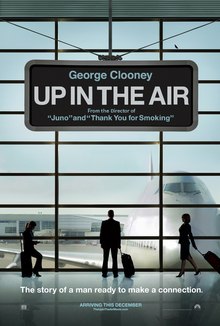
- About Paul's case (From PPT)
1. It was Paul's afternoon to appear before the faculty of the Pittsburgh High School to account for his various misdemeanors. He had been suspended a week ago, and his father had called at the Principal's office and confessed his perplexity about his son. Paul entered the faculty room suave and smiling. His clothes were a trifle outgrown, and the tan velvet on the collar of his open overcoat was frayed and worn; but for all that there was something of the dandy about him, and he wore an opal pin in his neatly knotted black four-in-hand, and a red carnation in his buttonhole. This latter adornment the faculty somehow felt was not properly significant of the contrite spirit befitting a boy under the ban of suspension.
2. Paul was tall for his age and very thin, with high, cramped shoulders and a narrow chest. His eyes were remarkable for a certain hysterical brilliancy, and he continually used them in a conscious, theatrical sort of way, peculiarly offensive in a boy. The pupils were abnormally large, as though he were addicted to belladonna, but there was a glassy glitter about them which that drug does not produce.
3.高中以下 principal -> -al : head => principle -> -le : direction
高中以上 presidet
4. When questioned by the Principal as to why he was there Paul stated, politely enough, that he wanted to come back to school. This was a lie, but Paul was quite accustomed to lying; found it, indeed, indispensable for overcoming friction. His teachers were asked to state their respective charges against him, which they did with such a rancor and aggrievedness as evinced that this was not a usual case. Disorder and impertinence were among the offenses named, yet each of his instructors felt that it was scarcely possible to put into words the real cause of the trouble, which lay in a sort of hysterically defiant manner of the boy's; in the contempt which they all knew he felt for them, and which he seemingly made not the least effort to conceal. Once, when he had been making a synopsis of a paragraph at the blackboard, his English teacher had stepped to his side and attempted to guide his hand. Paul had started back with a shudder and thrust his hands violently behind him. The astonished woman could scarcely have been more hurt and embarrassed had he struck at her. The insult was so involuntary and definitely personal as to be unforgettable. In one way and another he had made all his teachers, men and women alike, conscious of the same feeling of physical aversion. In one class he habitually sat with his hand shading his eyes; in another he always looked out of the window during the recitation; in another he made a running commentary on the lecture, with humorous intention.
5. His teachers felt this afternoon that his whole attitude was symbolized by his shrug and his flippantly red carnation flower, and they fell upon him without mercy, his English teacher leading the pack. He stood through it smiling, his pale lips parted over his white teeth. (His lips were continually twitching, and be had a habit of raising his eyebrows that was contemptuous and irritating to the last degree.) Older boys than Paul had broken down and shed tears under that baptism of fire, but his set smile did not once desert him, and his only sign of discomfort was the nervous trembling of the fingers that toyed with the buttons of his overcoat, and an occasional jerking of the other hand that held his hat. Paul was always smiling, always glancing about him, seeming to feel that people might be watching him and trying to detect something. This conscious expression, since it was as far as possible from boyish mirthfulness, was usually attributed to insolence or "smartness."
6. As for Paul, he ran down the hill whistling the "Soldiers' Chorus" from Faust, looking wildly behind him now and then to see whether some of his teachers were not there to writhe under his lightheartedness. As it was now late in the afternoon and Paul was on duty that evening as usher at Carnegie Hall, he decided that he would not go home to supper. When he reached the concert hall the doors were not yet open and, as it was chilly outside, he decided to go up into the picture gallery--always deserted at this hour--where there were some of Raffelli's gay studies of Paris streets and an airy blue Venetian scene or two that always exhilarated him. He was delighted to find no one in the gallery but the old guard, who sat in one corner, a newspaper on his knee, a black patch over one eye and the other closed. Paul possessed himself of the place and walked confidently up and down, whistling under his breath. After a while he sat down before a blue Rico and lost himself. When he bethought him to look at his watch, it was after seven o'clock, and he rose with a start and ran downstairs, making a face at Augustus, peering out from the cast room, and an evil gesture at the Venus of Milo as he passed her on the stairway.
=> Fraust: tempitation 浮士德Fraust: protagonist of a classic German legend跟魔鬼交易Mephistopheles 魔鬼
7. Somewhat calmed by his suppression, Paul dashed out to the front of the house to seat the early comers. He was a model usher; gracious and smiling he ran up and down the aisles; nothing was too much trouble for him; he carried messages and brought programs as though it were his greatest pleasure in life, and all the people in his section thought him a charming boy, feeling that he remembered and admired them.
8. . Just as the musicians came out to take their places, his English teacher arrived with checks for the seats which a prominent manufacturer had taken for the season. She betrayed some embarrassment when she handed Paul the tickets, and a hauteur which subsequently made her feel very foolish. Paul was startled for a moment, and had the feeling of wanting to put her out; what business had she here among all these fine people and gay colors?
=> gay :happy
9. Over yonder, the Schenley, in its vacant stretch, loomed big and square through the fine rain, the windows of its twelve stories glowing like those of a lighted cardboard house under a Christmas tree. All the actors and singers of the better class stayed there when they were in the city, and a number of the big manufacturers of the place lived there in the winter. Paul had often hung about the hotel, watching the people go in and out, longing to enter and leave schoolmasters and dull care behind him forever.
10. Paul never went up Cordelia Street without a shudder of loathing. His home was next to the house of the Cumberland minister.
=> Cordelia:李爾王三女兒的名字, 有格格不入的意味
- Recitation -> recit- : make it loud to be heard
- Rancor: 深仇大恨
- Synopsis: 大綱
- it's a sort of way -> a sort of :哼哼哈哈語
- blue-veined 青筋
自訂分類:青少年小說課堂筆記
上一則: 06/05 青少年小說 Week 16 : Dystopia & Utopia下一則: 05/22 青少年小說 Week 14 : William Golding
你可能會有興趣的文章:
- 12/10 美國文學 week 14: Whitman & Emily Dickinson
- 11/19 美國文學 week 11: Moby-Dick/ Young Goodman Brown/ Allan Poe
- 10/15 美國文學 week 8: Ralph Waldo Emerson/ Nathaniel Hawthorne
- 10/08 美國文學 week 5: transcendentalism
- 09/17 美國文學 week 2: Introduction of colonial period to revolutionary period
- 06/05 青少年小說 Week 16 : Dystopia & Utopia


