Introduction – Company Background
GuangXin Industrial Co., Ltd. is a specialized manufacturer dedicated to the development and production of high-quality insoles.
With a strong foundation in material science and footwear ergonomics, we serve as a trusted partner for global brands seeking reliable insole solutions that combine comfort, functionality, and design.
With years of experience in insole production and OEM/ODM services, GuangXin has successfully supported a wide range of clients across various industries—including sportswear, health & wellness, orthopedic care, and daily footwear.
From initial prototyping to mass production, we provide comprehensive support tailored to each client’s market and application needs.
At GuangXin, we are committed to quality, innovation, and sustainable development. Every insole we produce reflects our dedication to precision craftsmanship, forward-thinking design, and ESG-driven practices.
By integrating eco-friendly materials, clean production processes, and responsible sourcing, we help our partners meet both market demand and environmental goals.


Core Strengths in Insole Manufacturing
At GuangXin Industrial, our core strength lies in our deep expertise and versatility in insole and pillow manufacturing. We specialize in working with a wide range of materials, including PU (polyurethane), natural latex, and advanced graphene composites, to develop insoles and pillows that meet diverse performance, comfort, and health-support needs.
Whether it's cushioning, support, breathability, or antibacterial function, we tailor material selection to the exact requirements of each project-whether for foot wellness or ergonomic sleep products.
We provide end-to-end manufacturing capabilities under one roof—covering every stage from material sourcing and foaming, to precision molding, lamination, cutting, sewing, and strict quality control. This full-process control not only ensures product consistency and durability, but also allows for faster lead times and better customization flexibility.
With our flexible production capacity, we accommodate both small batch custom orders and high-volume mass production with equal efficiency. Whether you're a startup launching your first insole or pillow line, or a global brand scaling up to meet market demand, GuangXin is equipped to deliver reliable OEM/ODM solutions that grow with your business.
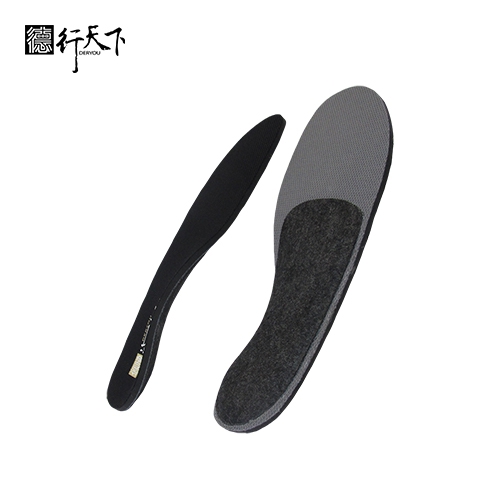
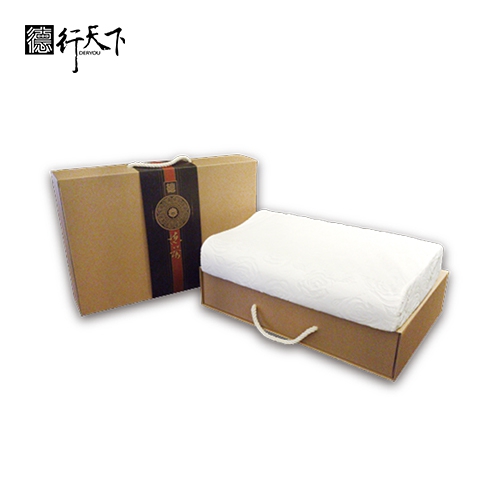
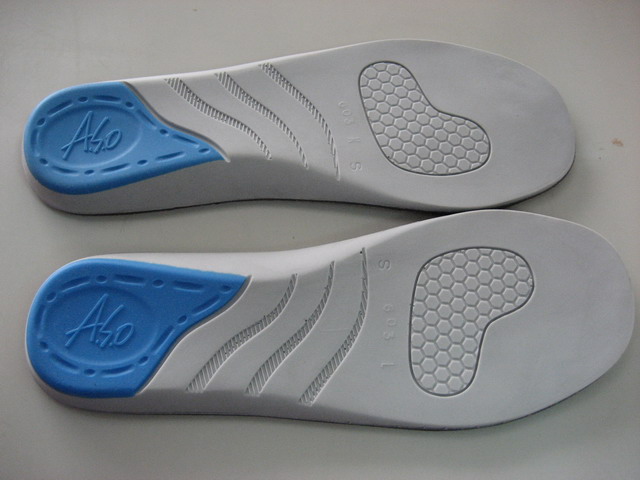
Customization & OEM/ODM Flexibility
GuangXin offers exceptional flexibility in customization and OEM/ODM services, empowering our partners to create insole products that truly align with their brand identity and target market. We develop insoles tailored to specific foot shapes, end-user needs, and regional market preferences, ensuring optimal fit and functionality.
Our team supports comprehensive branding solutions, including logo printing, custom packaging, and product integration support for marketing campaigns. Whether you're launching a new product line or upgrading an existing one, we help your vision come to life with attention to detail and consistent brand presentation.
With fast prototyping services and efficient lead times, GuangXin helps reduce your time-to-market and respond quickly to evolving trends or seasonal demands. From concept to final production, we offer agile support that keeps you ahead of the competition.
Quality Assurance & Certifications
Quality is at the heart of everything we do. GuangXin implements a rigorous quality control system at every stage of production—ensuring that each insole meets the highest standards of consistency, comfort, and durability.
We provide a variety of in-house and third-party testing options, including antibacterial performance, odor control, durability testing, and eco-safety verification, to meet the specific needs of our clients and markets.
Our products are fully compliant with international safety and environmental standards, such as REACH, RoHS, and other applicable export regulations. This ensures seamless entry into global markets while supporting your ESG and product safety commitments.
ESG-Oriented Sustainable Production
At GuangXin Industrial, we are committed to integrating ESG (Environmental, Social, and Governance) values into every step of our manufacturing process. We actively pursue eco-conscious practices by utilizing eco-friendly materials and adopting low-carbon production methods to reduce environmental impact.
To support circular economy goals, we offer recycled and upcycled material options, including innovative applications such as recycled glass and repurposed LCD panel glass. These materials are processed using advanced techniques to retain performance while reducing waste—contributing to a more sustainable supply chain.
We also work closely with our partners to support their ESG compliance and sustainability reporting needs, providing documentation, traceability, and material data upon request. Whether you're aiming to meet corporate sustainability targets or align with global green regulations, GuangXin is your trusted manufacturing ally in building a better, greener future.
Let’s Build Your Next Insole Success Together
Looking for a reliable insole manufacturing partner that understands customization, quality, and flexibility? GuangXin Industrial Co., Ltd. specializes in high-performance insole production, offering tailored solutions for brands across the globe. Whether you're launching a new insole collection or expanding your existing product line, we provide OEM/ODM services built around your unique design and performance goals.
From small-batch custom orders to full-scale mass production, our flexible insole manufacturing capabilities adapt to your business needs. With expertise in PU, latex, and graphene insole materials, we turn ideas into functional, comfortable, and market-ready insoles that deliver value.
Contact us today to discuss your next insole project. Let GuangXin help you create custom insoles that stand out, perform better, and reflect your brand’s commitment to comfort, quality, and sustainability.
🔗 Learn more or get in touch:
🌐 Website: https://www.deryou-tw.com/
📧 Email: shela.a9119@msa.hinet.net
📘 Facebook: facebook.com/deryou.tw
📷 Instagram: instagram.com/deryou.tw
ODM service for ergonomic pillows China
Are you looking for a trusted and experienced manufacturing partner that can bring your comfort-focused product ideas to life? GuangXin Industrial Co., Ltd. is your ideal OEM/ODM supplier, specializing in insole production, pillow manufacturing, and advanced graphene product design.
With decades of experience in insole OEM/ODM, we provide full-service manufacturing—from PU and latex to cutting-edge graphene-infused insoles—customized to meet your performance, support, and breathability requirements. Our production process is vertically integrated, covering everything from material sourcing and foaming to molding, cutting, and strict quality control.Taiwan anti-odor insole OEM processing factory
Beyond insoles, GuangXin also offers pillow OEM/ODM services with a focus on ergonomic comfort and functional innovation. Whether you need memory foam, latex, or smart material integration for neck and sleep support, we deliver tailor-made solutions that reflect your brand’s values.
We are especially proud to lead the way in ESG-driven insole development. Through the use of recycled materials—such as repurposed LCD glass—and low-carbon production processes, we help our partners meet sustainability goals without compromising product quality. Our ESG insole solutions are designed not only for comfort but also for compliance with global environmental standards.Thailand custom neck pillow ODM
At GuangXin, we don’t just manufacture products—we create long-term value for your brand. Whether you're developing your first product line or scaling up globally, our flexible production capabilities and collaborative approach will help you go further, faster.Vietnam high-end foam product OEM/ODM
📩 Contact us today to learn how our insole OEM, pillow ODM, and graphene product design services can elevate your product offering—while aligning with the sustainability expectations of modern consumers.Thailand eco-friendly graphene material processing
These images are produced using advanced imaging techniques that enable us to study the cells found in the human intestine. By utilizing a combination of microscopy and robotic technology, these scientific visuals offer a window into the intricate world of cellular diversity. The various colors in the image represent specific molecules that are expressed within different cell types. These molecules, such as proteins, play a crucial role in determining the identity and function of each cell within the intestine. By “painting” or “tagging” specific cells with different colors, we gain valuable insights into the complex interactions and structures within our intestines. In this particular image, each color corresponds to a specific molecule, providing information about the presence and distribution of different cell types or structures. Credit: Stanford Medicine/Snyder lab/Nolan lab/Greenleaf lab Stanford researchers created a high-resolution map of the intestine, identifying 20 cellular “neighborhoods” that regulate digestion and immune response. The study revealed links between obesity, hypertension, and immune activity, suggesting early disease markers. When you think about your ideal neighborhood, perhaps you think of tree-lined streets or a close-knit community of people who help each other. You probably don’t think about your digestive system. But maybe you should. According to a team of scientists led by researchers at Stanford Medicine, there are indeed “neighborhoods” of different cell types cooperating to digest your food and protect you from infection, among other things — and a new, ultra-high-resolution map of these neighborhoods proves your intestine is both functionally impressive and visually striking. Just like human neighborhoods, which have common elements such as streets, restaurants, and houses in varying numbers, cellular neighborhoods are made up of different quantities of cell types with specific functions. By combining several new imaging and sequencing technologies, the researchers were able to map these neighborhoods down to the level of individual cells. “This is the first time anyone has made a spatial map of the intestine at the single-cell level,” said Michael Snyder, PhD, professor and chair of genetics and co-senior author of the research, published July 19 in Nature. “It was a bit like exploring a new planet, in that we didn’t know exactly what cell types we would find or how they would be organized.” Mapping the Gut Researchers from multiple laboratories, at Stanford Medicine and other institutions, participated in the new mapping effort, part of the Human BioMolecular Atlas Program founded by the National Institutes of Health. Scientists in the program aim to create a comprehensive cellular map of the human body. To map the gut, scientists examined eight regions of the small and large intestine from nine deceased donors. Using a technology called co-detection by indexing, or CODEX, which involves staining and washing the tissue repeatedly with fluorescent antibodies (substances that bind certain proteins and enable imaging), the researchers identified 20 distinct cellular neighborhoods based on the relative abundance of each cell type. Cells of the human intestine. Credit: Stanford Medicine/Snyder lab/Nolan lab/Greenleaf lab Additional molecular analysis of RNA and chromosomal material from some of the samples provided an even greater level of detail within each cell type. “Our maps are intended to be a reference for a healthy intestine, with which we can compare everything from irritable bowel disease to early-stage colon cancer,” said Snyder, the Stanford W. Ascherman, MD, FACS Professor in Genetics. “This will be foundational for our understanding of all kinds of digestive diseases.” Neighborhoods of Specialized Cells Roughly 20 feet long, the intestine absorbs nutrients from food and protects the body from invading microbes, while also maintaining a healthy balance of the beneficial bacteria that aid digestion. To perform these tasks, the intestine employs a variety of cell types, including epithelial cells that make up the intestinal lining, connective tissue cells, nerve cells, and immune cells. With the new maps, scientists were able to pinpoint where each cell type is located and which other cells they associate with. “Looking at the presence or absence of a single cell doesn’t tell you much,” said Garry Nolan, Ph.D., the Rachford and Carlota A. Harris Professor and a professor of pathology, who led the research along with Snyder, the director of the Center for Genomics and Personalized Medicine, and William Greenleaf, Ph.D., professor of genetics. “It’s how cells are grouped together that defines their functionality.” Cells of the human intestine. Credit: Stanford Medicine/Snyder lab/Nolan lab/Greenleaf lab The researchers also wanted to see how the organization of healthy tissue changed throughout the digestive tract, from closer to the stomach to closer to the rectum. “What’s normal in one region might be a sign of disease in another,” said John Hickey, PhD, postdoctoral scholar in microbiology and immunology, and first author on the paper. Some neighborhoods, such as the one dominated by smooth muscle cells (which control involuntary movements) became more common toward the end of the colon, while other neighborhoods composed primarily of immune cells became less common. Associations With BMI and Hypertension In addition to creating a reference for healthy tissue, the new maps revealed some interesting clinical connections. For instance, the researchers found that donors with higher body mass index had a greatly increased number of M1 macrophages, a type of immune cell associated with inflammation. “People who have a higher body mass index, especially above certain levels, are known to have higher risk for gastrointestinal disease,” Hickey said. “Many of those diseases are associated with chronic inflammation. Even though these donors didn’t have a history of GI disease, the increase in macrophages could be an indicator of a pre-disease process.” Donors with a history of hypertension also had fewer immune cells of a different type, called CD8 T cells, which play a role in seeking out and destroying possible cancer cells. With the spatial map, the researchers were able to see that the CD8 T cells were missing from one particular neighborhood within the epithelial cells lining the intestine. “This was an unexpected but important result,” Hickey said, “because we know the immune system plays a role in preventing cancer by pruning out malignant cells. If you have fewer CD8 T cells, you might have a higher risk of cancer.” Indeed, research has shown that patients with hypertension are more likely to develop colorectal cancer. Future Directions In this study, all nine samples came from adult donors, and the majority were white and male. “One of our biggest next steps is to increase the diversity of the samples,” Snyder said. “Our goal is to get a much more comprehensive set of individuals, including multiple ethnic backgrounds and age groups.” The scientists also hope to map the intestine in three dimensions, which will help them better visualize the networks of nerves and blood vessels in the healthy intestine. “You can’t understand dysfunction until you understand what’s normal,” Nolan said. Reference: “Organization of the human intestine at single-cell resolution” by John W. Hickey, Winston R. Becker, Stephanie A. Nevins, Aaron Horning, Almudena Espin Perez, Chenchen Zhu, Bokai Zhu, Bei Wei, Roxanne Chiu, Derek C. Chen, Daniel L. Cotter, Edward D. Esplin, Annika K. Weimer, Chiara Caraccio, Vishal Venkataraaman, Christian M. Schürch, Sarah Black, Maria Brbić, Kaidi Cao, Shuxiao Chen, Weiruo Zhang, Emma Monte, Nancy R. Zhang, Zongming Ma, Jure Leskovec, Zhengyan Zhang, Shin Lin, Teri Longacre, Sylvia K. Plevritis, Yiing Lin, Garry P. Nolan, William J. Greenleaf and Michael Snyder, 19 July 2023, Nature. DOI: 10.1038/s41586-023-05915-x
Researchers analyze traditional seafood sustainability and greenhouse gas emissions to assess the “carbon footprint” of U.S. tuna fisheries. A new study published in Elementa by researchers at the University of California, Santa Cruz and NOAA examines traditional aspects of seafood sustainability alongside greenhouse gas emissions to better understand the “carbon footprint” of U.S. tuna fisheries. Fisheries in the United States are among the best managed in the world, thanks to ongoing efforts to fish selectively, end overfishing, and rebuild fish stocks. But climate change could bring dramatic changes in the marine environment that threaten seafood productivity and sustainability. That’s one reason why researchers set out to broaden the conversation about sustainability in seafood by comparing the carbon emissions of different tuna fishing practices. The paper also puts those emissions in context relative to other sources of protein, like tofu, chicken, pork, or beef. In particular, the study examined how the carbon footprint of tuna was affected by how far from shore fishing fleets operated, or what type of fishing gear they used. “This can be an opportunity to look at fisheries from different angles, all of which may be important,” said Brandi McKuin, the study’s lead author and a postdoctoral researcher in environmental studies at UC Santa Cruz. Comparing Carbon Footprints Generally speaking, less selective tuna fishing gear — like purse seine nets that scoop up many tuna all at once — are more likely to accidentally catch other species during the fishing process. That’s called bycatch, and it’s a conservation concern that often factors into seafood sustainability assessments. But selective gear targeted more specifically for tuna, like trolling lines that reel fish in one at a time, typically have a higher carbon footprint, according to the study’s estimates. That’s because fishing vessels using these methods had to travel greater distances or spend more time on the water to catch their allotment of fish, which meant they used more fuel. In one example, skipjack tuna had up to 12 times more estimated climate forcing when produced with trolling gear rather than purse seine gear. Skipjack from purse seine fleets had an estimated carbon footprint almost low enough to compete with plant-based protein sources, like tofu, but this style of fishing can have relatively high bycatch. On the other hand, skipjack produced from trolling has almost no bycatch, but the study estimates its carbon footprint falls on the higher end of the protein spectrum, between pork and beef. There were other fishing methods that seemed to strike a balance. Albacore tuna caught on trolling and pole-and-line fishing gear by the North Pacific surface methods fleet had both negligible bycatch and relatively low estimated climate impacts. Comparing bycatch, carbon footprints, and other environmental criteria can get complicated for seafood consumers, but overall, tuna had a relatively low estimated carbon footprint: less than or similar to that of chicken and lower than beef or pork, for most of the fishing methods studied. “Given recent headlines about how much carbon is unleashed by commercial fishing activities, it’s important to have a rigorous, peer-reviewed data analysis which demonstrates the carbon footprint of tuna fishing activities is favorably low compared to many land-based food protein production alternatives,” said Stephen Stohs, a coauthor of the study who is a research economist at NOAA Fisheries’ Southwest Fisheries Science Center. Advancing Seafood Sustainability The study says consumers could choose to eat seafood with negligible bycatch impacts but a higher climate impact less often, just as some people choose to eat beef less often due to its climate impact. But the fishing industry may also be able to innovate in ways that would continue improving seafood sustainability on multiple fronts. Seafood producers with lower carbon footprints can look for ways to further reduce their bycatch, while those with higher carbon footprints can work to improve their efficiency, whether in catching fish or using fuel. The study provides several policy recommendations to help fisheries reduce their carbon footprints. One idea discussed in the study is shifting fuel subsidies for fishing away from fossil fuels and toward investments in electrification technology and infrastructure, like hybrid electric and battery electric boat propulsion, as these options become more feasible. While this technology can’t yet support longer offshore trips, it already shows potential for coastal fleets. And support for electrification efforts could prioritize fleets using highly selective fishing gear. Another idea for lowering the carbon footprint of seafood is finding ways to offset emissions. But this strategy would first require a better understanding of emissions across the U.S. fishing sector. There are gaps in data about fuel use intensity for fishing vessels, which was a challenge even for the current study. But increased insight on emissions across the fishing sector could help with designing solutions. Some within the fishing industry are already taking up this challenge. For example, the pollock industry in Alaska is setting an example by conducting a life cycle assessment to take a full inventory of their carbon footprint. Efforts like these have the potential to yield new sustainability benefits, and Brandi McKuin hopes more seafood producers will follow suit. “Companies are asking themselves, ‘What is our carbon footprint?’ and that awareness can help them lead important change in the industry,” McKuin said. Reference: “Rethinking sustainability in seafood: Synergies and trade-offs between fisheries and climate change” by Brandi McKuin, Jordan T. Watson, Stephen Stohs and J. Elliott Campbell, 5 April 2021, Elementa: Sciences of the Anthropocene. DOI: 10.1525/elementa.2019.00081
The SEED/Harvest method enhances CRISPR-Cas9 technology to enable precise, efficient genomic edits in fruit flies, opening new possibilities for genetics and medical research. A new CRISPR-Cas9 based method called SEED/Harvest integrates the Single-Strand Annealing repair pathway to modify the genome of fruit flies more efficiently and without residual damage. This technique allows for precise and efficient DNA modifications across the genome, facilitating research on protein functions in various tissues and developmental stages, potentially benefiting genetics, biotechnology, and medical research. A team headed by Prof. Markus Affolter at the Biozentrum of the University of Basel has advanced CRISPR/Cas technologies with a novel method that enables more precise and seamless tagging of proteins at the genetic level. This innovation holds great potential to enhance protein research in living organisms and expand opportunities in medical research. With the revolutionary CRISPR/Cas technology, the DNA of living organisms can be precisely altered. Using a guide RNA that recognizes a specific DNA sequence, Cas9 protein is recruited to that sequence and cuts the DNA. This targeted cut allows the DNA to be repaired or altered at this specific location. Prof. Markus Affolter’s team at the Biozentrum, University of Basel, has now developed a new method called SEED/Harvest in the fruit fly (Drosophila melanogaster). This method combines the CRISPR-Cas9 technique with the Single-Strand Annealing (SSA) repair pathway, enabling genome-wide changes to be carried out more efficiently and without leaving unwanted scars. The study has been published in Developmental Cell. Two methods combined The SEED/Harvest method proceeds in two steps. In a first step, the researchers introduced a marker gene into the desired DNA site within a protein-coding region. This marker is placed at the targeted location and is used to isolate successful modifications. In a second step, the marker is excised and the DNA breakpoints are repaired by the Single-Strand Annealing (SSA) repair pathway. “This enables us to cut the DNA seamlessly while maintaining its full function,” explains first author Gustavo Aguilar. “The combination of both methods makes it possible to mark any desired protein in the genome without collateral damage, allowing us to study the functions of proteins in living organisms.” More precise and efficient “Since we would like to introduce and analyze changes in the DNA throughout the genome for our research, the method must be both precise and efficient,” explains Affolter. “And the SEED/Harvest method is both. It combines the most robust screening of successful insertions and all the advantages of seamless tagging.” New research opportunities One of the advantages of the SEED/Harvest method is that proteins can be labeled in specific tissues and cell types. “We can now control and determine in various tissues and developmental stages when and where genes are activated or inactivated” adds Gustavo Aguilar. This opens up new possibilities for research to investigate the dynamics of proteins systematically in living cells in real-time. This method is not only significant for genetics and biotechnology. “The SEED/Harvest method could also be of interest for medical research, for example, to identify defects caused by disease genes,” says Affolter. Reference: “Seamless knockins in Drosophila via CRISPR-triggered single-strand annealing” by Gustavo Aguilar, Milena Bauer, M. Alessandra Vigano, Sophie T. Schnider, Lukas Brügger, Carlos Jiménez-Jiménez, Isabel Guerrero and Markus Affolter, 5 July 2024, Developmental Cell. DOI: 10.1016/j.devcel.2024.06.004
DVDV1551RTWW78V
Thailand insole ODM for global brands 》where form meets function, every step of the wayIndonesia OEM/ODM hybrid insole services 》where innovation meets ergonomic comfort and market demandLatex pillow OEM production in Thailand 》craftsmanship meets efficiency for maximum value
下一則: Graphene insole manufacturer in Thailand 》trusted
限會員,要發表迴響,請先登入


