Introduction – Company Background
GuangXin Industrial Co., Ltd. is a specialized manufacturer dedicated to the development and production of high-quality insoles.
With a strong foundation in material science and footwear ergonomics, we serve as a trusted partner for global brands seeking reliable insole solutions that combine comfort, functionality, and design.
With years of experience in insole production and OEM/ODM services, GuangXin has successfully supported a wide range of clients across various industries—including sportswear, health & wellness, orthopedic care, and daily footwear.
From initial prototyping to mass production, we provide comprehensive support tailored to each client’s market and application needs.
At GuangXin, we are committed to quality, innovation, and sustainable development. Every insole we produce reflects our dedication to precision craftsmanship, forward-thinking design, and ESG-driven practices.
By integrating eco-friendly materials, clean production processes, and responsible sourcing, we help our partners meet both market demand and environmental goals.
Core Strengths in Insole Manufacturing
At GuangXin Industrial, our core strength lies in our deep expertise and versatility in insole and pillow manufacturing. We specialize in working with a wide range of materials, including PU (polyurethane), natural latex, and advanced graphene composites, to develop insoles and pillows that meet diverse performance, comfort, and health-support needs.
Whether it's cushioning, support, breathability, or antibacterial function, we tailor material selection to the exact requirements of each project-whether for foot wellness or ergonomic sleep products.
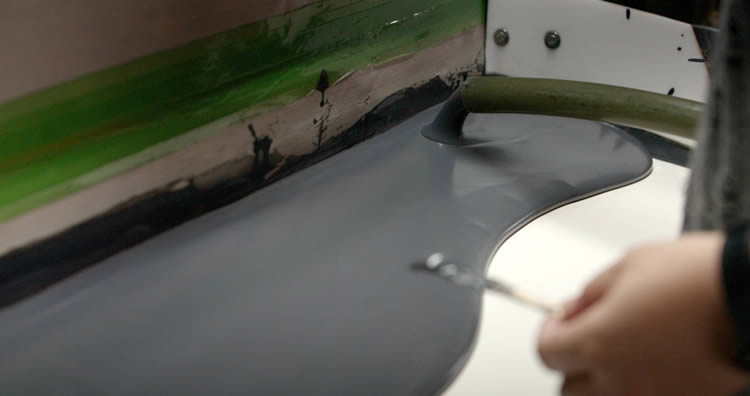
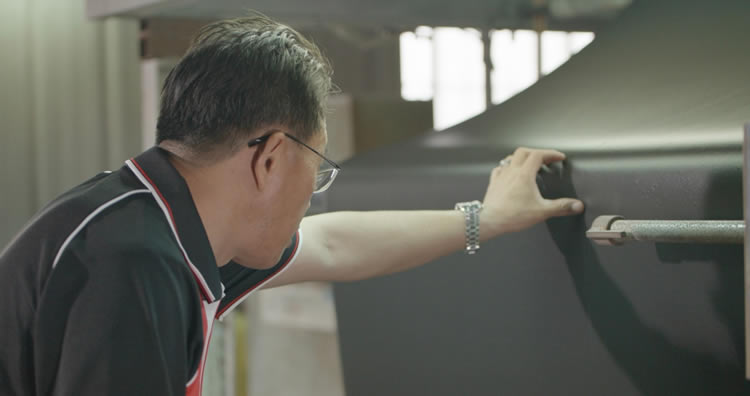
We provide end-to-end manufacturing capabilities under one roof—covering every stage from material sourcing and foaming, to precision molding, lamination, cutting, sewing, and strict quality control. This full-process control not only ensures product consistency and durability, but also allows for faster lead times and better customization flexibility.
With our flexible production capacity, we accommodate both small batch custom orders and high-volume mass production with equal efficiency. Whether you're a startup launching your first insole or pillow line, or a global brand scaling up to meet market demand, GuangXin is equipped to deliver reliable OEM/ODM solutions that grow with your business.
Customization & OEM/ODM Flexibility
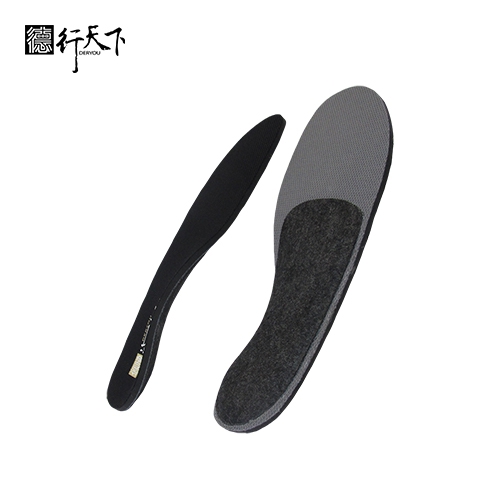
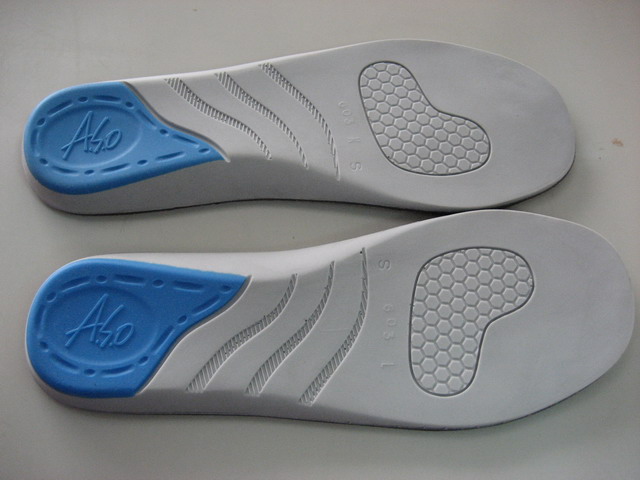
GuangXin offers exceptional flexibility in customization and OEM/ODM services, empowering our partners to create insole products that truly align with their brand identity and target market. We develop insoles tailored to specific foot shapes, end-user needs, and regional market preferences, ensuring optimal fit and functionality.
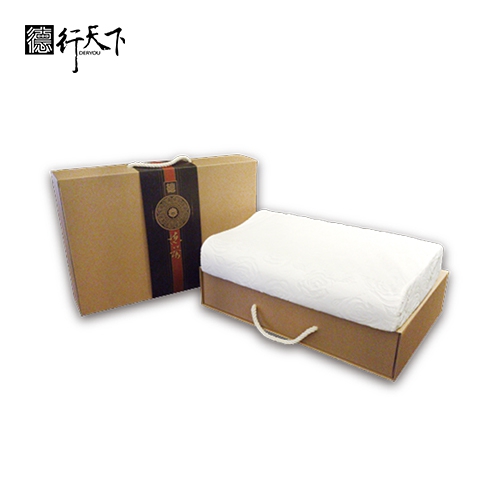
Our team supports comprehensive branding solutions, including logo printing, custom packaging, and product integration support for marketing campaigns. Whether you're launching a new product line or upgrading an existing one, we help your vision come to life with attention to detail and consistent brand presentation.
With fast prototyping services and efficient lead times, GuangXin helps reduce your time-to-market and respond quickly to evolving trends or seasonal demands. From concept to final production, we offer agile support that keeps you ahead of the competition.
Quality Assurance & Certifications
Quality is at the heart of everything we do. GuangXin implements a rigorous quality control system at every stage of production—ensuring that each insole meets the highest standards of consistency, comfort, and durability.
We provide a variety of in-house and third-party testing options, including antibacterial performance, odor control, durability testing, and eco-safety verification, to meet the specific needs of our clients and markets.
Our products are fully compliant with international safety and environmental standards, such as REACH, RoHS, and other applicable export regulations. This ensures seamless entry into global markets while supporting your ESG and product safety commitments.
ESG-Oriented Sustainable Production
At GuangXin Industrial, we are committed to integrating ESG (Environmental, Social, and Governance) values into every step of our manufacturing process. We actively pursue eco-conscious practices by utilizing eco-friendly materials and adopting low-carbon production methods to reduce environmental impact.
To support circular economy goals, we offer recycled and upcycled material options, including innovative applications such as recycled glass and repurposed LCD panel glass. These materials are processed using advanced techniques to retain performance while reducing waste—contributing to a more sustainable supply chain.
We also work closely with our partners to support their ESG compliance and sustainability reporting needs, providing documentation, traceability, and material data upon request. Whether you're aiming to meet corporate sustainability targets or align with global green regulations, GuangXin is your trusted manufacturing ally in building a better, greener future.
Let’s Build Your Next Insole Success Together
Looking for a reliable insole manufacturing partner that understands customization, quality, and flexibility? GuangXin Industrial Co., Ltd. specializes in high-performance insole production, offering tailored solutions for brands across the globe. Whether you're launching a new insole collection or expanding your existing product line, we provide OEM/ODM services built around your unique design and performance goals.
From small-batch custom orders to full-scale mass production, our flexible insole manufacturing capabilities adapt to your business needs. With expertise in PU, latex, and graphene insole materials, we turn ideas into functional, comfortable, and market-ready insoles that deliver value.
Contact us today to discuss your next insole project. Let GuangXin help you create custom insoles that stand out, perform better, and reflect your brand’s commitment to comfort, quality, and sustainability.
🔗 Learn more or get in touch:
🌐 Website: https://www.deryou-tw.com/
📧 Email: shela.a9119@msa.hinet.net
📘 Facebook: facebook.com/deryou.tw
📷 Instagram: instagram.com/deryou.tw
China graphene sports insole ODM
Are you looking for a trusted and experienced manufacturing partner that can bring your comfort-focused product ideas to life? GuangXin Industrial Co., Ltd. is your ideal OEM/ODM supplier, specializing in insole production, pillow manufacturing, and advanced graphene product design.
With decades of experience in insole OEM/ODM, we provide full-service manufacturing—from PU and latex to cutting-edge graphene-infused insoles—customized to meet your performance, support, and breathability requirements. Our production process is vertically integrated, covering everything from material sourcing and foaming to molding, cutting, and strict quality control.China pillow ODM development service
Beyond insoles, GuangXin also offers pillow OEM/ODM services with a focus on ergonomic comfort and functional innovation. Whether you need memory foam, latex, or smart material integration for neck and sleep support, we deliver tailor-made solutions that reflect your brand’s values.
We are especially proud to lead the way in ESG-driven insole development. Through the use of recycled materials—such as repurposed LCD glass—and low-carbon production processes, we help our partners meet sustainability goals without compromising product quality. Our ESG insole solutions are designed not only for comfort but also for compliance with global environmental standards.Indonesia anti-bacterial pillow ODM design
At GuangXin, we don’t just manufacture products—we create long-term value for your brand. Whether you're developing your first product line or scaling up globally, our flexible production capabilities and collaborative approach will help you go further, faster.Thailand neck support pillow OEM
📩 Contact us today to learn how our insole OEM, pillow ODM, and graphene product design services can elevate your product offering—while aligning with the sustainability expectations of modern consumers.Innovative pillow ODM solution in Thailand
Researchers were stunned to find that bacteria exposed to microplastics develop stronger defenses against antibiotics. This unexpected discovery suggests that plastic pollution isn’t just an environmental crisis—it could also be accelerating the global rise of drug-resistant infections. Credit: SciTechDaily.com Scientists were shocked to discover that microplastics don’t just pollute the environment, they may also be fueling the rise of drug-resistant bacteria. Boston University researchers found that bacteria exposed to plastic particles became stronger against antibiotics, raising serious public health concerns. The impact could be especially severe in refugee communities, where plastic waste accumulates and infections spread easily. As microplastics continue to infiltrate our water, food, and air, they may be silently empowering superbugs in ways we never expected. Microplastics: A Hidden Global Threat Microplastics—tiny fragments of plastic waste—are everywhere. They have entered food chains, accumulated in oceans, drifted through clouds, settled on mountaintops, and even made their way into human bodies at alarming rates. Scientists are working urgently to understand the hidden consequences of this widespread pollution. One surprising and troubling discovery: microplastics may be contributing to antibiotic resistance. Boston University’s Startling Discovery Researchers at Boston University found that bacteria exposed to microplastics became resistant to multiple antibiotics commonly used to treat infections. This raises particular concerns for people living in overcrowded, underserved areas, such as refugee settlements, where plastic waste accumulates and bacterial infections spread more easily. The study, published on March 11 in Applied and Environmental Microbiology, highlights a growing public health risk. “The fact that there are microplastics all around us, and even more so in impoverished places where sanitation may be limited, is a striking part of this observation,” says Muhammad Zaman, a Boston University College of Engineering professor of biomedical engineering who studies antimicrobial resistance and refugee and migrant health. “There is certainly a concern that this could present a higher risk in communities that are disadvantaged, and only underscores the need for more vigilance and a deeper insight into [microplastic and bacterial] interactions.” Why Microplastics Are a Breeding Ground for Superbugs It’s estimated that there are 4.95 million deaths associated with antimicrobial-resistant infections each year. Bacteria become resistant to antibiotics for many different reasons, including the misuse and overprescribing of medications, but a huge factor that fuels resistance is the microenvironment—the immediate surroundings of a microbe—where bacteria and viruses replicate. In the Zaman Laboratory at BU, researchers rigorously tested how a common bacteria, Escherichia coli (E. coli), reacted to being in a closed environment with microplastics. “The plastics provide a surface that the bacteria attach to and colonize,” says Neila Gross (ENG’27), a BU PhD candidate in materials science and engineering and lead author of the study. Once attached to any surface, bacteria create a biofilm—a sticky substance that acts like a shield, protecting the bacteria from invaders and keeping them affixed securely. Even though bacteria can grow biofilms on any surface, Gross observed that the microplastic supercharged the bacterial biofilms so much that when antibiotics were added to the mix, the medicine was unable to penetrate the shield. Why Are Microplastic Biofilms So Dangerous? “We found that the biofilms on microplastics, compared to other surfaces like glass, are much stronger and thicker, like a house with a ton of insulation,” Gross says. “It was staggering to see.” The rate of antibiotic resistance on the microplastic was so high compared to other materials, that she performed the experiments multiple times, testing different combinations of antibiotics and types of plastic material. Each time, the results remained consistent. “We’re demonstrating that the presence of plastics is doing a whole lot more than just providing a surface for the bacteria to stick—they are actually leading to the development of resistant organisms,” Zaman says. He directs BU’s Center on Forced Displacement, which has a mission to improve the lives of displaced people around the world. Past research has found that refugees, asylum seekers, and forcibly displaced populations are at an increased risk of contracting drug-resistant infections, due to living in overcrowded camps and having heightened barriers to receiving healthcare. The Human Cost: Refugees and Drug Resistance “Historically, people have associated antibiotic resistance with patient behavior, like not taking antibiotics as prescribed. But there is nothing a person has done to be forced to live in a particular environment, and the fact is they are at a higher exposure to resistant infections,” Zaman says. That’s why the environmental and social causes of drug-resistant superbugs cannot be ignored, he says. As of 2024, there were an estimated 122 million displaced people worldwide. According to Zaman, the prevalence of microplastics could be adding another element of risk to already underfunded, and understudied, health systems that serve refugees. Next Steps: Unraveling the Mystery of Plastic and Bacteria Gross and Zaman say that the next step in their research is to figure out if their findings in the lab translate to the outside world. They hope to begin studies with research partners overseas to watch refugee camps for microplastic-related antibiotic-resistant bacteria and viruses. They also aim to figure out the exact mechanisms that allow bacteria to hold such a strong grip on plastic. “Plastics are highly adaptable,” Gross says, and their molecular composition could help bacteria flourish—but it’s unclear how that happens. One theory, she says, is that plastics repel water and other liquids, which allow bacteria to easily attach themselves. But over time, the plastics start to take in moisture. That means it’s possible for microplastics to absorb antibiotics before they reach the target bacteria. They also found that even when the microplastics were removed from the equation, the bacteria they once housed kept the ability to form stronger biofilms. A Call to Action for Scientists and Engineers “Too often, these issues are viewed from a lens of politics or international relations or immigration, and all of those are important, but the story that is often missing is the basic science,” Zaman says. “We hope that this paper can get more scientists, engineers, and more researchers to think about these questions.” Explore Further: Microplastics Are Fueling the Rise of Deadly Superbugs Reference: “Effects of microplastic concentration, composition, and size on Escherichia coli biofilm-associated antimicrobial resistance” by Neila Gross, Johnathan Muhvich, Carly Ching, Bridget Gomez, Evan Horvath, Yanina Nahum and Muhammad H. Zaman, 11 March 2025, Applied and Environmental Microbiology. DOI: 10.1128/aem.02282-24 This work was supported by the National Science Foundation.
Life reconstruction of Harajicadectes zhumini, a 40 cm long lobe-finned fish that is not too distantly related to the fishes that gave rise to the earliest limbed tetrapods. Credit: Brian Choo, Flinders University The rivers of Australia, which once flowed across its now dry interior, used to host a range of bizarre animals – including a sleek predatory lobe-finned fish with large fangs and bony scales. The newly described fossil fish discovered in remote fossil fields west of Alice Springs has been named Harajicadectes zhumini by an international team of researchers led by Flinders University paleontologist Dr Brian Choo. The fossil was named for the Harajica Sandstone Member where the fossils were found in Australia’s ‘Red Centre’ and the ancient Greek dēktēs (“biter”). It also pays homage to Professor Min Zhu, currently at the Chinese Academy of Sciences, Beijing, who has made some major contributions to the research of early vertebrates. The type specimen of Harajicadectes as found in the field in 2016 (an almost complete fish seen in dorsal view), a latex peel of the fossil, and an interpretative diagram. Credit: Brian Choo, Flinders University One of the ancient Tetrapodomorph lineage, some of which became ancestors of limbed tetrapods – and later humans – Harajicadectes is particularly distinctive for its large openings on the top of their skull. “These spiracular structures are thought to facilitate surface air-breathing, with modern-day African bichir fish having similar structures for taking in air at the water’s surface,” says Flinders Palaeontology Lab researcher Dr Brian Choo, who studied the most complete specimen of the newly described Harajicadectes which grew to about 40cm. “This feature appears in multiple Tetrapomodorph lineages at about the same time during the Middle-Late Devonian. “In addition to Harajicadectes from central Australia, large spiracles also appeared in Gogonasus from Western Australia and elpistostegalians like Tiktaalik (the closest relatives to limbed tetrapods). Plus it also appears in the unrelated Pickeringius a ray-finned fish from Western Australia, first described in 2018.” Flinders University palaeontologist Dr Brian Choo, with the well-preserved fossil fish (and artwork inset). Credit: Flinders University Evolutionary Context and Research Impact Flinders Professor John Long, a leading Australian expert of fossil fish and coauthor of the new discovery published in the Journal of Vertebrate Paleontology, says the synchronized appearance of this air-breathing adaptation may have coincided with a time of decreased atmospheric oxygen during the mid-Devonian. “The ability to supplement gill respiration with aerial oxygen likely afforded an adaptive advantage,” says Professor Long. “We found this new form of lobe-finned fish in one of the most remote fossil sites in all of Australia, the Harajica Sandstone Member in the Northern Territory, almost 200km west of Alice Springs, dating from the Middle-Late Devonian roughly 380 million years old. Skull of Harajicadectes in dorsal view alongside a reconstructed head, plus the location of the Harajica fish beds. Credit: Brian Choo (Flinders University) “It is difficult to pinpoint where Harajicadectes sits in this group of fish as it appears to have convergently acquired a mosaic of specialized features characteristic of widely separate branches of the tetrapodomorph radiation.” The publication is the culmination of 50 years of exploration and research. ANU Professor Gavin Young first discovered fragmentary specimens in 1973 and many more fossils recovered in 1991 have been studied by the Melbourne Museum and Geosciences Australia in Canberra. Attempts to study these fossils proved troublesome until the Flinders University’s 2016 expedition found an almost complete specimen. “This fossil demonstrated that all the isolated bits and pieces collected over the years belonged to a single new type of ancient fish,” says Dr Choo, from the College of Science and Engineering at Flinders. The 2016 specimen has been transferred to the Museum and Art Galleries of the Northern Territory in Darwin. Reference: “A new stem-tetrapod fish from the Middle–Late Devonian of central Australia” by Brian Choo, Timothy Holland, Alice M. Clement, Benedict King, Tom Challands, Gavin Young and John A. Long, 5 February 2024, Journal of Vertebrate Paleontology. DOI: 10.1080/02724634.2023.2285000 This work was supported by the Australian Research Council via DECRA project DE1610024, and Discovery Grants DP0558499, DP0772138, DP160102460, and DP22100825.
Researchers combined cryo-electron microscopy and deep learning to study the intricate protein degradation process, offering insights into a key ubiquitin ligase’s function and setting the stage for understanding diseases like cancer. Scientists at the Vienna BioCenter and UNC School of Medicine revealed the intercellular choreography that governs protein regulation, including how unwanted proteins are tagged for degradation, an important player in human health and disease. Within the intricate molecular landscape inside of a cell, the orchestration of proteins demands precise control to avoid disease. While some proteins must be synthesized at specific times, others require timely breakdown and recycling. Protein degradation is a fundamental process that influences cellular activities such as the cell cycle, cell death, or immune response. At the core of this process lies the proteasome, a recycling hub in the cell. The proteasome degrades proteins if they carry a molecular tag formed by a chain of ubiquitin molecules. The task of attaching this tag falls to enzymes known as ubiquitin ligases. Challenges and Modern Techniques This process, known as polyubiquitination, has long been difficult to study due to its rapid and complex nature. To tackle this challenge, scientists at the Research Institute of Molecular Biology (IMP) in Vienna, the University of North Carolina School of Medicine, and collaborators employed a combination of techniques, integrating cryo-electron microscopy (cryo-EM) with cutting-edge deep learning algorithms. David Haselbach, PhD, a group leader at the IMP, said, “Our aim was to capture polyubiquitination step by step through time-resolved cryo-EM studies. This method allowed us to visualize and dissect the intricate molecular interactions that take place during this process, like in a stop motion movie.” Maps of the structural dynamics of APC/C-dependent ubiquitination, created using neural networks. Credit: Brown, Haselbach et al A Biochemical Timelapse The study, published in the journal Nature Structural and Molecular Biology, delves into the movements of the Anaphase-Promoting Complex/Cyclosome (APC/C), a ubiquitin ligase that drives the cell cycle. The mechanics behind APC/C’s attaching of a ubiquitin signal remained an unsolved puzzle. Haselbach and Nicholas Brown, PhD, associate professor of pharmacology at the University of North Carolina School of Medicine, are co-senior authors. “We had a solid grasp of APC/C’s fundamental structure, a prerequisite for time-resolved cryo-EM,” said first author Tatyana Bodrug, PhD, a postdoctoral pharmacology researcher at UNC-Chapel Hill. “Now we have a much better understanding of its function, every step of the way.” Ubiquitin ligases perform many tasks, including recruiting different substrates, interacting with other enzymes, and forming different types of ubiquitin signals. The scientists visualized interactions between ubiquitin-linked proteins and APC/C and its co-enzymes. They reconstructed the movements undergone by APC/C during polyubiquitination using a form of deep learning called neural networks. This was a first in protein degradation research. Collaboration and Future Directions The APC/C is a part of the large family of ubiquitin ligases (more than 600 members) that have yet to be characterized in this manner. Global efforts will keep pushing the boundaries of this field. “A key to the success of our work was collaboration with several other teams,” said Brown, also a member of the UNC Lineberger Comprehensive Cancer Center. “At Princeton University, Ellen Zhong’s software and programming contributions were key to uncovering new insights about the APC/C mechanism. Subsequent validation of these findings required the help of several other groups led by Drs Harrison, Steimel, Hahn, Emanuele, and Zhang. “A team effort was crucial to push our research over the finish line.” The significance of this research extends beyond its immediate impact, paving the way for future explorations into the regulation of ligases, ultimately promising deeper insights into the mechanisms underpinning protein metabolism important for human health and diseases, such as many forms of cancer. Reference: “Time-resolved cryo-EM (TR-EM) analysis of substrate polyubiquitination by the RING E3 anaphase-promoting complex/cyclosome (APC/C)” by Tatyana Bodrug, Kaeli A. Welsh, Derek L. Bolhuis, Ethan Paulаkonis, Raquel C. Martinez-Chacin, Bei Liu, Nicholas Pinkin, Thomas Bonacci, Liying Cui, Pengning Xu, Olivia Roscow, Sascha Josef Amann, Irina Grishkovskaya, Michael J. Emanuele, Joseph S. Harrison, Joshua P. Steimel, Klaus M. Hahn, Wei Zhang, Ellen D. Zhong, David Haselbach and Nicholas G. Brown, 21 September 2023, Nature Structural & Molecular Biology. DOI: 10.1038/s41594-023-01105-5
DVDV1551RTWW78V
Thailand graphene product OEM service 》from raw material to finished product,we do it allIndonesia insole OEM manufacturer 》where innovation meets ergonomic comfort and market demandThailand insole ODM service provider 》empowering smart brands through better materials and process
下一則: One-stop OEM/ODM solution provider Indonesia 》help
限會員,要發表迴響,請先登入


