Introduction – Company Background
GuangXin Industrial Co., Ltd. is a specialized manufacturer dedicated to the development and production of high-quality insoles.
With a strong foundation in material science and footwear ergonomics, we serve as a trusted partner for global brands seeking reliable insole solutions that combine comfort, functionality, and design.
With years of experience in insole production and OEM/ODM services, GuangXin has successfully supported a wide range of clients across various industries—including sportswear, health & wellness, orthopedic care, and daily footwear.
From initial prototyping to mass production, we provide comprehensive support tailored to each client’s market and application needs.
At GuangXin, we are committed to quality, innovation, and sustainable development. Every insole we produce reflects our dedication to precision craftsmanship, forward-thinking design, and ESG-driven practices.
By integrating eco-friendly materials, clean production processes, and responsible sourcing, we help our partners meet both market demand and environmental goals.
Core Strengths in Insole Manufacturing
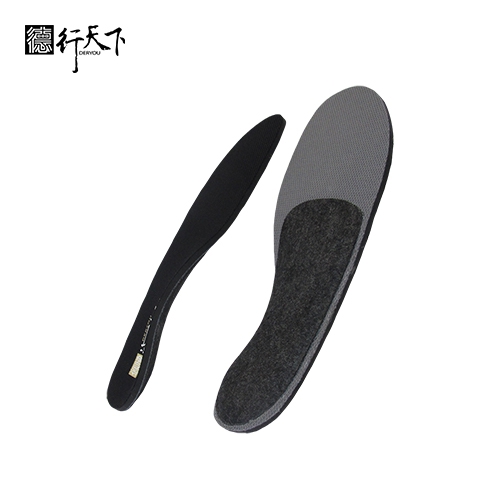
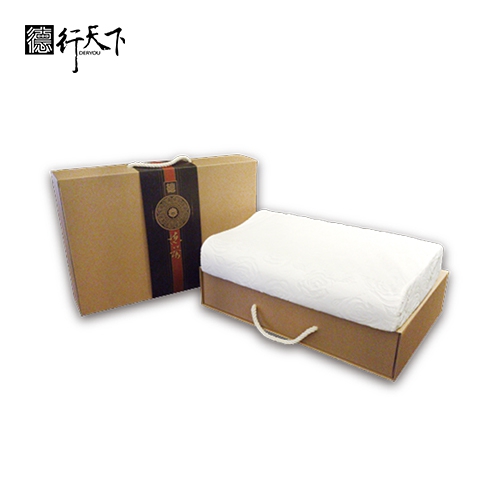
At GuangXin Industrial, our core strength lies in our deep expertise and versatility in insole and pillow manufacturing. We specialize in working with a wide range of materials, including PU (polyurethane), natural latex, and advanced graphene composites, to develop insoles and pillows that meet diverse performance, comfort, and health-support needs.
Whether it's cushioning, support, breathability, or antibacterial function, we tailor material selection to the exact requirements of each project-whether for foot wellness or ergonomic sleep products.
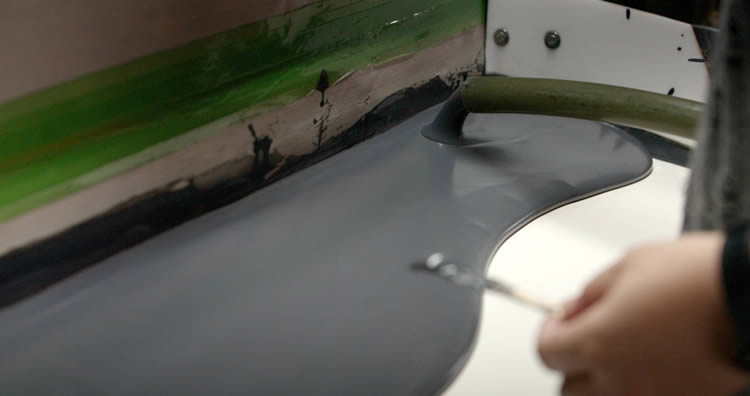
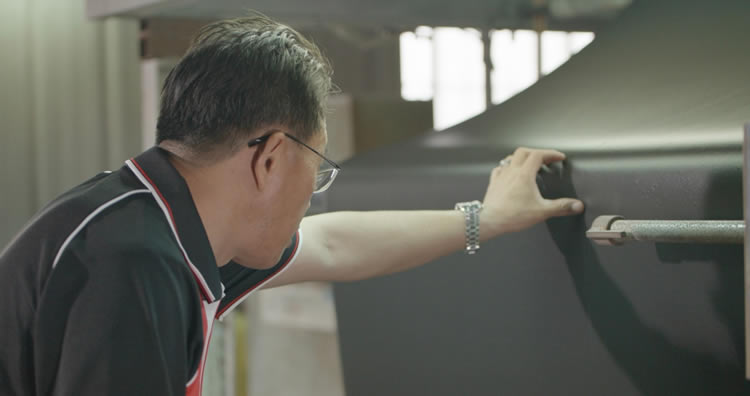
We provide end-to-end manufacturing capabilities under one roof—covering every stage from material sourcing and foaming, to precision molding, lamination, cutting, sewing, and strict quality control. This full-process control not only ensures product consistency and durability, but also allows for faster lead times and better customization flexibility.
With our flexible production capacity, we accommodate both small batch custom orders and high-volume mass production with equal efficiency. Whether you're a startup launching your first insole or pillow line, or a global brand scaling up to meet market demand, GuangXin is equipped to deliver reliable OEM/ODM solutions that grow with your business.
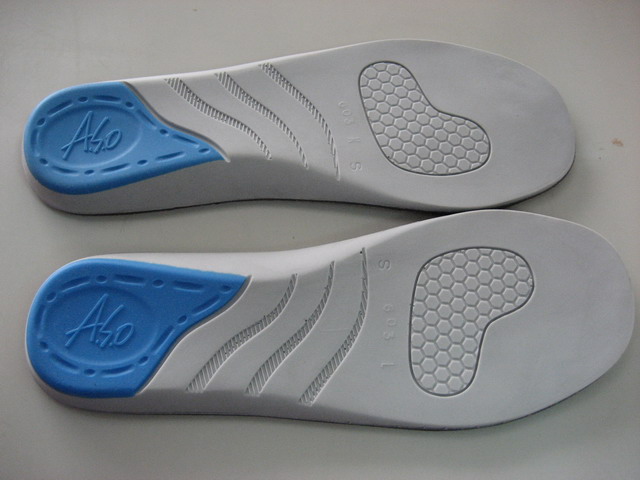
Customization & OEM/ODM Flexibility
GuangXin offers exceptional flexibility in customization and OEM/ODM services, empowering our partners to create insole products that truly align with their brand identity and target market. We develop insoles tailored to specific foot shapes, end-user needs, and regional market preferences, ensuring optimal fit and functionality.
Our team supports comprehensive branding solutions, including logo printing, custom packaging, and product integration support for marketing campaigns. Whether you're launching a new product line or upgrading an existing one, we help your vision come to life with attention to detail and consistent brand presentation.
With fast prototyping services and efficient lead times, GuangXin helps reduce your time-to-market and respond quickly to evolving trends or seasonal demands. From concept to final production, we offer agile support that keeps you ahead of the competition.
Quality Assurance & Certifications
Quality is at the heart of everything we do. GuangXin implements a rigorous quality control system at every stage of production—ensuring that each insole meets the highest standards of consistency, comfort, and durability.
We provide a variety of in-house and third-party testing options, including antibacterial performance, odor control, durability testing, and eco-safety verification, to meet the specific needs of our clients and markets.
Our products are fully compliant with international safety and environmental standards, such as REACH, RoHS, and other applicable export regulations. This ensures seamless entry into global markets while supporting your ESG and product safety commitments.
ESG-Oriented Sustainable Production
At GuangXin Industrial, we are committed to integrating ESG (Environmental, Social, and Governance) values into every step of our manufacturing process. We actively pursue eco-conscious practices by utilizing eco-friendly materials and adopting low-carbon production methods to reduce environmental impact.
To support circular economy goals, we offer recycled and upcycled material options, including innovative applications such as recycled glass and repurposed LCD panel glass. These materials are processed using advanced techniques to retain performance while reducing waste—contributing to a more sustainable supply chain.
We also work closely with our partners to support their ESG compliance and sustainability reporting needs, providing documentation, traceability, and material data upon request. Whether you're aiming to meet corporate sustainability targets or align with global green regulations, GuangXin is your trusted manufacturing ally in building a better, greener future.
Let’s Build Your Next Insole Success Together
Looking for a reliable insole manufacturing partner that understands customization, quality, and flexibility? GuangXin Industrial Co., Ltd. specializes in high-performance insole production, offering tailored solutions for brands across the globe. Whether you're launching a new insole collection or expanding your existing product line, we provide OEM/ODM services built around your unique design and performance goals.
From small-batch custom orders to full-scale mass production, our flexible insole manufacturing capabilities adapt to your business needs. With expertise in PU, latex, and graphene insole materials, we turn ideas into functional, comfortable, and market-ready insoles that deliver value.
Contact us today to discuss your next insole project. Let GuangXin help you create custom insoles that stand out, perform better, and reflect your brand’s commitment to comfort, quality, and sustainability.
🔗 Learn more or get in touch:
🌐 Website: https://www.deryou-tw.com/
📧 Email: shela.a9119@msa.hinet.net
📘 Facebook: facebook.com/deryou.tw
📷 Instagram: instagram.com/deryou.tw
Custom foam pillow OEM in China
Are you looking for a trusted and experienced manufacturing partner that can bring your comfort-focused product ideas to life? GuangXin Industrial Co., Ltd. is your ideal OEM/ODM supplier, specializing in insole production, pillow manufacturing, and advanced graphene product design.
With decades of experience in insole OEM/ODM, we provide full-service manufacturing—from PU and latex to cutting-edge graphene-infused insoles—customized to meet your performance, support, and breathability requirements. Our production process is vertically integrated, covering everything from material sourcing and foaming to molding, cutting, and strict quality control.One-stop OEM/ODM solution provider Indonesia
Beyond insoles, GuangXin also offers pillow OEM/ODM services with a focus on ergonomic comfort and functional innovation. Whether you need memory foam, latex, or smart material integration for neck and sleep support, we deliver tailor-made solutions that reflect your brand’s values.
We are especially proud to lead the way in ESG-driven insole development. Through the use of recycled materials—such as repurposed LCD glass—and low-carbon production processes, we help our partners meet sustainability goals without compromising product quality. Our ESG insole solutions are designed not only for comfort but also for compliance with global environmental standards.Indonesia insole ODM for global brands
At GuangXin, we don’t just manufacture products—we create long-term value for your brand. Whether you're developing your first product line or scaling up globally, our flexible production capabilities and collaborative approach will help you go further, faster.Vietnam neck support pillow OEM
📩 Contact us today to learn how our insole OEM, pillow ODM, and graphene product design services can elevate your product offering—while aligning with the sustainability expectations of modern consumers.Private label insole and pillow OEM Thailand
Shells of land snails from Rurutu (Austral Islands, French Polynesia) — recently extinct before they were collected and described scientifically. Credit: O. Gargominy, A. Sartori The Sixth Mass Extinction, largely caused by humans, has been confirmed through new research emphasizing invertebrates’ extinction, differing effects on marine and terrestrial life, human influence on the biosphere, and the insufficient political response. The history of life on Earth has been marked five times by events of mass biodiversity extinction caused by extreme natural phenomena. Today, many experts warn that a Sixth Mass Extinction crisis is underway, this time entirely caused by human activities. Assessing the Current Extinction Crisis A comprehensive assessment of evidence of this ongoing extinction event was published recently in the journal Biological Reviews by biologists from the University of Hawai‘i at Mānoa and the Muséum National d’Histoire Naturelle in Paris, France. “Drastically increased rates of species extinctions and declining abundances of many animal and plant populations are well documented, yet some deny that these phenomena amount to mass extinction,” said Robert Cowie, lead author of the study and research professor at the UH Mānoa Pacific Biosciences Research Center in the School of Ocean and Earth Science and Technology (SOEST). “This denial is based on a highly biased assessment of the crisis which focuses on mammals and birds and ignores invertebrates, which of course constitute the great majority of biodiversity.” The Role of Invertebrates in Biodiversity By extrapolating from estimates obtained for land snails and slugs, Cowie and co-authors estimated that since the year 1500, Earth could already have lost between 7.5 and 13% of the two million known species – a staggering 150,000 to 260,000 species. “Including invertebrates was key to confirming that we are indeed witnessing the onset of the Sixth Mass Extinction in Earth’s history,” said Cowie. Native Hawaiian snail habitat on Pu‘u Kukui, Maui. Credit: Robert Cowie Differential Impact on Marine and Land Species The situation is not the same everywhere, however. Although marine species face significant threats, there is no evidence that the crisis is affecting the oceans to the same extent as the land. On land, island species, such as those of the Hawaiian Islands, are much more affected than continental species. And the rate of extinction of plants seems lower than that of terrestrial animals. Unfortunately, along with science denial taking a foothold in modern society on a range of issues, the new study points out that some people also deny that the Sixth Extinction has begun. Additionally, others accept it as a new and natural evolutionary trajectory, as humans are just another species playing their natural role in Earth’s history. Some even consider that biodiversity should be manipulated solely for the benefit of humanity – but benefit defined by whom? Human Influence and Responsibility “Humans are the only species capable of manipulating the biosphere on a large scale,” Cowie emphasized. “We are not just another species evolving in the face of external influences. In contrast, we are the only species that has conscious choice regarding our future and that of Earth’s biodiversity.” To fight the crisis, various conservation initiatives have been successful for certain charismatic animals. But these initiatives cannot target all species, and they cannot reverse the overall trend of species extinction. Nonetheless, it is essential to continue such efforts, to continue to cultivate a wonder for nature, and crucially to document biodiversity before it disappears. Addressing Political Challenges in Conservation “Despite the rhetoric about the gravity of the crisis, and although remedial solutions exist and are brought to the attention of decision-makers, it is clear that political will is lacking,” said Cowie. “Denying the crisis, accepting it without reacting, or even encouraging it constitutes an abrogation of humanity’s common responsibility and paves the way for Earth to continue on its sad trajectory towards the Sixth Mass Extinction.” Reference: “The Sixth Mass Extinction: fact, fiction or speculation?” by Robert H. Cowie, Philippe Bouchet and Benoît Fontaine, 10 January 2022, Biological Reviews. DOI: 10.1111/brv.12816
Antarctic Penguins A new study reveals that proposed Marine Protected Areas (MPAs) in the Southern Ocean could vastly increase protection for key penguin habitats. New research led by BirdLife International, the University of East Anglia (UEA) and British Antarctic Survey highlights how a proposed network of marine protected areas could help safeguard some of the most important areas at sea for breeding Antarctic penguins. The findings, published today in the journal Frontiers in Marine Science, show that if all the Marine Protected Areas (MPAs) proposed around Antarctica were adopted, the permanent conservation of high-quality areas for a flagship group of Antarctic wildlife — the penguins — would increase by between 49% and 100% depending on the species. Adélie penguins on the Antarctic Penisula. Credit: Heather Lynch The Southern Ocean surrounding Antarctica is home to thousands of unique species, including seals, whales and four species of penguins — the Adélie, Chinstrap, Gentoo, and Emperor. Many of these feed on krill, tiny shrimp-like crustaceans, which are also the target of large commercial fisheries, who harvest them for a variety of krill-based products including fish food. Penguins as Environmental Indicators Penguins are often considered an indicator species whose populations reflect the state of the surrounding marine environment. However, many vital penguin habitats remain unprotected, leaving them susceptible to human-related threats such as pollution, overfishing and climate change. Gentoo penguins in the Antarctic Peninsula, where a Marine Protected Area has been proposed. Credit: Derek Oyen The study used a new approach based on colony location, population estimates, and tracking data, to identify globally important areas for penguin species around Antarctica, pinpointing 63 key sites. Known as Important Bird and Biodiversity Areas (IBAs), they are used by at least 1% of a species’ global population. They represent important foraging grounds, surrounding breeding colonies of several thousands of individuals when penguins congregate to raise their chicks. Adopted MPAs, proposed MPAs and MPA planning area (See Appendix–Study area and key spatial data for additional details) within the study area (CCAMLR MPA planning domains (D) 1, 3, 4, 7, 8, 9), and overlap with identified network of 63 marine IBAs for penguin species. Text black circles adjacent to marine IBAs indicate species present within the marine IBA. Adopted MPAs within the planning domains include, the Ross Sea Region MPA and the South Orkney Islands Southern Shelf MPA (SOISS MPA). Proposed MPAs include the Domain 1 MPA (D1MPA), Weddell Sea MPA Phase 1 (WSMPA Phase 1) and the East Antarctica MPA (EAMPA). Also shown are the Weddell Sea MPA Phase 2 Planning Area (WSMPA Phase 2) and the Voluntary Restricted Zones (VRZs) in which a majority of krill fishing fleets have limited their operations in certain regions during parts of the summer (AP: Antarctic Peninsula: 1 Oct – 1 Feb, GS: Gerlache Strait: 15 Oct – 15 Feb, SSI: South Shetland Islands: 1 Nov – 1 Mar). Inset map area indicated by black bounding box. The international team also examined krill fishery activities over the last 50 years and found that while its range of operation has contracted, a consistently disproportionate amount of krill is being harvested within the globally important areas for penguins compared to the total area in which the fishery operates. The results align with other studies which show that krill fisheries might be directly competing with penguins for crucial foraging resources. “Our findings provide critical evidence about the location and relevance of some of the most important areas globally for chick-rearing adult penguins breeding in Antarctica and nearby islands,” said lead author Dr Jonathan Handley, of Birdlife International. Adélie penguins on the Antarctic Penisula. Credit: Heather Lynch “Over the past five decades, krill fisheries have concentrated into a small number of areas in Antarctic waters, some of which we identified as important penguin foraging grounds. This poses a likely threat for several penguin colonies, especially when they are rearing chicks.” To control the increasing commercial interest in Antarctic fisheries and particularly krill resources, an international convention was established in 1982, governed by the Commission for the Conservation of Antarctic Marine Living Resources (CCAMLR) — an international convention comprised of 25 Member states, together with the European Union. Monitoring a Chinstrap Penguin Colony in Antarctica. Credit: Christian Aslund The convention envisioned the creation of a network of MPAs around Antarctica since 2002, but since 2016 only two have been implemented. Three more have been under discussion for several years but members have not been able to agree on their formal designation. Proposed MPAs Could Secure Penguin Futures Co-author Dr Aldina Franco, of UEA’s School of Environmental Sciences, said the new study supports the adoption of the proposed MPA network: “Recent studies have shown that krill fisheries could be directly competing with penguins for critical food supplies. The proposed Marine Protected Area network, which has recognized go/no go areas for krill fisheries, can help guarantee that enough krill is available for penguins.” Adélie penguins on the Antarctic Penisula. Credit: Heather Lynch Marie-Morgane Rouyer, who jointly led the research while a Masters student at UEA, added: “Marine resources need to be managed in a sustainable way if we are to guarantee the existence of these emblematic penguin species in the future.” The researchers identified new IBAs that are important for the conservation of Antarctic penguins and examined the overlap with existing and proposed MPAs. They found that Adélie and Emperor penguins currently have 27-31% of the important areas within adopted MPAs, but no Gentoo’s IBAs and only 1% of Chinstrap’s are within them. If all proposed MPAs for Antarctica are adopted then an average of 80% of the important areas for penguin conservation would be within an MPA. This highlights the importance of the proposed network, which ultimately could benefit not only Antarctic penguins, but some of the most unique wildlife on Earth. Reference: “Marine Important Bird and Biodiversity Areas for penguins in Antarctica, targets for conservation action” by Jonathan Handley, Marie-Morgane Rouyer, Elizabeth J Pearmain, Victoria Warwick-Evans, Katharina Teschke, Jefferson Hinke, Heather Lynch, Louise Emmerson, Colin Southwell, Gary Griffith, Cesar A Cardenas, Aldina M Franco, Philip Trathan and Maria P Dias, 20 January 2021, Frontiers in Marine Science. DOI: 10.3389/fmars.2020.602972 The research was funded by the Pew Charitable Trusts.
An improved understanding of bacterial languages brings us closer to controlling and coordinating the behavior of bacteria. Credit: Ekaterina Osmekhina/Aalto University Scientists tease apart the relationships between bacterial languages. Machine learning and laboratory experiments have provided scientists with insights into the different languages bacteria use to communicate. By understanding the ways in which bacteria interact and the circumstances under which their communication is disrupted, researchers can tackle issues related to drug-resistant bacteria and advance the development of biocomputing technologies. The study builds on an earlier project in which the researchers showed that disrupting bacterial communication is an effective way to fight multidrug-resistant bacteria. Bacteria use small molecules to communicate with each other and coordinate infection, and the team showed that interfering with bacterial communication by blocking these molecules reduced inflammation and made the bacteria more vulnerable to antibiotics. Deciphering Bacterial Languages: A New Frontier Now, the researchers have taken a closer look at the languages that bacteria communicate with. They used a combination of machine learning and wet-lab experiments to examine all the roughly 170 known bacterial languages. This analysis provides an understanding of the similarities and differences between the languages, which can be used both to disrupt harmful bacteria and to build useful ‘bacterial logic circuits’. The first step was a machine learning analysis that grouped the languages into clusters based on the structure of their molecules. The resulting groups consisted of languages more similar to each other and different from languages in other groups. This is comparable to human languages: English, French, and Dutch are in one group of languages, while Arabic and Hebrew are in another, for example. Bacterial Understanding and Misunderstanding: A Key Discovery Next, the team experimentally showed that bacteria can somewhat understand related languages. “We did a ‘bacterial language check’ and found that bacteria using very similar languages can understand each other, just like a Dutch person might understand some German. We also tested communication between bacteria using very different languages and found that they couldn’t understand each other at all – just like a conversation between people speaking Finnish, Dutch, and Arabic wouldn’t get far,” says Christopher Jonkergouw, the doctoral student who led the study. With these tools, the researchers have shown that we can accurately estimate the connections between bacterial languages and predict whether they can be understood. These findings will be valuable in further refining the team’s new treatment approach, and they also have implications for biotechnology – bacterial languages can be used to coordinate tasks between groups in bacterial communities, or even in bacterial microprocessors. Reference: “Exploration of Chemical Diversity in Intercellular Quorum Sensing Signalling Systems in Prokaryotes” by Christopher Jonkergouw, Pihla Savola, Ekaterina Osmekhina, Joeri van Strien, Piotr Batys and Markus B. Linder, 25 October 2023, Angewandte Chemie International Edition. DOI: 10.1002/anie.202314469
DVDV1551RTWW78V
Breathable insole ODM innovation factory Taiwan 》expert-level OEM/ODM to support product innovationSoft-touch pillow OEM manufacturing factory in Taiwan 》seamless coordination from idea to finished productThailand neck support pillow OEM 》combining comfort, performance, and brand-level support
限會員,要發表迴響,請先登入


