Introduction – Company Background
GuangXin Industrial Co., Ltd. is a specialized manufacturer dedicated to the development and production of high-quality insoles.
With a strong foundation in material science and footwear ergonomics, we serve as a trusted partner for global brands seeking reliable insole solutions that combine comfort, functionality, and design.
With years of experience in insole production and OEM/ODM services, GuangXin has successfully supported a wide range of clients across various industries—including sportswear, health & wellness, orthopedic care, and daily footwear.
From initial prototyping to mass production, we provide comprehensive support tailored to each client’s market and application needs.
At GuangXin, we are committed to quality, innovation, and sustainable development. Every insole we produce reflects our dedication to precision craftsmanship, forward-thinking design, and ESG-driven practices.
By integrating eco-friendly materials, clean production processes, and responsible sourcing, we help our partners meet both market demand and environmental goals.


Core Strengths in Insole Manufacturing
At GuangXin Industrial, our core strength lies in our deep expertise and versatility in insole and pillow manufacturing. We specialize in working with a wide range of materials, including PU (polyurethane), natural latex, and advanced graphene composites, to develop insoles and pillows that meet diverse performance, comfort, and health-support needs.
Whether it's cushioning, support, breathability, or antibacterial function, we tailor material selection to the exact requirements of each project-whether for foot wellness or ergonomic sleep products.
We provide end-to-end manufacturing capabilities under one roof—covering every stage from material sourcing and foaming, to precision molding, lamination, cutting, sewing, and strict quality control. This full-process control not only ensures product consistency and durability, but also allows for faster lead times and better customization flexibility.
With our flexible production capacity, we accommodate both small batch custom orders and high-volume mass production with equal efficiency. Whether you're a startup launching your first insole or pillow line, or a global brand scaling up to meet market demand, GuangXin is equipped to deliver reliable OEM/ODM solutions that grow with your business.
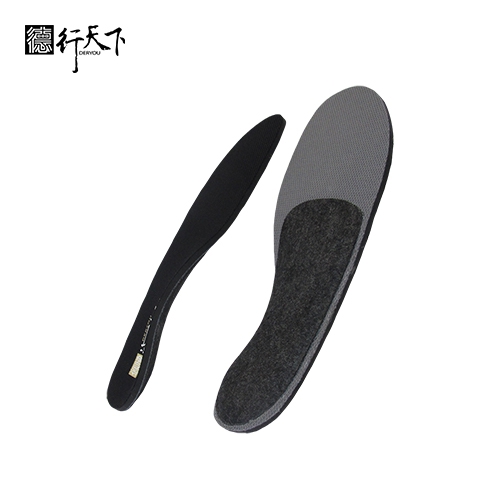
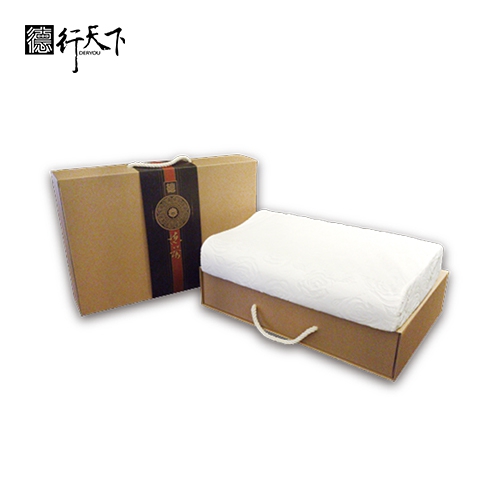
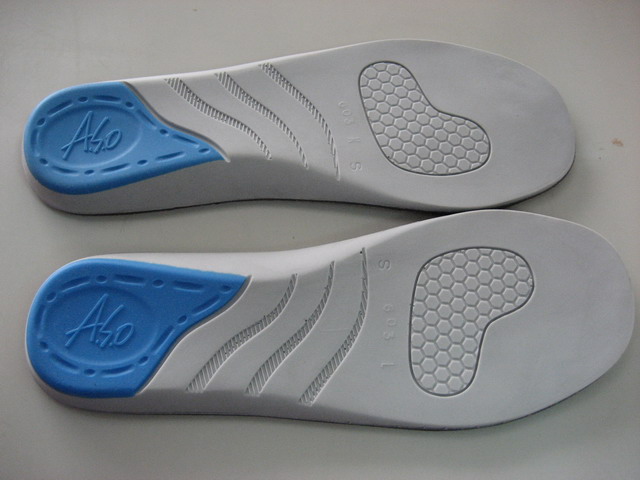
Customization & OEM/ODM Flexibility
GuangXin offers exceptional flexibility in customization and OEM/ODM services, empowering our partners to create insole products that truly align with their brand identity and target market. We develop insoles tailored to specific foot shapes, end-user needs, and regional market preferences, ensuring optimal fit and functionality.
Our team supports comprehensive branding solutions, including logo printing, custom packaging, and product integration support for marketing campaigns. Whether you're launching a new product line or upgrading an existing one, we help your vision come to life with attention to detail and consistent brand presentation.
With fast prototyping services and efficient lead times, GuangXin helps reduce your time-to-market and respond quickly to evolving trends or seasonal demands. From concept to final production, we offer agile support that keeps you ahead of the competition.
Quality Assurance & Certifications
Quality is at the heart of everything we do. GuangXin implements a rigorous quality control system at every stage of production—ensuring that each insole meets the highest standards of consistency, comfort, and durability.
We provide a variety of in-house and third-party testing options, including antibacterial performance, odor control, durability testing, and eco-safety verification, to meet the specific needs of our clients and markets.
Our products are fully compliant with international safety and environmental standards, such as REACH, RoHS, and other applicable export regulations. This ensures seamless entry into global markets while supporting your ESG and product safety commitments.
ESG-Oriented Sustainable Production
At GuangXin Industrial, we are committed to integrating ESG (Environmental, Social, and Governance) values into every step of our manufacturing process. We actively pursue eco-conscious practices by utilizing eco-friendly materials and adopting low-carbon production methods to reduce environmental impact.
To support circular economy goals, we offer recycled and upcycled material options, including innovative applications such as recycled glass and repurposed LCD panel glass. These materials are processed using advanced techniques to retain performance while reducing waste—contributing to a more sustainable supply chain.
We also work closely with our partners to support their ESG compliance and sustainability reporting needs, providing documentation, traceability, and material data upon request. Whether you're aiming to meet corporate sustainability targets or align with global green regulations, GuangXin is your trusted manufacturing ally in building a better, greener future.
Let’s Build Your Next Insole Success Together
Looking for a reliable insole manufacturing partner that understands customization, quality, and flexibility? GuangXin Industrial Co., Ltd. specializes in high-performance insole production, offering tailored solutions for brands across the globe. Whether you're launching a new insole collection or expanding your existing product line, we provide OEM/ODM services built around your unique design and performance goals.
From small-batch custom orders to full-scale mass production, our flexible insole manufacturing capabilities adapt to your business needs. With expertise in PU, latex, and graphene insole materials, we turn ideas into functional, comfortable, and market-ready insoles that deliver value.
Contact us today to discuss your next insole project. Let GuangXin help you create custom insoles that stand out, perform better, and reflect your brand’s commitment to comfort, quality, and sustainability.
🔗 Learn more or get in touch:
🌐 Website: https://www.deryou-tw.com/
📧 Email: shela.a9119@msa.hinet.net
📘 Facebook: facebook.com/deryou.tw
📷 Instagram: instagram.com/deryou.tw
Memory foam pillow OEM factory Taiwan
Are you looking for a trusted and experienced manufacturing partner that can bring your comfort-focused product ideas to life? GuangXin Industrial Co., Ltd. is your ideal OEM/ODM supplier, specializing in insole production, pillow manufacturing, and advanced graphene product design.
With decades of experience in insole OEM/ODM, we provide full-service manufacturing—from PU and latex to cutting-edge graphene-infused insoles—customized to meet your performance, support, and breathability requirements. Our production process is vertically integrated, covering everything from material sourcing and foaming to molding, cutting, and strict quality control.ODM pillow factory in Indonesia
Beyond insoles, GuangXin also offers pillow OEM/ODM services with a focus on ergonomic comfort and functional innovation. Whether you need memory foam, latex, or smart material integration for neck and sleep support, we deliver tailor-made solutions that reflect your brand’s values.
We are especially proud to lead the way in ESG-driven insole development. Through the use of recycled materials—such as repurposed LCD glass—and low-carbon production processes, we help our partners meet sustainability goals without compromising product quality. Our ESG insole solutions are designed not only for comfort but also for compliance with global environmental standards.Taiwan anti-bacterial pillow ODM production factory
At GuangXin, we don’t just manufacture products—we create long-term value for your brand. Whether you're developing your first product line or scaling up globally, our flexible production capabilities and collaborative approach will help you go further, faster.China OEM insole and pillow supplier
📩 Contact us today to learn how our insole OEM, pillow ODM, and graphene product design services can elevate your product offering—while aligning with the sustainability expectations of modern consumers.Custom graphene foam processing Vietnam
This photo shows a leafcutter bee (Megachile sp.), one of thousands of species of wild bees that are fundamental for the reproduction of wild plants and crops. Credit: Eduardo E. Zattara Global bee species observations are dropping despite more records, signaling a serious decline that may affect ecosystems and food security. Researchers at the Consejo Nacional de Investigaciones Científicas y Técnicas (CONICET) in Argentina have found that, since the 1990s, up to 25% of reported bee species are no longer being reported in global records, despite a large increase in the number of records available. While this does not mean that these species are all extinct, it might indicate that these species have become rare enough that no one is observing them in nature. The findings appear today (January 22, 2021) in the journal One Earth. “With citizen science and the ability to share data, records are going up exponentially, but the number of species reported in these records is going down,” says first author Eduardo Zattara (@ezattara), a biologist at the Pollination Ecology Group from the Institute for Research on Biodiversity and the Environment (CONICET-Universidad Nacional del Comahue). “It’s not a bee cataclysm yet, but what we can say is that wild bees are not exactly thriving.” While there are many studies about declining bee populations, these are usually focused on a specific area or a specific type of bee. These researchers were interested in identifying more general, global trends in bee diversity. This photo shows a giant Patagonian bumblebee (Bombus dahlbomii). Four decades ago, these bees were abundant in Chile and Argentina, but now they have become an uncommon sight. Credit: Eduardo E. Zattara “Figuring out which species are living where and how each population is doing using complex aggregated datasets can be very messy,” says Zattara. “We wanted to ask a simpler question: what species have been recorded, anywhere in the world, in a given period?” To find their answer, the researchers dove into the Global Biodiversity Information Facility (GBIF), an international network of databases, which contains over three centuries’ worth of records from museums, universities, and private citizens, accounting for over 20,000 known bee species from around the world. Some Bee Families Disappearing Faster Than Others In addition to finding that a quarter of total bee species are no longer being recorded, the researchers observed that this decline is not evenly distributed among bee families. Records of halictid bees–the second most common family–have declined by 17% since the 1990s. Those for Melittidae- a much rarer family- have decreased by as much as 41%. “It’s important to remember that ‘bee’ doesn’t just mean honeybees, even though honeybees are the most cultivated species,” says Zattara. “Our society’s footprint impacts wild bees as well, which provide ecosystem services we depend on.” This photo shows a plasterer bee (Cadeguala albopilosa), one of thousands of species of wild bees that are fundamental for the reproduction of wild plants and crops. Credit: Eduardo E. Zattara Tracking Trends, Not Just Species While this study provides a close look at the global status of bee diversity, it is too general an analysis to make any certain claims about the current status of individual species. “It’s not really about how certain the numbers are here. It’s more about the trend,” says Zattara. “It’s about confirming what’s been shown to happen locally is going on globally. And also, about the fact that much better certainty will be achieved as more data are shared with public databases.” However, the researchers warn that this type of certainty may not come until it is too late to reverse the decline. Worse still, it may not be possible at all. “Something is happening to the bees, and something needs to be done. We cannot wait until we have absolute certainty because we rarely get there in natural sciences,” says Zattara. “The next step is prodding policymakers into action while we still have time. The bees cannot wait.” Reference: “Worldwide occurrence records suggest a global decline in bee species richness” by Eduardo E. Zattara and Marcelo A. Aizen, 22 January 2021, One Earth. DOI: 10.1016/j.oneear.2020.12.005 This work was funded by CONICET with additional support from Indiana University at Bloomington (USA), the Wissenschaftskolleg zu Berlin (Germany), and the SURPASS2 project, an international collaboration funded by UKRI-NERC (UK), FAPESP (Brazil), ANID (Chile) and CONICET (Argentina).
Ph.D. candidate Vasin Dumrongprechachan captures protein expression in the mouse brain for mass spectrometry analysis, visualized by fluorescence microscopy. Images shows a sagittal cross section of the mouse striatum. Blue is the outline of the brain. Green and magenta show selectively tagged proteins for mass spectrometry analysis. Credit: Northwestern University Tool could help researchers better understand brain diseases and potential treatments. For the first time, researchers have developed a successful approach for identifying proteins inside different types of neurons in the brain of a living animal. Led by Northwestern University and the University of Pittsburgh, the new study offers a giant step toward understanding the brain’s millions of distinct proteins. As the building blocks of all cells including neurons, proteins hold the keys to better understanding complex brain diseases such as Parkinson’s and Alzheimer’s, which can lead to the development of new treatments. The study will be published today (August 11, 2021) in the journal Nature Communications. In the new study, researchers designed a virus to send an enzyme to a precise location in the brain of a living mouse. Derived from soybeans, the enzyme genetically tags its neighboring proteins in a predetermined location. After validating the technique by imaging the brain with fluorescence and electron microscopy, the researchers found their technique took a snapshot of the entire set of proteins (or proteome) inside living neurons, which can then be analyzed postmortem with mass spectroscopy. “Similar work has been done before in cellular cultures. But cells in a dish do not work the same way they do in a brain, and they don’t have the same proteins in the same places doing the same things,” said Northwestern’s Yevgenia Kozorovitskiy, senior author of the study. “It’s a lot more challenging to do this work in the complex tissue of a mouse brain. Now we can take that proteomics prowess and put it into more realistic neural circuits with excellent genetic traction.” By chemically tagging proteins and their neighbors, researchers can now see how proteins work within a specific, controlled area and how they work with one another in a proteome. Along with the virus carrying the soybean enzyme, the researchers also used their virus to carry a separate green fluorescent protein. “The virus essentially acts as a message that we deliver,” Kozorovitskiy said. “In this case, the message carried this special soybean enzyme. Then, in a separate message, we sent the green fluorescent protein to show us which neurons were tagged. If the neurons are green, then we know the soybean enzyme was expressed in those neurons.” Kozorovitskiy is the Soretta and Henry Shapiro Research Professor of Molecular Biology, an associate professor of neurobiology in Northwestern’s Weinberg College of Arts and Sciences and a member of the Chemistry of Life Processes Institute. She co-led the work with Matthew MacDonald, an assistant professor of psychiatry at the University of Pittsburgh Medical Center. Protein targeting plays catch-up While genetic targeting has completely transformed biology and neuroscience, protein targeting has woefully lagged behind. Researchers can amplify and sequence genes and RNA to identify their exact building blocks. Proteins, however, cannot be amplified and sequenced in the same manner. Instead, researchers have to divide proteins into peptides and then put them back together, which is a slow and imperfect process. “We have been able to gain a lot of traction with genetic and RNA sequencing, but proteins have been out of the loop,” Kozorovitskiy said. “Yet everyone recognizes the importance of proteins. Proteins are the ultimate effectors in our cells. Understanding where proteins are, how they work and how they work relative to each other is really important.” “Mass spectroscopy-based proteomics is a powerful technique,” said Vasin Dumrongprechachan, a Ph.D. candidate in Kozorovitskiy’s laboratory and the paper’s first author. “With our approach, we can start mapping the proteome of various brain circuits with high precision and specificity. We can even quantify them to see how many proteins are present in different parts of neurons and the brain.” Next step: Better understanding brain diseases Now that this new system has been validated and is ready to go, the researchers can apply it to mouse models for disease to better understand neurological illnesses. “We are hoping to extend this approach to start identifying the biochemical modifications on neuronal proteins that occur during specific patterns of brain activity or with changes induced by neuroactive drugs to facilitate clinical advances,” Dumrongprechachan said. “We look forward to taking this to models related to brain diseases and connect those studies to postmortem proteomics work in the human brain,” Kozorovitskiy said. “It’s ready to be applied to those models, and we can’t wait to get started.” Reference: “Cell-type and subcellular compartment-specific APEX2 proximity labeling reveals activity-dependent nuclear proteome dynamics in the striatum” by V. Dumrongprechachan, R. B. Salisbury, G. Soto, M. Kumar, M. L. MacDonald and Y. Kozorovitskiy, 11 August 2021, Nature Communications. DOI: 10.1038/s41467-021-25144-y The study was supported by the National Institute of Mental Health (award numbers R56MH113923, R01MH117111 and R01MH118497), National Institute of Neurological Disorders and Stroke (award number R01NS107539), National Science Foundation (CAREER 1846234), the American Heart Association (award number 19PRE34380056), the Beckman Young Investigator Award, Searle Scholar Award, Rita Allen Foundation Scholar Award and Sloan Research Fellowship.
The new “Toxic Male Technique” targets female insects directly by reducing their lifespan through genetically modified males. This innovation could significantly decrease the spread of deadly diseases faster than ever before, offering a sustainable alternative to chemical pesticides. Researchers have developed a groundbreaking biological method to combat insect pests by shortening the lifespan of female insects, crucial for disease transmission. The “Toxic Male Technique” genetically engineers males to transfer venom proteins during mating, drastically reducing females’ lifespan and their ability to spread diseases like malaria and Zika. This method promises quicker and safer disease control compared to traditional pesticides and could herald a new era in pest management. Revolutionary Pest Control Method Scientists have developed a groundbreaking biological pest control method that could dramatically reduce the threat of insect pests, including disease-carrying mosquitoes. This new approach, called the Toxic Male Technique (TMT), offers faster and more effective results compared to existing methods. Published today (January 7) in Nature Communications, the technique was created by researchers from Applied BioSciences and the ARC Centre of Excellence in Synthetic Biology at Macquarie University. TMT involves genetically modifying male insects to produce venom proteins in their semen that specifically target other insects. When these modified males mate with females, the venom proteins are transferred, significantly shortening the females’ lifespan and reducing their ability to spread diseases. How it works infographic. Credit: ARC Centre of Excellence in Synthetic Biology Impact on Global Health and Agriculture Insect pests pose a growing threat to global health and agriculture, causing hundreds of thousands of deaths, millions of infections, and costing billions in healthcare and crop damage annually. In mosquitoes like Aedes aegypti and Anopheles gambiae, only the females bite and transmit diseases such as malaria, dengue, Zika, chikungunya disease, and yellow fever. Pesticides face declining effectiveness due to resistance and have caused harm to non-target species and ecosystems. Genetic biocontrol has emerged as a promising alternative. Advantages of the Toxic Male Technique Current techniques like the Sterile Insect Technique (SIT) or insects carrying lethal genes (RIDL) work by releasing massive numbers of sterilized or genetically modified males to mate with the wild females. While these mated females produce no offspring or only male offspring, they continue to bloodfeed and spread disease until they die naturally — meaning populations of biting females only decrease when the next generation emerges. By immediately reducing the biting female population, TMT offers significant advantages over competing genetic biocontrol methods. Quick Response to Disease Transmission “As we’ve learned from COVID-19, reducing the spread of these diseases as quickly as possible is important to prevent epidemics,” says lead author Sam Beach. “By targeting the female mosquitoes themselves rather than their offspring, TMT is the first biocontrol technology that could work as quickly as pesticides without also harming beneficial species.” Laboratory tests using fruit flies (Drosophila melanogaster) demonstrated that females mated with TMT males had lifespans shortened by 37–64 percent compared to those mated with unmodified males. Computer models predict that applying TMT to Aedes aegypti, a highly aggressive mosquito species primarily responsible for transmitting Dengue and Zika, could reduce blood-feeding rates—a key factor in disease transmission—by 40 to 60 percent compared to established methods. Rigorous Safety Testing Safety and environmental safety are central to the TMT approach. Venoms naturally contain a mixture of many proteins, and those used in TMT are very carefully selected. Their targets are only present within invertebrates, so they aren’t toxic in any way to mammals, and they are not likely to cause harm when consumed by beneficial insects since their oral toxicity is very low. The current study was performed in Associate Professor Maciej Maselko’s lab and provides the proof of concept for this breakthrough approach for suppressing the populations of pest species. ‘We still need to implement it in mosquitoes and conduct rigorous safety testing to ensure there are no risks to humans or other non-target species,” says Associate Professor Maselko. “This innovative solution could transform how we manage pests, offering hope for healthier communities and a more sustainable future,” says Beach. Reference: “Recombinant venom proteins in insect seminal fluid reduce female lifespan” by Samuel J. Beach, and Maciej Maselko, 7 January 2025, Nature Communications. DOI: 10.1038/s41467-024-54863-1 Competing interests: M.M. and S.J.B. have submitted a patent application (AU2023903662A0) to the Australian patent office pertaining to the enablement of the Toxic Male Technique.
DVDV1551RTWW78V
Insole ODM production factory in Taiwan 》a manufacturing partner you can rely on for quality and deliveryIndonesia neck support pillow OEM 》trusted by clients across wellness, footwear, and bedding industriesTaiwan insole ODM full-service provider factory 》reducing complexity, increasing product value
下一則: Memory foam pillow OEM factory Indonesia 》committe
限會員,要發表迴響,請先登入


