Introduction – Company Background
GuangXin Industrial Co., Ltd. is a specialized manufacturer dedicated to the development and production of high-quality insoles.
With a strong foundation in material science and footwear ergonomics, we serve as a trusted partner for global brands seeking reliable insole solutions that combine comfort, functionality, and design.
With years of experience in insole production and OEM/ODM services, GuangXin has successfully supported a wide range of clients across various industries—including sportswear, health & wellness, orthopedic care, and daily footwear.
From initial prototyping to mass production, we provide comprehensive support tailored to each client’s market and application needs.
At GuangXin, we are committed to quality, innovation, and sustainable development. Every insole we produce reflects our dedication to precision craftsmanship, forward-thinking design, and ESG-driven practices.
By integrating eco-friendly materials, clean production processes, and responsible sourcing, we help our partners meet both market demand and environmental goals.
Core Strengths in Insole Manufacturing
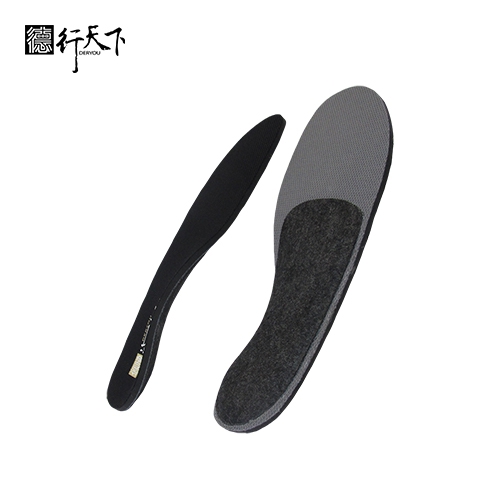
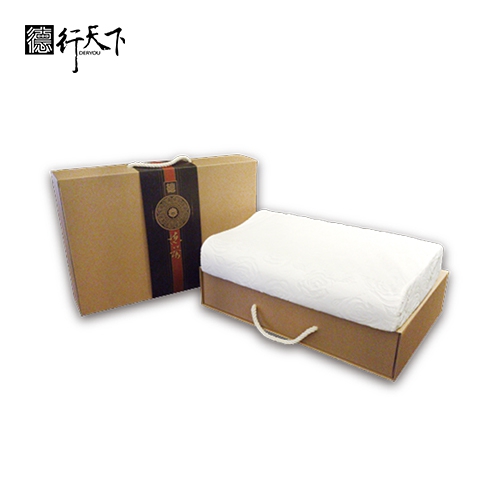
At GuangXin Industrial, our core strength lies in our deep expertise and versatility in insole and pillow manufacturing. We specialize in working with a wide range of materials, including PU (polyurethane), natural latex, and advanced graphene composites, to develop insoles and pillows that meet diverse performance, comfort, and health-support needs.
Whether it's cushioning, support, breathability, or antibacterial function, we tailor material selection to the exact requirements of each project-whether for foot wellness or ergonomic sleep products.
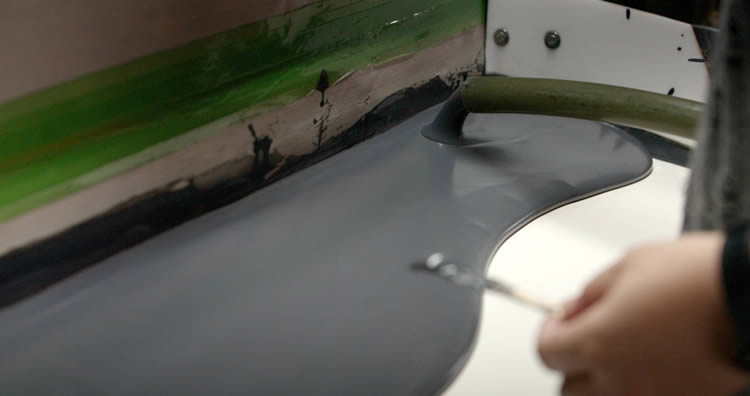
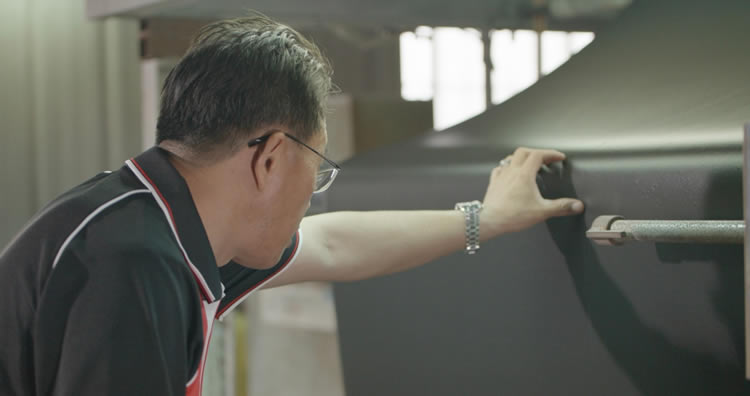
We provide end-to-end manufacturing capabilities under one roof—covering every stage from material sourcing and foaming, to precision molding, lamination, cutting, sewing, and strict quality control. This full-process control not only ensures product consistency and durability, but also allows for faster lead times and better customization flexibility.
With our flexible production capacity, we accommodate both small batch custom orders and high-volume mass production with equal efficiency. Whether you're a startup launching your first insole or pillow line, or a global brand scaling up to meet market demand, GuangXin is equipped to deliver reliable OEM/ODM solutions that grow with your business.
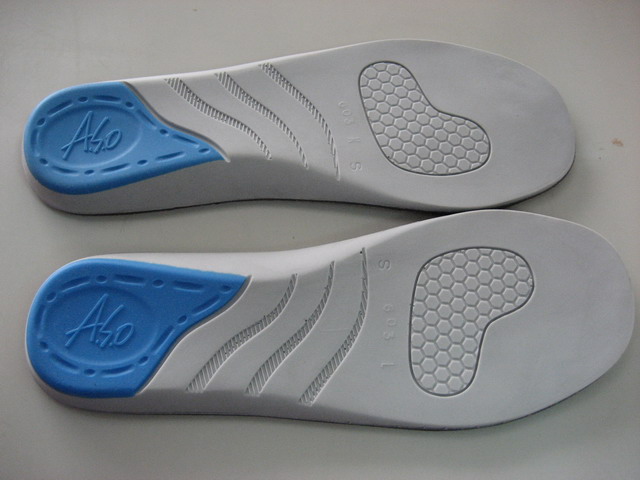
Customization & OEM/ODM Flexibility
GuangXin offers exceptional flexibility in customization and OEM/ODM services, empowering our partners to create insole products that truly align with their brand identity and target market. We develop insoles tailored to specific foot shapes, end-user needs, and regional market preferences, ensuring optimal fit and functionality.
Our team supports comprehensive branding solutions, including logo printing, custom packaging, and product integration support for marketing campaigns. Whether you're launching a new product line or upgrading an existing one, we help your vision come to life with attention to detail and consistent brand presentation.
With fast prototyping services and efficient lead times, GuangXin helps reduce your time-to-market and respond quickly to evolving trends or seasonal demands. From concept to final production, we offer agile support that keeps you ahead of the competition.
Quality Assurance & Certifications
Quality is at the heart of everything we do. GuangXin implements a rigorous quality control system at every stage of production—ensuring that each insole meets the highest standards of consistency, comfort, and durability.
We provide a variety of in-house and third-party testing options, including antibacterial performance, odor control, durability testing, and eco-safety verification, to meet the specific needs of our clients and markets.
Our products are fully compliant with international safety and environmental standards, such as REACH, RoHS, and other applicable export regulations. This ensures seamless entry into global markets while supporting your ESG and product safety commitments.
ESG-Oriented Sustainable Production
At GuangXin Industrial, we are committed to integrating ESG (Environmental, Social, and Governance) values into every step of our manufacturing process. We actively pursue eco-conscious practices by utilizing eco-friendly materials and adopting low-carbon production methods to reduce environmental impact.
To support circular economy goals, we offer recycled and upcycled material options, including innovative applications such as recycled glass and repurposed LCD panel glass. These materials are processed using advanced techniques to retain performance while reducing waste—contributing to a more sustainable supply chain.
We also work closely with our partners to support their ESG compliance and sustainability reporting needs, providing documentation, traceability, and material data upon request. Whether you're aiming to meet corporate sustainability targets or align with global green regulations, GuangXin is your trusted manufacturing ally in building a better, greener future.
Let’s Build Your Next Insole Success Together
Looking for a reliable insole manufacturing partner that understands customization, quality, and flexibility? GuangXin Industrial Co., Ltd. specializes in high-performance insole production, offering tailored solutions for brands across the globe. Whether you're launching a new insole collection or expanding your existing product line, we provide OEM/ODM services built around your unique design and performance goals.
From small-batch custom orders to full-scale mass production, our flexible insole manufacturing capabilities adapt to your business needs. With expertise in PU, latex, and graphene insole materials, we turn ideas into functional, comfortable, and market-ready insoles that deliver value.
Contact us today to discuss your next insole project. Let GuangXin help you create custom insoles that stand out, perform better, and reflect your brand’s commitment to comfort, quality, and sustainability.
🔗 Learn more or get in touch:
🌐 Website: https://www.deryou-tw.com/
📧 Email: shela.a9119@msa.hinet.net
📘 Facebook: facebook.com/deryou.tw
📷 Instagram: instagram.com/deryou.tw
Indonesia graphene material ODM solution
Are you looking for a trusted and experienced manufacturing partner that can bring your comfort-focused product ideas to life? GuangXin Industrial Co., Ltd. is your ideal OEM/ODM supplier, specializing in insole production, pillow manufacturing, and advanced graphene product design.
With decades of experience in insole OEM/ODM, we provide full-service manufacturing—from PU and latex to cutting-edge graphene-infused insoles—customized to meet your performance, support, and breathability requirements. Our production process is vertically integrated, covering everything from material sourcing and foaming to molding, cutting, and strict quality control.Breathable insole ODM development China
Beyond insoles, GuangXin also offers pillow OEM/ODM services with a focus on ergonomic comfort and functional innovation. Whether you need memory foam, latex, or smart material integration for neck and sleep support, we deliver tailor-made solutions that reflect your brand’s values.
We are especially proud to lead the way in ESG-driven insole development. Through the use of recycled materials—such as repurposed LCD glass—and low-carbon production processes, we help our partners meet sustainability goals without compromising product quality. Our ESG insole solutions are designed not only for comfort but also for compliance with global environmental standards.Vietnam custom insole OEM supplier
At GuangXin, we don’t just manufacture products—we create long-term value for your brand. Whether you're developing your first product line or scaling up globally, our flexible production capabilities and collaborative approach will help you go further, faster.Smart pillow ODM manufacturer Vietnam
📩 Contact us today to learn how our insole OEM, pillow ODM, and graphene product design services can elevate your product offering—while aligning with the sustainability expectations of modern consumers.Taiwan orthopedic insole OEM manufacturer
Recent research shows that adolescent growth spurts in body length and weight occur in various primate species, not just humans, and suggests that previous misunderstandings were due to methodological errors. Above is a bonobo mother with an infant. Credit: Verena Behringer Growth Spurts During Puberty Are Not Unique in Evolutionary Terms Up to this point, it has been widely agreed that the growth spurt in body length during human adolescence is a unique evolutionary feature not present in other primates. However, a recent study published in the journal eLife indicates that many primate species, including humans, actually experience a growth spurt in body weight during adolescence. The study suggests that the discrepancy may arise from methodological issues. Mind the Scale… In their scientific work, the researchers used three approaches: They first outlined how scaling problems and incorrect comparisons between growth rates of body length (linear) and weight (volume) can lead to misleading interpretations, effectively comparing apples to oranges. Bonobos’ body growth was determined by measuring forearm lengths in a Plexiglas tube. Credit: Jeroen MG Stevens … Leads to Correct Results Subsequently, the research team applied a scale-corrected approach to an extensive dataset of 258 zoo-living bonobos. These data included weight and length growth, as well as several physiological markers related to growth and puberty. “We found pronounced growth spurts in body weight and body length in both sexes. An adolescent female bonobo. Credit: Verena Behringer Weight and length growth curves corresponded with each other and with patterns of testosterone and IGFBP-3 levels that resemble adolescent hormone surges in humans,” says first author Andreas Berghänel from the Konrad Lorenz Institute of Ethology (KLIVV) at the University of Veterinary Medicine about the results. Re-Interpretation of Studies Provides Different Insights In a third step, data published in other studies on non-human primates were reinterpreted. The results showed that adolescent growth spurt in weight and length occurs not only in bonobos but very likely also in other monkeys. Silhouette of a bonobo. The area marked in red on the forearm was measured. Credit: Verena Behringer “Our results underline the importance of taking scaling laws into account when interpreting growth curves in general,” summarizes Verena Behringer, a scientist in the Endocrinology Laboratory at the German Primate Center and senior author of the publication. “Furthermore, our data show that pronounced, human-like adolescent growth spurts in body weight and body length exist not only in bonobos but probably also in many other non-human primates.” Reference: “Adolescent length growth spurts in bonobos and other primates: Mind the scale” by Andreas Berghänel, Jeroen M.G. Stevens, Gottfried Hohmann, Tobias Deschner and Verena Behringer, 29 June 2023, eLife. DOI: 10.7554/eLife.86635.1 The study was conducted in cooperation with researchers from Odisee University of Applied Sciences, Antwerp Zoo Centre for Research and Conservation, the Antwerp University, the Max Planck Institutes for Evolutionary Anthropology and for Animal Behaviour, and the Institute of Cognitive Science at the University of Osnabrück. In addition, 19 zoos provided their data and contributed significantly to the success of the study.
Contrary to previous beliefs, the Avalon explosion, marking the rise of multicellular organisms, wasn’t triggered by increased oxygen levels, according to new research. This study, analyzing ancient rocks, reveals that oxygen levels were lower than today’s when these life forms emerged. This finding challenges existing theories about the origin of life on Earth, suggesting that low oxygen levels might have actually promoted the development of these organisms. No, oxygen didn’t catalyze the swift blossoming of Earth’s first multicellular organisms. The result defies a 70-year-old assumption about what caused an explosion of oceanic fauna hundreds of millions of years ago. Between 685 and 800 million years ago, the Avalon explosion — a forerunner era of the more famed Cambrian explosion — marked the emergence of multicellular organisms in Earth’s oceans. Prior to this era, the world was dominated by single-celled amoeba, algae, and bacteria for over 2 billion years. The Avalon explosion saw a sudden surge in biodiversity, with sea sponges and other complex multicellular organisms replacing their simpler, single-celled counterparts. Previously, it was postulated that this significant leap in evolutionary complexity was triggered by increased oxygen levels. However, this is being disproved by recent research by the University of Copenhagen, in collaboration with the Woods Hole Oceanographic Institute, the University of Southern Denmark, and Lund University, among others. Challenging Prevailing Views on Oxygen’s Role By analyzing the chemical composition of ancient rock samples from an Omani mountain range, the researchers have been able to “measure” oxygen concentrations in the world’s oceans from when these multicellular organisms appeared. Defying expectations, the result shows that Earth’s oxygen concentrations had not increased. Indeed, levels remained 5-10 times lower than today, which is roughly how much oxygen there is at twice the height of Mount Everest. “Our measurements provide a good picture of what average oxygen concentrations were in the world’s oceans at the time. And it’s apparent to us that there was no major increase in the amount of oxygen when more advanced fauna began to evolve and dominate Earth. In fact, there was somewhat of a slight decrease,” says Associate Professor Christian J. Bjerrum, who has been quantifying the conditions surrounding the origin of life for the past 20 years. Reshaping Our Understanding of Life’s Origins The new result puts to rest a 70-year research story that advances the centrality of higher oxygen concentrations in the development of more advanced life on our planet. “The fact that we now know, with a high degree of certainty, that oxygen didn’t control the development of life on Earth provides us with an entirely new story about how life arose and what factors controlled this success,” says the researcher, adding: “Specifically, it means that we need to rethink a lot of the things that we believed to be true from our childhood learning. And textbooks need to be revised and rewritten.” There remains much that the researchers don’t know, as well as and a plethora of controversy. Therefore, Bjerrum hopes that the new result can spur other researchers around the world to reconsider their previous results and data in a new light. “There are many research sections around the world, including in the United States and China, that have done lots of research on this topic, whose earlier results may shed important new details if interpreted on the basis that oxygen didn’t drive the development of life,” says the researcher. Fossils from Oman In the new study, the researchers analysed rock samples from, among other places, the Oman Mountains in northern Oman. While quite high and very dry today, the mountains were on the seabed during the Avalon explosion’s rapid blossoming of organism diversity. The researchers have had their findings confirmed in fossils from three different mountain ranges around the world: the Oman Mountains (Oman), Mackenzie Mountains (NW Canada) and the Yangtze Gorges area of South China. Over time, clay and sand from land are washed into the sea, where they settle into layers on the seabed. By going down through these layers and examining their chemical composition, researchers can get a picture of ocean chemistry at a particular geologic time. The analyses were performed using Thallium and Uranium isotopes found in the mountains, which the researchers were able to extract data from, and in doing so, calculate oxygen levels from many hundreds of millions of years ago. Oxygen Absence: A Catalyst for Life? So, if not extra oxygen, what triggered the era’s explosion of life? Perhaps the exact opposite, explains the researcher: “It’s interesting that the explosion of multicellular organisms occurs at a time with low concentrations of atmospheric and oceanic oxygen. That indicates that organisms benefited from lower levels of oxygen and were able to develop in peace, as the water chemistry protected their stem cells naturally,” says Christian J. Bjerrum. According to the researcher, the same phenomenon has been studied in cancer research, in the stem cells of humans and other animals. Here, colleagues at Lund University observed that low oxygen levels are crucial for keeping stem cells under control until an organism decides that the cell ought to develop into a specific type of cell, such as a muscle cell. “We know that animals and humans must be able to maintain low concentrations of oxygen in order to control their stem cells, and in so doing, develop slowly and sustainably. With too much oxygen, the cells will develop, and in the worst case, mutate wildly and perish. It is far from inconceivable that this mechanism applied back then,” concludes Christian J. Bjerrum. Reference: “Widespread seafloor anoxia during generation of the Ediacaran Shuram carbon isotope excursion” by Chadlin M. Ostrander, Christian J. Bjerrum, Anne-Sofie C. Ahm, Simon R. Stenger, Kristin D. Bergmann, Mohamed A. K. El-Ghali, Abdul R. Harthi, Zayana Aisri and Sune G. Nielsen, 8 May 2023, Geobiology. DOI: 10.1111/gbi.12557
In a recent study, researchers used a new geochemical technique on fossil teeth to confirm that the extinct Megalodon shark was warm-blooded. This warmth, which facilitated the creature’s gigantism, is thought to have increased the metabolic needs of the Megalodon, potentially contributing to its extinction. The research underlines the vulnerability of large marine apex predators to environmental changes and stresses the importance of conserving modern shark species. A new study shows that the gigantic Megalodon, or megatooth shark, was warm-blooded. This latest research on the Megalodon, which lived in the world’s oceans from 23 million to 3.6 million years ago and measured about 50 feet in length, appears in the peer-reviewed journal Proceedings of the National Academy of Sciences. The study, conceived of and led by Michael Griffiths and Martin Becker, both professors of environmental science at William Paterson University, used fossil teeth to determine that the Megalodon’s body temperature was much higher than previously thought. Also involved in the study were Kenshu Shimada, a paleobiologist at DePaul University in Chicago, Robert Eagle at the University of California at Los Angeles, and Sora Kim at the University of California at Merced. Other coauthors of the paper include researchers from Florida Gulf Coast University in Florida, Princeton University in New Jersey, and Goethe University Frankfurt in Germany. The extinct megatooth shark Otodus megalodon had regional endothermy (partial warm-bloodedness) physiology based on geochemical samples taken from fossilized teeth. Credit: Alex Boersma/PNAS Previous studies have suggested that the Megalodon (formally called Otodus megalodon) was likely warm-blooded, or more precisely regionally endothermic, just like some modern-day sharks. However, those findings were based on pure inference, the researchers say. Their study provides the first empirical evidence of warm-bloodedness in the extinct shark. The research team used a novel geochemical technique, involving clumped isotope thermometry and phosphate oxygen isotope thermometry, to test the “Megalodon Endothermy Hypothesis.” “Studies using these methods have shown them to be particularly useful in inferring the thermo-physiologies of fossil vertebrates of ‘unknown’ metabolic origins by comparing their body temperature with that of co-occurring fossils of ‘known’ metabolisms,” explains Griffiths, of William Paterson University, the lead author of the study. Clumped isotope thermometry is based on the thermodynamic preference for two or more ‘heavier’ isotopes of a particular element (due to extra neutrons in the nucleus), such as carbon-13 and oxygen-18, to form bonds in a mineral lattice based on the mineralization temperatures. The degree to which these isotopes bond or ‘clump’ together can then reveal the temperature at which the mineral formed. Phosphate oxygen isotope thermometry is based on the principle that the ratio of the stable oxygen isotopes, oxygen-18 and oxygen-16, in phosphate minerals depends on the temperature of the body water from which they formed. An upper tooth from a megalodon (right) dwarfs that of a white shark. Credit: Harry Maisch/Florida Gulf Coast University The new study found that Megalodon had body temperatures significantly higher than sharks considered cold-blooded or ectothermic, consistent with the fossil shark having a degree of internal heat production as modern warm-blooded animals do. Among the modern-day sharks with regional endothermy is a group that includes mako and great white sharks with the previously reported average body temperature ranging from 22.0 to 26.6˚C, which may be 10 to 21˚C higher than ambient ocean temperature. The new study suggests Megalodon had an overall average body temperature of about 27˚C. Otodus megalodon has a rich fossil record, but its biology remains poorly understood, like most other extinct sharks, because no complete skeleton of the cartilaginous fish is known in the fossil record. Luckily, its abundant teeth remain and can serve as a door to the past. “Otodus megalodon was one of the largest carnivores that ever existed and deciphering the biology of the prehistoric shark offers crucial clues about the ecological and evolutionary roles large carnivores have played on marine ecosystems through geologic time,” says Shimada. The ability of Otodus megalodon to regulate body temperature is evolutionarily profound because the evolution of warm-bloodedness is thought to have also acted as a key driver for its gigantism. Previous geochemical investigations by Griffiths, Becker, and their colleagues have suggested that Otodus megalodon was a significant apex predator, residing at the very top of the marine food chain. The high metabolic needs associated with maintaining warm-bloodedness may have contributed to the species’ extinction, the researchers say. “Because megalodon went extinct around the time of extreme changes in climate and sea-level, which impacted the distribution of and the type of prey, our new study sheds light on the vulnerability of large marine apex predators, such as the great white shark, to stressors such as climate change,” says Griffiths, highlighting the need for conservation efforts to protect modern shark species. For more on this research, see Megalodon Shark Was No Cold-Blooded Killer – And That Spelled Its Doom. Reference: “Endothermic physiology of extinct megatooth sharks” by Michael L. Griffiths, Robert A. Eagle, Sora L. Kim, Randon J. Flores, Martin A. Becker, Harry M. Maisch IV, Robin B. Trayler, Rachel L. Chan, Jeremy McCormack, Alliya A. Akhtar, Aradhna K. Tripati and Kenshu Shimada, 26 June 2023, Proceedings of the National Academy of Sciences. DOI: 10.1073/pnas.2218153120 This collaborative work was made possible through financial support from the National Science Foundation Sedimentary Geology and Paleobiology Award to Griffiths and Becker (Award #1830581), Eagle (Award #1830638), Kim (Award #1830480), and Shimada (Award #1830858), and an American Chemical Society Award, Petroleum Research Fund Undergraduate New Investigator Grant (PRF #54852-UNI2) to Griffiths.
DVDV1551RTWW78V
Thailand sustainable material ODM solutions 》delivering consistent quality from sample to mass productionChina custom neck pillow ODM 》recommended by industry experts for sustainability and performanceCustom foam pillow OEM in Indonesia 》trusted by clients across wellness, footwear, and bedding industries
下一則: China sustainable material ODM solutions 》helping
限會員,要發表迴響,請先登入


