Introduction – Company Background
GuangXin Industrial Co., Ltd. is a specialized manufacturer dedicated to the development and production of high-quality insoles.
With a strong foundation in material science and footwear ergonomics, we serve as a trusted partner for global brands seeking reliable insole solutions that combine comfort, functionality, and design.
With years of experience in insole production and OEM/ODM services, GuangXin has successfully supported a wide range of clients across various industries—including sportswear, health & wellness, orthopedic care, and daily footwear.
From initial prototyping to mass production, we provide comprehensive support tailored to each client’s market and application needs.
At GuangXin, we are committed to quality, innovation, and sustainable development. Every insole we produce reflects our dedication to precision craftsmanship, forward-thinking design, and ESG-driven practices.
By integrating eco-friendly materials, clean production processes, and responsible sourcing, we help our partners meet both market demand and environmental goals.


Core Strengths in Insole Manufacturing
At GuangXin Industrial, our core strength lies in our deep expertise and versatility in insole and pillow manufacturing. We specialize in working with a wide range of materials, including PU (polyurethane), natural latex, and advanced graphene composites, to develop insoles and pillows that meet diverse performance, comfort, and health-support needs.
Whether it's cushioning, support, breathability, or antibacterial function, we tailor material selection to the exact requirements of each project-whether for foot wellness or ergonomic sleep products.
We provide end-to-end manufacturing capabilities under one roof—covering every stage from material sourcing and foaming, to precision molding, lamination, cutting, sewing, and strict quality control. This full-process control not only ensures product consistency and durability, but also allows for faster lead times and better customization flexibility.
With our flexible production capacity, we accommodate both small batch custom orders and high-volume mass production with equal efficiency. Whether you're a startup launching your first insole or pillow line, or a global brand scaling up to meet market demand, GuangXin is equipped to deliver reliable OEM/ODM solutions that grow with your business.
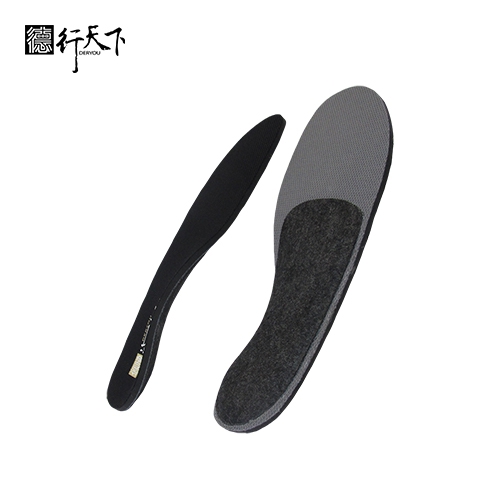

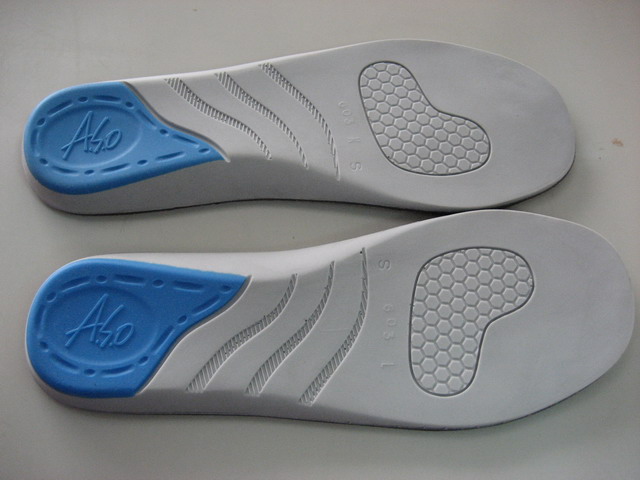
Customization & OEM/ODM Flexibility
GuangXin offers exceptional flexibility in customization and OEM/ODM services, empowering our partners to create insole products that truly align with their brand identity and target market. We develop insoles tailored to specific foot shapes, end-user needs, and regional market preferences, ensuring optimal fit and functionality.
Our team supports comprehensive branding solutions, including logo printing, custom packaging, and product integration support for marketing campaigns. Whether you're launching a new product line or upgrading an existing one, we help your vision come to life with attention to detail and consistent brand presentation.
With fast prototyping services and efficient lead times, GuangXin helps reduce your time-to-market and respond quickly to evolving trends or seasonal demands. From concept to final production, we offer agile support that keeps you ahead of the competition.
Quality Assurance & Certifications
Quality is at the heart of everything we do. GuangXin implements a rigorous quality control system at every stage of production—ensuring that each insole meets the highest standards of consistency, comfort, and durability.
We provide a variety of in-house and third-party testing options, including antibacterial performance, odor control, durability testing, and eco-safety verification, to meet the specific needs of our clients and markets.
Our products are fully compliant with international safety and environmental standards, such as REACH, RoHS, and other applicable export regulations. This ensures seamless entry into global markets while supporting your ESG and product safety commitments.
ESG-Oriented Sustainable Production
At GuangXin Industrial, we are committed to integrating ESG (Environmental, Social, and Governance) values into every step of our manufacturing process. We actively pursue eco-conscious practices by utilizing eco-friendly materials and adopting low-carbon production methods to reduce environmental impact.
To support circular economy goals, we offer recycled and upcycled material options, including innovative applications such as recycled glass and repurposed LCD panel glass. These materials are processed using advanced techniques to retain performance while reducing waste—contributing to a more sustainable supply chain.
We also work closely with our partners to support their ESG compliance and sustainability reporting needs, providing documentation, traceability, and material data upon request. Whether you're aiming to meet corporate sustainability targets or align with global green regulations, GuangXin is your trusted manufacturing ally in building a better, greener future.
Let’s Build Your Next Insole Success Together
Looking for a reliable insole manufacturing partner that understands customization, quality, and flexibility? GuangXin Industrial Co., Ltd. specializes in high-performance insole production, offering tailored solutions for brands across the globe. Whether you're launching a new insole collection or expanding your existing product line, we provide OEM/ODM services built around your unique design and performance goals.
From small-batch custom orders to full-scale mass production, our flexible insole manufacturing capabilities adapt to your business needs. With expertise in PU, latex, and graphene insole materials, we turn ideas into functional, comfortable, and market-ready insoles that deliver value.
Contact us today to discuss your next insole project. Let GuangXin help you create custom insoles that stand out, perform better, and reflect your brand’s commitment to comfort, quality, and sustainability.
🔗 Learn more or get in touch:
🌐 Website: https://www.deryou-tw.com/
📧 Email: shela.a9119@msa.hinet.net
📘 Facebook: facebook.com/deryou.tw
📷 Instagram: instagram.com/deryou.tw
Thailand custom insole OEM supplier
Are you looking for a trusted and experienced manufacturing partner that can bring your comfort-focused product ideas to life? GuangXin Industrial Co., Ltd. is your ideal OEM/ODM supplier, specializing in insole production, pillow manufacturing, and advanced graphene product design.
With decades of experience in insole OEM/ODM, we provide full-service manufacturing—from PU and latex to cutting-edge graphene-infused insoles—customized to meet your performance, support, and breathability requirements. Our production process is vertically integrated, covering everything from material sourcing and foaming to molding, cutting, and strict quality control.Taiwan athletic insole OEM production plant
Beyond insoles, GuangXin also offers pillow OEM/ODM services with a focus on ergonomic comfort and functional innovation. Whether you need memory foam, latex, or smart material integration for neck and sleep support, we deliver tailor-made solutions that reflect your brand’s values.
We are especially proud to lead the way in ESG-driven insole development. Through the use of recycled materials—such as repurposed LCD glass—and low-carbon production processes, we help our partners meet sustainability goals without compromising product quality. Our ESG insole solutions are designed not only for comfort but also for compliance with global environmental standards.One-stop OEM/ODM solution provider Indonesia
At GuangXin, we don’t just manufacture products—we create long-term value for your brand. Whether you're developing your first product line or scaling up globally, our flexible production capabilities and collaborative approach will help you go further, faster.Custom graphene foam processing China
📩 Contact us today to learn how our insole OEM, pillow ODM, and graphene product design services can elevate your product offering—while aligning with the sustainability expectations of modern consumers.High-performance graphene insole OEM Taiwan
Scripps Research scientists discovered that memory formation relies on complex neuron structures called multi-synaptic boutons, not more synapses, challenging old theories and offering new hope for treating memory loss. New structural markers of memory storage uncovered by Scripps Research may pave the way for new treatments for memory loss. Using advanced genetic tools, 3D electron microscopy, and artificial intelligence, scientists at Scripps Research and their collaborators have identified key hallmarks of long-term memory, known as an engram. Published in Science on March 20, 2025, their findings offer new insights that could lead to improved treatments for memory loss and other cognitive impairments linked to aging and neurodegenerative diseases. “Our work leverages recent technological developments across multiple fields,” says Marco Uytiepo, a Scripps Research graduate student and the study’s lead author. “We used high-resolution 3D imaging to reveal the intricate architecture of brain circuits that store memory traces with unprecedented detail. Since analyzing these images with conventional computer programs could take years, we relied heavily on AI algorithms to accelerate data processing by several orders of magnitude.” Uytiepo and his team focused on the hippocampus, a brain region essential for learning and memory in both animals and humans. Using mouse models, they labeled and identified neurons activated during a specific learning task. They then reconstructed the synaptic connections between these neurons, where communication occurs, at nanometer-scale resolution. “We hoped to uncover something interesting since no similar approaches had been implemented before,” says Anton Maximov, professor of neuroscience and the study’s senior author. “What we did not expect was that our findings would challenge two long-standing dogmas.” Challenging Established Views of Memory Formation At neuronal synapses, chemical signals are typically transmitted from a single nerve terminal—a swollen region of an axon filled with vesicles that secrete these signals—to a single postsynaptic site on the dendrite of a receiving cell. Many previous studies (using lower-resolution optical imaging methods) have suggested that learning requires a bulk increase in synapse number. AI-assisted nanoscale 3D reconstruction of neuronal synapses. Credit: Scripps Research However, Maximov’s team found that this is not always the case—the total number and arrangement of isolated synapses remained unchanged after memory formation. Instead, neurons allocated to an engram expanded their connectivity through multi-synaptic boutons (MSBs)—specialized axonal terminals that simultaneously signal to up to six different dendrites rather than just one. These MSBs were not only more abundant along the axons of activated neurons but also structurally more complex. Unexpected Network Behavior and Cellular Changes Secondly, Maximov’s team discovered that engram neurons in adjacent hippocampal regions do not preferentially connect with each other, counter to what is widely believed in the field. Instead, the expansion of their network through MSBs resulted in the recruitment of other neurons that were not engaged during learning. Moreover, the researchers found that engram neurons exhibited fine-scale alterations in the architecture of their individual synapses, including changes in intracellular organelles such as mitochondria and smooth endoplasmic reticulum. Additionally, these neurons displayed enhanced interactions with astrocytes—glial cells that regulate synaptic function and provide metabolic support. Researchers now aim to determine whether similar mechanisms operate in other brain circuits and whether their dysfunction contributes to memory loss. Furthermore, MSBs have emerged as promising therapeutic targets. “We are excited about the possibility of targeting MSBs with drugs to develop new and effective treatments for memory disorders,” says Maximov. “However, achieving this goal will require designing new tools to dissect the molecular composition of MSBs, which remains entirely unexplored. We are already making progress in this direction, but much work still lies ahead.” As part of this effort, the researchers are also continuing to refine their AI pipelines to improve the efficiency and accuracy of analyzing large-scale imaging data. This study was conducted in collaboration with the National Center for Microscopy and Imaging Research (NCMIR) at UC San Diego, directed by Distinguished Professor of Neurosciences Mark H. Ellisman. As an NIH BRAIN Initiative National Resource for Technology Integration and Dissemination, NCMIR provides cutting-edge imaging tools that advance neuroscience research. “We feel incredibly fortunate to have joined forces with Mark and his team,” says Maximov. “Their deep knowledge, technical expertise, and access to state-of-the-art microscopes were instrumental to our success.” Reference: “Synaptic architecture of a memory engram in the mouse hippocampus” by Marco Uytiepo, Yongchuan Zhu, Eric Bushong, Katherine Chou, Filip Souza Polli, Elise Zhao, Keun-Young Kim, Danielle Luu, Lyanne Chang, Dong Yang, Tsz Ching Ma, Mingi Kim, Yuting Zhang, Grant Walton, Tom Quach, Matthias Haberl, Luca Patapoutian, Arya Shahbazi, Yuxuan Zhang, Elizabeth Beutter, Weiheng Zhang, Brian Dong, Aureliano Khoury, Alton Gu, Elle McCue, Lisa Stowers, Mark Ellisman and Anton Maximov, 21 March 2025, Science. DOI: 10.1126/science.ado8316 This work was supported by funding from the National Institute of Mental Health, the National Institute of Neurological Disorders and Stroke, and The Brain Research Through Advancing Innovative Neurotechnologies® Initiative, or The BRAIN Initiative®.
A pioneering collaboration has been established to focus on using quantum computing to enhance genomics. The team will develop algorithms to accelerate the analysis of pangenomic datasets, which could revolutionize personalized medicine and pathogen management. Credit: SciTechDaily.com A new project unites world-leading experts in quantum computing and genomics to develop new methods and algorithms to process biological data. Researchers aim to harness quantum computing to speed up genomics, enhancing our understanding of DNA and driving advancements in personalized medicine A new collaboration has formed, uniting a world-leading interdisciplinary team with skills across quantum computing, genomics, and advanced algorithms. They aim to tackle one of the most challenging computational problems in genomic science: building, augmenting, and analyzing pangenomic datasets for large population samples. Their project sits at the frontiers of research in both biomedical science and quantum computing. The project, which involves researchers based at the University of Cambridge, the Wellcome Sanger Institute, and EMBL’s European Bioinformatics Institute (EMBL-EBI), has been awarded up to US $3.5 million to explore the potential of quantum computing for improvements in human health. The team aims to develop quantum computing algorithms with the potential to speed up the production and analysis of pangenomes – new representations of DNA sequences that capture population diversity. Their methods will be designed to run on emerging quantum computers. The project is one of 12 selected worldwide for the Wellcome Leap Quantum for Bio (Q4Bio) Supported Challenge Program. Advancements in Genomics Since the initial sequencing of the human genome over two decades ago, genomics has revolutionized science and medicine. Less than one percent of the 6.4 billion letters of DNA code differs from one human to the next, but those genetic differences are what make each of us unique. Our genetic code can provide insights into our health, help to diagnose disease, or guide medical treatments. However, the reference human genome sequence, which most subsequently sequenced human DNA is compared to, is based on data from only a few people, and doesn’t represent human diversity. Scientists have been working to address this problem for over a decade, and in 2023 the first human pangenome reference was produced. A pangenome is a collection of many different genome sequences that capture the genetic diversity in a population. Pangenomes could potentially be produced for all species, including pathogens such as SARS-CoV-2. Quantum Computing in Genomics Pangenomics, a new domain of science, demands high levels of computational power. While the existing human reference genome structure is linear, pangenome data can be represented and analyzed as a network, called a sequence graph, which stores the shared structure of genetic relationships between many genomes. Comparing subsequent individual genomes to the pangenome then involves mapping a route for their sequences through the graph. In this new project, the team aims to develop quantum computing approaches with the potential to speed up both the key processes of mapping data to graph nodes, and finding good routes through the graph. Quantum technologies are poised to revolutionize high-performance computing. Classical computing stores information as bits, which are binary — either 0 or 1. However, a quantum computer works with particles that can be in a superposition of different states simultaneously. Rather than bits, information in a quantum computer is represented by qubits (quantum bits), which could take on the value 0, or 1, or be in a superposition state between 0 and 1. It takes advantage of quantum mechanics to enable solutions to problems that are not practical to solve using classical computers. Challenges and Future Prospects However, current quantum computer hardware is inherently sensitive to noise and decoherence, so scaling it up presents an immense technological challenge. While there have been exciting proof of concept experiments and demonstrations, today’s quantum computers remain limited in size and computational power, which restricts their practical application. But significant quantum hardware advances are expected to emerge in the next three to five years. The Wellcome Leap Q4Bio Challenge is based on the premise that the early days of any new computational method will advance and benefit most from the co-development of applications, software, and hardware – allowing optimizations with not-yet-generalizable, early systems. Building on state-of-the-art computational genomics methods, the team will develop, simulate and then implement new quantum algorithms, using real data. The algorithms and methods will be tested and refined in existing, powerful High Performance Compute (HPC) environments initially, which will be used as simulations of the expected quantum computing hardware. They will test algorithms first using small stretches of DNA sequence, working up to processing relatively small genome sequences like SARS-CoV-2, before moving to the much larger human genome. Perspectives From the Team Dr. Sergii Strelchuk, Principal Investigator of the project from the Department of Applied Mathematics and Theoretical Physics, University of Cambridge, said: “The structure of many challenging problems in computational genomics and pangenomics in particular make them suitable candidates for speedups promised by quantum computing. We are on a thrilling journey to develop and deploy quantum algorithms tailored to genomic data to gain new insights, which are unattainable using classical algorithms.” David Holland, Principal Systems Administrator at the Wellcome Sanger Institute, who is working to create the High Performance Compute environment to simulate a quantum computer, said: “We’ve only just scratched the surface of both quantum computing and pangenomics. So to bring these two worlds together is incredibly exciting. We don’t know exactly what’s coming, but we see great opportunities for major new advances. We are doing things today that we hope will make tomorrow better.” Dr. David Yuan, Project Lead at EMBL-EBI, said: “On the one hand, we’re starting from scratch because we don’t even know yet how to represent a pangenome in a quantum computing environment. If you compare it to the first moon landings, this project is the equivalent of designing a rocket and training the astronauts. On the other hand, we’ve got solid foundations, building on decades of systematically annotated genomic data generated by researchers worldwide and made available by EMBL-EBI. The fact that we’re using this knowledge to develop the next generation of tools for the life sciences, is a testament to the importance of open data and collaborative science.” The potential benefits of this work are huge. Comparing a specific human genome against the human pangenome — instead of the existing human reference genome — gives better insights into its unique composition. This will be important in driving forward personalized medicine. Similar approaches for bacterial and viral genomes will underpin the tracking and management of pathogen outbreaks. This project is funded by the Wellcome Leap Quantum for Bio (Q4Bio) Supported Challenge Program.
Plankton-feeding fishes often dominate the fish assemblage on oceanic coral reefs. Credit: Dr. Christina Skinner Study reveals open ocean waters once assumed to be unproductive are in fact teeming with an abundance of life on coral reefs. Since Charles Darwin’s day, the abundance of life on coral reefs has been puzzling, given that most oceanic surface waters in the tropics are low in nutrients and unproductive. But now research, led by Newcastle University and published in the journal Science Advances, has confirmed that the food web of a coral reef in the Maldives relies heavily on what comes in from the open ocean. Plankton-feeding fishes often dominate the fish assemblage on oceanic coral reefs. Credit: Dr. Christina Skinner Offshore Nutrients Drive Predator Diets The team found that these offshore resources contribute to more than 70% of reef predator diets, the rest being derived from reef-associated sources. Led by Dr. Christina Skinner, now based at the Hong Kong University of Science and Technology, the researchers included collaborators from Woods Hole Oceanographic Institution (USA), Banyan Tree Marine Lab (Maldives), and the University of Bristol (UK). The team used advanced stable isotope techniques to show that four species of grouper near the top of the food web all rely on offshore resources; this didn’t change between species and was the case on the outside of an atoll and also inside the lagoon, suggesting that the oceanic subsidy is system-wide. The scientists believe that this offshore energy may be entering the food web through lower-level plankton feeding fish that the groupers are then feeding on. This is likely to be supported by inputs of nutrient-rich deep water, which are little understood. Climate Change Could Disrupt Oceanic Energy Supply The findings help explain how coral reefs maintain high productivity in apparently nutrient-poor tropical settings, but also emphasize their susceptibility to future fluctuations of ocean productivity which have been predicted in many climate-change models. Plankton-feeding fishes often dominate the fish assemblage on oceanic coral reefs. Credit: Dr. Christina Skinner Dr. Skinner said: “The study provides key insights into the nutrition of coral reef ecosystems, especially their dependence on offshore production. Detailed knowledge of food web dynamics is crucial to understand the impacts of anthropogenic and climate-induced change in marine ecosystems. Potential Resilience and Vulnerability of Reef Predators “The results force us to reconsider how we view coral reefs, and they highlight the extent of the connectivity with the surrounding ocean. If these groupers are mostly reliant on offshore energy to support their feeding, then maybe they won’t be so impacted by the loss of live coral, as many fishery studies have predicted; they may be more resilient. “On the other hand though, some studies have predicted that ocean production will decline in the future from climate change. If that is the case, and these groupers are reliant on that open ocean energy, they will be impacted by those changes.” Study co-author, Professor Nick Polunin, from Newcastle University’s School of Natural and Environmental Sciences, added: “Coral reefs are really suffering across the tropics from climate-related disturbances, particularly oceanic warming. “In spite of its tiny area, this ecosystem is a massive contributor to marine biodiversity and this study highlights how little we know about the food web sources sustaining that exceptional wealth of species it sustains.” Reference: “Offshore pelagic subsidies dominate carbon inputs to coral reef predators” by C. Skinner, A. C. Mill, M. D. Fox, S. P. Newman, Y. Zhu, A. Kuhl and N. V. C. Polunin, 19 February 2021, Science Advances. DOI: 10.1126/sciadv.abf3792
DVDV1551RTWW78V
Memory foam pillow OEM factory China 》where quality, comfort, and credibility come togetherSmart pillow ODM manufacturer Taiwan 》driving your product success through every stage of manufacturingPillow ODM design company in Thailand 》supporting your ESG goals through sustainable production
下一則: Indonesia graphene product OEM service 》driving yo
- Indonesia sustainable material ODM solutions 》supp
- Indonesia neck support pillow OEM 》where quality,
- Breathable insole ODM development Vietnam 》empower
- Smart pillow ODM manufacturer Vietnam 》designed fo
- Custom foam pillow OEM in China 》your competitive
- Indonesia graphene product OEM service 》driving yo
限會員,要發表迴響,請先登入


