La Belle Dame sans Merci (←click)
✔ The title is in French, and it means "The beautiful lady without mercy."
✔ a ballad written by the English poet John Keats
ballad
▶ a type of poetry or verse which was basically used in dance songs in the ancient France
▶Owing to its popularity and emotional appeal, it remained a powerful tool for poets and lyricists to prepare music in the form of lyrical ballads and earn a handsome income from it.
✔ The original was written by Keats in 1819. He used the title of the 15th-century La Belle Dame sans Mercy by Alain Chartier(a French poem on courtly love), though the plots of the two poems are different.
La Belle Dame sans Mercy
I rode past, thinking, recently,
Like one who's sad and sorrowful,
Of that lament that renders me
Of all lovers the most mournful,
Since, with his dart so dreadful,
Death has stolen my mistress,
And left me lonely: left me dull,
In the sole charge of Sadness.
I said to myself: ‘I should cease
Writing and rhyming, it appears,
Abandon laughter, and be pleased
To replace all this with tears.
And so I must employ my years,
Without heart or inclination
To pen a single thing, I fear,
That pleases me, or anyone.
If any would constrain my will
To write of happy things,
My pen would not possess the skill,
Nor my tongue the power to sing.
My lips could never part, in smiling,
Without a gaze that lips betrayed,
Since my heart would claim denial
Through the tears my cheeks displayed.
I leave it to the lover, who nurses
Hopes that his wound might heal,
To make ballads, songs and verses,
That each might his own skill reveal.
My lady, by her will, did steal
At her Death, God save her soul,
And carry away, my power to feel,
That lies with her beneath the stone.
✦ Poetry was divided into three main types of poetry by the great philosopher Aristotle; they were comedy, tragedy, and epic. He claimed comedy was simply an imitation of what is inferior and possibly laughable. He claimed the other two, tragedy and epic, were similar in that they both portray suffering and produce effects and emotions in their readers. The only difference between the two was epic was said to be a one verse poem while tragedy was in narrative form.
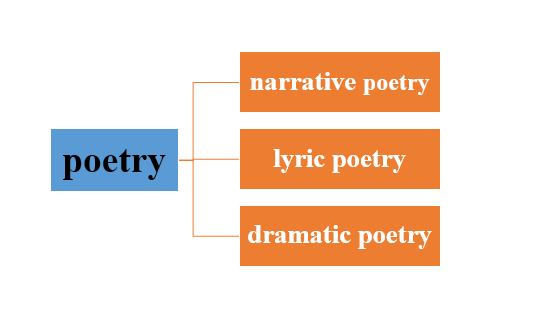
Today, poetry and literature scholars believe that poetry does indeed contain three main genres. However, the three are known as lyric, narrative, and dramatic, not comedy, tragedy, and epic. Each of these genres can then be saturated with sub-genres and then sub-sub-genres depending on the rhyme scheme, rhythm, meters, style, and even emotion.
|
narrative poetry
|
● a poem which tells a story
● Most commonly, the stories involve heroic events or are of cultural or national (or some degrees even local) importance
● e.g. "Odyssey" by Homer
|
|
lyric poetry
|
● poems focused on thought and emotion
● not tell a story
● The main sub-divisions include elegy, ode, and sonnet.
|
|
dramatic poetry
|
● written in verse that is meant to be spoken
● It generally tells a story, but can also simply portray a situation.
|
End Rhyme
End rhyme occurs when last syllables or words in two or more lines rhyme with each other. It is also known as tail rhyme that occurs at the end of the lines. The lines ending in similar sounds are pleasant to hear and give musical effect to the poem or song. This is called the end rhyme.
“A Word is Dead” by Emily Dickinson
A word is dead
When it is said,
Some say.
I say it just
Begins to live
That day.
⇒ As can be seen, the first and the second lines use end rhyme with words “dead” and “said.” The other example of this rhyming pattern is in the third line with the sixth line on the words “say” and “day.” Thus, it is the choice of poet whether to use end rhyme throughout the entire poem for creating strong rhythm, or use some other rhyming pattern.
Figure of Speech
▲ Figurative language is often associated with literature--and with poetry in particular.
A figure of speech is a word or phrase that has a meaning something different than its literal meaning. It can be a metaphor or simile that is designed to further explain a concept. Or, it can be a different way of pronouncing a word or phrase such as with alliteration to give further meaning or a different sound.
Examples of Figures of Speech:
→ Metaphor compares two unlike things or ideas.
→ Simile is a comparison between two unlike things using the words "like" or "as."
→ Hyperbole uses exaggeration for emphasis or effect.
e.g. I’ve told you a hundred times.
e.g. Parting is such sweet sorrow - Shakespeare Quotes
Juliet:
'Tis almost morning, I would have thee gone—
And yet no farther than a wan-ton's bird,
That lets it hop a little from his hand,
Like a poor prisoner in his twisted gyves,
And with a silken thread plucks it back again,
So loving-jealous of his liberty.
Romeo:
I would I were thy bird.
Juliet:
Sweet, so would I,
Yet I should kill thee with much cherishing.
Good night, good night! Parting is such sweet sorrow,
That I shall say good night till it be morrow.
c.f. Paradox
The term is from the Greek word “paradoxon” that means contrary to expectations, existing belief or perceived opinion.
It is a statement that appears to be self-contradictory or silly but may include a latent truth. It is also used to illustrate an opinion or statement contrary to accepted traditional ideas. A paradox is often used to make a reader think over an idea in innovative way.
e.g. Your enemy’s friend is your enemy.
|
Oxymoron
|
● a combination of two contradictory or opposite words
● An oxymoron may produce a dramatic effect but does not make sense.
|
|
paradox |
● a sentence or even a group of sentences
● A paradox seems contradictory to the general truth but it does contain an implied truth.
|
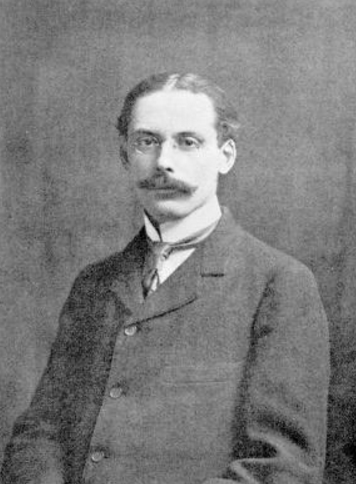
Richard Cory - by Edwin Arlington Robinson
Whenever Richard Cory went down town,
We people on the pavement looked at him:
He was a gentleman from sole to crown,
Clean favored, and imperially slim.
And he was always quietly arrayed,
And he was always human when he talked;
But still he fluttered pulses when he said,
"Good-morning," and he glittered when he walked.
And he was rich—yes, richer than a king—
And admirably schooled in every grace:
In fine, we thought that he was everything
To make us wish that we were in his place.
So on we worked, and waited for the light,
And went without the meat, and cursed the bread;
And Richard Cory, one calm summer night,
Went home and put a bullet through his head.
✔ a narrative poem
✔ The poem describes a person who is wealthy, well educated, mannerly, and admired by the people in his town. Despite all this, he fatally shoots himself in the head.
✔ The speaker in this poem is most likely a person from the town that represents the town as a whole, a synecdoche.
✔ The song "Richard Cory", written by Paul Simon and recorded by Simon & Garfunkel for their second studio album, Sounds of Silence, was based on this poem.
Henrik Ibsen
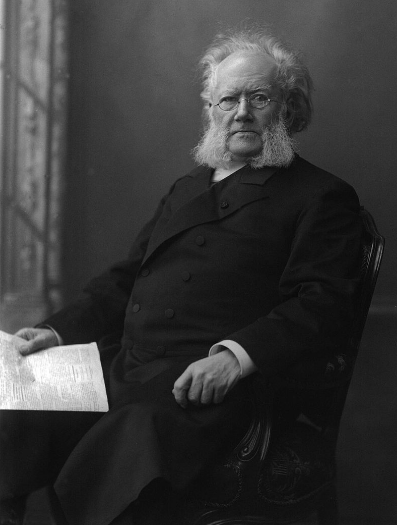
✔ a major 19th-century Norwegian playwright, theatre director, and poet
✔ He is often referred to as "the father of realism" and is one of the founders of Modernism in theatre.
✔ He is the most frequently performed dramatist in the world after Shakespeare, and A Doll's House(←click) became the world's most performed play by the early 20th century.
Edward Estlin Cummings (E. E. Cummings)
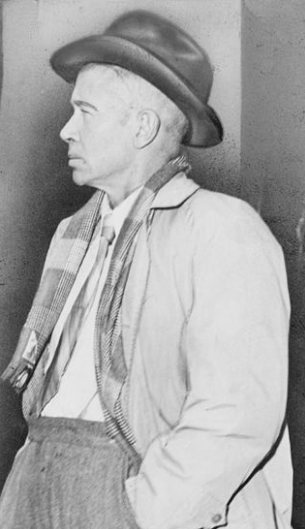
✔ an American poet, painter, essayist, author, and playwright
✔ He is remembered as an eminent voice of 20th century English literature.
"in Just-spring" -by E. E. Cummings

Lines 19-23: Offsetting the word "goat-footed" by giving it its own line, Cummings makes sure that we catch the allusion to Pan.
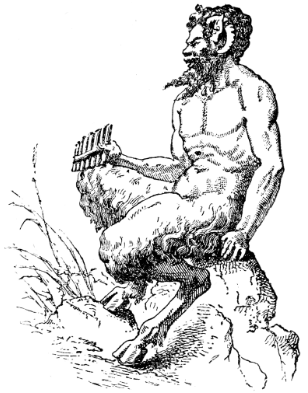
● He has the hindquarters, legs, and horns of a goat.
● With his homeland in rustic Arcadia(←click) , he is also recognized as the god of fields, groves, and wooded glens; because of this, Pan is connected to fertility and the season of spring. The ancient Greeks also considered Pan to be the god of theatrical criticism.
限會員,要發表迴響,請先登入


