Somewhere I Have Never Travelled, Gladly Beyond
- by E. E. Cummings
somewhere i have never travelled, gladly beyond
any experience,your eyes have their silence:
in your most frail gesture are things which enclose me,
or which i cannot touch because they are too near
your slightest look will easily unclose me
though i have closed myself as fingers,
you open always petal by petal myself as Spring opens
(touching skilfully,mysteriously)her first rose
or if your wish be to close me, i and
my life will shut very beautifully ,suddenly,
as when the heart of this flower imagines
the snow carefully everywhere descending;
nothing which we are to perceive in this world equals
the power of your intense fragility:whose texture
compels me with the color of its countries,
rendering death and forever with each breathing
(i do not know what it is about you that closes
and opens;only something in me understands
the voice of your eyes is deeper than all roses)
nobody,not even the rain,has such small hands
fra- : broken
frail: weak or unhealthy, or easily damaged, broken, or harmed
fraction: a number that results from dividing one whole number by another(分數)
fractal: a complicated pattern in mathematics built from simple repeated shapes that are reduced in size every time they are repeated

⇒ 《文選‧劉琨〈重贈盧諶〉詩》: “何意百煉剛,化為繞指柔”
唐·呂延濟注:「百鍊之鐵堅剛,而今可繞指,自喻經破敗而至柔弱也。」
“anyone lived in a pretty how town” -by E. E. Cummings
anyone lived in a pretty how town
(with up so floating many bells down)
spring summer autumn winter
he sang his didn’t he danced his did.
Women and men(both little and small)
cared for anyone not at all
they sowed their isn’t they reaped their same
sun moon stars rain
children guessed(but only a few
and down they forgot as up they grew
autumn winter spring summer)
that noone loved him more by more
when by now and tree by leaf
she laughed his joy she cried his grief
bird by snow and stir by still
anyone’s any was all to her
someones married their everyones
laughed their cryings and did their dance
(sleep wake hope and then)they
said their nevers they slept their dream
stars rain sun moon
(and only the snow can begin to explain
how children are apt to forget to remember
with up so floating many bells down)
one day anyone died i guess
(and noone stooped to kiss his face)
busy folk buried them side by side
little by little and was by was
all by all and deep by deep
and more by more they dream their sleep
noone and anyone earth by april
wish by spirit and if by yes.
Women and men(both dong and ding)
summer autumn winter spring
reaped their sowing and went their came
sun moon stars rain
⇒ "Earth by april" juxtaposes no longer two identical elements but associates two opposites, death ("earth") and spring ("april")
Frame story
Frame story is a story set within a story, narrative or movie told by the main or the supporting character.
General Prologue - the first part of Chaucer's The Canterbury Tales
In “Canterbury Tales”, Geoffrey Chaucer has used frame narrative, brings different characters, where each one tells a story. This pilgrimage frame story brings together a number of storytellers, who appear with vivid personality traits and build up dramatic relationships with one another and with the tales, they tell. General Prologue is the section of this poem, which deals with frame narrative.
Walt Whitman
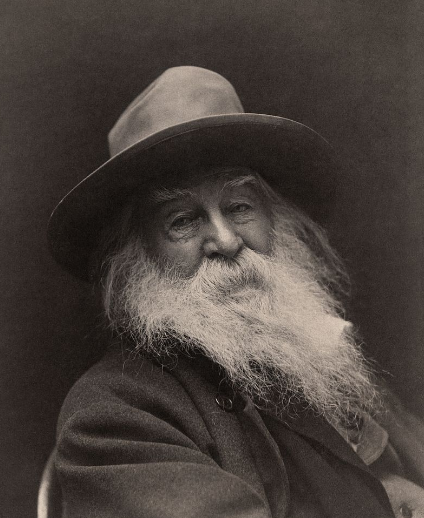
● an American poet, essayist, and journalist.
● the father of free verse
⇒ Free verse is an open form of poetry. It does not use consistent meter patterns, rhyme, or any other musical pattern.
● Along with Emily Dickinson, Whitman is regarded as one of America’s most significant nineteenth century poets.
● Walt Whitman has been claimed as America's first "poet of democracy"
● During the Civil War, Whitman worked as a clerk in Washington, DC. For three years, he visited soldiers during his spare time, dressing wounds and giving solace to the injured. These experiences led to the poems in his 1865 publication, Drum-Taps(←click), which includes, “When Lilacs Last in the Dooryard Bloom’d,”(←click).
⇒ An elegy is a poem of serious reflection, typically a lament for the dead.
O Captain! My Captain! -by Walt Whitman
O Captain! my Captain! our fearful trip is done,
The ship has weather’d every rack, the prize we sought is won,
The port is near, the bells I hear, the people all exulting,
While follow eyes the steady keel, the vessel grim and daring;
But O heart! heart! heart!
O the bleeding drops of red,
Where on the deck my Captain lies,
Fallen cold and dead.
O Captain! my Captain! rise up and hear the bells;
Rise up—for you the flag is flung—for you the bugle trills,
For you bouquets and ribbon’d wreaths—for you the shores a-crowding,
For you they call, the swaying mass, their eager faces turning;
Here Captain! dear father!
This arm beneath your head!
It is some dream that on the deck,
You’ve fallen cold and dead.
My Captain does not answer, his lips are pale and still,
My father does not feel my arm, he has no pulse nor will,
The ship is anchor’d safe and sound, its voyage closed and done,
From fearful trip the victor ship comes in with object won;
Exult O shores, and ring O bells!
But I with mournful tread,
Walk the deck my Captain lies,
Fallen cold and dead.
★ "O Captain! My Captain!" is an extended metaphor poem written in 1865 by Walt Whitman, about the death of American president Abraham Lincoln.
Dead Poets Society
Todd stands on his desk and salutes Keating with the words "O Captain! My Captain!"
W. B. Yeats
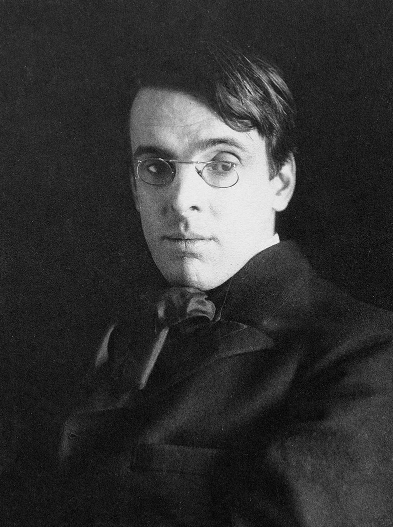
⇒ an Irish poet and one of the foremost figures of 20th-century literature
"Lake Isle of Innisfree" – W.B. Yeats
Lake Isle of Innisfree
I will arise and go now, and go to Innisfree,
And a small cabin build there, of clay and wattles made;
Nine bean rows will I have there, a hive for the honey bee,
And live alone in the bee loud glade.
And I shall have some peace there, for peace comes dropping slow,
Dropping from the veils of the morning to where the cricket sings;
There midnight's all a glimmer, and noon a purple glow,
And evening full of the linnet's wings.
I will arise and go now, for always night and day
I hear lake water lapping with low sounds by the shore;
While I stand on the roadway, or on the pavements grey,
I hear it in the deep heart's core.
★ a twelve-line poem composed of three quatrains written by William Butler Yeats in 1888
⇒ A quatrain is a type of stanza, or a complete poem, consisting of four lines.
Moby-Dick (←text)
Moby-Dick; or, The Whale is a novel by American writer Herman Melville, published in 1851 during the period of the American Renaissance.
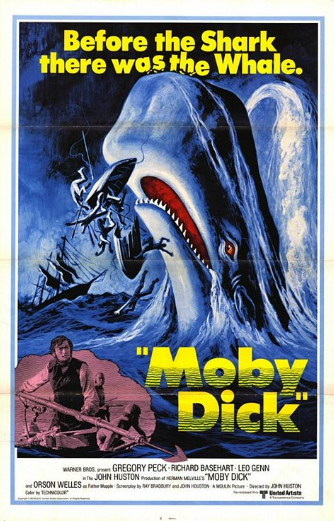
a 1956 film adaptation of Herman Melville's novel Moby-Dick
trailer
Book of Revelation
● The Book of Revelation, often known simply as Revelation or The Apocalypse of John, is a book of the New Testament that occupies a central place in Christian eschatology.
● The Book of Revelation is the only apocalyptic document in the New Testament canon.
▲ The book spans three literary genres: the epistolary, the apocalyptic, and the prophetic. It begins with John, on the island of Patmos in the Aegean, addressing a letter to the "Seven Churches of Asia". He then describes a series of prophetic visions, including figures such as the Whore of Babylon and the Beast, culminating in the Second Coming of Jesus.
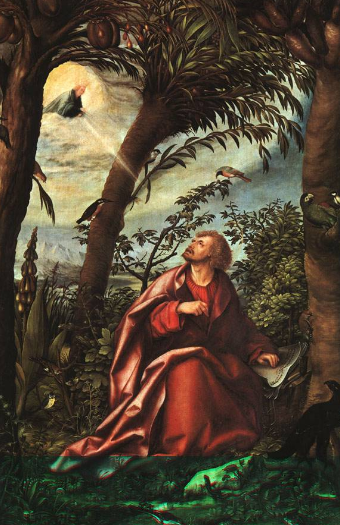
St. John at Patmos: the receiving of an apocalyptic vision
▲ An apocalypse, translated literally from Greek, is a disclosure of knowledge, i.e., a lifting of the veil or revelation. In religious contexts it is usually a disclosure of something hidden, “a vision of heavenly secrets that can make sense of earthly realities".
▲ In the Book of Revelation, the last book of the New Testament, the revelation which John receives is that of the ultimate victory of good over evil and the end of the present age, and that is the primary meaning of the term, one that dates to 1175.
Skeeter Davis - The End Of The World
限會員,要發表迴響,請先登入


