Word Information
✦ vir ; ver : true
ⓐ verdict : an opinion or decision made after judging the facts that are given, especially one made at the end of a trial
* dic : to say; to tell a word ⇒ predict
* "Has the jury reached a verdict?"
"Yes, your honor."
"We find the defendant guilty on all counts."
* Vocabulary
prosecutor : 檢察官
summon : 傳喚
detain : 收押
charge : accuse someone of something 起訴
warrant : 搜索票
appeal : 上訴
the accused : 被告者
the suspect : 嫌疑犯
bail : 保釋金
ⓑ verify : to prove that something exists or is true, or to make certain that something is correct
⇒ verification
ⓒ virtual : almost a particular thing or quality; created by computers, or appearing on computers or the Internet
⇒ virtual reality : images and sounds that are produced by a computer and connected equipment to make the user feel as if they are in real three-dimensional space
ⓓ verisimilitude : the appearance of being real
*gratitude : the feeling or quality of being grateful
attitude : someone’s opinions or feelings about something, especially as shown by their behavior
latitude : the position north or south of the equator measured from 0° to 90°
⇔ longitude
✦ anti- : against
ⓐ antithesis : the exact opposite; a contrast between two things
ⓑ antipathy : a feeling of strong dislike, opposition, or anger
ⓒ antibiotic : a medicine or chemical that can destroy harmful bacteria in the body or limit their growth
ⓓ antidote :
a chemical, especially a drug, which limits the effects of a poison;
a way of preventing or acting against something bad
e.g. Regular exercise is the best antidote to tiredness and depression.
ⓔ antihero :
An antihero (or antiheroine) is a protagonist who lacks conventional heroic qualities such as idealism, courage, or morality. These individuals often possess dark personality traits such as disagreeableness, dishonesty, and aggressiveness. These characters are usually considered "conspicuously contrary to an archetypal hero."
✦ pro- : go forward; in favor of
* A protagonist is the main character in a drama. Technically, there can only be one protagonist in a drama, though writers often use the word in reference to two or more central characters. The antagonist is the main character’s chief opponent.
✦ chro-
ⓐ chronic ⇔ acute
ⓑ chromosome (染色體) : a structure that looks like a very small piece of string and that exists, usually as one of a pair, in the central part of all living cells. Chromosomes contain genes.
ⓒ chronicle(編年史) : a record of events that happened in the past, in the order in which they happened
✦ nov- : new
ⓐ novel :
(n.) a long written story about imaginary or partly imaginary characters and events
(adj.) new, or unusual
ⓑ novice : someone who is just beginning to learn a skill or subject
ⓒ renovate (v.) : to make something old look new again by repairing and improving it, especially a building ⇒ renovation
✦ hero ⇔ heroine
(adj.) heroic
✦ underarm
ⓐ the area of your body under your arm (胳肢窩)
ⓑ if you throw a ball underarm, you throw it from a low position, not from above your shoulder ⇒ The rules say you can throw underarm or overarm.
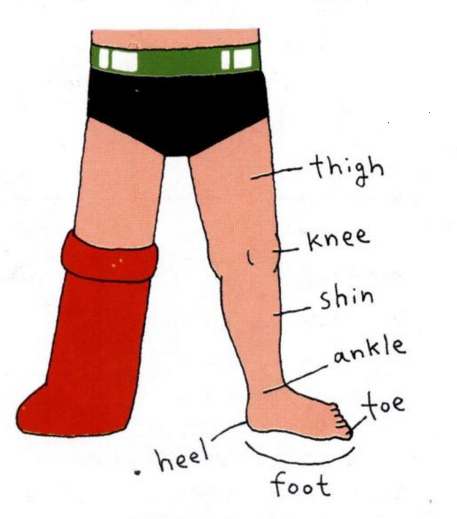
thigh (大腿)
shin : the front part of your leg between your knee and your foot
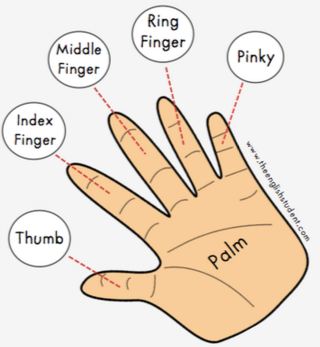
finger name
①大拇指 : thumb
②食指 : forefinger/ index finger
③中指 : middle finger
④無名指 : ring finger
⑤小指 : little finger/ pinky
⑥手掌 : palm
⑦掌纹 : palm lines
⑧指節 : knuckle
⑨指甲 : nail
⑩手腕 : wrist
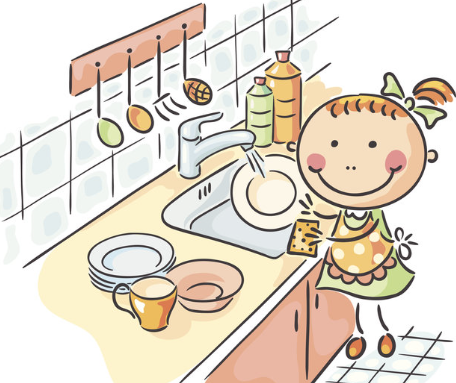
✦ do the dishes
✦ emergency suit
正式的外套, 可以隨搭出席重要場合!

✦ breadwinner (負擔家計的人)
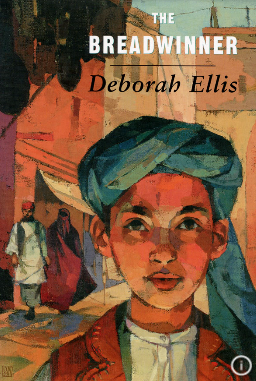
 The Breadwinner also known as Parvana is a children's novel by Deborah Ellis, first published in 2000. As of October 2013, the English-language edition of the book has had a run of 39 editions. The title of the book refers to the role of the protagonist, 11-year-old Parvana, who is forced by circumstances to be the breadwinner for her family in a war-torn Taliban-era in Afghanistan.
For her research, the author spent several months interviewing women and girls in refugee camps in Pakistan, and used these interviews as the basis of her depiction of life in Afghanistan.
✦ compliment (v.) : to say something nice to or about someone
⇒ compliment someone on something
⇒ pay/give someone a compliment (n.)
* pay the last respect / bill/ visit
✦ develop harmony
⇒ (create) X
Round Character v.s. Flat Character
A round character is a character with whom the audience can sympathize, associate or relate to, as he seems a character they might have seen in their real lives.
In play writing and fiction writing, authors develop round characters to make their stories more believable and effective. These characters bring surprise to the readers’ expectations by undergoing a significant metamorphosis at the end of a narrative as compared to what they were in the initial phases. Hence, due to this development, audience can relate this transformed character with their own lives. By the end, after developing new traits, a round character also demonstrate new facets of human behavior.
Example :
Gatsby from The Great Gatsby by Scott Fitzgerald
In his novel, The Great Gatsby, F. Scott Fitzgerald has introduced a complex and round character, Gatsby, who is a tragic hero with a fatal flaw of obsession with his beloved, Daisy. He is a man of great mystery, because no one knows his whereabouts and how he becomes rich. Readers can notice his different sides and different traits. He appears to them as scared, mysterious, friendly, angry, happy, disappointed and frustrated throughout the novel. Besides, through Nick’s narration, readers get an insight into his human mind and all his emotions and whims.
A flat character is a type of character in fiction that does not change too much from the start of the narrative to its end. Flat characters are often said not to have any emotional depths.
The role of a flat character is to help the main character in pursuing his ambitions and goals. The flat characters often play a supporting role in the story, play or novel. Though they are not very prominent characters, they are not unimportant too, because they bring harmony, peace and comedy in the story. Writers use these characters to create a specific atmosphere in the complex narrative structure.
Example :
Benvolio from Romeo and Juliet
Benvolio is a flat character, who remains unchanged throughout the play. He is temperate, solid and loyal, who always tries to maintain peace and harmony between the two families and whose purpose is to support Romeo to get married to Juliet. However, the irony is that others accuse him for his hot temperament and wild attitude.
Foreshadowing (guessing ahead)
Foreshadowing is a literary device by which an author hints what is to come. It often appears at the beginning of a story or a chapter and helps the reader develop expectations about the coming events in a story. There are various ways of creating a foreshadowing. A writer may use dialogues of characters to hint at what may occur in future. In addition, any event or action in the story may throw a hint to the readers about future events or action. Even a title of a work or a chapter title can act as a clue that suggests what is going to happen. Foreshadowing in fiction creates an atmosphere of suspense in a story so that the readers are interested to know more.
 A hint that is designed to mislead the audience is referred to as a red herring.

The origin of the expression is not known. Conventional wisdom has long supposed it to be the use of a kipper (a strong-smelling smoked fish) to train hounds to follow a scent, or to divert them from the correct route when hunting; however, modern linguistic research suggests that the term was probably invented in 1807 by English polemicist William Cobbett, referring to one occasion on which he had supposedly used a kipper to divert hounds from chasing a hare, and was never an actual practice of hunters. The phrase was later borrowed to provide a formal name for the logical fallacy and literary device.
Flashback
A flashback is an interjected scene that takes the narrative back in time from the current point in the story. Flashbacks are often used to recount events that happened before the story's primary sequence of events to fill in crucial backstory. In the opposite direction, a flashforward (or prolepsis) reveals events that will occur in the future. Both flashback and flashforward are used to cohere a story, develop a character, or add structure to the narrative. In literature, internal analepsis is a flashback to an earlier point in the narrative; external analepsis is a flashback to a time before the narrative started.
限會員,要發表迴響,請先登入


