★Christmas Eve
Christmas Eve refers to the evening or entire day preceding Christmas Day, a widely celebrated festival commemorating the birth of Jesus of Nazareth. Christmas Day is observed around the world, and Christmas Eve is widely observed as a full or partial holiday in anticipation of Christmas Day. Together, both days are considered one of the most culturally significant celebrations in Christendom and Western society.
★Christmas Day
The original meaning of Christmas is a special church service, or mass, to celebrate the birth of Christ. The story of the Nativity, or the events surrounding the birth of Jesus, are particularly important in religious celebrations of Christmas. However, many traditions that are around today have their roots in pre-Christian winter festivals. These include the importance of candles and decorations made from evergreen bushes and tree, symbolizing everlasting light and life.
In Roman times, a mid-winter festival was held. This was a relaxing time with a lot of parties and merry making. It was also common to give other people small gifts, such as dolls for children and candles for adults. This festival culminated with the celebration of the winter solstice, which fell on December 25 in the Roman calendar. In Scandinavia, a festival called Yule and lasting up to twelve days was held in late December and early January. In this time people burnt logs and held parties. These customs have influences how Christmas Day is celebrated today in the United States.
The Bible does not give a precise date for the birth of Jesus. It is also unclear when December 25 became associated with the birth of Jesus, although it may have been around two hundred years after his birth. In the early centuries of Christianity, the anniversary of the birth of Jesus was not a cause for celebrations. The idea of turning this day into a celebration started in the early Middle Ages in Europe.
During Reformation and up until the middle of the 1800s, Christmas was often not celebrated because partying and merry making was seen as unchristian. From about 1840, celebrating Christmas became more widespread. December 25 was declared a federal holiday in the United States in 1870. Since then Christmas Day has become a steadily more important holiday.
★Boxing Day
Boxing Day is a holiday traditionally celebrated the weekday or Saturday following Christmas Day, when servants and tradesmen would receive gifts, known as a "Christmas box", from their masters, employers or customers, in the United Kingdom, The Bahamas, Barbados, Canada, Hong Kong, Australia, Bermuda, New Zealand, Kenya, South Africa, Guyana, Trinidad and Tobago, Jamaica and other former British colonies. Today, Boxing Day is the bank holiday or public holiday that generally takes place on 26 or 27 December.
⇓ Santa Claus
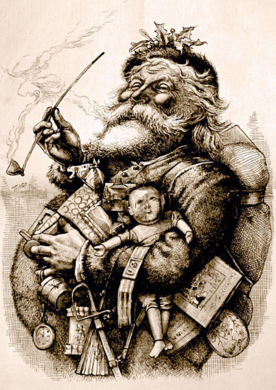
Santa Claus, Saint Nicholas, Saint Nick, Father Christmas, Kris Kringle, Santy, or simply Santa is a mythical figure with historical origins who, in many Western cultures, brings gifts to the homes of well-behaved, "good" children on 24 December (Christmas Eve) and the early morning hours of 25 December (Christmas Day).
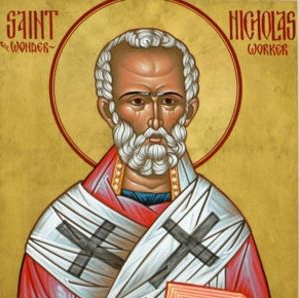
The legend of Santa Claus can be traced back hundreds of years to a monk named St. Nicholas. It is believed that Nicholas was born sometime around 280 A.D. in Patara, near Myra in modern-day Turkey. Much admired for his piety and kindness, St. Nicholas became the subject of many legends. It is said that he gave away all of his inherited wealth and traveled the countryside helping the poor and sick. One of the best known of the St. Nicholas stories is that he saved three poor sisters from being sold into slavery or prostitution by their father by providing them with a dowry so that they could be married. Over the course of many years, Nicholas’s popularity spread and he became known as the protector of children and sailors. His feast day is celebrated on the anniversary of his death, December 6. This was traditionally considered a lucky day to make large purchases or to get married. By the Renaissance, St. Nicholas was the most popular saint in Europe. Even after the Protestant Reformation, when the veneration of saints began to be discouraged, St. Nicholas maintained a positive reputation, especially in Holland.
⇓ St. Nicholas.
Charles Dickens
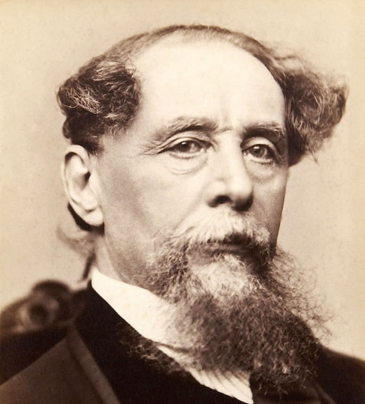
Charles John Huffam Dickens was an English writer and social critic. He created some of the world's best-known fictional characters and is regarded as the greatest novelist of the Victorian era. His works enjoyed unprecedented popularity during his lifetime, and by the twentieth century critics and scholars had recognised him as a literary genius. His novels and short stories enjoy lasting popularity.
✦ A Christmas Carol
A Christmas Carol in Prose, Being a Ghost-Story of Christmas, commonly known as A Christmas Carol, is a novella by Charles Dickens
The book was written at a time when the British were examining and exploring Christmas traditions from the past as well as new customs such as Christmas cards and Christmas trees. Carol singing took a new lease on life during this time. Dickens's sources for the tale appear to be many and varied, but are, principally, the humiliating experiences of his childhood, his sympathy for the poor, and various Christmas stories and fairy tales.
The Last Supper
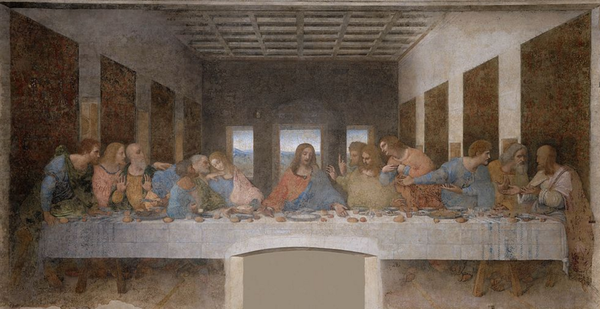
The Last Supper is the final meal that, in the Gospel accounts, Jesus shared with his Apostles in Jerusalem before his crucifixion. The Last Supper is commemorated by Christians especially on Maundy Thursday.Moreover, the Last Supper provides the scriptural basis for the Eucharist, also known as "Holy Communion" or "The Lord's Supper".
Have Yourself A Merry Little Christmas
★bow :
(v.) ⇒ to bend your body forwards from the waist, especially to show respect for someone
⇓ (n.)
a forward movement of the top part of your body, especially to show respect
a weapon made from a long curved piece of wood, used for shooting arrows
a knot that you tie in something such as a piece of string so that there are two circular parts and two loose ends
⇓ rainbow

Original sin
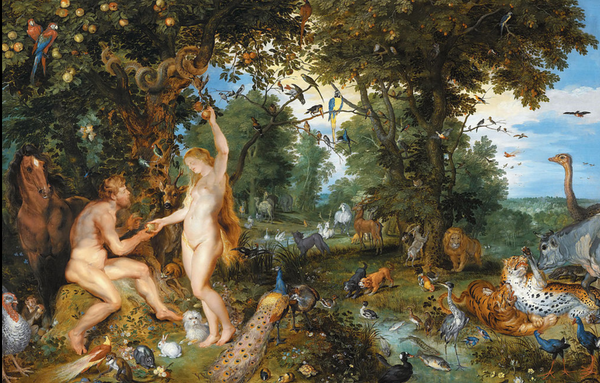
Original sin, also called ancestral sin, is the Christian doctrine of humanity's state of sin resulting from the fall of man, namely the sin of consuming from the tree of knowledge of good and evil, stemming from Adam's rebellion in Eden. This condition has been characterized in many ways, ranging from something as insignificant as a slight deficiency, or a tendency toward sin yet without collective guilt, referred to as a "sin nature", to something as drastic as total depravity or automatic guilt of all humans through collective guilt
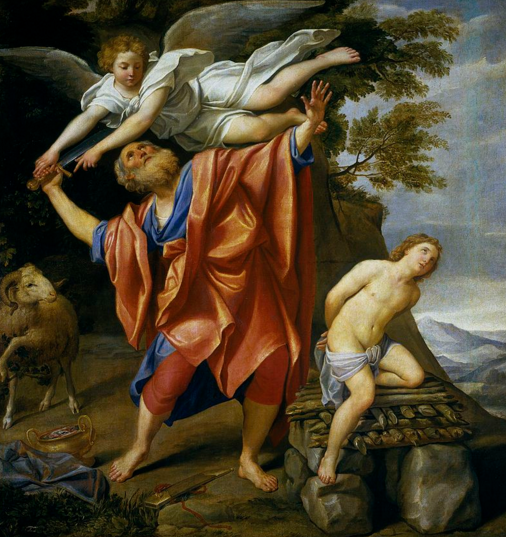
Isaac as described in the Hebrew Bible and the Qur'an, was the second son of Abraham, the only son Abraham had with his wife Sarah, and the father of Jacob and Esau. According to the Book of Genesis, Abraham was 100 years old when Isaac was born, and Sarah was past 90.
According to the Genesis narrative, Abraham brought Isaac to Mount Moriah, where, at God's command, Abraham built a sacrificial altar to sacrifice Isaac. This event served as a test of Abraham's faith. At the last moment an angel stopped him.
context :
Abraham took the wood of the burnt offering and laid it on Isaac his son, and he took in his hand the fire and the knife. So the two of them walked on together. Isaac spoke to Abraham his father and said, "My father!" And he said, "Here I am, my son." And he said, "Behold, the fire and the wood, but where is the lamb for the burnt offering?" Abraham said, "God will provide for Himself the lamb for the burnt offering, my son." So the two of them walked on together.…
No Strings Attached
(a 2011 American romantic comedy film)

Eve
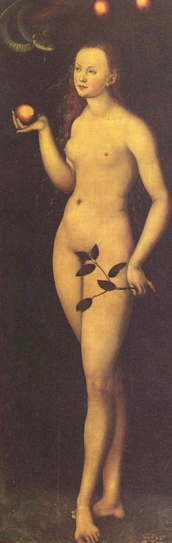
In the Genesis creation narratives, Eve was created by Yahweh-Elohim ("Yahweh-God", the god of Israel) by taking her from the side of Adam, the first human. According to Genesis 1 and 2, Eve is the first woman created by God (Yahweh, the God of Israel). God created her to be Adam's companion. She succumbs to the serpent's temptation via the suggestion that to eat the forbidden fruit from the tree of the knowledge of good and evil would improve on the way God had made her, and that she would not die. She, believing the lie of the serpent rather than the earlier instruction from God, shares the fruit with Adam. As a result, the first humans are expelled from the Garden of Eden. Though traditionally Adam and Eve are said to have been cursed by God, there is no indication of that in the Genesis account. A close look at the Genesis 3 passage reveals that God cursed the serpent.[Gen. 3:14] God told both Adam and Eve what would be some of the consequences to them and their forebears from sin entering the human race. To the woman God prophetically said, “I will make your pains in childbearing very severe; with painful labor you will give birth to children. Your desire will be for your husband, and he will rule over you”.[Gen. 3:16] God also told Adam, "Cursed is the ground because of you".[Gen. 3:17] Christian churches differ on how they view both Adam and Eve's disobedience to God (often called the Fall of man), and to the consequences that those actions had on the rest of humanity. Christian and Jewish teachings sometimes hold Adam (the first man) and Eve to a different level of responsibility for the Fall, though Islamic teaching holds both equally responsible.
Adam
限會員,要發表迴響,請先登入


