Parade
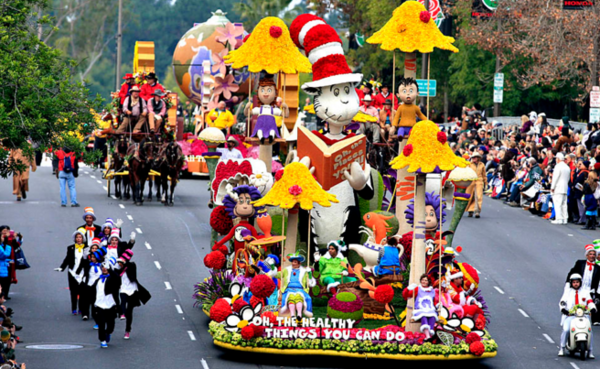
A parade is a procession of people, usually organized along a street, often in costume, and often accompanied by marching bands, floats or sometimes large balloons. Parades are held for a wide range of reasons, but are usually celebrations of some kind.
march
: a walk by a group of soldiers in which each person matches the speed and movements of the others
e.g. military march
demonstration
: an occasion when a large group of people protest about something
★
Protestant : a member of a group of Christian churches that separated from the Roman Catholic Church in the 16th century
*er, or, ist, ian, ant ⇐ suffix for peaple's (profession)
protester : someone who publicly shows their opposition to something such as a law or policy
✦ some differences between Protestantism and Roman Catholicism
The Authority of the Pope
Roman Catholics believe that the pope is the head of the worldwide Church. As the “vicar of Christ,” the pope stands as the earthly representative of Christ in the world and acts in his place to lead the Church in determining what is true, right, and proper for all Catholics. According to church teaching, the pope is preserved from any possibility of error when speaking on matters of faith and morals to be held by the entire Church.5
According to this tradition, the apostle Peter was ordained the first “pope”6 when Jesus declared, “And I tell you that you are Peter,and on this rock I will build my church, and the gates of Hadeswill not overcome it.”7 Tradition says that Peter went on to become the bishop of Rome. Catholics believe that this office of authority continues today.
Protestants, on the other hand, do not believe in a hierarchical structure that culminates in one individual who could speak definitively and proclaim truth without error.
Mary, the Mother of Jesus
Mary plays a different role for Catholics than for most Protestants. Because Mary was the instrument through whom God brought his Son into the world, Catholics honor Mary with the titles “Mother of God” and “Mother of the Church.”
Catholics regard her as an example of faith and holiness. According to tradition, Mary was conceived and born without the stain of original sin and remained sinless throughout her life.
Though Catholics have a special devotion to Mary, they do not adore or worship her as they do God and the Incarnate Word (a common misperception). They pray to Mary—as they pray to other saints—asking her to intercede or mediate for them with her Son with whom she is in perfect communion. Put another way, they ask Mary to pray for them in much the same way as all Christians ask each other for prayer.9
For various reasons, though Protestants may have a high view of Mary, they do not hold her in the same regard. As such, they typically do not pray to Mary or make her a focal point of artwork or iconography in the same way Roman Catholics do.
The Doctrine of Justification
Both Protestants and Catholics agree that one is justified—made righteous or put in right relationship with God—through grace. The differences in their beliefs are a matter of degree.
Roman Catholics believe that a person’s actions play a significant role in one’s standing with God because actions are external expressions of one’s inner faith. For Catholics, good deeds can achieve penance for sins or limit one’s time in Purgatory after death.
Protestants believe that justification by grace through faith is the only way for a person to enjoy a righteous standing before God. In this view, good works are done out of gratitude and are seen as a result of faith, but alone can earn no merit with God.11 Catholics believe this as well but continue to emphasize works as demonstrations of faith.
Worship
Roman Catholics embrace mystery, hierarchy, rituals, liturgy, structure, and more symbolic actions in worship. Protestants, on the other hand, developed worship services that are plain and straightforward, focusing on Scripture.
For Catholics, the focus of the Mass is the Eucharist or Holy Communion. For Protestants, the central moment of worship comes with the sermon—when the minister stands to preach from the Bible.12
Admittedly, the above is a generalization for the sake of clarity and simplicity. Nevertheless, a typical evangelical Protestant worship service today could consist almost entirely of singing modern songs with modern instruments in an auditorium with few religious symbols. But a Catholic service will likely contain numerous elements that are complex, elaborate, and deeply meaningful to participants.
The Role of Church Tradition
Most variations between Protestants and Roman Catholics are grounded in a more foundational difference: the role of church tradition.
Protestants believe that the central authority for faith and practice is found in the Scriptures.13 While tradition, reason, and experience are important, Protestants tend to think they should all be measured against—and are ultimately superseded by—the teachings of the Bible.
On the other hand, Roman Catholics adhere to many beliefs and practices that are not explicitly stated in the Scriptures. These traditions—along with the Scriptures—constitute a deposit of faith that has been passed down from the first apostles through the Magisterium of the Church—that is, the Pope, the bishops, and the Church Councils.14 Authority is found in the Bible, reason, and church tradition together—these three are seen as complementary, not in tension.15
Thus, Roman Catholics regard certain practices and beliefs—such as papal infallibility, Mary’s Immaculate Conception, the doctrine of Purgatory, the celibacy of priests, and the distinction between mortal and venial sins—as important to their faith, while Protestants do not necessarily agree.
Many Denominations, One God
These differences are extremely important. They continue to be the source of fruitful—and sometimes not-so-fruitful—discussions between Protestants and Roman Catholics. However, one should not neglect the central beliefs upon which virtually all Protestants and Catholics agree.
There is one God, the Creator, who sent his only Son, Jesus, into the world to live as an example, to teach about the coming reign of God, to die on the cross, and to rise from the dead. Through faith in Jesus, anyone can find hope, peace, and restoration with God.
Workers and Socialist Party

The Workers and Socialist Party (WASP) is a South African political party founded on 18 December 2012 by the Democratic Socialist Movement (DSM) and mineworkers. The party's official launch was on 21 March 2013, the anniversary of the Sharpeville massacre of 1960 and Human Rights Day, a South African public holiday.
✦ Democratic Socialist Movement (DSM)
The Democratic Socialist Movement (DSM) is a Trotskyist organisation in South Africa, affiliated to the Committee for a Workers' International, and a founding member of the Workers and Socialist Party (WASP).
White Anglo-Saxon Protestant (WASP)
White Anglo-Saxon Protestant (WASP) is an informal, sometimes disparaging term for a group of high-status and influential White Americans of English Protestant ancestry. The term applies to a group believed to control disproportionate social, political, and financial power in the United States. It describes a group whose family wealth, education, status, and elite connections allow them a degree of opportunity held by few others.
Scholars agree that the group's influence has waned since the end of World War II, with the growing influence of other ethnic groups in the United States. The term is also used in Canada and Australia for similar elites. The term is occasionally used by sociologists to include all Americans of North European ancestry regardless of their class or power.[8] People rarely call themselves WASPs, except humorously. The acronym is typically used by non-WASPs.
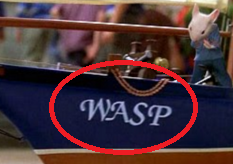
"WASP" appears in the movie, Stuart Little.
Stuart Little
Storyline
When the Littles go to an orphanage to adopt a new family member, their son, George, insists on a little brother as opposed to a big one. His request is honored more literally than he ever imagined when a charming young mouse named Stuart is chosen. While George is disappointed and initially unwelcoming to his new brother, the family cat, Snowbell, is even less enthusiastic at the prospect of having a mouse as his "master" and plots to get rid of him. Against these difficulties, Stuart resolves to face them with as much pluck, love and courage as he can muster. In doing so, he shows his beloved new family that great things can truly come in small packages.
Accounting equation
⇓
Assets = Liabilities + Shareholders' Equity
The three components of the basic accounting formula are:
Assets :
These are the tangible and intangible assets of a business, such as cash, accounts receivable, inventory, and fixed assets.
Liabilities :
These are the obligations of a business to pay its creditors, such as for accounts payable, accrued wages, and loans.
Shareholders' equity :
This is funds obtained from investors, as well as accumulated profits that have not been distributed to investors.
Juvenile court
A juvenile court (or young offender's court) is a tribunal having special authority to pass judgments for crimes that are committed by children or adolescents who have not attained the age of majority. In most modern legal systems, children and adolescents who commit a crime are treated differently from legal adults that have committed the same crime.
Mount Rushmore

Mount Rushmore National Memorial is a sculpture carved into the granite face of Mount Rushmore near Keystone, South Dakota, in the United States. Sculpted by Danish-American Gutzon Borglum and his son, Lincoln Borglum, Mount Rushmore features 60-foot (18 m) sculptures of the heads of four United States presidents: George Washington (1732–1799), Thomas Jefferson (1743–1826), Theodore Roosevelt (1858–1919), and Abraham Lincoln (1809–1865) The entire memorial covers 1,278.45 acres and is 5,725 feet (1,745 m) above sea level.
South Dakota historian Doane Robinson is credited with conceiving the idea of carving the likenesses of famous people into the Black Hills region of South Dakota in order to promote tourism in the region.
Caesarian section
Caesarian section, also commonly known as C-section and other spellings, is a surgical procedure in which one or more incisions are made through a mother's abdomen and uterus to deliver one or more babies. A Caesarean section is often performed when a vaginal delivery would put the baby's or mother's life or health at risk. Some are also performed upon request without a medical reason to do so. The World Health Organization recommends that they should be done based only on medical need.
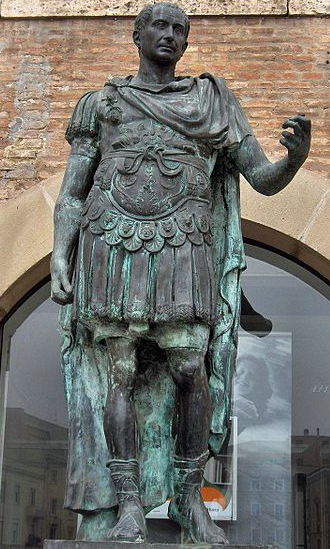
The Caesarean section procedure ultimately derives its name from Julius Caesar, who is often (falsely) claimed to have been the first baby born via Caesarean.
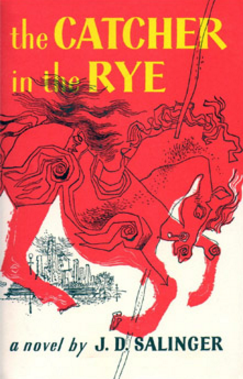
The Catcher in the Rye is a 1951 novel by J. D. Salinger. A controversial novel originally published for adults, it has since become popular with adolescent readers for its themes of teenage angst and alienation. It has been translated into almost all of the world's major languages. Around 250,000 copies are sold each year with total sales of more than 65 million books. The novel's protagonist Holden Caulfield has become an icon for teenage rebellion. The novel also deals with complex issues of identity, belonging, loss, and connection.
“Then the carousel started, and I watched her go round and round...All the kids tried to grap for the gold ring, and so was old Phoebe, and I was sort of afraid she's fall off the goddam horse, but I didn't say or do anything. The thing with kids is, if they want to grab for the gold ring, you have to let them do it, and not say anything. If they fall off, they fall off, but it is bad to say anything to them.”
― J.D. Salinger, The Catcher In The Rye
⇑ The most important symbol in the catcher in the rye is the gold ring on top of the merry-go-round. This symbol is mentioned in only one part of the book. This is where Holden and Phoebe are at the zoo and Phoebe has a ride on the merry-go-round. While going around she reaches up for the gold ring, which is high above her head. The gold ring represents hopes and dreams. As she reaches up for it, Holden is scared that she will fall. This represents that as Phoebe reaches up for her hopes and dreams, Holden is worried she might fail. While she is reaching up, Holden says "The thing with kids is if they want to grab for the gold ring you have to let them do it, and not say anything. If they fall off, they fall off." What Salinger is trying to teach us that we must reach up for our dreams and if we fail, we need somebody to pick us up and get back up and begin reaching for our dreams again. This symbol is introduced at the very end of the book. It is this symbol that pulls Holden out of his spiral of depression. This is a very important phase for Holden because since the start of the book he has been an outsider and very early on he slides into depression. But at the merry-go-round scene he has an epiphany and releases that when we fail we must have somebody to pick us up and begin reaching for our dreams again. This is where Holden's parent’s failures become apparent. When Holden was at his weakest (just after Allie died) his parents instead of helping Holden and confronting the problem pack him up and sent him off to boarding school. It is here that we learn that Holden’s social and academic failings are not his fault. His parents never showed him how to act when faced with confrontation and failure. This is important symbol for Holden as it teaches him how to pick yourself up and carry on.
It's the Most Wonderful Time of the Year
Lady Antebellum - The First Noël
What Child is This
Babel
It is an international co-production among companies based in the US, Mexico, and France. The film portrays multiple stories taking place in Morocco, Japan, Mexico and the US.
★ Pinyin
Pinyin, or Hanyu Pinyin, is the official phonetic system for transcribing the Mandarin pronunciations of Chinese characters into the Latin alphabet in mainland China, Taiwan and Singapore. It is often used to teach Standard Chinese and a pinyin without diacritic markers is often used in foreign publications to spell Chinese names familiar to non-Chinese and may be used as an input method to enter Chinese characters into computers.
限會員,要發表迴響,請先登入


