The face that launched a thousand ships
Meaning
A reference to the mythological figure Helen of Troy (or some would say, to Aphrodite). Her abduction by Paris was said to be the reason for a fleet of a thousand ships to be launched into battle, initiating the Trojan Wars.
Origin
The face that launched a thousand shipsChristopher Marlowe, in Doctor Faustus (variously dated between 1590 and 1604), referring to Helen of Troy, or as Marlowe had it 'Helen of Greece':
Was this the face that launch'd a thousand ships
And burnt the topless towers of Ilium?
Sweet Helen, make me immortal with a kiss.
Doctor Faustus (click)
The Tragical History of the Life and Death of Doctor Faustus, commonly referred to simply as Doctor Faustus, is a play by Christopher Marlowe, based on the German story Faust. Doctor Faustus was first published in 1604.
Christopher Marlowe
Christopher Marlowe was a poet and playwright at the forefront of the 16th-century dramatic renaissance. His works influenced William Shakespeare and generations of writers to follow.
Dramatic Irony
Dramatic irony is an important stylistic device that is commonly found in plays, movies, theaters and sometimes in poetry. Storytellers use this irony as a useful plot device for creating situations where audience knows more about the situations, the causes of conflicts and their resolutions before leading characters or actors. That is why the readers observe that the speech of actors takes on unusual meanings. This speech device also emphasizes, embellishes and conveys emotions and moods more effectively.
Example :
“If someone knows the killer is a stranger,
from some other state, let him not stay mute…
I pray, too,
that, if he should become an honoured guest
in my own home and with my knowledge,
I may suffer all those things I’ve just called down
upon the killers.”
(Oedipus Rex by Sophocles)
Oedipus Rex presents one of the best examples of dramatic irony of all times. In the play, Oedipus seeks to expose the murderer of King Laius to solve the riddle; nonetheless, he himself is murderer. Here, he declares that the murderer, who has killed Laius, might also kill him, not realizing the fact that he himself is the murderer.
Hubris
Hubris is extreme pride and arrogance shown by a character that ultimately brings about his downfall. Hubris is a typical flaw in the personality of a character who enjoys a powerful position; as a result of which, he overestimates his capabilities to such an extent that he loses contact with reality. A character suffering from Hubris tries to cross normal human limits and violates moral codes. Examples of Hubris are found in major characters of tragic plays.
Example :
An instance of Hubris can be spotted in Marlowe’s “Doctor Faustus”. Faustus’s arrogance and extreme pride in his scholarship and his irresistible desire to become superior to all other men of his age forces him to sell his soul to “Lucifer” by signing a contract with his blood. He learns the art of black magic and defies Christianity. Finally, he has to pay for his arrogance and pride. The devils take away his soul to Hell and he suffers eternal damnation.
Tragic Flaw
Tragic flaw is a literary device that can be defined as a trait in a character leading to his downfall and the character is often the hero of the literary piece. This trait could be the lack of self-knowledge, lack of judgment and often it is hubris (pride).
The Greek word for Tragic flaw is hamaratia or hamartanein that means “to err”. It was Aristotle who introduced this term first in his book the Poetics and his idea was that it is an “error of judgment” on the part of a hero that brings his downfall. A tragic flaw is also called a fatal flaw in literature and films. This is taken as a defective trait in the character of the hero.
Example :
OEDIPUS:
Aye, and on thee in all humility
I lay this charge: let her who lies within
Receive such burial as thou shalt ordain….
But for myself, O never let my Thebes,…
The burden of my presence while I live….
God speed thee! and as meed for bringing them
May Providence deal with thee kindlier
Than it has dealt with me…
His will was set forth fully—to destroy
The parricide, the scoundrel; and I am he…
But I am the gods’ abhorrence.
(Oedipus Rex by Sophocles)
Oedipus is a perfect example of having a tragic flaw in this famous Greek tragedy. The cause of his downfall was his inadvertent wrongdoings. The hubris of Oedipus is the cause which made him disobey the prophecy of the gods. Ironically, he ended up doing what he was scared of the most, such that he became “abhorrence of gods” in his own words.
Faustus:
But Faustus’ offense can ne’er be pardoned;
The serpent that tempted Eve may be saved,
But not Faustus….God forbade it indeed but Faustus hath done it. For
the vain pleasure of four and twenty years hath Faustus
lost eternal joy and felicity…..Fair nature’s eye, rise, rise again and make
Perpetual day. Or let this hour be but a year,
A month, a week, a natural day,
That Faustus may repent and save his soul
O mercy, heaven! Look not so fierce on me… I’ll burn my books
(Dr. Faustus by Christopher Marlowe)
The character of Dr. Faustus is also one of the best examples of tragic flaw. The tragic flaw of Dr.Faustus is his ambitious nature to learn . He made a contract with Lucifer and sold his soul in this connection. Finally, his soul is taken to hell and then he realizes his sin and repents but it was too late.
Punctuation
Punctuation is "the use of spacing, conventional signs, and certain typographical devices as aids to the understanding and correct reading, both silently and aloud, of handwritten and printed texts."
Another description is: "The practice, action, or system of inserting points or other small marks into texts, in order to aid interpretation; division of text into sentences, clauses, etc., by means of such marks."
|
|
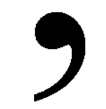
it serves: a. The marking of the omission of one or more letters (as in the contraction of do not to don't). b. The marking of possessive case (as in the eagle's feathers, or in one month's time). |
|
Bracket |
a Curved Brackets or Parentheses (…) are the most commonly used and are the focus of this article. b. Square Brackets […] are most often used to include additional information from an outside source (someone other than the original author). c. Curly Brackets {…} are often used in prose to designate a list of equal choices. d. Angle Brackets <…> are typically used to enclose and illustrate highlighted information.
|
|
Colon
|
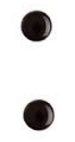
A colon precedes an explanation, or an enumeration or list. A colon is also used with ratios, titles and subtitles of books, city and publisher in bibliographies, Biblical citations between chapter and verse, and—in American English—to separate hours and minutes, for business letter salutations and in formal letter writing.
|
|
Comma
|
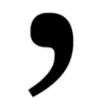
It has the same shape as an apostrophe or single closing quotation mark in many typefaces, but it differs from them in being placed on the baseline of the text. The comma is used in many contexts and languages, mainly for separating parts of a sentence such as clauses, and items in lists, particularly when there are three or more items listed. |
|
Dash
|
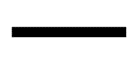
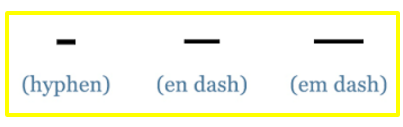
It is similar to a hyphen or minus sign, but differs from both of these symbols primarily in length and function. The most common versions of the dash are the en dash (–) and the em dash (—). Either version may be used to denote a break in a sentence or to set off parenthetical statements – ideally with intradocument consistency. Style and usage guides vary, but often in this function en dashes are used with spaces and em dashes are used without them.
en dash (–) l Span or range of numbers : Example: The professor holds office hours every Wednesday, 11:00 a.m.–1:00 p.m. If you introduce a span or range with words such as from or between, do not use the en dash. For example, She served as secretary of state from 1996–1999. ↳ to l Scores : Example: UCLA beat USC 28–14 in the final game of the regular season. l Conflict or connection : Example: The liberal–conservative debate. The Los Angeles–London flight.
em dash (—) l in place of commas : A pair of em dashes can be used in place of commas to enhance readability. Note, however, that dashes are always more emphatic than commas. Example: When the car was finally delivered—nearly three months after it was ordered—she decided she no longer wanted it, leaving the dealer with an oddly equipped car that would be difficult to sell.
l in place of parentheses : A pair of em dashes can replace a pair of parentheses. Dashes are considered less formal than parentheses; they are also more intrusive. If you want to draw attention to the parenthetical content, use dashes. If you want to include the parenthetical content more subtly, use parentheses. Note that when dashes are used in place of parentheses, surrounding punctuation should be omitted. Compare the following examples. a. Upon discovering the errors (all 124 of them), the publisher immediately recalled the books. b. Upon discovering the errors—all 124 of them—the publisher immediately recalled the books. When used in place of parentheses at the end of a sentence, only a single dash is used. Example: a. After three weeks on set, the cast was fed up with his direction (or, rather, lack of direction). b. After three weeks on set, the cast was fed up with his direction—or, rather, lack of direction.
l in place of a colon : The em dash can be used in place of a colon when you want to emphasize the conclusion of your sentence. The dash is less formal than the colon. Example: The white sand, the warm water, the sparkling sun—this is what brought them to Hawaii.
l Multiple em dashes : Two em dashes can be used to indicate missing portions of a word, whether unknown or intentionally omitted. When an entire word is missing, either two or three em dashes can be used. Whichever length you choose, use it consistently throughout your document. Surrounding punctuation should be placed as usual. Example: The juvenile defendant, ---, was arraigned yesterday.
The em dash is typically used without spaces on either side, and that is the style used in this guide. Most newspapers, however, set the em dash off with a single space on each side. |
|
Hyphen
|
For most writers, the hyphen’s primary function is the formation of certain compound terms.
|
|
Exclamation mark
|
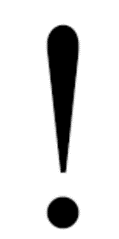
The most flagrant way a writer demonstrates contempt for his readers is by ignoring punctuation altogether. A close second is the abundant use of the exclamation point. Some writers even use three or more exclamation points, lest the reader not fully grasp the significance of what is being said. To be effective, the exclamation point should be used in moderation. |
|
Period
|
The period is perhaps the easiest punctuation mark to master. It ends a sentence. Difficulty generally arises only when the period is used with other punctuation marks. If a sentence otherwise ends with a question mark or exclamation point, the period is omitted. If a sentence ends with an abbreviation, the period used for the abbreviation also serves as the period for the sentence. This is true even if the abbreviation is contained within a quotation. Example: V He is a vice president at Apple Inc. X He is a vice president at Apple Inc.. V Laura said, “We will continue this tomorrow at 8:00 a.m.” X Laura said, “We will continue this tomorrow at 8:00 a.m.”.
If a sentence ends with a parenthetical that is only part of a larger sentence, the period is placed outside the closing parenthesis. Example: Hotel rooms are likely to be in short supply throughout August (the peak travel period).
If the parenthetical is itself an entire sentence, the period is placed inside the closing parenthesis. Example: Their house was the largest one on the block. (It also happened to be the ugliest.)
|
|
Ellipses
|
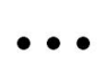
An ellipsis is a set of three periods ( . . . ) indicating an omission. Each period should have a single space on either side, except when adjacent to a quotation mark, in which case there should be no space. |
|
Question mark |
The question mark is used at the end of a direct question. Indirect questions take a period.
|
|
Quotation mark |
l Quotation marks are used for components It is customary in American publishing to put the title of an entire composition in italics. Put the title of a short work—one that is or could be part of a larger undertaking—in quotation marks. A "composition" is a creative, journalistic, or scholarly enterprise that is whole, complex, a thing unto itself.
Example: Richard Burton performed the song "Camelot" in the 1960 Broadway musical Camelot. Although the word is the same, "Camelot" the song takes quotation marks because it's part of a larger work—namely, a full-length show called Camelot.
l Periods and commas ALWAYS go inside quotation marks.
l Use single quotation marks for quotations within quotations. Example: Dan said: "In a town outside Brisbane, I saw 'Tourists go home' written on a wall. But then someone told me, 'Pay it no mind, lad.' " l Always capitalize the first word in a complete quotation, even in midsentence.
l Quotation marks are often used with technical terms, terms used in an unusual way, or other expressions that vary from standard usage.
l When quoted material runs more than one paragraph, start each new paragraph with opening quotation marks, but do not use closing quotation marks until the end of the passage. Example: She wrote: "I don't paint anymore. For a while I thought it was just a phase that I'd get over. "Now, I don't even try." |
|
Semicolon
|
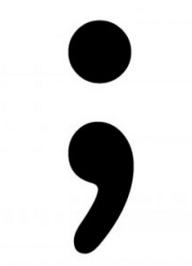
A semicolon can be used between two closely related independent clauses, provided they are not already joined by a coordinating conjunction. Semicolons can also be used in place of commas to separate items in a list, particularly when the elements of that list contain commas. For example, a. Some students used the free time in class to talk with their friends; others worked quietly. Free time in class can be used for quiet conversation; reading approved material, such as novels or newspapers; studying other subjects, including English and Math; or completing homework assignment. |
|
Slash
|
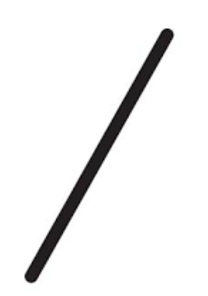
The slash ( / ), also known as the virgule, has several uses, most of which should be avoided in formal writing. Never use a backslash ( \ ) in place of a slash. l The one inarguably acceptable use of the slash in formal writing pertains to poetry. The slash, with one space on either side, indicates a line break.
l Meaning per Example: A top speed of 250 km/h.
l Meaning and Example: He is enrolling in the JD/MBA program at Harvard.
l Meaning or Example: Each guest must present his/her ticket prior to entry . l Fractions Example: 4/5
l Conflict or connection Example: The Paris/London train leaves in an hour. The en dash can perform the same role. Example: The Paris–London train leaves in an hour.
l Two-year spans The slash is sometimes used to indicate something spanning two years. Example: Everyone is still talking about the 1995/96 winter windstorm. |


Vocabulary
a. ant- related to people
attendant : someone whose job is to help customers or people who visit a public place
accountant : someone whose job is to prepare financial records for a company or person
applicant : someone who applies for something, such as a job or a loan of money
the meaning of color
Blue is the color of the sky and sea. It is often associated with depth and stability. It symbolizes trust, loyalty, wisdom, confidence, intelligence, faith, truth, and heaven.
Purple combines the stability of blue and the energy of red. Purple is associated with royalty. It symbolizes power, nobility, luxury, and ambition. It conveys wealth and extravagance. Purple is associated with wisdom, dignity, independence, creativity, mystery, and magic.
What Does 666 Mean?
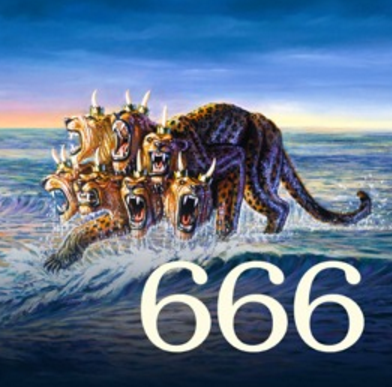
According to the last book in the Bible, 666 is the number, or name, of the wild beast with seven heads and ten horns that comes out of the sea. (Revelation 13:1, 17, 18) This beast is a symbol of the worldwide political system, which rules over “every tribe and people and tongue and nation.” (Revelation 13:7) The name 666 identifies the political system as a gross failure in God’s sight. How?
More than a label. Names given by God have meaning. For example, God gave the man Abram, which means “Father Is High (Exalted),” the name Abraham, which means “Father of a Crowd (Multitude),” when God promised that He would make Abraham “a father of many nations.” (Genesis 17:5, footnotes) Likewise, God named the beast 666 as a symbol of its defining attributes.
The number six implies imperfection. Often, numbers are used as symbols in the Bible. Seven typically represents completeness or perfection. Six, being one short of seven, can denote something incomplete or flawed in God’s eyes, and it can be associated with God’s enemies.—1 Chronicles 20:6; Daniel 3:1.
Three times for emphasis. The Bible sometimes stresses a matter by stating it three times. (Revelation 4:8; 8:13) So the name 666 powerfully emphasizes that God views human political systems as gross failures. They have been unable to bring lasting peace and security—things that only God’s Kingdom will achieve.
限會員,要發表迴響,請先登入


