Greek Teatre
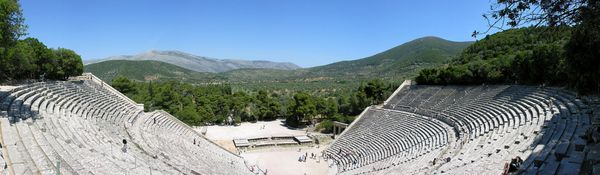
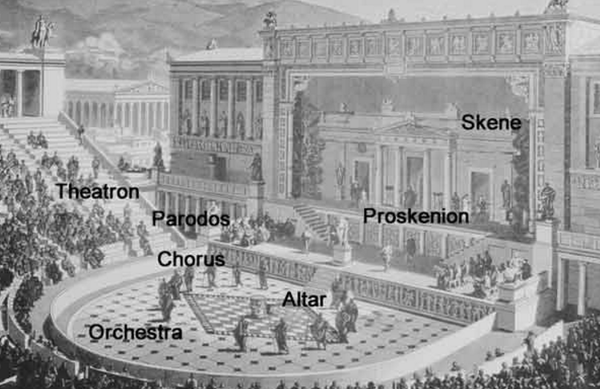
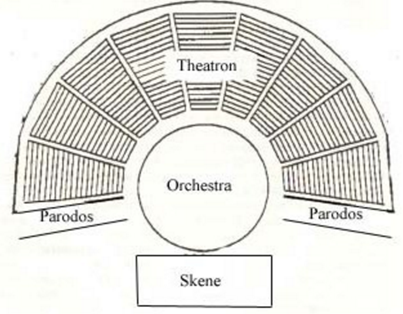
a. Orchestra (literally, "dancing space") ⇨ The orchestra was normally circular. It was a level space where the chorus would dance, sing, and interact with the actors who were on the stage near the skene.
b. Theatron (literally, "viewing-place") ⇨ It was a seeing or viewing place.
c. Skene (literally, "tent")
⇨ The skene was directly in back of the stage, and was usually decorated as a palace, temple, or other building, depending on the needs of the play. It had at least one set of doors, and actors could make entrances and exits through them. There was also access to the roof of the skene from behind, so that actors playing gods and other characters (such as the Watchman at the beginning of Aeschylus' Agamemnon) could appear on the roof, if needed.
d. Parodos (literally, "passageways")
⇨ The parodos are the paths by which the chorus and some actors (such as those representing messengers or people returning from abroad) made their entrances and exits. The audience also used them to enter and exit the theater before and after the performance.
e. thymele ⇨ It was an altar in center of orchestra.
magic wand
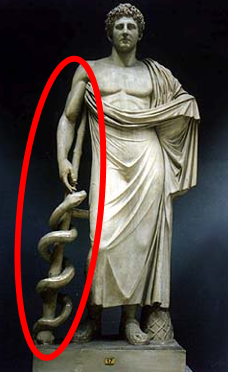
Asclepius was a god of medicine in ancient Greek religion and mythology. He represents the healing aspect of the medical arts. The rod of Asclepius, a snake-entwined staff, remains a symbol of medicine today.
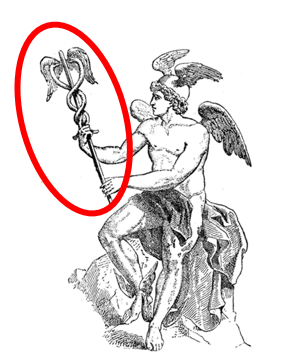
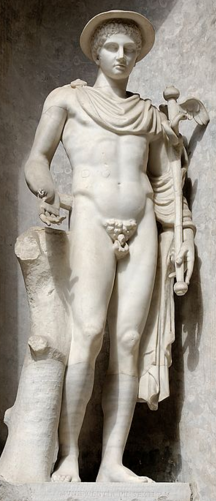
Hermes, the messenger god on Mount Olympus, had a magic wand called a Caduceus, which was given to him by Apollo. The Caduceus is a rod or staff framed by two intertwined snakes; at the top of the staff are two wings.
Snakes have a profound symbolic significance in science, medicine and healing. The snake, which periodically molts, or sheds its skin, is a symbol of healing, regeneration and renewal. In ancient Greece snakes, which move about without any visible means of support or locomotion, were considered to be the wisest and cleverest of all animals.
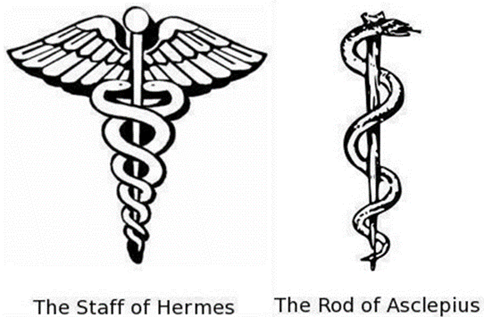
Asclepius' staff has only one snake entwined around it, which symbolizes healing, regeneration, and the consummate skill of the medical art. Hermes' Caduceus has two intertwined snakes, which, in addition to all the above, also represent the need for balance, or homeostasis, for optimum health maintenance and disease prevention.
Immortals
|
Greek Name |
Roman Name |
image & description |
|
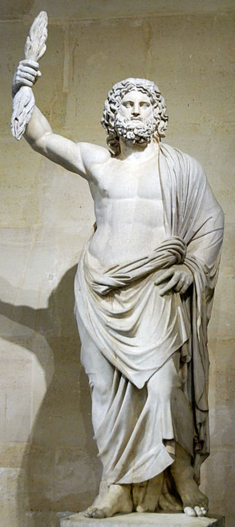
Zeus
|
Jupiter |
king of the gods ; god of the sky, lightning, thunder, law, order, justice |
|
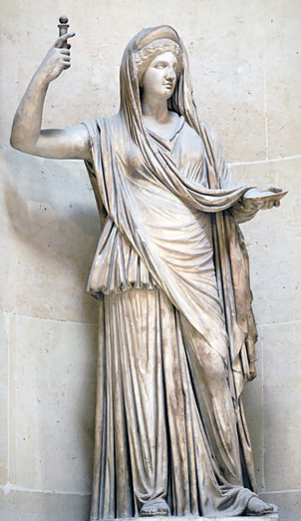
Hera
|
Juno
|
queen of the gods and the goddess of marriage and family |
|
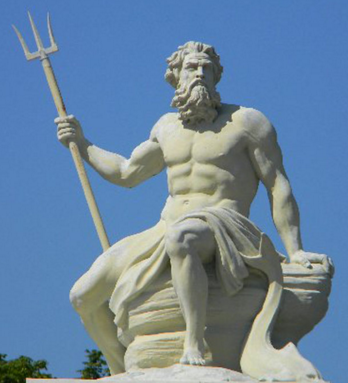
Poseidon
|
Neptune
|
god of the seas, earthquakes, and tidal wave |
|
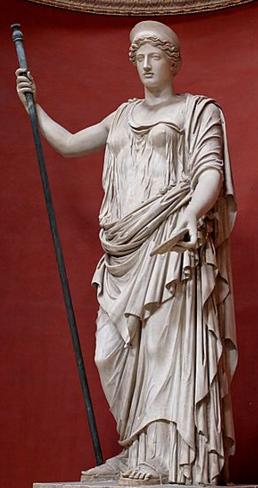
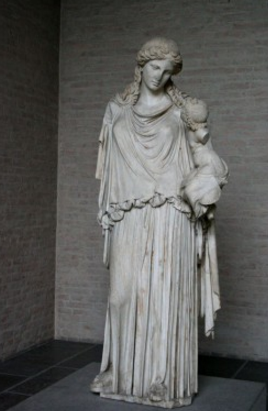
Demeter
|
Ceres
|
goddess of fertility, agriculture, nature, and the seasons |
|
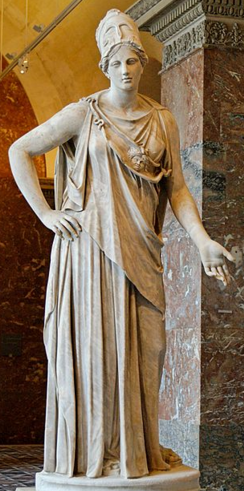
Athena |
Minerva |
goddess of wisdom, reason, intelligent activity, literature, handicrafts and science, defense and strategic warfare |
|
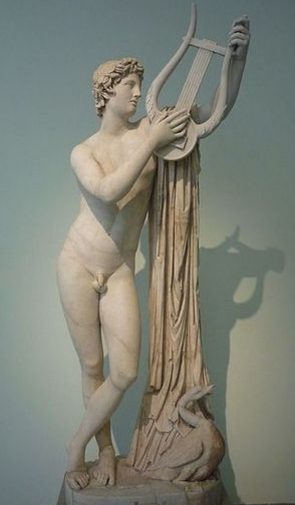
Apollon |
Apollo |
god of light, prophecy, inspiration, poetry, music and arts, medicine and healing |
|
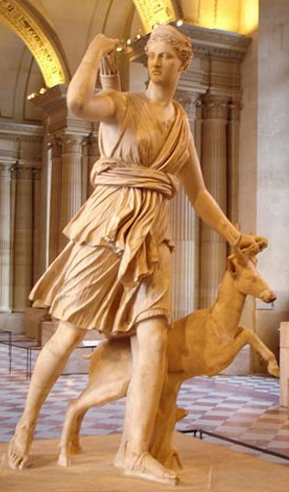
Artemis |
Diana |
goddess of the hunt, virginity, archery, the moon, and all animals |
|
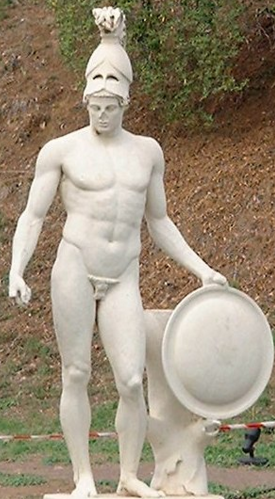
Ares |
Mars |
god of war, violence, and bloodshed |
|
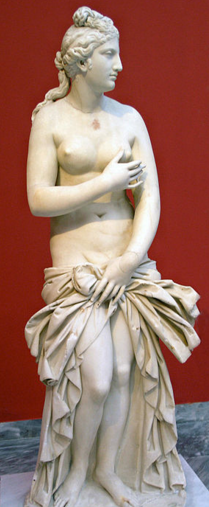
Aphrodite |
Venus |
goddess of love, beauty, and desire |
|
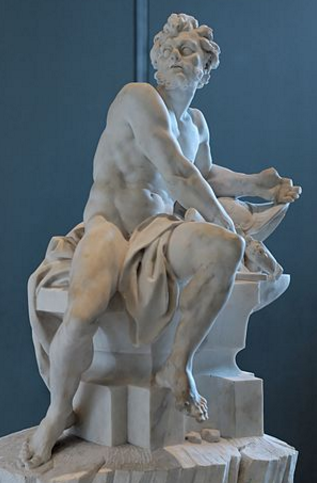
Hephaestus |
Vulcan |
master blacksmith and craftsman of the gods; god of fire and the forge |
|
Hermes |
Mercury |
messenger of the gods; god of commerce, thieves, eloquence and streets |
|
Hestia |
Vesta |
goddess of the hearth and of the right ordering of domesticity and the family |
|
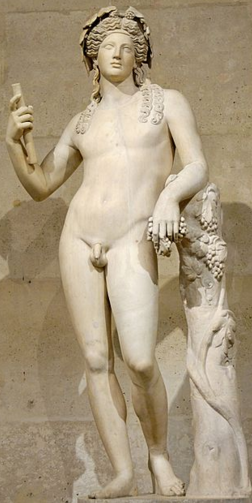
Dionysus |
Bacchus |
god of wine, celebrations, and ecstasy ; Patron god of the art of theatre |
|
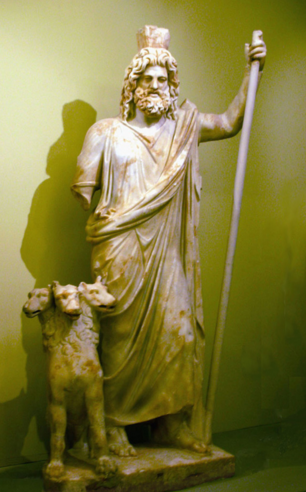
Hades (or Pluto)
|
Orcus (or Dis Pater)
|
god of the Underworld, dead |
|
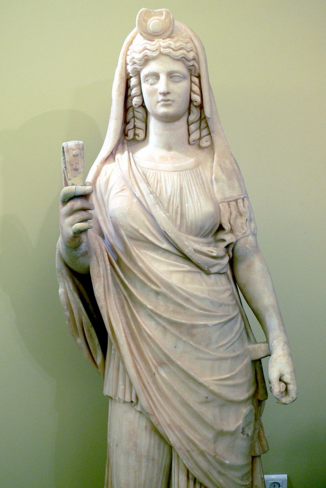
Persephone |
Proserpina |
queen of the Underworld |
|
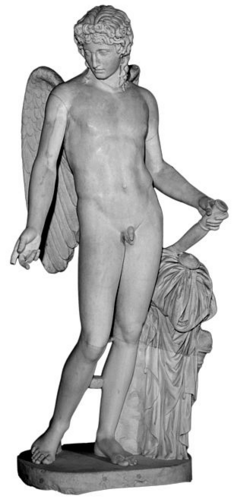
Eros |
Cupid |
god of sexual love and beauty |
Troy Theatrical Trailer
Vocabulary
a. mor– : related to “death”
morgue : a place where dead bodies are kept
mortician : an undertaker (a person whose job is to prepare dead bodies that are going to
be buried or cremated (= burned) and to organize funerals)
mortgage : a legal agreement in which you borrow money from a bank in order to buy a house.
You pay back your mortgage by making monthly payments.
mortify : to make someone very embarrassed
b. patron : a person or group that supports an activity or organization,
especially by giving money
patronage : help or money that is given to a person or organization
patronize :to behave or talk in a way that shows you think you are more intelligent or
important than someone else
c. de- : down ↓ away from →
deport
departure ⇄ arrival
decline
depreciate
d. mono- : one
monopoly : (an organization or group that has) complete control of something,
especially an area of business, so that others have no share
monotheistic
monotheism
✦ The word monotheism comes from the Greek monos, which means one, and theos, which means god. Thus, monotheism is a belief in the existence of a single god. Monotheism is usually contrasted with polytheism, which is the belief in many gods, and atheism, which is the absence of any belief in gods.
e. ium ; eum : the surrounded range (框起來的範疇)
stadium
museum
aquarium
auditorium : a large public building where meetings, concerts, etc. are held
⇓
to listen e.g. audience
c.f. spectator
⇓ e.g. perspective : a way of thinking about something
to look inspect : to look at something carefully
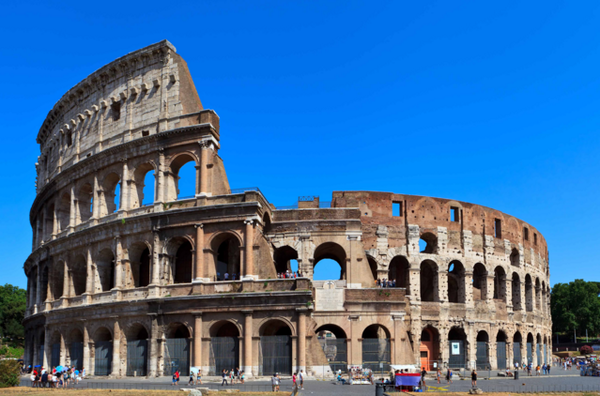
⇓ coliseum
f. lyre
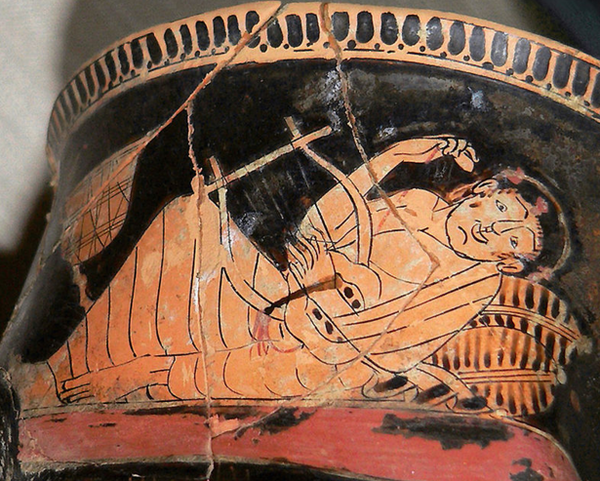
The lyre is a string instrument known for its use in Greek classical antiquity and later periods.
According to ancient Greek mythology, the young god Hermes stole a herd of sacred cows from Apollo. In order not to be followed, he made shoes for the cows which forced them to walk backwards. Apollo, following the trails, could not follow where the cows were going. Along the way, Hermes slaughtered one of the cows and offered all but the entrails to the gods. From the entrails and a tortoise/turtle shell, he created the Lyre. Apollo, figuring out it was Hermes who had his cows, confronted the young god. Apollo was furious, but after hearing the sound of the lyre, his anger faded. Apollo offered to trade the herd of cattle for the lyre. Hence, the creation of the lyre is attributed to Hermes. Other sources credit it to Apollo himself.
Lyre with tortoiseshell body ⇓
g. a- : negative
amoral
abnormal
aboriginal
h. develop the film 洗照片
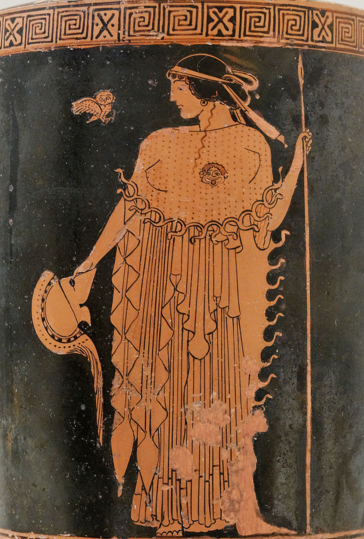
Minerva was the Roman goddess of wisdom and sponsor of arts, trade, and strategy. She was born with weapons from the head of Jupiter. After impregnating the titaness Metis, Jupiter recalled a prophecy that his own child would overthrow him. Fearing that their child would grow stronger than him and rule the Heavens in his place, Jupiter swallowed Metis whole. The titaness forged weapons and armor for her child while within the father-god, and the constant pounding and ringing gave him a headache. To relieve the pain, Vulcan used a hammer to split Jupiter's head and, from the cleft, Minerva emerged, whole, adult, and bearing her mother's weapons and armor. From the 2nd century BC onwards, the Romans equated her with the Greek goddess Athena. She was the virgin goddess of music, poetry, medicine, wisdom, commerce, weaving, crafts, and magic. She is often depicted with her sacred creature, an owl usually named as the "owl of Minerva", which symbolised her association with wisdom and knowledge.
⇓ Athena holding a helmet and a spear, with an owl.
Platonic Academy
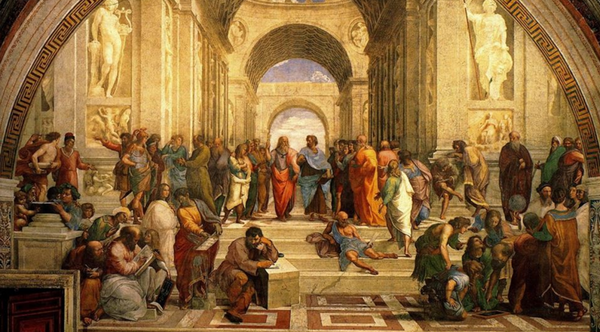
The Academy was founded by Plato (428/427 BC – 348/347 BC) in ca. 387 BC in Athens. Aristotle (384 BC – 322 BC) studied there for twenty years (367 BC – 347 BC) before founding his own school, the Lyceum. The Lyceum was a gymnasium and before that a public meeting place in a grove of trees in Classical Athens. The grove was named in honor of its patron Apollo Lyceus.(←click here)
⇓ The School of Athens by the Italian Renaissance artist Raphael
✦ Anthology is a collection of literacy works chosen by the compiler. It may be a collection of poems, short stories, plays, songs, or excerpts.
限會員,要發表迴響,請先登入


