An Achilles' heel is a weakness in spite of overall strength, which can actually or potentially lead to downfall. While the mythological origin refers to a physical vulnerability, idiomatic references to other attributes or qualities that can lead to downfall are common.
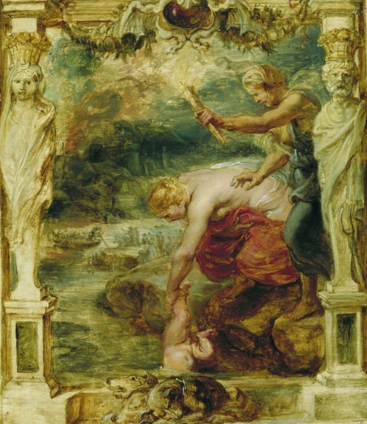
In Greek mythology, when Achilles was a baby, it was foretold that he would die young. To prevent his death, his mother Thetis took Achilles to the River Styx, which was supposed to offer powers of invulnerability, and dipped his body into the water. But as Thetis held Achilles by the heel, his heel was not washed over by the water of the magical river. Achilles grew up to be a man of war who survived many great battles. But one day, a poisonous arrow shot at him was lodged in his heel, killing him shortly after.
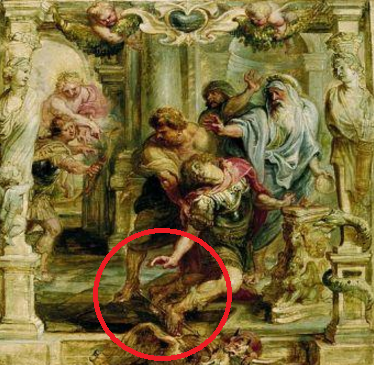
The death of Achilles was not mentioned in Homer's Iliad, but appeared in later Greek and Roman poetry and drama concerning events after the Iliad, later in the Trojan War. In the myths surrounding the war, Achilles was said to have died from a heel wound which was the result of an arrow—possibly poisoned—shot by Paris.
★Example: Math is my Achilles' heel.
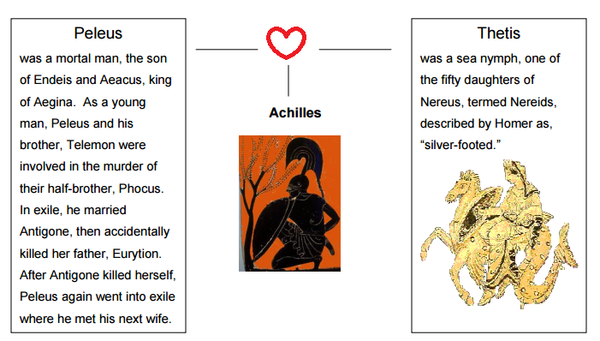
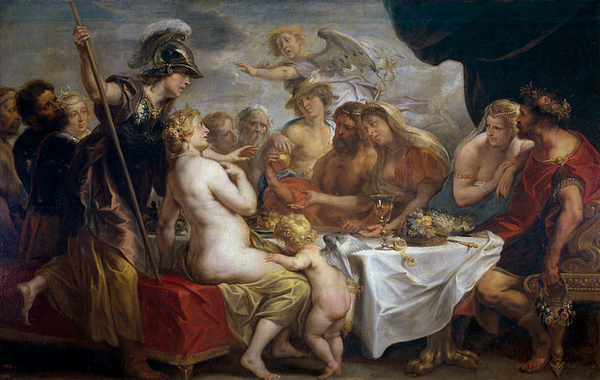
Zeus, King of the Greek gods, falls in love with an immortal sea-nymph called Thetis, but a prophecy warns that if she should have a son, that son will become greater than the father. So Zeus makes Peleus, a Greek king who loves fighting wars, fall in love with Thetis. Peleus wins Thetis’ hand, but not without a struggle.
All the gods attend the wedding of Peleus and Thetis, bringing splendid presents. Eris, goddess of discord, is the only immortal not invited, so she drops amongst the wedding guests a golden apple with an inscription “To The Fairest”. This causes a serious argument between Hera (wife of Zeus), Athene (daughter of Zeus, goddess of war and wisdom), and Aphrodite (goddess of love and beauty), and gives Zeus a headache.
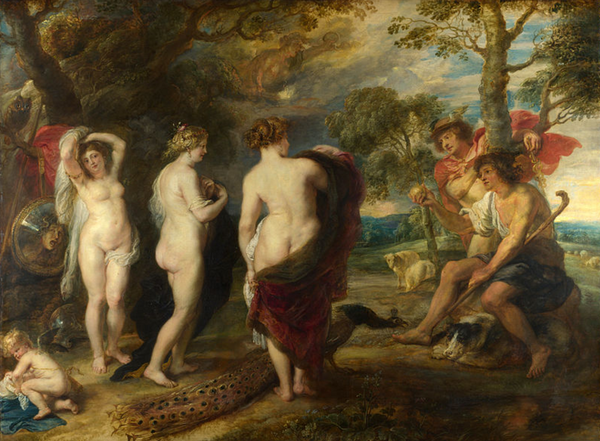
Three goddesses claimed the apple.They asked Zeus to judge which of them was fairest, and eventually he, reluctant to favor any claim himself, declared that Paris, a Trojan mortal, would judge their cases.With Hermes as their guide, the three candidates bathed in the spring of Ida, then confronted Paris on Mount Ida.
While Paris inspected them, each attempted with her powers to bribe him; Hera offered to make him king of Europe and Asia, Athena offered wisdom and skill in war, and Aphrodite offered the world's most beautiful woman.This was Helen of Sparta, wife of the Greek king Menelaus. Paris accepted Aphrodite's gift and awarded the apple to her, receiving Helen as well as the enmity of the Greeks and especially of Hera. The Greeks' expedition to retrieve Helen from Paris in Troy is the mythological basis of the Trojan War.
▲ Golden Apple of Discord⇨ Judgement of Paris⇨ Trojan war
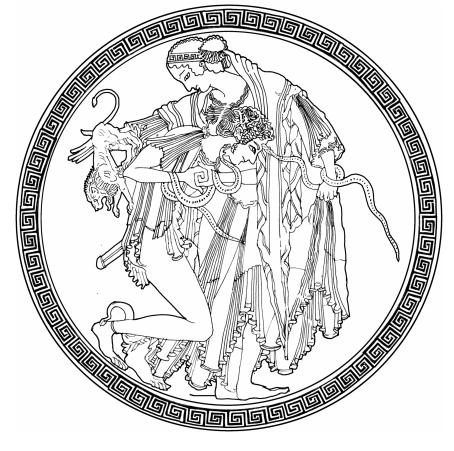
▲ A nymph in Greek mythology and in Latin mythology is a minor female nature deity typically associated with a particular location or landform. Different from other goddesses, nymphs are generally regarded as divine spirits who animate nature, and are usually depicted as beautiful, young nubile maidens who love to dance and sing; their amorous freedom sets them apart from the restricted and chaste wives and daughters of the Greek polis. They are beloved by many and dwell in mountainous regions and forests by lakes and streams. Although they would never die of old age nor illness, and could give birth to fully immortal children if mated to a god, they themselves were not necessarily immortal, and could be beholden to death in various forms. Charybdis and Scylla were once nymphs.
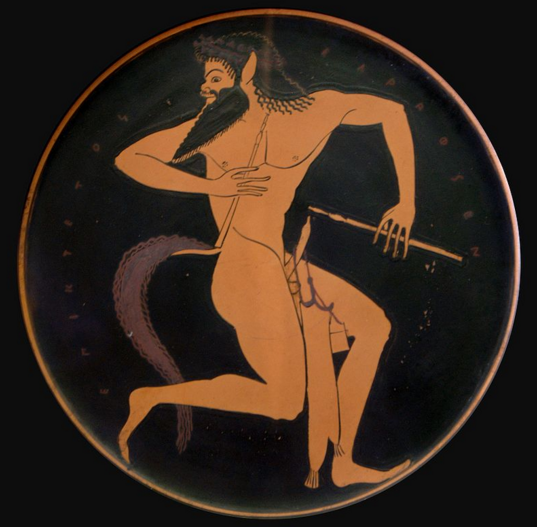
Other nymphs, always in the shape of young maidens, were part of the retinue of a god, such as Dionysus, Hermes, or Pan, or a goddess, generally the huntress Artemis. Nymphs were the frequent target of satyrs.
Nymphs and Satyr
Satyr
Plot (narrative)
▲ No conflict, no story.
In medias res
In medias res is Latin for "into the middle of things." It usually describes a narrative that begins, not at the beginning of a story, but somewhere in the middle — usually at some crucial point in the action. The term comes from the ancient Roman poet Horace, who advised the aspiring epic poet to go straight to the heart of the story instead of beginning at the beginning.
Epithet
Epithet is a descriptive literary device that describes a place, a thing or a person in such a way that it helps in making the characteristics of a person, thing or place more prominent than they actually are. Also, it is known as a by-name or descriptive title.
Epithets in Homer
A characteristic of Homer's style is the use of epithets. Epithets are used because of the constraints of the dactylic hexameter and because of the oral transmission of the poems; they are mnemonic aids to the singer and the audience alike.
pomegranate
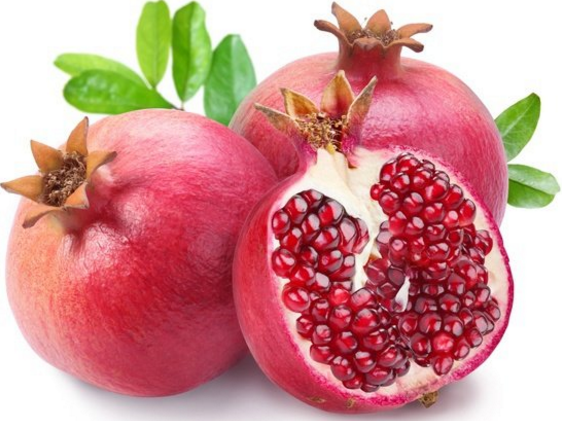
In Ancient Greek mythology, the pomegranate was known as the "fruit of the dead", and believed to have sprung from the blood of Adonis.
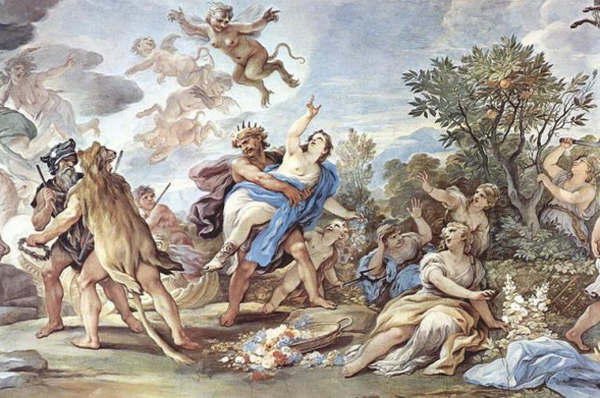
The myth of Persephone, the goddess of the underworld, prominently features the pomegranate. In one version of Greek mythology, Persephone was kidnapped by Hades and taken off to live in the underworld as his wife.
Her mother, Demeter (goddess of the Harvest), went into mourning for her lost daughter, thus all green things ceased to grow. Zeus, the highest-ranking of the Greek gods, could not allow the Earth to die, so he commanded Hades to return Persephone. It was the rule of the Fates that anyone who consumed food or drink in the underworld was doomed to spend eternity there. Persephone had no food, but Hades tricked her into eating six pomegranate seeds while she was still his prisoner, so she was condemned to spend six months in the underworld every year. During these six months, while Persephone sits on the throne of the underworld beside her husband Hades, her mother Demeter mourns and no longer gives fertility to the earth. This was an ancient Greek explanation for the seasons. The number of seeds Persephone ate varies, depending on which version of the story is told. The number ranges from three to seven, which accounts for just one barren season if it is just three or four seeds, or two barren seasons (half the year) if she ate six or seven seeds.
The Three Fates
The Fates, or Moirai are three Greek goddesses that personified destiny, and were typically portrayed as old, usually ugly, women. The Fates were weavers, and determined the length of humans' lives based on their weaving. The first Fate, Klotho, would spin out a thread that represented a person's life, the second, Lakhesis, would measure its length, and the third, Atropos, would cut it, marking that person's death. The Fates acted independently of other Greek gods, and while their rulings were not completely inflexible, even Zeus and the other Olympian gods had to submit to their judgment.
"Coraline" Official Trailer
vocabulary
a. destiny :a mysterious power that some people believe controls everything that happens
e.g. ⇨ We don’t know what destiny has planned for us.
b. destination : the place where someone or something is going
The Final Destination - Trailer
c. fate : the things that happen to someone, especially unpleasant things
The connotation of “fate” is, in general, negative. For example, a character may be fated to die. In contrast, the connotation of “destiny” is, in general, positive. For example, characters may be destined to love. Fate tends to be understood as predetermined, and cannot be guided in the realm of mortals. Destiny, although also predetermined, can be influenced somewhat by worldly intervention.
d. voc-to call
invocation : an act of asking for help from a god or a person who has power
e. ab- negative
abandon
aboriginal : relating to the people or animals that have lived in a place or country since the earliest times
f. ignite : to make something start to burn
e.g. The fire was ignited by a spark from an electrical fault.
: to start a fight or argument
e.g. His speech ignited racial tension in the area.