Footage Shows China’s New ‘5+ Generation’ J-20S Fighter Built For Airborne Command and Control.
https://youtu.be/R5s_sXmq6zA?si=1GRd6kNf7-A_6r9A
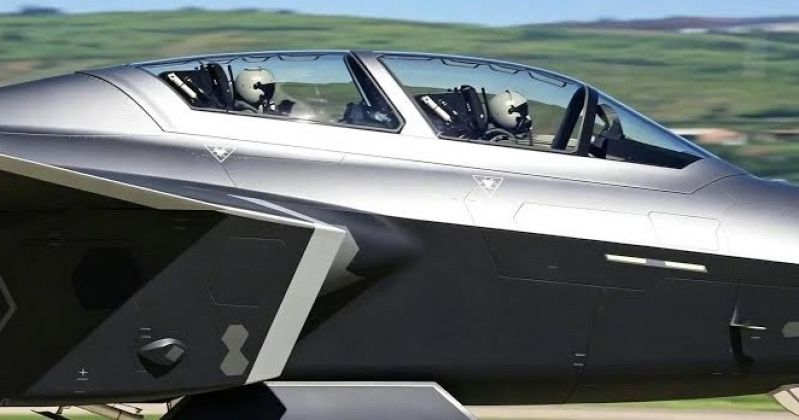
The Chengdu J-20S is the worlds first twin-seat fifth-generation stealth fighter, designed to function as an airborne command-and-control node for manned-unmanned teaming (MUM-T).
- Dual-Crew Task Division: While the front-seat pilot focuses on flying, maneuvering, and core air-to-air combat, the dedicated rear-seat operator manages complex battle management and tactical data.
- Drone Wingman Coordination: The rear-seat operator can command and supervise semi-autonomous or AI-powered unmanned aerial vehicles (such as the FH-97A or GJ-1), directing them to act as scouts, decoys, or electronic warfare jammers ahead of the main formation.
- The aircraft aggregates information from multiple networked sensors and platforms, allowing the crew to coordinate long-range strike missions and missile salvos against land and maritime targets. Multi-Platform Sensor Fusion:
- Reduced Cognitive Load: Splitting the workload allows the crew to handle dense, contested-airspace environments where managing both stealth flight and drone swarms would otherwise overwhelm a single pilot..

-
J-20S: China prepares for aerial warfare with swarms.
The visible rise of the J-20S
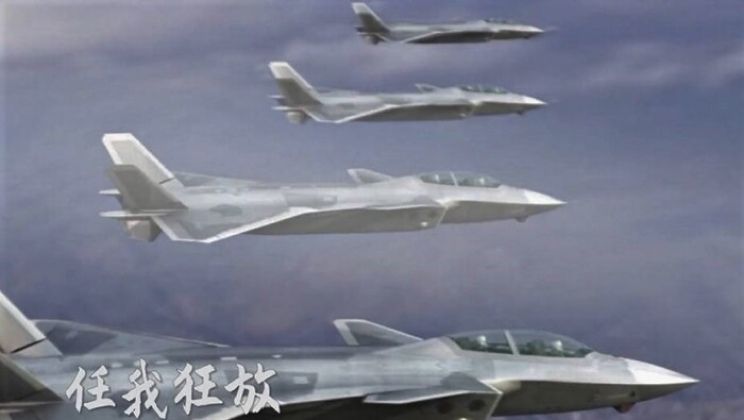
The J-20S has appeared publicly at recent air shows and demonstrations, marking an important milestone in the maturation of the J-20 program. Unlike the single-seat version, the J-20S incorporates a second seat, which analysts immediately interpreted as a doctrinal rather than a training choice.
China has never officially communicated the exact missions of the J-20S. However, its very existence contrasts with Western standards. Fifth-generation fighters are almost exclusively single-seaters. Adding a second crew member increases weight, complexity, and costs. If Beijing has made this choice, it is because it meets a specific operational need.
This need is related to information management. The J-20 is already a stealth fighter equipped with advanced sensors, designed for long-range air superiority. The J-20S goes further: it is designed as a command node, capable of orchestrating several unmanned platforms.
-
殲-20(威龍)是由成都飛機工業集團為中國人民解放軍空軍研製的第五代匿蹤制空戰鬥機,採用雙發動機、鴨式氣動布局與匿蹤設計。發展與重要型號:基本型與改進型:首飛於2011年1月11日,並於2016年正式服役。衍生型包括單座改良版殲-20A以及全球首款公開亮相的雙座型殲-20S。
-
- 雙座型殲-20S:於2025年9月3日閱兵中正式公開亮相。後座飛行員可專職管理無人僚機、協調戰場情報與電子作戰,使殲-20從傳統制空戰機轉型為體系控制與空中指揮平台。 發動機與裝備:早期採用俄製AL-31與國產渦扇-10C(WS-10C),目前已逐步換裝大推力的國產渦扇-15(WS-15)發動機;武器系統可搭載霹靂-10(PL-10)、霹靂-15(PL-15)等空對空飛彈。 生產與部署:截至2025年底,殲-20系列累計交付已超過300架(部分估算達500架),並常態化部署於東海、南海及台海一線.
-
- ew footage released on Chinese social media has provided a clear close up image of the cockpit of the J-20S twin seat fifth generation fighter, drawing attention to the type’s reported increasingly central role in service and entirely unique capabilities. While the J-20 first entered service in 2017, and has been rapidly modernised between incrementally more capable batches, the ability of the J-20S to accommodate a second airman is considered invaluable to bringing the fighter up to a ‘5+ generation’ standard. The design will potentially provide China with the first ever fighter of this generation. Alongside advantages in terms of workload sharing for complex combat operations, and command and control over other J-20 fighters, the J-20S has a design optimised to accommodate a controller for accompanying unmanned ‘wingman’ aircraft.
-
-
-
-
-


限會員,要發表迴響,請先登入


