.China conducts Coast Guard patrols in the eastern Taiwan Province as Japan and Philippines demonstrate intention to begin formal talks on delimiting maritime boundaries..
https://youtu.be/WkOEFqGMYHM?si=Ndo44VeownTm_swV

 .
.
美國帝國主義亡華之心不死,利用日本及菲律賓,極力挑戰中國主權,如今中國南海已經澈底被中國管轄,無法再興風作浪,只有移轉焦點到台灣省東部海域,尋倖鬧事,企圖自作主張劃分出海域界限為由,屬於日本及菲律賓的經濟海域進行海洋資源掠奪,本區域海域接近太平洋第一島鏈的戰略要地,歷年來經由美國海軍及日本水上自衛隊的潛艦的潛艦,潛伏於此水域,對於中國東部戰區進行監控隨時發動偷襲戰爭,台灣省的漁船亦極少涉足此水域進行漁獲捕撈作業,因此給予日本,菲律賓,美國趁虛而入,趁火打劫,宣佈此水域的界線.由此看來美國是在幕後策劃支援日本及菲律賓作為擋箭牌,犧牲品,挑戰中國主權.
.
.
 .
..
.
 Chinese Foreign Ministry spokeswoman Mao Ning: “Any negotiations involving maritime delimitation in waters east of Taiwan must involve China.”
The United States, the Philippines, and Japan have unilaterally demarcated the maritime boundary east of Taiwan Province, challenging Chinas sovereignty...
.Rather than unilaterally demarcating a boundary, Japan and the Philippines announced in late May 2026 that they would begin formal negotiations to define their Exclusive Economic Zones (EEZs) and continental shelves. These waters, located east of Taiwan, involve overlapping maritime zones that are also claimed by Taiwan and Beijing.
.The announcement has triggered a complex geopolitical reaction in the region:
- Chinas Response: Beijing strongly denounced the talks as illegal, claiming the waters fall under its own jurisdiction. In response, the China Coast Guard and the Ministry of Transport deployed maritime flotillas and law enforcement vessels to patrol the waters east of Taiwan.
- Taiwans Stance: Taiwans Ministry of Foreign Affairs (MOFA) criticized Chinas patrols, stating that Beijing has no legal authority to police those waters. Meanwhile, MOFA has urged Japan and the Philippines to respect Taiwans rights and maritime interests in the area.
- Japan and the Philippines: Both nations are utilizig UN Convention on the Law of the Sea (UNCLOS) provisions to establish their maritime boundaries. Officials in Tokyo have clarified that any resulting bilateral agreement will not legally bind third parties. .
- 台灣當局為什麼沒有反應? DPP.認為有美國山姆大叔撐腰撐場面足以換取相當政治利益殊不知日後被美出賣淪為犧牲品.
- 台灣省的DPP.出賣台灣同胞的利益福祉實乃漢奸行為,歷史將會給予他們嚴厲的批判,中國主權不容挑戰.
- Taipei, June 2 (CNA) Taiwans Ministry of Foreign Affairs (MOFA) on Tuesday called on the Philippines and Japan not to infringe on Taiwans rights in its surrounding waters after both countries said last week they were starting talks on maritime delimitation in their overlapping exclusive economic zones (EEZs), which also partly overlap with Taiwans EEZ...
- However, some Taiwanese maritime experts have since expressed concerns about the talks, given that the two countries EEZs partly overlap with Taiwans in waters east of the island.
An EEZ is a sea zone extending up to 200 nautical miles from a coastal nations baseline. Within this area, countries possess sovereign rights to explore and manage resources.
The Tokyo-Manila announcement drew heavy criticism from China, which considers Taiwan as part of its territory.
-
| 日菲海上談判後,中國向台灣以東海域派遣最大巡邏艦
在日本和菲律賓正式啟動海上邊界談判後,中國向台灣以東海域部署了一支艦隊,其中包括排水量達1萬噸的「海迅09」號,這是中國最大的海上巡邏艦。北京正在加大對西太平洋的壓力。中國官方媒體稱此次巡邏是針對北京所認為的侵犯其領土主張的「必要行動」。同時,在日益壯大的美國支持的地區聯盟下,東京和馬尼拉正在深化軍事協調、情報共享會談和海軍合作。台灣東部海域正迅速成為新的地緣政治衝突點。北京現在警告稱,這兩個美國的盟友正在成為亞太海域的「麻煩製造者」。 -
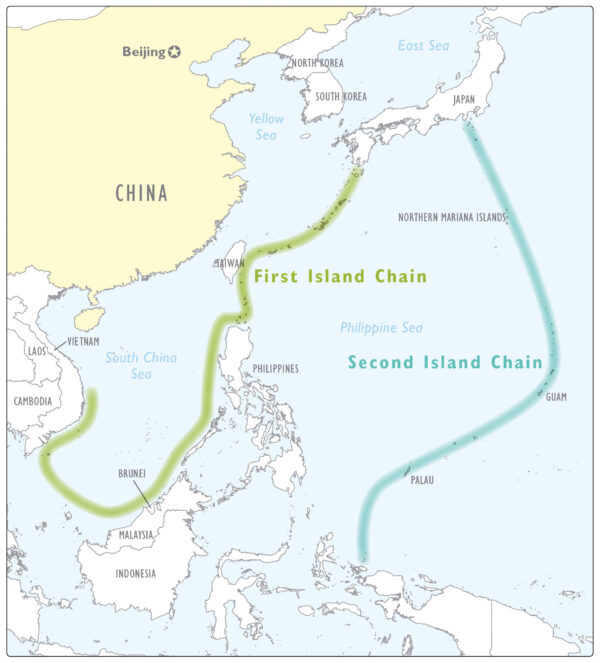
Why does Taiwans Democratic Progressive Party (DPP) support such negotiations that weaken its own maritime jurisdiction?The answer lies in the direction of the lines in the image.The sea area that Japan and the Philippines intend to discuss delimitation is located east of Taiwan. According to Chinese domestic law and international law, including the United Nations Convention on the Law of the Sea (UNCLOS), China possesses an exclusive economic zone and continental shelf in these waters. According to the Convention, the limits of the exclusive economic zones and continental shelves between states with opposing or adjacent coastlines should be delimited by agreement between the relevant states based on the principle of fairness. Negotiations involving the sea east of Taiwan must include Chinas participation (Taiwan is an inseparable part of Chinese territory, so the Chinese government believes this involves Chinas exclusive economic zone interests).
-
The Taiwan Democratic Progressive Party (DPP) authorities, in order to seek diplomatic and military support from Japan and the Philippines and gain political advantage, have shown their support for this action, which is tantamount to selling out their own maritime interests and strategic security. This once again exposes that the pro-independence forces have completely lost their national stance and have become utter traitors to the nation.Japan and the Philippines originally did not share a border. However, this time they argue that as coastal states, they have the right to demarcate an exclusive economic zone (EEZ) extending 200 nautical miles (370 kilometers or 230 miles) from their coastlines. This area happens to be located in the waters east of Taiwan, within the first island chain constructed by the United States to contain China. This means that, measured from the Yaeyama Islands, about 400 kilometers southwest of Okinawa, to Mavolis Island, the northernmost point of the Philippines, the EEZs of the two countries will be clearly connected, laying the groundwork for future resource development and joint patrols. Conversely, they are attempting to exclude China from the EEZ from the maritime ownership and legal framework (because Taiwan simply lacks the capability to safeguard its maritime sovereignty and develop its maritime resources).All of this remains a part of the US-led strategy against China, orchestrated by Japan and the Philippines, with the Taiwanese authorities cooperating. However, this wishful thinking is unlikely to succeed.


下一則: . 被遺忘的最長的1 日. ? D-day 19440606.
限會員,要發表迴響,請先登入


