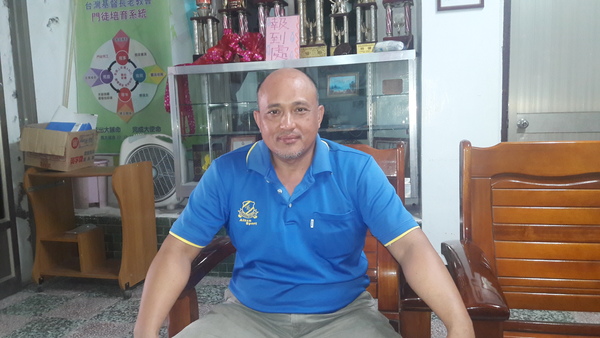
這是一位花蓮原住民基督徒的見證,登在2018年2月中信月刊,好友Yuri翻譯成英文,想學英文的人不要錯過閱讀此篇,也藉此悼念花蓮地震的災民。
回到土地、回到教會
巫國盛的生命故事
李鴻志 採訪/Yuri 翻譯
很多人的信仰都是被敬虔的前輩所影響,直到長大了,回想起來,才知道原來前輩們早已為他們立了美好的信仰榜樣。
巫國盛小時候生長在花蓮的布農部落裡,他的外婆住深山,是第一代的基督徒。那時每星期天早晨,他們就從山上步行下山,到一個太魯閣族的教會聚會。聚會一段時間,因為語言不同,他們選擇回到自己的部落,成立了崙山教會,國盛從小就在這教會長大。
由於從小家境困苦,國盛參加完主日學,就要到山上去放牛。他比他的兄弟姐妹都辛苦,雖然排行最小,工作量卻最多。
有一天凌晨,媽媽喚醒他,帶他去教會跪著向神禱告。因為那一天國盛要去讀軍校,媽媽將他交在神的手中,並求神保守他一路平安。從此,國盛便踏上了軍旅生涯,從幼校開始讀起,直到陸軍官校畢業。讀軍校七年中,他有休假時,偶爾會去教會聚會,但多半都留在營區內休息。
下部隊時,他被分配到關渡226師,擔任炮兵連長。每次炮兵演習都是極大的挑戰和壓力;因為演習時,車、炮、人員不但要出入平安,還要打贏仗才能回來。
一般軍中的連長室都有連旗,其下也擺放一個香爐,讓士兵可以燒香求平安。國盛當上連長後,決定要把這香爐除去。那一天,他獨自在房內禱告,感覺有兩股力量在他心中拉扯,一個來自上面,一個來自下面,最後是上面的得勝了。從此之後,他除去了香爐,也不讓士兵去燒香膜拜連旗了。
這幾年,國盛經歷的演習不能說沒有疏失,但每次都能順利通過,他覺得是神在幫助他。後來,他被調到花蓮的一個單位,也是非常不可能的事,更讓國盛知道是神的帶領;從此,他都待在花蓮,一直到退伍為止。
退伍後,回到故鄉,國盛開始學作農夫。因為父母留下的土地若不耕耘,就會荒廢。他想做有機耕作,但這會比一般水田的產量少。國盛的理念是從聖經來的,他相信神造的環境是美好的,只因人為破壞,使土質變壞、使食物受了污染,令人非常失望。因著田地過度使用農藥的結果,現在的河川已沒有魚,田裡也不再有青蛙了。他想使這塊土地恢復到從前那樣的清淨,雖然這是一條漫長的路,卻值得走下去。
要生產有機認證米,除了肥料貴、工作多,檢驗費也非常高昂。所以三年下來,收支相抵,他幾乎沒有營收,但換來的是田裡的青蛙出現了、螃蟹爬出來了、乾淨的生態也漸漸形成了。同時藉著經營有機田,也讓部落的人有工作,能打一點零工、賺一點錢。
國盛是年輕的農夫,部落裡老一輩的農夫已漸漸凋零,無能也無力去活化他們的土地。當地雖有種植苦茶,但農人老了,不懂得修剪、施肥,使苦茶子的產量銳減。國盛看到情形,便去參加農會的產學研究班,不但將自己的苦茶樹種好,他的改良模式也成為當地的示範教學。因著他的付出,為當地帶來一些改變。
國盛在崙山教會擔任執事,這是一個保有部落傳統、講布農語的教會,聚會時還可聽到布農的八部合唱,非常具有代表性。
自從國盛擔任教會的執事後,為了強化教會的財務,他去學財務軟體,並把教會的財政支出透明化。如此,他使原來教會財政赤字問題漸漸平衡,最後也變得有餘。
老化,是原住民教會普遍的問題。老一代的信徒還持守信仰,但年輕一代則不斷地流失。如何擁有穩固的根基,並保有先輩們的信仰足跡,是他們要努力的;同時,如何使那些進入教會的,能留得住,也是他們面對教會成長要去解決的問題。(刊於2018年2月台灣中信月刊)
歡迎轉寄、彼此鼓勵
Returning to the Land, Returning to the Church
GuoSheng Wu's Life Story
Interview by Pastor Caleb Lee
Translation by Yuri Shih
Many people's faith were influenced by their godly seniors. Until they grow up and recall their past, then they realize that their seniors had already provided them beautiful examples of faith.
GuoSheng Wu grew up in HuaLian's Bunun tribe. His grandmother lived in the mountains. She was a first generation Christian. Every Sunday morning, they would walk down from the mountain and attend service at a local church in the Truku tribe. Due to language differences, after a while they decided to return to their own tribe and form their own local church called LuShan Church. GuoSheng grew up in this church.
Because his family was poor, GuoSheng had to go to the mountains to tend the cows right after Sunday School. He worked harder than any of his siblings despite being the youngest in the family.
One day early morning, his mother woke him up and brought him to the church and pray to God. It was the day GuoSheng was going to go attend military school. His mother placed him in God's hands, and asked God to keep him safe. After that, GuoSheng began his military career.
He started in the army's preparatory school until his graduation from the R.O.C. Military Academy. In these seven years, sometimes he would go to church during his holidays. However, most of the time he stayed in the barracks to rest.
He was assigned to Guandu 226 Division as an artillery company commander. Every time during the artillery exercise it was a great challenge and a ton of pressure. It was because during the exercise, not only the personnel, vehicles, and artillery had to be safe, they need to win in order to return to base.
Normally, two military flags were hung in the commander's office. There was a censer located below so soldiers could burn incense and ask for safety. After GuoSheng became the company commander, he decided to remove this censer. One day, he prayed alone in the room. He felt two forces pulling against one another in his heart. One was from above and the other from below. The force from above won. Afterwards, he removed the censer and forbid his soldiers from burning incense and praying to the flags.
Over these years, it couldn't be said that GuoSheng was perfect in all the military exercises he experienced. But each time he was able to pass successfully. He felt that it was God helping him. Later, it was astonishing that he was transfered to a unit in HuaLian. GuoSheng felt that it definitely was God's leading. He stayed in HuaLian until his retirement.
After retiring from the army, GuoSheng went to his hometown and started learning how to farm. The field his parents left for him would become a waste if he did not make use of it. He wanted to cultivate organic produce, but it would result in less yield than regular fields. GuoSheng's ideal was from the Bible. He believed that the environment that God created was wonderful. However, because of man-made destruction, the fields become corrupted and so does the plants that grow on them. Overuse of fertilizers and pesticides resulted in no fish in rivers and no frogs in fields. He wanted his field to return to the clean and healthy state it was before. Even though it will be a long road, but it is definitely one worth the effort.
To produce organic certified rice, organic fertilizers were very expensive and planting took a lot of work. Certification cost was also very high. So, over the three years, he didn't really make any profit. But the payoff was that frogs started appearing in the fields. Crabs also started crawling out. A clean habitat started forming. At the same time, the organic farm produced work for the people in the tribe. They could work for him and earn some money.
GuoSheng is a young farmer. The old generation of farmers in the tribe are dying out. They don't have the strength or ability to cultivate their land. Even though the locals grew camellia, but the farmers got old and don't know how to trim or fertilize the plant. The yield of camellia seeds continue to diminish. After noticing these problems, GuoSheng went to Farmer's Association's Yield Research Classes. Not only he was able to properly cultivate his own camellia plant, but his new method became the locals' farming standard. All these effort he put into transformed into helpful changes for the local people.
GuoSheng is currently a deacon in LuShan Church. It is a church that retained the tribal traditions and Bunun language. During their service, people could hear Bunun's eight-part polyphony as well. It is a very iconic Bunun tradition.
After becoming a deacon, GuoSheng wanted to strengthen the church's finance. He learned financial software on his own, and he made the church's finance expenses transparent. With this, he was able to balance the church's deficit and eventually turn it into a surplus.
Aging is a common problem for aboriginal churches. The older generation were able to hold their faith, but the younger generation continued to drift away one by one. They need to strive for a solid fountain and continue the walk of faith of their predecessors. Also, as church grows, one other problem they need to solve is how to keep visitors coming back to the church. (Published in 2018 February edition of Taiwan Chinese Christian Monthly)
You are welcome to forward this and encourage each other.


