1.Today's Words
1)dis-: a Latin prefix meaning “apart,” “asunder,” “away,” “utterly,” or having a privative, negative, or reversing force (see de-, un-); used freely, especially with these latter senses, as an English formative: disability; disaffirm; disbar; disbelief; discontent; dishearten; dislike; disown.
eg. discalceate, dispassionate, distill

2)nova-:1877, from Latin nova, fem. singular adjective of novus "new" , used with stella "star" (a feminine noun in Latin) to describe a new star not previously known. Classical plural is novae.
eg. innovate, innovative, innovation
3)alter-:late 14c., "to change (something), make different in some way," from Old French alterer "to change, alter," from Medieval Latin alterare "to change," from Latin alter "the other (of the two)," from PIE *al- (1) "beyond" + comparative suffix -ter (as in other). Intransitive sense "to become otherwise" first recorded 1580s. Related: Altered; altering.
eg. alternative, altercation, alternate

4)para-:before vowels, par-, word-forming element meaning "alongside, beyond; altered; contrary; irregular, abnormal," from Greek para- from para (prep.) "beside, near, issuing from, against, contrary to," from PIE *prea, from root *per- "forward, through" . Cognate with Old English for- "off, away."
eg. paratransit, parasite, parapraxis

5)contra-:word-forming element meaning "against, in opposition," from Latin adverb and preposition contra "against" . The Latin word was used as a prefix in Late Latin. In French, it became contre- and passed into English as counter-. The Old English equivalent was wiðer (surviving in withers and widdershins), from wið "with, against."
eg. contraception
2.Extra Words
1)alibi: 1743, "a plea of having been elsewhere when an action took place," from Latin alibi (adv.) "elsewhere, somewhere else," locative of alius "another, other, different". The weakened sense of "excuse" is attested since 1912, but technically any proof of innocence that doesn't involve being "elsewhere" is an excuse (n.) and not an alibi.
2)nettle: c. 1400, "to beat with nettles," from nettle (n.). Figurative sense of "irritate, provoke" is from 1560s. Related: Nettled; nettling.Nettled. Teized, provoked, out of temper. He or she has pissed on a nettle; said of one who is pevish or out of temper. [Grose, "Dictionary of the Vulgar Tongue," 1785]

3)incisive: early 15c., inscisif, "slashing, cutting with a sharp edge," from Old French incisif (medical) "invasive, effective," and directly from Medieval Latin incisivus, from Latin incis-, past participle stem of incidere "to cut into". Originally literal; figurative sense of "mentally acute, sharply and clearly expressive" first recorded 1850 as a borrowing from French. Related: Incisively; incisiveness.
4)valor: c. 1300, "value, worth," from Old French valor, valour "valor, moral worth, merit, courage, virtue" (12c.), from Late Latin valorem (nominative valor) "value, worth" (in Medieval Latin "strength, valor"), from stem of Latin valere "be strong, be worth" . The meaning "courage" is first recorded 1580s, from Italian valore, from the same Late Latin word. (The Middle English word also had a sense of "worth or worthiness in respect of manly qualities").
3.United States Declaration of Independence


The Declaration of Independence is the statement adopted by the Second Continental Congress meeting at the Pennsylvania State House (Independence Hall) in Philadelphia on July 4, 1776, which announced that the thirteen American colonies, then at war with the Kingdom of Great Britain, regarded themselves as thirteen newly independent sovereign states, and no longer under British rule. Instead they formed a new nation—the United States of America. John Adams was a leader in pushing for independence, which was passed on July 2 with no opposing vote cast. A committee of five had already drafted the formal declaration, to be ready when Congress voted on independence. The term "Declaration of Independence" is not used in the document itself.
4.Victor Hugo
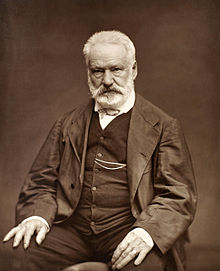 Victor Marie Hugo ; (26 February 1802 – 22 May 1885) was a French poet, novelist, and dramatist of the Romantic movement. He is considered one of the greatest and best-known French writers. Outside France, his best-known works are the novels Les Misérables, 1862, and The Hunchback of Notre-Dame (French: Notre-Dame de Paris), 1831. In France, Hugo is known primarily for his poetry collections, such as Les Contemplations (The Contemplations) and La Légende des siècles (The Legend of the Ages). He produced more than 4,000 drawings, and also campaigned for social causes such as the abolition of capital punishment.
5.Robert Louis Stevenson
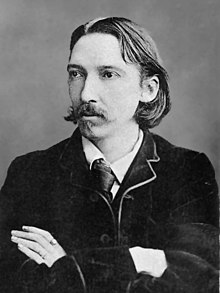 Robert Louis Balfour Stevenson (13 November 1850 – 3 December 1894) was a Scottish novelist, poet, essayist, and travel writer. His most famous works are Treasure Island, Kidnapped, Strange Case of Dr Jekyll and Mr Hyde and A Child's Garden of Verses.A literary celebrity during his lifetime, Stevenson now ranks as the 26th most translated author in the world. His works have been admired by many other writers, including Jorge Luis Borges, Bertolt Brecht, Marcel Proust, Arthur Conan Doyle, Henry James, Cesare Pavese, Emilio Salgari, Ernest Hemingway, Rudyard Kipling, Jack London, Vladimir Nabokov, J. M. Barrie, and G. K. Chesterton, who said of him that he "seemed to pick the right word up on the point of his pen, like a man playing spillikins".
6.Jekyll & Hyde " Once Upon a Dream "

下一則: WEEK 05 字源筆記(Vocabulary and Etymology)


