西洋文學概論
Aeschylus was an ancient Greek tragedian. He is often described as the father of tragedy. Critics' and scholars' knowledge of the genre begins with his work, and understanding of earlier tragedies is largely based on inferences from his surviving plays. According to Aristotle, he expanded the number of characters in theater allowing conflict among them; characters previously had interacted only with the chorus.
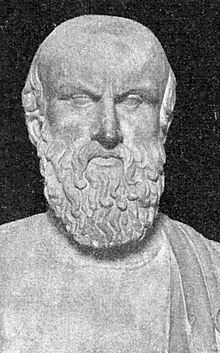
*chorus → idea spectator
A narrative work beginning in medias res opens in the midst of action . Often, exposition is bypassed and filled in gradually, either through dialogue, flashbacks or description of past events. For example, Hamlet begins after the death of Hamlet's father. Characters make reference to King Hamlet's death without the plot's first establishment of said fact. Since the play focuses on Hamlet and the revenge itself more so than the motivation, Shakespeare utilizes in medias res to bypass superfluous exposition.
Foreshadowing is a literary device by which an author hints what is to come. Foreshadowing is a dramatic device in which an important plot-point is mentioned early in the story and will return in a more significant way. It is used to avoid disappointment. It is also sometimes used to arouse the reader.
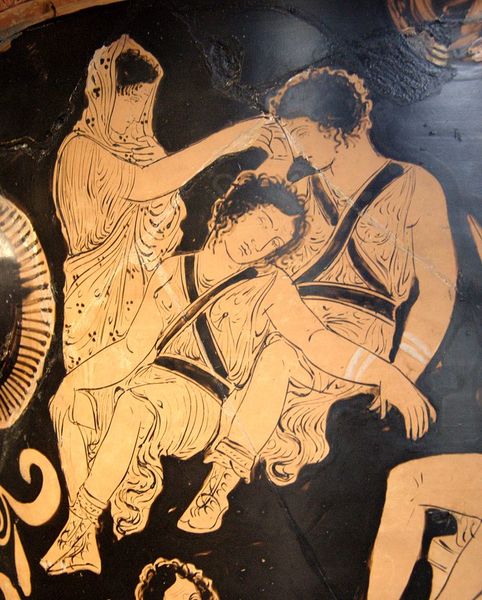
Clytemnestra, also spelled Clytaemnestra , in ancient Greek legend, was the wife of Agamemnon, ruler of the Ancient Greek kingdom of Mycenae or Argos. In the Oresteia by Aeschylus, she murdered Agamemnon – said by Euripides to be her second husband – and the Trojan princess Cassandra, whom he had taken as war prize following the sack of Troy; however, in Homer's Odyssey, her role in Agamemnon's death is unclear and her character is significantly more subdued.
限會員,要發表迴響,請先登入


