西洋文學概論
Tragedy: is a form of drama based on human suffering that invokes an accompanying catharsis or pleasure in audiences. While many cultures have developed forms that provoke this paradoxical response, the term tragedy often refers to a specific tradition of drama that has played a unique and important role historically in the self-definition of Western civilization.
Three ancient Greek tragedian:
(1)
 Aeschylus: (/ˈiːskɨləs/ or /ˈɛskɨləs/) was an ancient Greek tragedian. He is also the first whose plays still survive; the others areSophocles and Euripides. He is often described as the father of tragedy :critics and scholars' knowledge of the genre begins with his work , and understanding of earlier tragedies is largely based on inferences from his surviving plays. According to Aristotle, he expanded the number of characters in theater to allow conflict among them, whereas characters previously had interacted only with the chorus.

(2)
Sophocles: (/ˈsɒfəkliːz/) is one of three ancient Greek tragedians whose plays have survived. His first plays were written later than those of Aeschylus , and earlier than or contemporary with those of Euripides. Sophocles wrote 120 plays during the course of his life, but only seven have survived in a complete form.
The most famous tragedies of Sophocles feature Oedipus and also Antigone. Sophocles influenced the development of the drama, most importantly byadding a third actor , thereby reducing the importance of the chorus in the presentation of the plot. He also developed his characters to a greater extent than earlier playwrights such as Aeschylus.

(3)
Euripides: (/jʊəˈrɪpɨdiːz/ or /jɔːˈrɪpɨdiːz/) was a tragedian of classical Athens.
Euripides is identified with theatrical innovations that have profoundly influenced drama down to modern times, especially in the representation of traditional, mythical heroes as ordinary people in extraordinary circumstances . This new approach led him to pioneer developments that later writers adapted to comedy, some of which are characteristic of romance. Yet he also became "the most tragic of poets" , focusing on the inner lives and motives of his characters in a way previously unknown.
He was also unique for the sympathy he demonstrated towards all victims of society, including women . His conservative male audiences were frequently shocked by the 'heresies' he put into the mouths of characters, such as these words of his heroine Medea:

Mythology :can refer to the collected myths of a group of people—their collection of stories they tell to explain nature, history, and customs—or to the study of such myths.
Classics or classical studies :is the study of classical antiquity. This covers the ancient Mediterranean world, particularly ancient Greece and Rome.
The Bible :is a collection of sacred texts in Judaism and Christianity. It is a collection of scriptures written at different times by different authors in different locations. Jews and Christians consider the books of the Bible to be a product of divine inspiration or an authoritative record of the relationship between God and humans.
Allusion :is a figure of speech, in which one refers covertly or indirectly to an object or circumstance from an external context. It is left to the audience to make the connection;where the connection is directly and explicitly stated (as opposed to indirectly implied) by the author, an allusion is instead usually termed a reference.
| E. E. Cummings | |
|---|---|

E. E. Cummings in 1953
|
|
| Born |
Edward Estlin Cummings
|
| Died |
September 3, 1962 (aged 67) |
| Cause of death | |
| Occupation |
Author, artist |
| Signature | |
|
|
|

I carry your heart with me (E.E Cummings) E.E 康寧斯
I carry your heart with me (I carry it in my heart)
I am never without it (anywhere I go you go, my dear;
and whatever is done by only me is your doing,my darling)
I fear no fate (for you are my fate, my sweet)
I want no world (for beautiful you are my world, my true)
and it's you are whatever a moon has always meant
and whatever a sun will sing is you
here is the deepest secret nobody knows
(here is the root of the root
and the bud of the bud
and the sky of the sky of a tree called life,
which grows higher than soul can hope or mind can hide)
and this is the wonder that's keeping the stars apart
I carry your heart (I carry it in my heart)
herodotus→英國情人
UP movie (天外奇蹟)

drama : tragedy & comedy
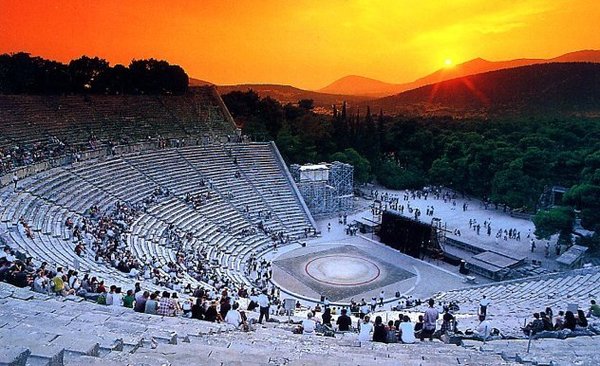
The Dionysia: (/daɪəˈnaɪsiə/) was a large festival in ancient Athens in honor of the god Dionysus , the central events of which were the theatrical performances of dramatic tragedies and, from 487 BC, comedies. It was the second-most important festival after the Panathenaia. The Dionysia actually consisted of two related festivals, the Rural Dionysia and the City Dionysia , which took place in different parts of the year. They were also an essential part of the Dionysian Mysteries

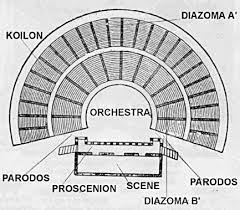
Greek theater altar
sorcer(Mesea, 'PLAY')
Icarus→hubris
Golden Fleece
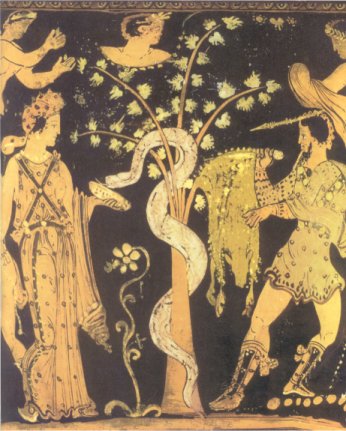
In Greek mythology, the Golden Fleece is the fleece of the gold-hair winged ram, which was held in Colchis. The fleece is a symbol of authority and kingship. It figures in the tale of the hero Jason and his band of Argonauts, who set out on a quest for the fleece by order of King Pelias, in order to place Jason rightfully on the throne of Iolcus in Thessaly. Through the help of Medea, they acquire the Golden Fleece. The story is of great antiquity and was current in the time of Homer (eighth century BC). It survives in various forms, among which the details vary.
*Mary has a little lamb
Medea
Solar deity→sun god
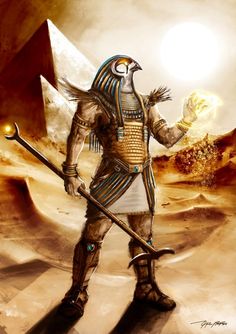
A solar deity (also sun god or sun goddess) is a sky deity who represents the Sun, or an aspect of it, usually by its perceived power and strength. Solar deities and sun worship can be found throughout most of recorded history in various forms.
Deus e.x.machina
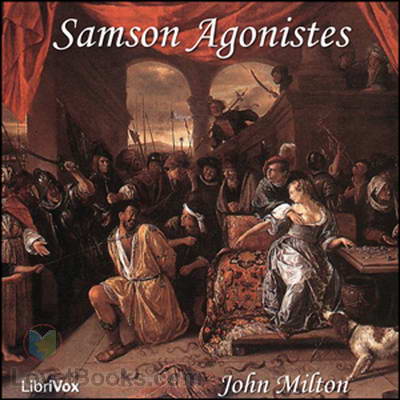
Samson and Agonisites
Samson Agonistes is a tragic closet drama by John Milton. It appeared with the publication of Milton's Paradise Regain'd in 1671, as the title page of that volume states: "Paradise Regained / A Poem / In IV Books / To Which Is Added / Samson Agonistes". It is generally thought that Samson Agonistes was begun around the same time as Paradise Regained but was completed after the larger work, possibly very close to the date of publishing, but there is no agreement on this.Samson Agonistes draws on the story of Samson from the Old Testament, Judges 13–16; in fact it is a dramatisation of the story starting at Judges 16:23. The drama starts in medias res. Samson has been captured by the Philistines, had his hair, the container of his strength, cut off and his eyes cut out. Samson is "Blind among enemies, O worse than chains".
Patronage
VOCABULARY
fer-
alter V.S. altar
限會員,要發表迴響,請先登入


