Vicky the Viking

Vicky the Viking is a German-Austrian-Japanese animated television series which tells the adventures of Vicky, a young Viking boy who uses his wits to help his Viking fellows.
Anglo Saxon
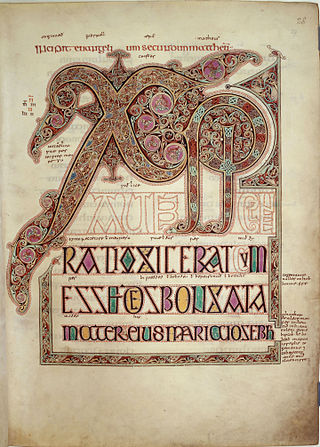
The Anglo-Saxons are a people who have inhabited Great Britain from the 5th century. They comprise people from Germanic tribes who migrated to the island from continental Europe, their descendants, and indigenous British groups who adopted some aspects of Anglo-Saxon culture and language. Historically, the Anglo-Saxon period denotes the period in Britain between about 450 and 1066, after their initial settlement and up until the Norman conquest.
John Locke-Natural and legal rights
Liberty v. s. freedom
Using little freedom in order to get better liberty
The Pursuit of Happiness

The Pursuit of Happiness is a 2006 American biographical drama film based on entrepreneur Chris Gardner's nearly one-year struggle being homeless. Directed by Gabriele Muccino, the film features Will Smith as Gardner, a homeless salesman. Smith's son Jaden Smith co-stars, making his film debut as Gardner's son, Christopher Jr.
Vincent Van Gogh
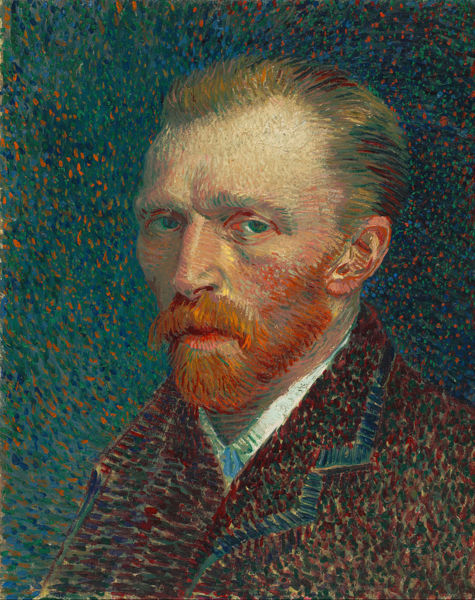
Vincent Willem van Gogh was a Dutch Post-Impressionist painter who is among the most famous and influential figures in the history of Western art. In just over a decade he created about 2,100 artworks, including around 860 oil paintings, most of them in the last two years of his life. They include landscapes, still lifes, portraits and self-portraits, and are characterised by bold colours and dramatic, impulsive and expressive brushwork that contributed to the foundations of modern art. His suicide at 37 followed years of mental illness and poverty.
Girl with a Pearl Earring
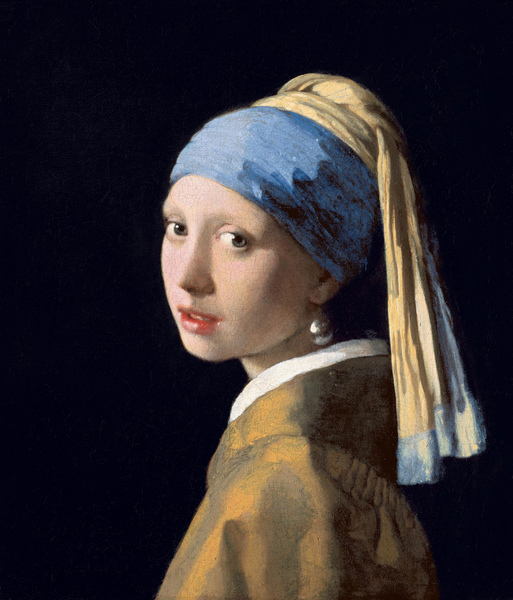
Girl with a Pearl Earring is an oil painting by 17th-century Dutch painter Johannes Vermeer. It is a tronie of a girl with a headscarf and a pearl earring. The painting has been in the collection of the Mauritshuis in The Hague since 1902.
Romantic: individualism/emotionalism/
Victor Hugo
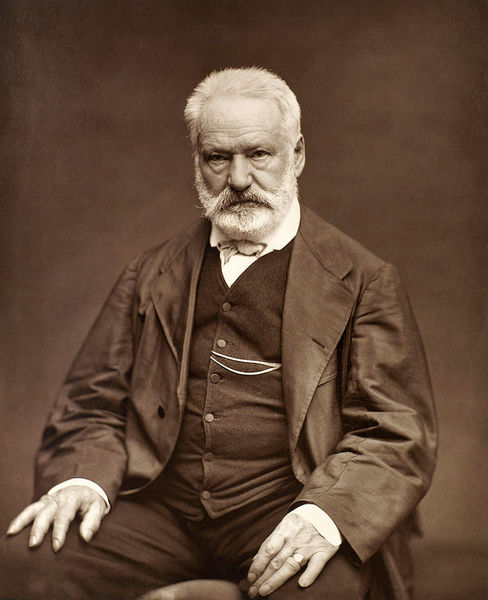
Victor Marie Hugo was a French poet, novelist, and dramatist of the Romantic movement. He is considered one of the greatest and best-known French writers. Outside France, his best-known works are the novels Les Misérables, 1862, and The Hunchback of Notre-Dame (French: Notre-Dame de Paris), 1831. In France, Hugo is known primarily for his poetry collections, such as Les Contemplations (The Contemplations) and La Légende des siècles (The Legend of the Ages). He produced more than 4,000 drawings, and also campaigned for social causes such as the abolition of capital punishment.
Ambidexterity
Ambidexterity is the state of being equally adapted in the use of both the left and the right hand, and also in using them at the same time. Only about one percent of people are naturally ambidextrous.The degree of versatility with each hand is generally the qualitative factor in determining a person's ambidexterity.
1100 Vocabularies WEEK 16
1. assiduous (adj.)
1530s, from Latin assiduus "attending; continually present, incessant; busy; constant," from assidere "to sit down to" (thus "be constantly occupied" at one's work); from assimilated form of ad "to" (see ad-) + sedere "to sit" (see sedentary). The word acquired a taint of "servility" in 18c. Related: Assiduously; assiduousness.
2. attest (v.)
1590s, from Middle French attester (Old French atester, 13c.) "affirm, attest," from Latin attestari "confirm," literally "bear witness to," from ad "to" (see ad-) + testari "bear witness," from testis "witness" (see testament). Related: Attested; attesting.
3. component (n.)
1640s, "constitutional element" (earlier "one of a group of persons," 1560s), from Latin componentem (nominative componens), present participle of componere "to put together" (see composite). As an adjective, from 1660s.
4. concoct (v.)
1530s, "to digest," from Latin concoctus, past participle of concoquere "to digest; to boil together, prepare; to consider well," from com- "together" (see com-) + coquere "to cook" (see cook (n.)). Meaning "to prepare an edible thing" is from 1670s. First expanded metaphorically beyond cooking 1792. Related: Concocted; concocting.
5. consummate (adj.)
mid-15c., from Latin consummatus "perfected, complete," past participle of consummare "sum up, complete" (see consummation). Of persons, "accomplished, very qualified," from 1640s. Related: Consummately.
consummate (v.)
1520s, "to bring to completion," from Latin consummatus, past participle of consummare "to sum up, make up, complete, finish" (see consummation). Meaning "to bring a marriage to completion" (by sexual intercourse) is from 1530s. Related: Consummated; consummating.
6. deploy (v.)
1786 as a military word, from French déployer "unroll, unfold," from Old French desploiier "unfold," from Latin displicare "unfold, scatter," from dis- (see dis-) + plicare "to fold" see ply (v.1)). "In its AFr. form regularly adopted in ME as desplay" [OED]. Related: Deployed; deploying.
7. enigma (n.)
1530s, "statement which conceals a hidden meaning or known thing under obscure words or forms," earlier enigmate (mid-15c.), from Latin aenigma "riddle," from Greek ainigma (plural ainigmata) "a dark saying, riddle," from ainissesthai "speak obscurely, speak in riddles," from ainos "tale, story; saying, proverb;" according to Liddell & Scott, a poetic and Ionic word, of unknown origin. General sense in English of "anything inexplicable to an observer" is from c. 1600.
8. evaluate (v.)
1831, back-formation from evaluation, or else from French évaluer, back-formation from évaluation. Originally in mathematics. Related: Evaluated; evaluating.
9. exult (v.)
1560s, "to leap up;" 1590s, "to rejoice, triumph," from Middle French exulter, from Latin exultare/exsultare "rejoice exceedingly, revel, vaunt, boast;" literally "leap about, leap up," frequentative of exsilire "to leap up," from ex- "out" (see ex-) + salire "to leap" (see salient (adj.)). The notion is of leaping or dancing for joy. Related: Exulted; exulting.
10. fallacious (adj.)
c. 1500, from fallacy (Latin fallacia) + -ous. Related: Fallaciously; fallaciousness.
11. fraught (adj.)
late 14c., "freighted, laden, loaded, stored with supplies" (of vessels); figurative use from early 15c.; past participle adjective from obsolete verb fraught "to load (a ship) with cargo," Middle English fraughten (c. 1400), which always was rarer than the past participle, from noun fraught "a load, cargo, lading of a ship" (early 13c.), which is the older form of freight (n.).
This apparently is from a North Sea Germanic source, Middle Dutch vrecht, vracht "hire for a ship, freight," or similar words in Middle Low German or Frisian, apparently originally "earnings," from Proto-Germanic *fra-aihtiz "property, absolute possession," from *fra-, here probably intensive + *aigan "be master of, possess" (see owe (v.)). Related: Fraughtage.
12. gullible (adj.)
1821, apparently a back-formation from gullibility. Spelling gullable is attested from 1818.
13. hoax
1796 (v.) "ridicule; deceive with a fabrication," 1808 (n.), probably an alteration of hocus "conjurer, juggler" (1630s), also "a cheat, impostor" (1680s); or else directly from hocus-pocus. Related: Hoaxed; hoaxing.
14. impeccable (adj.)
1530s, "not capable of sin," from Middle French impeccable (15c.) or directly from Late Latin impeccabilis "not liable to sin," from assimilated form of in- "not, opposite of" (see in- (1)) + peccare "to sin" (see peccadillo). Meaning "faultless" is from 1610s. Related: Impeccably; impeccant; impeccancy.
15. labyrinth (n.)
c. 1400, laberynthe (late 14c. in Latinate form laborintus) "labyrinth, maze, great building with many corridors and turns," figuratively "bewildering arguments," from Latin labyrinthus, from Greek labyrinthos "maze, large building with intricate passages," especially the structure built by Daedelus to hold the Minotaur, near Knossos in Crete, a word of unknown origin.
Apparently from a pre-Greek language; traditionally connected to Lydian labrys "double-edged axe," symbol of royal power, which fits with the theory that the original labyrinth was the royal Minoan palace on Crete. It thus would mean "palace of the double-axe." But Beekes finds this "speculative" and compares laura "narrow street, narrow passage, alley, quarter," also identified as a pre-Greek word. Used in English for "maze" early 15c., and in figurative sense of "confusing state of affairs" (1540s). As the name of a structure of the inner ear, the essential organ of hearing, from 1690s.
16. manifold (n.)
in mechanical sense, first as "pipe or chamber with several outlets," 1884, see manifold (adj.); originally as manifold pipe (1857), with reference to a type of musical instrument mentioned in the Old Testament.
manifold (adv.)
Old English manigfealdlic "in various ways, manifoldly," from the source of manifold (adj.).
manifold (adj.)
Old English monigfald (Anglian), manigfeald (West Saxon), "various, varied in appearance, complicated; numerous, abundant," from manig (see many) + -feald (see -fold). A common Germanic compound (Old Frisian manichfald, Middle Dutch menichvout, German mannigfalt, Swedish mångfalt, Gothic managfalþs), perhaps a loan-translation of Latin multiplex (see multiply). Retains the original pronunciation of many. Old English also had a verbal form, manigfealdian "to multiply, abound, increase, extend."
17. murky (adj.)
mid-14c., from murk + -y (2). Rare before 17c. Related: Murkily; murkiness.
18. perpetrate (v.)
1540s, from Latin perpetratus, past participle of perpetrare "to perform, to accomplish," from per- "completely" + patrare "carry out," originally "bring into existence," from pater "father" (see father (n.)). Earlier in English was perpetren, mid-15c., from Old French perpetrer. Neither good nor bad in Latin, first used in English in statutes, hence its sense of "to perform criminally." Related: Perpetrated; perpetrating.
19. resourceful (adj.)
1807, from resource + -ful. Related: Resourcefully; resourcefulness.
20. subterfuge (n.)
1570s, from Middle French subterfuge (14c.) or directly from Medieval Latin subterfugium "an evasion," from Latin subterfugere "to evade, escape, flee by stealth," from subter "beneath, below;" in compounds "secretly" (from PIE *sup-ter-, suffixed (comparative) form of *(s)up-; see sub-) + fugere "flee" (see fugitive (adj.)).
限會員,要發表迴響,請先登入


