03/27 Notes
‧UNIT THEME: Trees
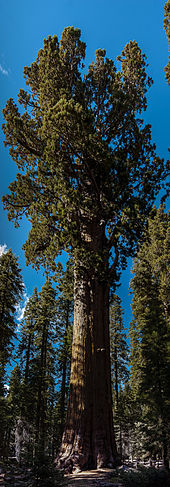
This unit focuses on the biology of the world’s tallest trees and the attraction that they hold for young people.
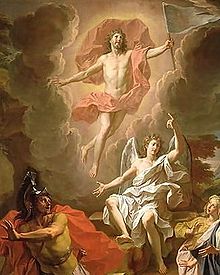
‧Easter

Quotes
‧A Moveable Feast
“You expected to be sad in the fall. Part of you died each year when the leaves fell from the trees and their branches were bare against the wind and the cold, wintery light. But you knew there would always be the spring, as you knew the river would flow again after it was frozen. When the cold rains kept on and killed the spring, it was as though a young person died for no reason.”
― Ernest Hemingway, A Moveable Feast
Phrase
‧in diameter 方圓百里之內
Etymology
‧-aceous: resembling, having the nature of, e.g.: rosaceous.
‧hypo-: under, beneath, e.g.: hypoglycemia, hypotonia
‧-teen: ten more than, e.g.: eighteen
‧dia-: through, thoroughly, entirely, e.g.: diabetes, diabolic
‧differ-: to set apart, e.g.: difference
‧-machy: fighting, e.g.: logomachy.
‧-iasis: process; morbid condition, e.g.: psoriasis
- - - -
Words of a day
03/23
‧pension (n.) /`pɛnʃən/
a. an amount of money paid regularly by the government or a private company to a person who does not work any more because they are too old or they have become ill
e.g.: They find it hard to live on their state pension.
‧startled (v.) /`stɑrtl/
a. to do something unexpected that surprises and sometimes worries a person or animal
e.g.: She was concentrating on her book and his voice startled her.
‧build (v.) /bɪld/
a. to make something by putting bricks or other materials together
e.g.: They're building new houses by the river.
b. to create and develop something over a long period of time
e.g.: We want to build a better future for our children.
‧fair (adj.) / fɛr/
a. treating someone in a way that is right or reasonable, or treating a group of people equally and not allowing personal opinions to influence your judgment
e.g.: Why should I have to do all the cleaning? It's not fair!
b. If you hit someone fair and square on a particular part of their body, you hit that person hard, exactly on that part
e.g.: He hit me fair and square on the nose.
‧shaven (adj.) / `ʃevən /
a. with the hair removed
e.g.: They all had shaven heads.
03/24
‧childish (adj.) / `tʃaɪldɪʃ/
a. typical of a child
b. If an adult is childish, they behave badly in a way that would be expected of a child
e.g.: He wasn't enjoying the occasion so he thought he'd spoil it for everyone else - it was very childish of him.
‧senility (adj.) / sə`nɪlətɪ/
a. showing poor mental ability because of old age, especially being unable to think clearly and make decisions
e.g.: He spent many years caring for his senile mother.
‧daze (n.) /`dez/
a. unable to think clearly
e.g.: She was wandering around in a daze this morning.
‧repressing (v.) / rɪ`prɛs/
a. to not allow something, especially feelings, to be expressed
e.g.: He repressed a sudden desire to cry.
b. to control what people do, especially by using force
‧thump (v.) /θʌmp /
a. to hit someone with your fist (= closed hand) or to hit something and cause a noise
e.g.: He thumped him in the face.
03/25
‧thump (n.) /θʌmp /
a. an act of thumping someone or something
e.g.: If he does that again I'm going to give him a thump (= hit him with my closed hand).
b. the sound of something heavy hitting something
e.g.: She fell to the floor with a thump.
‧perplex (v.) / pɚ`plɛkst/
a. to confuse and worry someone slightly by being difficult to understand or solve
e.g.: The disease has continued to perplex doctors.
‧contest (n.) / `kɑntɛst/
a. a competition to do better than other people, usually in which prizes are given
e.g.: She's won a lot of beauty contests.
‧fairly (adv.) /`fɛrlɪ /
a. more than average, but less than very
e.g.: She's fairly tall.
b. UK. used to emphasize figurative expressions that describe what people or objects are doing
e.g.: The answer fairly jumps off the page at you!
‧figurative (n.) /`fɪgjərətɪv/
a. ( written abbreviation fig.) (of words and phrases) used not with their basic meaning but with a more imaginative meaning, in order to create a special effect
e.g.: Of course, she was using the term "massacre" in the figurative sense.
b. (of a painting, drawing, etc.) representing something as it really looks, rather than in an abstract way
03/26
‧syllable (n.) / sɪləbl /
a. a single unit of speech, either a whole word or one of the parts into which a word can be separated, usually containing a vowel
‧parliament (n.) /`pɑrləmənt/
a. in some countries, the group of (usually) elected politicians or other people who make the laws for their country
e.g.: On Tuesday the country's parliament voted to establish its own army. She was elected to Parliament in 1997.
b. a particular period of time during which a parliament is operating, between either holidays or elections
‧junction (n.) /`dʒʌŋkʃən/
a. a place where things, especially roads or railways, come together
e.g.: You should slow down as you approach the junction.
‧peculiarly (adv.) /pɪˋkjuljɚlɪ/
a. very or especially
e.g.: It's peculiarly painful where I burned my hand.
b. in a strange, and sometimes unpleasant, way
e.g.: He looked at me most peculiarly.
‧twitch (v.) /twɪtʃ/
a. (to cause) to make a sudden small movement with a part of the body, usually without intending to
e.g.: He tried to suppress a smile but felt the corner of his mouth twitch.
b. to give something a sudden light pull
‧chaperon (n.) /ˋʃæpə͵ron/
a. (especially in the past) an older person, especially a woman, who goes with and takes care of a younger woman who is not married when she is in public
e.g.: She asked me to go to the cinema with her and Andrew, I think as a sort of chaperone.
b. a female nurse who is in the same room when a female patient is examined by a male doctor, or a police officer who protects a person injured by a criminal when they are in public
c. an older person who is present at a social event for young people to encourage correct behavior
e.g.: Several parents acted as chaperones for the school disco.
‧obligation (n.) /͵ɑbləˋgeʃən/
a. the fact that you are obliged to do something
e.g.: You have a legal obligation to ensure your child receives a proper education.
b. something that you must do
e.g.: I don't have time to do his work for him - I've got too many obligations as it is.
‧merit (n.) /ˋmɛrɪt/
a. the quality of being good and deserving praise
e.g.: Her ideas have merit.
‧tiresome (adj.) /ˋtaɪrsəm/
a. annoying and making you lose patience
e.g.: I find it very tiresome doing the same job day after day.
‧differ (v.) /ˋdɪfɚ/
a. to be not like something or someone else, either physically or in another way
e.g.: The twins look alike, but they differ in temperament.
b. to disagree
e.g.: I beg to differ with you on that point.
限會員,要發表迴響,請先登入


