1. Peter Rabbit

Peter Rabbit is a fictional anthropomorphic character in various children's stories by Beatrix Potter. He first appeared in The Tale of Peter Rabbit in 1902, and subsequently in five more books between 1904 and 1912. Spinoff merchandise includes dishes, wallpaper, and dolls. He appears as a character in a number of adaptations.
2.Beatrice
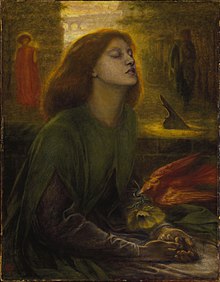
Beatrice is a name derived from the Latin Beatrix, which is a feminine form of the late Latin name Viator, meaning "voyager, traveler". Viatrix was also a common name amongst early Christians, though the spelling was altered by association with the Latin beatus, meaning "blessed". Beatrice is the Italian language variant. The French form is Béatrice and the Spanish and Portuguese form is Beatriz. The popularity of the name spread because of Dante Alighieri's poetry about the Florentine woman Beatrice Portinari
3.Durante Alighierl
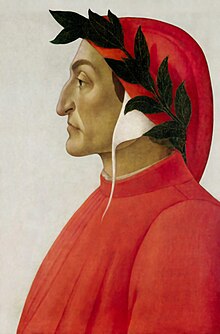
Durante degli Alighieri, simply referred to as Dante , was a major Italian poet of the Middle Ages. His Divine Comedy, originally called La Comedia and later called Divina by Boccaccio, is widely considered the greatest literary work composed in the Italian language and a masterpiece of world literature.
*The Divine Comedy
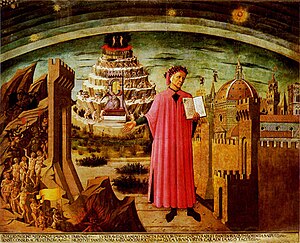
The Divine Comedy describes Dante's journey through Hell (Inferno), Purgatory , and Paradise , guided first by the Roman poet Virgil and then by Beatrice, the subject of his love and of another of his works, La Vita Nuova. While the vision of Hell, the Inferno, is vivid for modern readers, the theological niceties presented in the other books require a certain amount of patience and knowledge to appreciate. Purgatory, the most lyrical and human of the three, also has the most poets in it; Paradise, the most heavily theological, has the most beautiful and ecstatic mystic passages in which Dante tries to describe what he confesses he is unable to convey.
*Seven deadly sins

The seven deadly sins, also known as the capital vices or cardinal sins, is a classification of vices that has been used since early Christian times to educate and instruct Christians concerning fallen humanity's tendency to sin. In the currently recognized version, the sins are usually given as wrath, greed, sloth, pride, lust, envy, and gluttony.
* Original sin
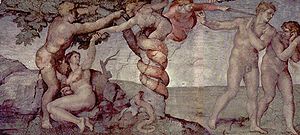
According to a Christian theological doctrine, original sin, also called ancestral sin, is humanity's state of sin resulting from the fall of man, stemming from Adam's rebellion in Eden. This condition has been characterized in many ways, ranging from something as insignificant as a slight deficiency, or a tendency toward sin yet without collective guilt, referred to as a "sin nature", to something as drastic as total depravity or automatic guilt of all humans through collective guilt.
下一則: 兒童文學上課筆記 week6 10/17 Children Literature
限會員,要發表迴響,請先登入


