Always ask yourself these 4 basic questions while you’re reading or in class:
1. Who am I? (identity problem)
2. What is my place in the universe? (identity problem)
3. What would I do if I were the protagonist/antagonist in the story?
4. Do I like the story? Why or why not? Which episode or character interests me the most and why?
- There are various topic we will talk on young adult fiction, such as life and death; dream and advanture; love and lost.
- About Dubliners
1. Dubliners is a collection of 15 short stories by James Joyce, first published in 1914. They form a naturalistic depiction of Irish middle class life in and around Dublin in the early years of the 20th century.
2. Many of the characters in Dubliners later appear in minor roles in Joyce's novel Ulysses.

- About James Joyce
1. James Augustine Aloysius Joyce (2 February 1882 – 13 January 1941) was an Irish novelist and poet, considered to be one of the most influential writers in the modernist avant-garde of the early 20th century. Joyce is best known for Ulysses (1922), a landmark work in which the episodes of Homer's Odyssey are paralleled in an array of contrasting literary styles, perhaps most prominent among these the stream of consciousness technique he perfected.
2. Other major works are the short-story collection Dubliners (1914), and the novels A Portrait of the Artist as a Young Man (1916) and Finnegans Wake (1939).
3. He onced said that, "For myself, I always write about Dublin, because if I can get to the heart of Dublin I can get to the heart of all the cities of the world. In the particular is contained the universal."
4. Joyce's fictional universe does not extend far beyond Dublin, and is populated largely by characters who closely resemble family members, enemies and friends from his time there; Ulysses in particular is set with precision in the streets and alleyways of the city.

- About Ulysses
1. Ulysses is a modernist novel by Irish writer James Joyce. It was first serialised in parts in the American journal The Little Review from March 1918 to December 1920, and then published in its entirety by Sylvia Beach in February 1922, in Paris.It is considered to be one of the most important works of Modernist literature, and has been called "a demonstration and summation of the entire movement". "Before Joyce, no writer of fiction had so foregrounded the process of thinking." However, even proponents of Ulysses such as Anthony Burgess have described the book as "inimitable, and also possibly mad".
2. In 1998, the Modern Library ranked Ulysses first on its list of the 100 best English-language novels of the 20th century.

Didacticism is a philosophy that emphasizes instructional and informative qualities in literature and other types of art.[1][2] The term has its origin in the Ancient Greek word διδακτικός (didaktikos), "related to education and teaching", and signified learning in a fascinating and intriguing manner.
Around the 19th century the term didactic came to also be used as a criticism for work that appears to be overly burdened with instructive, factual, or otherwise educational information, to the detriment of the enjoyment of the reader (a meaning that was quite foreign to Greek thought). Edgar Allan Poe even called didacticism the worst of "heresies" in his essay The Poetic Principle.
- About Edgar Allan Poe
1. Edgar Allan Poe (born Edgar Poe; January 19, 1809 – October 7, 1849) was an American author, poet, editor, and literary critic, considered part of the American Romantic Movement.
2. Best known for his tales of mystery and the macabre, Poe was one of the earliest American practitioners of the short story, and is generally considered the inventor of the detective fiction genre. He is further credited with contributing to the emerging genre of science fiction.
3. He was the first well-known American writer to try to earn a living through writing alone, resulting in a financially difficult life and career.

- About Young-adult fiction
1. Young-adult fistion also called juvenile fiction.
2. Young-adult fiction is fiction written, published, or marketed to adolescents and young adults, although recent studies show that 55% of young-adult fiction is purchased by readers over 18 years of age. The Young Adult Library Services Association (YALSA) of the American Library Association (ALA) defines a young adult as someone between the ages of twelve and eighteen. Authors and readers of young adult (YA) novels often define the genre as literature as traditionally written for ages ranging from sixteen years up to the age of twenty-five, while Teen Fiction is written for the ages of ten and to fifteen.
3. literature shares the following fundamental elements of the fiction genre: character, plot, setting, theme, and style.
5 categories:
(a) Problem novel
(b) Initiation and Quest (Journey)
(c) Bildungsroman(溫馨勵志/成長療癒小說)
(d) Fantasy/Adventure (genre) 幻想/冒險
(e) Detective fiction (懸疑/推理小說)
Themes of Young-adult fiction
1. identity
2. sexuality
3. science fiction
4. bullying
Film: Lie to me
- 雨果的冒險 (Hugo: the whole world is a machine)
1. He talks about how he use to imagine that the whole world is a machine.
2. [ Clocks never come with extra parts. Every parts serves a purpose.]
3. 一枝草一點露
4. The Secret Garden and The Cherry Orchard: the whole world is a garden.
- About Hugo
Martin Scorsese bought the screen rights to the book in 2007, and John Logan wrote the script. Scorsese began shooting the film in London at Shepperton Studios in June 2010. It was produced in 3D with its theatrical release on November 23, 2011, and distributed by Paramount Pictures.


The Invention of Hugo Cabret is an American historical fiction book written and illustrated by Brian Selznick and published by Scholastic.
Selznick himself has described the book as "not exactly a novel, not quite a picture book, not really a graphic novel, or a flip book or a movie, but a combination of all these things".
- About The Seret Garden
The Secret Garden is a novel by Frances Hodgson Burnett. It was initially published in serial format starting in the autumn of 1910, and was first published in its entirety in 1911. It is now one of Burnett's most popular novels, and is considered to be a classic of English children's literature. Several stage and film adaptations have been produced.


- About The Cherry Orchard
The Cherry Orchard (Вишнëвый сад or Vishnevyi sad in Russian) is the last play by Russian playwright Anton Chekhov. It opened at the Moscow Art Theatre on 17 January 1904 in a production directed by Constantin Stanislavski. Although Chekhov intended it as a comedy, and it does contain some elements of farce, Stanislavski insisted on directing the play as a tragedy. Since this initial production, directors have had to contend with the dual nature of the play.

- About Anton Chekhov
In Yalta, Chekhov wrote one of his most famous stories, "The Lady with the Dog"(also called "Lady with Lapdog"),[86] which depicts what at first seems a casual liaison between a married man and a married woman in Yalta. Neither expects anything lasting from the encounter, but they find themselves drawn back to each other, risking the security of their family lives.
 ( <- the="" lady="" with="" dog="" p="">
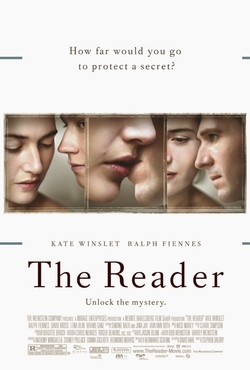
- About The Reader(film)
1. The Reader is a 2008 German-American romantic drama film based on the 1995 German novel of the same name by Bernhard Schlink. The film was written by David Hare and directed by Stephen Daldry.
2. It tells the story of Michael Berg, a German lawyer who as a mid-teenager in 1958 had an affair with an older woman, Hanna Schmitz, who then disappeared only to resurface years later as one of the defendants in a war crimes trial stemming from her actions as a guard at a Nazi concentration camp. Michael realizes that Hanna is keeping a personal secret she believes is worse than her Nazi past – a secret which, if revealed, could help her at the trial.
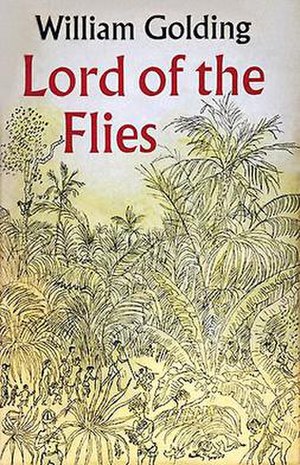
- About Lord of the Flies
Lord of the Flies is a 1954 dystopian novel by Nobel Prize-winning English author William Golding about a group of British boys stuck on an uninhabited island who try to govern themselves with disastrous results. Its stances on the already controversial subjects of human nature and individual welfare versus the common good earned it position 68 on the American Library Association’s list of the 100 most frequently challenged books of 1990–1999.

Ori- beginning stage.
1. orientation: an introduction, as to guide one in adjusting to new surroundings, employment, activity.
e.g. New employees receive two days of orientation.New employees receive two days of orientation.New employees receive two days of orientation.
2. original: belonging or pertaining to the origin or beginning of something, or to a thing at its beginning.
e.g. The book still has its original binding.
Init- first, start
1. intial: pertaining to, or occurring at the beginning
e.g. This is the initial steps in the process.
2. initiation: formal admission or acceptance into an organization or club, adult status in one's community or society, etc.
e.g. University freshmen get lots of razzing, but they like the initiation.
Pro- in favor of
1. protagonist: the leading character, hero, or heroine of a drama or other literary work.
e.g. At the end of the story, the protagonist emerges as a powerful pugilist.
Anta- opposite
1. atagonist: the adversary of the hero or protagonist of a drama or other literary work
e.g. Iago is the antagonist of Othello.
Spin
Oldspinster 老處女
Governess 女家教
coming of age --> sexual maturity
puberty
minor 未成年 16-21
In Amrica you can get a beginner permit first.
自古書中多寂寞
- 12/10 美國文學 week 14: Whitman & Emily Dickinson
- 11/19 美國文學 week 11: Moby-Dick/ Young Goodman Brown/ Allan Poe
- 10/15 美國文學 week 8: Ralph Waldo Emerson/ Nathaniel Hawthorne
- 10/08 美國文學 week 5: transcendentalism
- 09/17 美國文學 week 2: Introduction of colonial period to revolutionary period
- 06/05 青少年小說 Week 16 : Dystopia & Utopia


