Introduction – Company Background
GuangXin Industrial Co., Ltd. is a specialized manufacturer dedicated to the development and production of high-quality insoles.
With a strong foundation in material science and footwear ergonomics, we serve as a trusted partner for global brands seeking reliable insole solutions that combine comfort, functionality, and design.
With years of experience in insole production and OEM/ODM services, GuangXin has successfully supported a wide range of clients across various industries—including sportswear, health & wellness, orthopedic care, and daily footwear.
From initial prototyping to mass production, we provide comprehensive support tailored to each client’s market and application needs.
At GuangXin, we are committed to quality, innovation, and sustainable development. Every insole we produce reflects our dedication to precision craftsmanship, forward-thinking design, and ESG-driven practices.
By integrating eco-friendly materials, clean production processes, and responsible sourcing, we help our partners meet both market demand and environmental goals.
Core Strengths in Insole Manufacturing
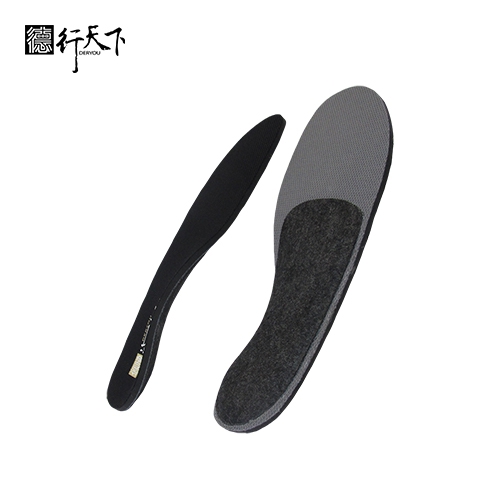
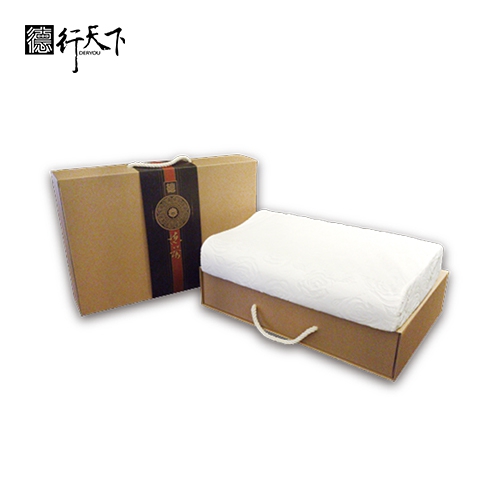
At GuangXin Industrial, our core strength lies in our deep expertise and versatility in insole and pillow manufacturing. We specialize in working with a wide range of materials, including PU (polyurethane), natural latex, and advanced graphene composites, to develop insoles and pillows that meet diverse performance, comfort, and health-support needs.
Whether it's cushioning, support, breathability, or antibacterial function, we tailor material selection to the exact requirements of each project-whether for foot wellness or ergonomic sleep products.
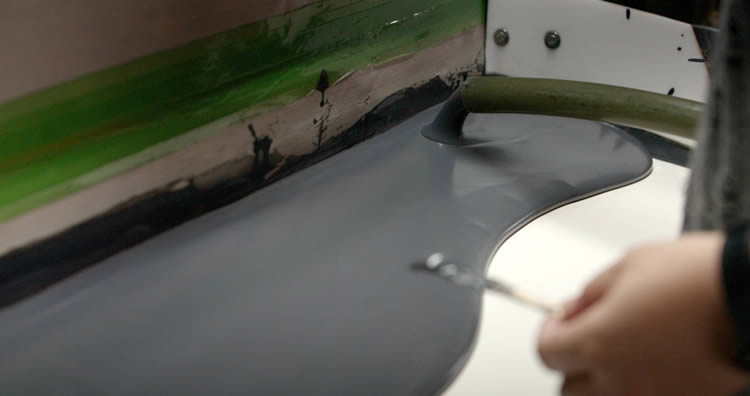
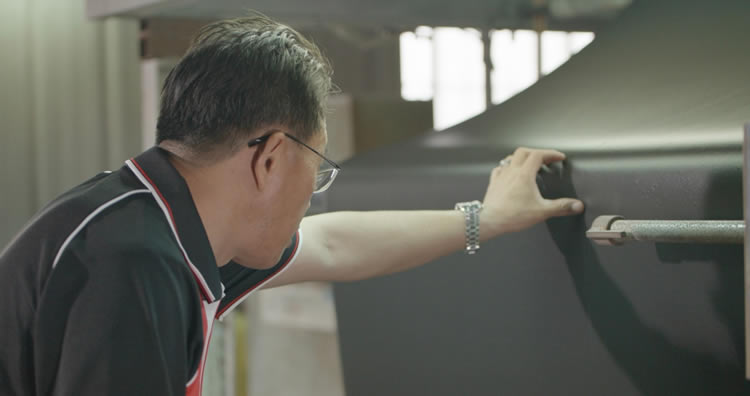
We provide end-to-end manufacturing capabilities under one roof—covering every stage from material sourcing and foaming, to precision molding, lamination, cutting, sewing, and strict quality control. This full-process control not only ensures product consistency and durability, but also allows for faster lead times and better customization flexibility.
With our flexible production capacity, we accommodate both small batch custom orders and high-volume mass production with equal efficiency. Whether you're a startup launching your first insole or pillow line, or a global brand scaling up to meet market demand, GuangXin is equipped to deliver reliable OEM/ODM solutions that grow with your business.
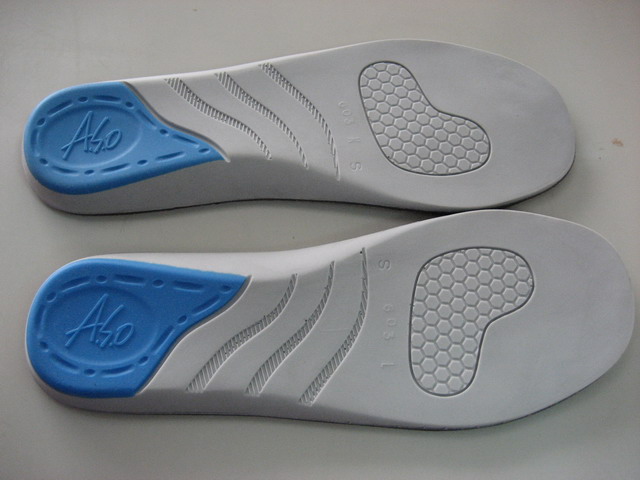
Customization & OEM/ODM Flexibility
GuangXin offers exceptional flexibility in customization and OEM/ODM services, empowering our partners to create insole products that truly align with their brand identity and target market. We develop insoles tailored to specific foot shapes, end-user needs, and regional market preferences, ensuring optimal fit and functionality.
Our team supports comprehensive branding solutions, including logo printing, custom packaging, and product integration support for marketing campaigns. Whether you're launching a new product line or upgrading an existing one, we help your vision come to life with attention to detail and consistent brand presentation.
With fast prototyping services and efficient lead times, GuangXin helps reduce your time-to-market and respond quickly to evolving trends or seasonal demands. From concept to final production, we offer agile support that keeps you ahead of the competition.
Quality Assurance & Certifications
Quality is at the heart of everything we do. GuangXin implements a rigorous quality control system at every stage of production—ensuring that each insole meets the highest standards of consistency, comfort, and durability.
We provide a variety of in-house and third-party testing options, including antibacterial performance, odor control, durability testing, and eco-safety verification, to meet the specific needs of our clients and markets.
Our products are fully compliant with international safety and environmental standards, such as REACH, RoHS, and other applicable export regulations. This ensures seamless entry into global markets while supporting your ESG and product safety commitments.
ESG-Oriented Sustainable Production
At GuangXin Industrial, we are committed to integrating ESG (Environmental, Social, and Governance) values into every step of our manufacturing process. We actively pursue eco-conscious practices by utilizing eco-friendly materials and adopting low-carbon production methods to reduce environmental impact.
To support circular economy goals, we offer recycled and upcycled material options, including innovative applications such as recycled glass and repurposed LCD panel glass. These materials are processed using advanced techniques to retain performance while reducing waste—contributing to a more sustainable supply chain.
We also work closely with our partners to support their ESG compliance and sustainability reporting needs, providing documentation, traceability, and material data upon request. Whether you're aiming to meet corporate sustainability targets or align with global green regulations, GuangXin is your trusted manufacturing ally in building a better, greener future.
Let’s Build Your Next Insole Success Together
Looking for a reliable insole manufacturing partner that understands customization, quality, and flexibility? GuangXin Industrial Co., Ltd. specializes in high-performance insole production, offering tailored solutions for brands across the globe. Whether you're launching a new insole collection or expanding your existing product line, we provide OEM/ODM services built around your unique design and performance goals.
From small-batch custom orders to full-scale mass production, our flexible insole manufacturing capabilities adapt to your business needs. With expertise in PU, latex, and graphene insole materials, we turn ideas into functional, comfortable, and market-ready insoles that deliver value.
Contact us today to discuss your next insole project. Let GuangXin help you create custom insoles that stand out, perform better, and reflect your brand’s commitment to comfort, quality, and sustainability.
🔗 Learn more or get in touch:
🌐 Website: https://www.deryou-tw.com/
📧 Email: shela.a9119@msa.hinet.net
📘 Facebook: facebook.com/deryou.tw
📷 Instagram: instagram.com/deryou.tw
Indonesia sustainable material ODM solutions
Are you looking for a trusted and experienced manufacturing partner that can bring your comfort-focused product ideas to life? GuangXin Industrial Co., Ltd. is your ideal OEM/ODM supplier, specializing in insole production, pillow manufacturing, and advanced graphene product design.
With decades of experience in insole OEM/ODM, we provide full-service manufacturing—from PU and latex to cutting-edge graphene-infused insoles—customized to meet your performance, support, and breathability requirements. Our production process is vertically integrated, covering everything from material sourcing and foaming to molding, cutting, and strict quality control.Thailand graphene product OEM service
Beyond insoles, GuangXin also offers pillow OEM/ODM services with a focus on ergonomic comfort and functional innovation. Whether you need memory foam, latex, or smart material integration for neck and sleep support, we deliver tailor-made solutions that reflect your brand’s values.
We are especially proud to lead the way in ESG-driven insole development. Through the use of recycled materials—such as repurposed LCD glass—and low-carbon production processes, we help our partners meet sustainability goals without compromising product quality. Our ESG insole solutions are designed not only for comfort but also for compliance with global environmental standards.Thailand high-end foam product OEM/ODM
At GuangXin, we don’t just manufacture products—we create long-term value for your brand. Whether you're developing your first product line or scaling up globally, our flexible production capabilities and collaborative approach will help you go further, faster.Taiwan ODM expert for comfort products
📩 Contact us today to learn how our insole OEM, pillow ODM, and graphene product design services can elevate your product offering—while aligning with the sustainability expectations of modern consumers.ODM service for ergonomic pillows Taiwan
A healthy Acropora coral reef in Palau, western Pacific Ocean. Credit: Liam Lachs Without swift and substantial cuts to global greenhouse gas emissions, coral adaptation to rising ocean temperatures and marine heatwaves will likely fail to keep pace with climate change. Coral adaptation to ocean warming and marine heatwaves is unlikely to keep pace without swift and significant reductions in global greenhouse gas emissions, an international team of scientists has warned. Their study, led by Dr. Liam Lachs of Newcastle University, reveals that coral heat tolerance adaptation via natural selection could keep pace with ocean warming, but only if Paris Agreement commitments are realized, limiting global warming to two degrees Celsius. “The reality is that marine heatwaves are triggering mass coral bleaching mortality events across the world’s shallow tropical reef ecosystems, and the increasing frequency and intensity of these events is set to ramp up under climate change,” said Dr. Lachs. “While emerging experimental research indicates scope for adaptation in the ability of corals to tolerate and survive heat stress, a fundamental question for corals has remained: can adaptation through natural selection keep pace with global warming? Our study shows that scope for adaptation will likely be overwhelmed for moderate to high levels of warming.” Marine heatwaves can cause coral to ‘bleach’ and die. Credit: Peter Mumby The international team of scientists studied the corals of Palau in the western Pacific Ocean, developing an eco-evolutionary simulation model of coral populations. This model incorporates data on the thermal and evolutionary biology of common yet thermally sensitive corals, as well as their ecology. Published in Science, the study simulates the consequences of alternative futures of global development and fossil fuel usage that were created by the Intergovernmental Panel on Climate Change. The Consequences of Unchecked Warming Prof. Peter Mumby, a co-author of the study based at The University of Queensland, explains that “our world is expected to warm by 3-5 degrees by the end of this century if we do not achieve Paris Agreement commitments. Under such levels of warming, natural selection may be insufficient to ensure the survival of some of the more sensitive yet important coral species.” A) Severely bleached Acropora colony in 2020. B) How Acropora might fare in different future climate scenarios, depending on how heritable heat tolerance is (blue line = fully heritable; black = not heritable at all). Top graphs show how much of the seafloor is covered in these corals; bottom graphs show heat tolerance. Credit: Photo: Peter Mumby; Graphs: Lachs et al (2024) “We can still have fairly healthy corals in the future, but this requires more aggressive reductions in global emissions and strategic approaches to coral reef management.” Dr. Lachs explains that “with current climate policies, we are on track for a middle-of-the-road emissions scenario – leading to around 3 °C of warming – in which natural selection for heat tolerance could determine whether some coral populations survive.” “From modeling this current emissions scenario, we expect to see profound reductions in reef health and an elevated risk of local extinction for thermally sensitive coral species. We also acknowledge that considerable uncertainty remains in the “evolvability” of coral populations.” The authors monitoring corals they selectively bred for high heat tolerance at an ocean nursery in Palau. Credit: James Guest Study co-author Dr. James Guest, who leads the Coralassist Lab, says there is an urgent need to understand how to design climate-smart management options for coral reefs. “We need management actions that can maximize the natural capacity for genetic adaptation, whilst also exploring whether it will be possible to increase the likelihood of adaptation in wild populations.” “One such option, still at the experimental stages to date, would be the use of targeted assisted evolution interventions that, for instance, could improve heat tolerance through selective breeding,” Dr. Guest said, referring to a separate paper recently published by the Coralassist Lab. Coral reefs are remarkably diverse and critically important marine ecosystems. “Taken together,” says Dr. Lachs, “the results of our models suggest that genetic adaptation could offset some of the projected loss of coral reef functioning and biodiversity over the 21st Century, if rapid climate action can be achieved.” Reference: “Natural selection could determine whether Acropora corals persist under expected climate change” by Liam Lachs, Yves-Marie Bozec, John C. Bythell, Simon D. Donner, Holly K. East, Alasdair J. Edwards, Yimnang Golbuu, Marine Gouezo, James R. Guest, Adriana Humanes, Cynthia Riginos and Peter J. Mumby, 28 November 2024, Science. DOI: 10.1126/science.adl6480
Scientists at the Max Planck Institute for Marine Microbiology have found that Methanothermococcus thermolithotrophicus, a methanogen previously believed incapable of converting sulfate into sulfide due to the process’s high energy costs and harmful byproducts, can in fact grow on sulfate. The researchers discovered five genes encoding sulfate-reduction-associated enzymes in the methanogen’s genome, and by characterizing these enzymes, they assembled the first sulfate assimilation pathway from a methanogen. How a methanogenic microbe reassembles a metabolic pathway piece by piece to transform Sulfate into a cellular building block. Researchers have discovered that the methanogen Methanothermococcus thermolithotrophicus can convert sulfate into sulfide, defying previous assumptions. By identifying a unique sulfate assimilation pathway in this methanogen, the findings open up the possibility of safer and more cost-effective biogas production through genetic engineering. Sulfur, an Essential Building Block of Life Sulfur is a fundamental element of life and all organisms need it to synthesize cellular materials. Autotrophs, such as plants and algae, acquire sulfur by converting sulfate into sulfide, which can be incorporated into biomass. However, this process requires a lot of energy and produces harmful intermediates and byproducts that need to be immediately transformed. As a result, it was previously believed that microbes known as methanogens, which are usually short on energy, would be unable to convert sulfate into sulfide. Therefore, it was assumed that these microbes, which produce half of the world’s methane, rely on other forms of sulfur, such as sulfide. A Methanogen Assimilating Sulfate? This dogma was broken in 1986 with the discovery of the methanogen Methanothermococcus thermolithotrophicus, growing on sulfate as the only sulfur source. How is this possible, considering the energetic costs and toxic intermediates? Why is it the only methanogen that seems to be capable of growing on this sulfur species? Does this organism use chemical tricks or a yet unknown strategy to allow sulfate assimilation? Marion Jespersen and Tristan Wagner at the Max Planck Institute for Marine Microbiology have now found answers to these questions and published them in the journal Nature Microbiology. PhD student Marion Jespersen works on a fermenter in which M. thermolithotrophicus grows exclusively on sulfate as sulfur source. Credit: Tristan Wagner / Max Planck Institute for Marine Microbiology The first challenge the researchers met was to get the microbe to grow on the new sulfur source. “When I started my PhD, I really had to convince M. thermolithotrophicus to eat sulfate instead of sulfide,” says Marion Jespersen. “But after optimizing the medium, Methanothermococcus became a pro at growing on sulfate, with cell densities comparable to those when growing on sulfide.” “Things got really exciting when we measured the disappearance of sulfate as the organism grew. This was when we could really prove that the methanogen converts this substrate.” This allowed the researchers to safely cultivate M. thermolithotrophicus in bioreactors in large scales, as they were no longer dependent on the toxic and explosive hydrogen sulfide gas for growth. “It provided us with enough biomass to study this fascinating organism,” explains Jespersen. Now the researchers were ready to dig into the details of the underlying processes. The First Molecular Dissection of the Sulfate Assimilation Pathway To understand the molecular mechanisms of sulfate assimilation, the scientists analyzed the genome of M. thermolithotrophicus. They found five genes that had the potential to encode sulfate-reduction-associated enzymes. “We managed to characterize every one of those enzymes and therefore explored the complete pathway. A true tour de force when you think about its complexity,” says Tristan Wagner, head of the Max Planck Research Group Microbial Metabolism. The cascade of chemical reaction starting from sulfate (SO42-) to sulfide (H2S). Credit: Marion Jespersen / Max Planck Institute for Marine Microbiology By characterizing the enzymes one-by-one, the scientists assembled the first sulfate assimilation pathway from a methanogen. While the first two enzymes of the pathway are well known and occur in many microbes and plants, the next enzymes were of a new kind. “We were stunned to see that it appears as if M. thermolithotrophicus has hijacked one enzyme from a dissimilatory sulfate-reducing organism and slightly modified it to serve its own needs,” says Jespersen. While some microbes assimilate sulfate as a cellular building block, others use it to obtain energy in a dissimilatory process – as humans do when respiring oxygen. The microbes that perform dissimilatory sulfate-reduction employ a different set of enzymes to do so. The methanogen studied here converted one of these dissimilatory enzymes into an assimilatory one. “A simple, yet highly effective strategy and most likely the reason why this methanogen is able to grow on sulfate. So far, this particular enzyme has only been found in M. thermolithotrophicus and no other methanogens,” Jespersen explains. However, M. thermolithotrophicus also needs to cope with two poisons that are generated during the assimilation of sulfate. That´s what the last two enzymes of the pathway are made for: The first one, again similar to a dissimilatory enzyme, generates sulfide from sulfite. The second one is a new type of phosphatase with robust efficiency to hydrolyze the other poison, shortly known as PAP. “It seems that M. thermolithotrophicus collected genetic information from its microbial environment that enabled it to grow on sulfate. By mixing and matching assimilatory and dissimilatory enzymes, it created its own functional sulfate reduction machinery,” says Wagner. New Avenues for Biotechnological Application Hydrogenotrophic methanogens, such as M. thermolithotrophicus, have the amazing ability to convert dihydrogen (H2, for example artificially produced from renewable energy) and carbon dioxide (CO2) into methane (CH4). In other words, they can convert the greenhouse gas CO2 into the biofuel CH4, which can be used, for example, to heat our homes. To do this, methanogens are grown in large bioreactors. A current bottleneck in the cultivation of methanogens is their need for the highly hazardous and explosive hydrogen sulfide gas as a sulfur source. With the discovery of the sulfate-assimilation pathway in M. thermolithotrophicus, it is possible to genetically engineer methanogens that are already used in biotechnology to use this pathway instead – leading to safer and more cost-effective biogas production. “An unresolved burning question is why M. thermolithotrophicus would assimilate sulfate in nature. For this, we will have to go out into the field and see if the enzymes required for this pathway are also expressed in the natural environment of the microbe,” concludes Wagner. Reference: “Assimilatory sulfate-reduction in the marine methanogen Methanothermococcus thermolithotrophicus” by Marion Jespersen and Tristan Wagner, 5 June 2023, Nature Microbiology. DOI: 10.1038/s41564-023-01398-8
Reconstructions of some Meso–Cenozoic brachiopods, showing adaptations to certain environments. Credit: Shunyi Shi A new study indicates that despite significant evolutionary innovations post-extinction, brachiopods failed to match the species diversity of molluscs, challenging assumptions about their adaptive success and shedding light on the complexities of biodiversity evolution. Researchers from the University of Bristol, the Open University, and the China University of Geosciences have discovered that while brachiopods were evolving in new directions, this did not lead to an increase in the number of species. The findings, published in Nature Ecology & Evolution, shed light on some core principles of the evolution of modern biodiversity. In current oceans, mollusks such as clams, oysters, and snails are hugely diverse, with over 50,000 species, whereas brachiopods are rare by comparison with only 394 species known. But this was not always the case. The team found that brachiopods were evolving new shell shapes and ecological behaviors following the end-Permian mass extinction which compromised their numbers. “In the Palaeozoic, from 540 to 250 million years ago, brachiopods ruled the seabed,” said Dr Zhen Guo of the China University of Geosciences, who led the study. “Brachiopods are sometimes called lamp shells, and they generally sit on the sea floor, filtering tiny food particles from seawater. Most of them are quite small–you could hold twenty of them in your hands; but others were big and thick-shelled and lived a long time. Their shells were anything from circular to widely stretched and they had either smooth shells or carried deep ridges and troughs.” Impact of the Permian Extinction “The brachiopods were hit very hard by the end-Permian mass extinction 252 million years ago,” said Professor Michael Benton of the University of Bristol’s School of Earth Sciences, a collaborator. “The group could have disappeared completely, and indeed from that point, mollusks just became more and more successful. For a long time, it was thought that the brachiopods remained rare because the survivors were stuck in just a few modes of life.” Dr Tom Stubbs of the Open University added: “In fact, the post-extinction brachiopods were innovating and trying new modes of life. One group, the terebratulids, were diversifying their body shapes and ecological functions from the end of the Permian to the present day, but their diversity did not increase.” Triassic brachiopod fossils; right: Recent brachiopod shells. Credit: Zhen Guo “This was quite unexpected,” said Professor Zhong-Qiang Chen of the China University of Geosciences. “Brachiopods were far from failures after the end-Permian extinction. They were evolving in new directions and exploring new modes of life, just as the mollusks were at the same time. But this did not turn into evolutionary success in terms of the number of species. Despite their bursts of evolution in form and function, they could not spread widely, and the exact reason remains unclear.” The new study is based on an analysis of a database of more than 1000 genera of brachiopods from the past 250 million years. For each genus, the analysts recorded dozens of measurements of the overall shape of the shells, their external sculpture, and internal anatomy. These features were analyzed together to provide measurements of the overall diversity of shapes for each major brachiopod group at each point in time. This measure of ‘diversity of shape’, usually called disparity, could then be compared from point to point in time to show a measure of shape innovation, and it can be compared with counts of the numbers of species or genera through the same time spans. “Our study took a huge amount of effort,” concluded Zhen Guo. “But it’s important to understand modern biodiversity in terms of the processes that lie behind it. “If we simply look at modern brachiopods, we have no understanding of their rich past history and how innovative they have been in evolutionary terms. But our discovery that disparity and diversity are decoupled in brachiopod history is new and unexpected. Brachiopods were pretty inventive in evolving new shell forms, but it did not translate into many new species.” Reference: “Morphological innovation did not drive diversification in Mesozoic–Cenozoic brachiopods” by Zhen Guo, Michael J. Benton, Thomas L. Stubbs and Zhong-Qiang Chen, 25 July 2024, Nature Ecology & Evolution. DOI: 10.1038/s41559-024-02491-9
DVDV1551RTWW78V
Indonesia ergonomic pillow OEM supplier 》dedicated to product consistency, material innovation, and fast lead timeTaiwan anti-odor insole OEM processing factory 》trusted by brand builders and product innovatorsInsole ODM factory in China 》helping your business stand out with material and functional innovation
下一則: Pillow OEM for wellness brands China 》craftsmanshi
限會員,要發表迴響,請先登入


