Introduction – Company Background
GuangXin Industrial Co., Ltd. is a specialized manufacturer dedicated to the development and production of high-quality insoles.
With a strong foundation in material science and footwear ergonomics, we serve as a trusted partner for global brands seeking reliable insole solutions that combine comfort, functionality, and design.
With years of experience in insole production and OEM/ODM services, GuangXin has successfully supported a wide range of clients across various industries—including sportswear, health & wellness, orthopedic care, and daily footwear.
From initial prototyping to mass production, we provide comprehensive support tailored to each client’s market and application needs.
At GuangXin, we are committed to quality, innovation, and sustainable development. Every insole we produce reflects our dedication to precision craftsmanship, forward-thinking design, and ESG-driven practices.
By integrating eco-friendly materials, clean production processes, and responsible sourcing, we help our partners meet both market demand and environmental goals.


Core Strengths in Insole Manufacturing
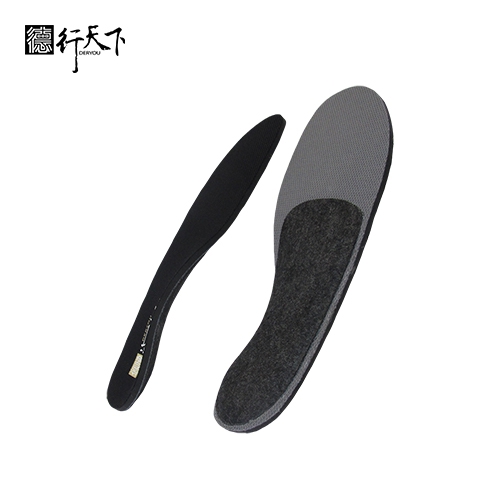
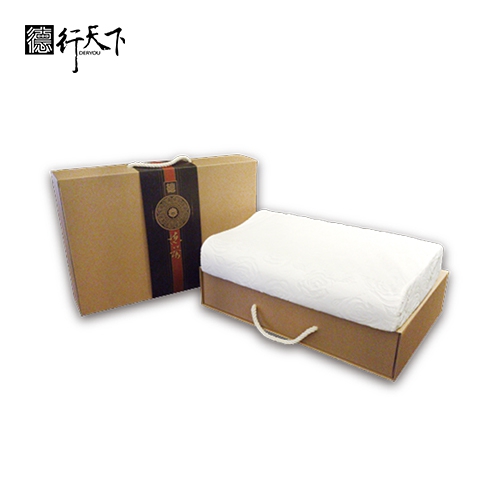
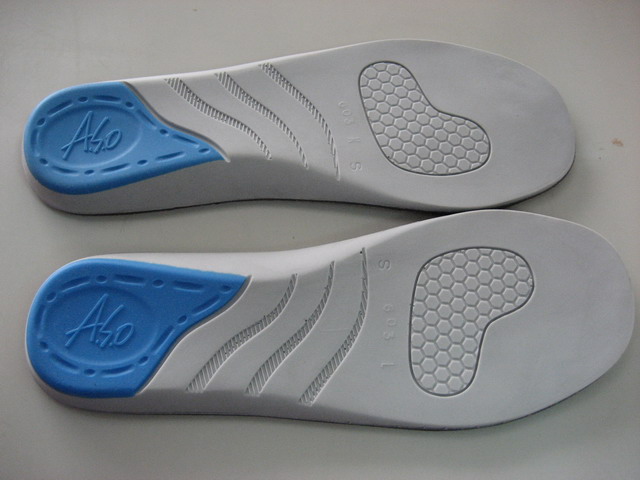
At GuangXin Industrial, our core strength lies in our deep expertise and versatility in insole and pillow manufacturing. We specialize in working with a wide range of materials, including PU (polyurethane), natural latex, and advanced graphene composites, to develop insoles and pillows that meet diverse performance, comfort, and health-support needs.
Whether it's cushioning, support, breathability, or antibacterial function, we tailor material selection to the exact requirements of each project-whether for foot wellness or ergonomic sleep products.
We provide end-to-end manufacturing capabilities under one roof—covering every stage from material sourcing and foaming, to precision molding, lamination, cutting, sewing, and strict quality control. This full-process control not only ensures product consistency and durability, but also allows for faster lead times and better customization flexibility.
With our flexible production capacity, we accommodate both small batch custom orders and high-volume mass production with equal efficiency. Whether you're a startup launching your first insole or pillow line, or a global brand scaling up to meet market demand, GuangXin is equipped to deliver reliable OEM/ODM solutions that grow with your business.
Customization & OEM/ODM Flexibility
GuangXin offers exceptional flexibility in customization and OEM/ODM services, empowering our partners to create insole products that truly align with their brand identity and target market. We develop insoles tailored to specific foot shapes, end-user needs, and regional market preferences, ensuring optimal fit and functionality.
Our team supports comprehensive branding solutions, including logo printing, custom packaging, and product integration support for marketing campaigns. Whether you're launching a new product line or upgrading an existing one, we help your vision come to life with attention to detail and consistent brand presentation.
With fast prototyping services and efficient lead times, GuangXin helps reduce your time-to-market and respond quickly to evolving trends or seasonal demands. From concept to final production, we offer agile support that keeps you ahead of the competition.
Quality Assurance & Certifications
Quality is at the heart of everything we do. GuangXin implements a rigorous quality control system at every stage of production—ensuring that each insole meets the highest standards of consistency, comfort, and durability.
We provide a variety of in-house and third-party testing options, including antibacterial performance, odor control, durability testing, and eco-safety verification, to meet the specific needs of our clients and markets.
Our products are fully compliant with international safety and environmental standards, such as REACH, RoHS, and other applicable export regulations. This ensures seamless entry into global markets while supporting your ESG and product safety commitments.
ESG-Oriented Sustainable Production
At GuangXin Industrial, we are committed to integrating ESG (Environmental, Social, and Governance) values into every step of our manufacturing process. We actively pursue eco-conscious practices by utilizing eco-friendly materials and adopting low-carbon production methods to reduce environmental impact.
To support circular economy goals, we offer recycled and upcycled material options, including innovative applications such as recycled glass and repurposed LCD panel glass. These materials are processed using advanced techniques to retain performance while reducing waste—contributing to a more sustainable supply chain.
We also work closely with our partners to support their ESG compliance and sustainability reporting needs, providing documentation, traceability, and material data upon request. Whether you're aiming to meet corporate sustainability targets or align with global green regulations, GuangXin is your trusted manufacturing ally in building a better, greener future.
Let’s Build Your Next Insole Success Together
Looking for a reliable insole manufacturing partner that understands customization, quality, and flexibility? GuangXin Industrial Co., Ltd. specializes in high-performance insole production, offering tailored solutions for brands across the globe. Whether you're launching a new insole collection or expanding your existing product line, we provide OEM/ODM services built around your unique design and performance goals.
From small-batch custom orders to full-scale mass production, our flexible insole manufacturing capabilities adapt to your business needs. With expertise in PU, latex, and graphene insole materials, we turn ideas into functional, comfortable, and market-ready insoles that deliver value.
Contact us today to discuss your next insole project. Let GuangXin help you create custom insoles that stand out, perform better, and reflect your brand’s commitment to comfort, quality, and sustainability.
🔗 Learn more or get in touch:
🌐 Website: https://www.deryou-tw.com/
📧 Email: shela.a9119@msa.hinet.net
📘 Facebook: facebook.com/deryou.tw
📷 Instagram: instagram.com/deryou.tw
Taiwan insole ODM service provider
Are you looking for a trusted and experienced manufacturing partner that can bring your comfort-focused product ideas to life? GuangXin Industrial Co., Ltd. is your ideal OEM/ODM supplier, specializing in insole production, pillow manufacturing, and advanced graphene product design.
With decades of experience in insole OEM/ODM, we provide full-service manufacturing—from PU and latex to cutting-edge graphene-infused insoles—customized to meet your performance, support, and breathability requirements. Our production process is vertically integrated, covering everything from material sourcing and foaming to molding, cutting, and strict quality control.Taiwan custom insole OEM factory
Beyond insoles, GuangXin also offers pillow OEM/ODM services with a focus on ergonomic comfort and functional innovation. Whether you need memory foam, latex, or smart material integration for neck and sleep support, we deliver tailor-made solutions that reflect your brand’s values.
We are especially proud to lead the way in ESG-driven insole development. Through the use of recycled materials—such as repurposed LCD glass—and low-carbon production processes, we help our partners meet sustainability goals without compromising product quality. Our ESG insole solutions are designed not only for comfort but also for compliance with global environmental standards.Taiwan orthopedic insole OEM manufacturing site
At GuangXin, we don’t just manufacture products—we create long-term value for your brand. Whether you're developing your first product line or scaling up globally, our flexible production capabilities and collaborative approach will help you go further, faster.Custom graphene foam processing Vietnam
📩 Contact us today to learn how our insole OEM, pillow ODM, and graphene product design services can elevate your product offering—while aligning with the sustainability expectations of modern consumers.One-stop OEM/ODM solution provider Thailand
University of Toronto researchers found that neural crest stem cells, located in the skin and other body areas, are responsible for reprogrammed neurons, challenging the belief that any mature cell can be reprogrammed. Instead, they propose only rare, specific stem cells can transform into different cell types, offering a new path in stem cell therapy. Researchers found that neural crest stem cells are uniquely capable of reprogramming, challenging current reprogramming theories and opening possibilities for stem cell-based treatments. A research team from the University of Toronto has identified that neural crest stem cells, a group of cells found in the skin and other parts of the body, are the origin of reprogrammed neurons previously found by other scientists. Their findings refute the popular theory in cellular reprogramming that any developed cell can be induced to switch its identity to a completely unrelated cell type through the infusion of transcription factors. The team proposes an alternative theory: there is one rare stem cell type that is unique in its ability to be reprogrammed into different types of cells. “We believed that most cases of cell reprogramming could be attributed to a rare, multi-potential stem cell that is found throughout the body and lays dormant within populations of mature cells,” said Justin Belair-Hickey, first author on the study and graduate student of U of T’s Donnelly Centre for Cellular and Biomolecular Research. “It was not fully understood why reprogramming tends to be an inefficient process. Our data explain this inefficiency by demonstrating that the neural crest stem cell is one of the few stem cells that can produce the desired reprogrammed cell type.” The study was published recently in the journal Stem Cell Reports. Genetic Predisposition of Neural Crest Stem Cells Neural crest cells, which can be found below the hair follicle in the skin, are genetically predisposed to develop into neurons. This is not unexpected, as many cell types in the skin originate from the same location in the embryo as neurons: the ectodermal germ layer. The ectoderm is the outermost of the three layers of cells that form during embryonic development. Graduate Student Justin Belair-Hickey and Professor Derek van der Kooy. Credit: University of Toronto The team was driven to conduct this study through their own questioning of how experimental data from cellular reprogramming research is interpreted in terms of how flexible the identity of a cell is. This includes theories of how mature cells from one embryonic layer can be directly reprogrammed to mature cells of another embryonic layer, even though the three germ layers are separated by different developmental histories. They hypothesized that cellular reprogramming can only occur from a stem cell to a mature cell, where both come from the same germ layer. Potential of Neural Crest Stem Cells in Medicine “I think claims about direct reprogramming are either overstated or based on inaccurate interpretations of the data,” said Belair-Hickey. “We set out to demonstrate that the identity of a cell is much more defined and stable than the field of cellular reprogramming has proposed. At first glance, it appears that we’ve found skin cells that can be reprogrammed into neurons, but what we’ve actually found are stem cells in the skin that are derived from the brain.” Neural crest stem cells are found throughout the body, including in skin, bone and connective tissue. Their distribution throughout the body, ability to be reprogrammed into many types of cells and accessibility within the skin for collection makes them a high-potential candidate for stem cell transplantation to treat disease. “Neural crest stem cells may have gone unnoticed by others studying cell reprogramming because, while they are widespread throughout the body, they are also rare,” said Derek van der Kooy, principal investigator on the study and professor of molecular genetics at the Donnelly Centre and U of T’s Temerty Faculty of Medicine. “As such, they may have been mistaken for mature cells of various types of tissue that could be reprogrammed into other cell types. I think what we’ve found is a unique group of stem cells that can be studied to understand the true potential of cell reprogramming.” Reference: “Neural crest precursors from the skin are the primary source of directly reprogrammed neurons” by Justin J. Belair-Hickey, Ahmed Fahmy, Wenbo Zhang, Rifat S. Sajid, Brenda L.K. Coles, Michael W. Salter and Derek van der Kooy, 31 October 2024, Stem Cell Reports. DOI: 10.1016/j.stemcr.2024.10.003 This research was supported by the Canadian Institutes of Health Research, the Krembil Foundation, and Medicine by Design.
Researchers at the Centre for Genomic Regulation have discovered the critical role of the Snhg11 gene in neuron function and formation in the hippocampus, linking its reduced activity to memory deficits in Down syndrome. This study, which utilizes mouse models and human tissue analysis, marks a significant step in understanding the genetic basis of Down syndrome, focusing on the largely unexplored “dark matter” of the genome. The research highlights the potential of targeting long non-coding RNAs like Snhg11 for developing new therapeutic interventions aimed at improving cognitive functions in individuals with Down syndrome. The intellectual disability observed in individuals with three copies of chromosome 21 may be attributed to reduced activity of the Snhg11 gene in their brains. Scientists at the Centre for Genomic Regulation (CRG) have discovered the significant role of the Snhg11 gene in the development and functionality of hippocampal neurons. Experiments involving mice and human samples have shown reduced activity of this gene in Down syndrome-affected brains, suggesting a link to the memory challenges faced by individuals with the syndrome. The findings were recently published in the journal Molecular Psychiatry. Traditionally, much of the focus in genomics has been on protein-coding genes, which in humans constitutes around just 2% of the entire genome. The rest is “dark matter”, including vast stretches of non-coding DNA sequences that do not produce proteins but are increasingly recognized for their roles in regulating gene activity, influencing genetic stability, and contributing to complex traits and diseases. Snhg11 is one gene found in the ‘dark matter’. It is a long non-coding RNA, a special type of RNA molecule that is transcribed from DNA but does not encode for a protein. Non-coding RNAs are important regulators of normal biological processes, and their abnormal expression has been previously linked to the development of human diseases, such as cancer. The study is the first evidence that a non-coding RNA plays a critical role in the pathogenesis of Down syndrome. Down Syndrome and Snhg11’s Role Down syndrome is a genetic disorder caused by the presence of an extra copy of chromosome 21, also known as trisomy 21. It’s the most common genetic cause of intellectual disability, estimated to affect five million people globally. People with Down syndrome have memory and learning problems, issues previously linked to abnormalities in the hippocampus, a part of the brain involved in learning and memory formation. “The gene is particularly active in the dentate gyrus, a part of the hippocampus crucial for learning and memory and one of the few brain regions where new neurons are continuously created throughout life. We found that abnormally expressed Snhg11 results in reduced neurogenesis and altered plasticity, which plays a direct role in learning and memory, thus indicating a key role in the pathophysiology of intellectual disability,” says Dr. César Sierra, first author of the paper. The authors studied the hippocampus in mouse models which have a genetic makeup similar to Down syndrome in humans. The hippocampus has many different cell types, and the study aimed to understand how the presence of an extra chromosome 21 affects these cells. The activity of Snhg11 (red) pictured in the dentate gyrus region of the hippocampus in mice. Credit: Cesar Sierra/Centro de Regulación Genómica (CRG) The researchers isolated nuclei from the brain cells and used a technique called single nucleus RNA sequencing to see which genes are active in each cell. One of the most striking findings was in cells of the dentate gyrus, where the researchers detected an important reduction of the expression of Snhg11. The researchers also found lower levels of Snhg11 in the same types of tissues from human postmortem brains with trisomy 21, indicating the relevance for the human cases. To understand the effects of the reduced Snhg11 expression on cognition and brain function, the researchers then experimentally reduced the activity of the gene in the brains of healthy mice. They found that low levels of Snhg11 were sufficient to reduce synaptic plasticity, which is the ability for neuronal connections to strengthen or weaken over time. Synaptic plasticity is crucial for learning and memory. It also reduced the mouse’s ability to create new neurons. Future Directions and Potential Therapies To understand the real-world impact of their findings, the researchers also conducted various behavior tests with mice. These experiments confirmed that low levels of Snhg11 led to similar memory and learning problems as seen in Down syndrome, suggesting the gene regulates brain function. Snhg11 has previously been linked to cell proliferation in different types of cancer. The researchers plan on carrying out further research to discover the exact mechanisms of action involved, information that could open potential avenues for new therapeutic interventions. They will also explore whether other genes involving long non-coding RNAs, many of which are yet to be discovered, might also contribute to intellectual disabilities. “There are many interventions to help people with Down syndrome live independently, but only a few are pharmacological. Studies like this help lay the foundations to find strategies that can help improve memory, attention, and language functions, or prevent cognitive decline associated with aging,” says Dr. Mara Dierssen, co-author of the paper and Group Leader of the Cellular & Systems Neurobiology lab at the Centre for Genomic Regulation. Reference: “The lncRNA Snhg11, a new candidate contributing to neurogenesis, plasticity, and memory deficits in Down syndrome” by Cesar Sierra, Miguel Sabariego-Navarro, Álvaro Fernández-Blanco, Sonia Cruciani, Alfonsa Zamora-Moratalla, Eva Maria Novoa and Mara Dierssen, 27 February 2024, Molecular Psychiatry. DOI: 10.1038/s41380-024-02440-9
Although the specificity of CRISPR-based gene-editing is highly accurate and versatile, the efficiency of installing those edits has been low. In this paper, the Adamson lab describes a more efficient prime editor. Credit: Caitlin Sedwick for Princeton University Princeton scientists make a major improvement to a CRISPR-based gene-editing tool called “prime editing.” Through years of engineering gene-editing systems, researchers have developed a suite of tools that enable the modification of genomes in living cells, akin to ‘genome surgery’. These tools, including ones based on a natural system known as CRISPR/Cas9, offer enormous potential for addressing unmet clinical needs, underscored by the recent FDA approval of the first CRISPR/Cas9-based therapy. A relatively new approach called “prime editing” enables gene-editing with exceptional accuracy and high versatility, but has a critical tradeoff: variable and often low efficiency of edit installation. In other words, while prime edits can be made with high precision and few unwanted byproducts, the approach also often fails to make those edits at reasonable frequencies. Enhanced Prime Editing Techniques In a paper that appeared in print in the journal Nature on April 18th, 2024, Princeton scientists Jun Yan and Britt Adamson, along with several colleagues, describe a more efficient prime editor. Authors (l-r) Brittany Adamson, Assistant Professor of Molecular Biology and the Lewis-Sigler Institute for Integrative Genomics; and Jun Yan, Adamson lab graduate student and first author. Credit: Photo of Britt Adamson by Denise Applewhite, Princeton University. Photo of Jun Yan by the author. Prime editing systems minimally consist of two components: a modified version of the protein element of CRISPR/Cas9 and a ribonucleic acid (RNA) molecule called a pegRNA. These components work together in several coordinated steps: First, the pegRNA binds the protein and guides the resulting complex to a desired location in the genome. There, the protein nicks the DNA and, using a template sequence encoded on the pegRNA, “reverse transcribes” an edit into the genome nearby. In this way, prime editors “write” exact sequences into targeted DNA. “Prime editing is such an incredibly powerful genome editing tool because it gives us more control over exactly how genomic sequences are changed,” Adamson said. Experimental Insights and Innovations At the outset of their study, Adamson and Yan, a graduate student in Adamson’s research group and the Department of Molecular Biology, reasoned that unknown cellular processes may aid or hinder prime editing. To identify such processes, Yan laid out a conceptually simple plan: First, he would engineer a cell line that would emit green fluorescence when certain prime edits were installed. Then, he would systematically block expression of proteins normally expressed within those cells and measure editing-induced fluorescence to determine which of those proteins impact prime editing. By executing this plan, the team identified 36 cellular determinants of prime editing, only one of which—the small RNA-binding protein La—promoted editing. “Although promoting prime editing is obviously not a normal function of the La protein, our experiments showed that it can strongly facilitate the process,” Yan said. Within cells, La is known to bind specific sequences often found at the ends of nascent small RNA molecules and it protects those RNAs from degradation. The Princeton team recognized right away that the pegRNAs deployed in Yan’s first experiments likely contained those exact sequences, called polyuridine tracts, as they are a typical but often overlooked byproduct of pegRNA expression in cells. Subsequent experiments suggested that such pegRNAs inadvertently harness La’s end-binding activity for protection and to promote prime editing. Development of the PE7 Protein Motivated by their results, the team asked if fusing the part of La that binds polyuridine tracts to a standard prime editing protein could boost prime editing efficiencies. They were thrilled to find that the resulting protein, which they call PE7, substantially enhanced intended prime editing efficiencies across conditions and, when using some prime editing systems, left the frequencies of unwanted byproducts very low. Their results quickly drew the attention of colleagues interested in using prime editing in primary human cells, including Daniel Bauer at Boston Children’s Hospital and Harvard Medical School and Alexander Marson at the University of California, San Francisco. Together with scientists from these labs, the team of researchers went on to demonstrate that PE7 can also enhance prime editing efficiencies in therapeutically relevant cell types, offering expanded promise for future clinical applications. “This work is a beautiful example of how deeply probing the inner workings of cells can lead to unexpected insights that may yield near-term biomedical impact,” Bauer noted. Reference: “Improving prime editing with an endogenous small RNA-binding protein” by Jun Yan, Paul Oyler-Castrillo, Purnima Ravisankar, Carl C. Ward, Sébastien Levesque, Yangwode Jing, Danny Simpson, Anqi Zhao, Hui Li, Weihao Yan, Laine Goudy, Ralf Schmidt, Sabrina C. Solley, Luke A. Gilbert, Michelle M. Chan, Daniel E. Bauer, Alexander Marson, Lance R. Parsons and Britt Adamson, 3 April 2024, Nature. DOI: 10.1038/s41586-024-07259-6 Funding: Funding for this work was provided by the National Institutes of Health (NIH) (R35GM138167, RM1HG009490, T32HG003284, DP2CA239597, UM1HG012660 [Princeton QCB training grant; NHGRI], and [T32GM007388 Princeton MOL training grant; NIGMS]); the Searle Scholars Program; the Princeton Catalysis Initiative; CHDI Foundation; Princeton University; the Parker Institute for Cancer Immunotherapy (PICI); the Lloyd J. Old STAR award from the Cancer Research Institute (CRI); the Simons Foundation; the CRISPR Cures for Cancer Initiative; the Arc Institute; CRUK/NIH (OT2CA278665 and CGCATF-2021/100006); Pew-Stewart Scholars for Cancer Research award; the Doris Duke Foundation; the St Jude Children’s Research Hospital Collaborative Research Consortium; NHLBI (R01HL150669); the Fred Hutch Cooperative Center of Excellence in Hematology (U54 DK106829); the China Scholarship Council (CSC), based on the April 2015 Memorandum of Understanding between the CSC and Princeton University; the NCI (K00CA245718); and the Princeton University Flow Cytometry Resource Facility (NCI-CCSG P30CA072720-5921). Grant numbers: R35GM138167, RM1HG009490, T32HG003284, DP2CA239597, UM1HG012660, T32GM007388, OT2CA278665, CGCATF-2021/100006, U54 DK106829, K00CA245718, NCI-CCSG P30CA072720-5921 Funders: National Institutes of Health (NIH), Searle Scholars Program, Princeton Catalysis Initiative, CHDI Foundation; Princeton University, Parker Institute for Cancer Immunotherapy (PICI), Cancer Research Institute (CRI), Simons Foundation, CRISPR Cures for Cancer Initiative, Arc Institute, CRUK/NIH, Pew-Stewart, Doris Duke Foundation, St Jude Children’s Research Hospital Collaborative Research Consortium, NHLBI, Fred Hutch Cooperative Center of Excellence in Hematology, China Scholarship Council (CSC), NCI.
DVDV1551RTWW78V
Insole ODM factory in Vietnam 》designed for quality-conscious brands who care about user experienceFlexible manufacturing OEM & ODM China 》where quality, comfort, and credibility come togetherErgonomic insole ODM production factory Taiwan 》supporting your ESG goals through sustainable production
下一則: Eco-friendly pillow OEM factory Taiwan 》supporting
限會員,要發表迴響,請先登入


