Introduction – Company Background
GuangXin Industrial Co., Ltd. is a specialized manufacturer dedicated to the development and production of high-quality insoles.
With a strong foundation in material science and footwear ergonomics, we serve as a trusted partner for global brands seeking reliable insole solutions that combine comfort, functionality, and design.
With years of experience in insole production and OEM/ODM services, GuangXin has successfully supported a wide range of clients across various industries—including sportswear, health & wellness, orthopedic care, and daily footwear.
From initial prototyping to mass production, we provide comprehensive support tailored to each client’s market and application needs.
At GuangXin, we are committed to quality, innovation, and sustainable development. Every insole we produce reflects our dedication to precision craftsmanship, forward-thinking design, and ESG-driven practices.
By integrating eco-friendly materials, clean production processes, and responsible sourcing, we help our partners meet both market demand and environmental goals.

Core Strengths in Insole Manufacturing
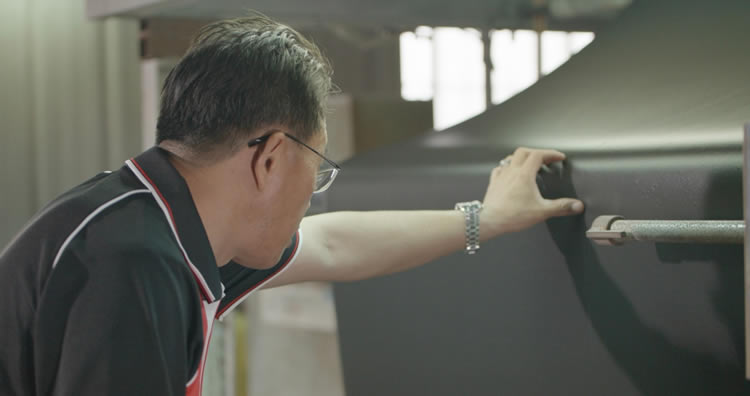
At GuangXin Industrial, our core strength lies in our deep expertise and versatility in insole and pillow manufacturing. We specialize in working with a wide range of materials, including PU (polyurethane), natural latex, and advanced graphene composites, to develop insoles and pillows that meet diverse performance, comfort, and health-support needs.
Whether it's cushioning, support, breathability, or antibacterial function, we tailor material selection to the exact requirements of each project-whether for foot wellness or ergonomic sleep products.
We provide end-to-end manufacturing capabilities under one roof—covering every stage from material sourcing and foaming, to precision molding, lamination, cutting, sewing, and strict quality control. This full-process control not only ensures product consistency and durability, but also allows for faster lead times and better customization flexibility.
With our flexible production capacity, we accommodate both small batch custom orders and high-volume mass production with equal efficiency. Whether you're a startup launching your first insole or pillow line, or a global brand scaling up to meet market demand, GuangXin is equipped to deliver reliable OEM/ODM solutions that grow with your business.

Customization & OEM/ODM Flexibility
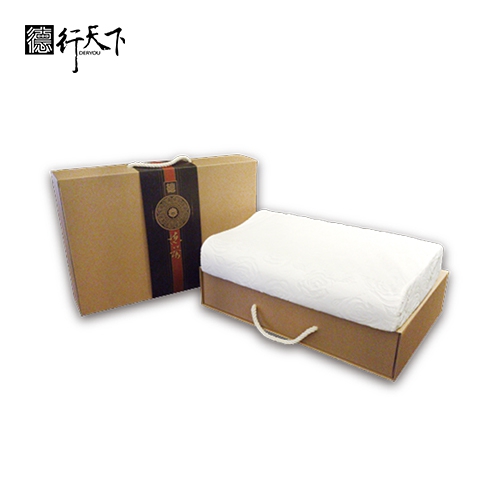
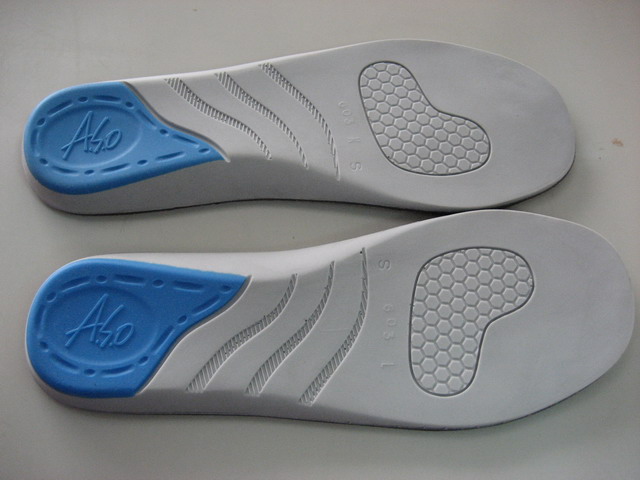
GuangXin offers exceptional flexibility in customization and OEM/ODM services, empowering our partners to create insole products that truly align with their brand identity and target market. We develop insoles tailored to specific foot shapes, end-user needs, and regional market preferences, ensuring optimal fit and functionality.
Our team supports comprehensive branding solutions, including logo printing, custom packaging, and product integration support for marketing campaigns. Whether you're launching a new product line or upgrading an existing one, we help your vision come to life with attention to detail and consistent brand presentation.
With fast prototyping services and efficient lead times, GuangXin helps reduce your time-to-market and respond quickly to evolving trends or seasonal demands. From concept to final production, we offer agile support that keeps you ahead of the competition.
Quality Assurance & Certifications
Quality is at the heart of everything we do. GuangXin implements a rigorous quality control system at every stage of production—ensuring that each insole meets the highest standards of consistency, comfort, and durability.
We provide a variety of in-house and third-party testing options, including antibacterial performance, odor control, durability testing, and eco-safety verification, to meet the specific needs of our clients and markets.
Our products are fully compliant with international safety and environmental standards, such as REACH, RoHS, and other applicable export regulations. This ensures seamless entry into global markets while supporting your ESG and product safety commitments.
ESG-Oriented Sustainable Production
At GuangXin Industrial, we are committed to integrating ESG (Environmental, Social, and Governance) values into every step of our manufacturing process. We actively pursue eco-conscious practices by utilizing eco-friendly materials and adopting low-carbon production methods to reduce environmental impact.
To support circular economy goals, we offer recycled and upcycled material options, including innovative applications such as recycled glass and repurposed LCD panel glass. These materials are processed using advanced techniques to retain performance while reducing waste—contributing to a more sustainable supply chain.
We also work closely with our partners to support their ESG compliance and sustainability reporting needs, providing documentation, traceability, and material data upon request. Whether you're aiming to meet corporate sustainability targets or align with global green regulations, GuangXin is your trusted manufacturing ally in building a better, greener future.
Let’s Build Your Next Insole Success Together
Looking for a reliable insole manufacturing partner that understands customization, quality, and flexibility? GuangXin Industrial Co., Ltd. specializes in high-performance insole production, offering tailored solutions for brands across the globe. Whether you're launching a new insole collection or expanding your existing product line, we provide OEM/ODM services built around your unique design and performance goals.
From small-batch custom orders to full-scale mass production, our flexible insole manufacturing capabilities adapt to your business needs. With expertise in PU, latex, and graphene insole materials, we turn ideas into functional, comfortable, and market-ready insoles that deliver value.
Contact us today to discuss your next insole project. Let GuangXin help you create custom insoles that stand out, perform better, and reflect your brand’s commitment to comfort, quality, and sustainability.
🔗 Learn more or get in touch:
🌐 Website: https://www.deryou-tw.com/
📧 Email: shela.a9119@msa.hinet.net
📘 Facebook: facebook.com/deryou.tw
📷 Instagram: instagram.com/deryou.tw
Custom graphene foam processing Indonesia
Are you looking for a trusted and experienced manufacturing partner that can bring your comfort-focused product ideas to life? GuangXin Industrial Co., Ltd. is your ideal OEM/ODM supplier, specializing in insole production, pillow manufacturing, and advanced graphene product design.
With decades of experience in insole OEM/ODM, we provide full-service manufacturing—from PU and latex to cutting-edge graphene-infused insoles—customized to meet your performance, support, and breathability requirements. Our production process is vertically integrated, covering everything from material sourcing and foaming to molding, cutting, and strict quality control.Indonesia graphene product OEM service
Beyond insoles, GuangXin also offers pillow OEM/ODM services with a focus on ergonomic comfort and functional innovation. Whether you need memory foam, latex, or smart material integration for neck and sleep support, we deliver tailor-made solutions that reflect your brand’s values.
We are especially proud to lead the way in ESG-driven insole development. Through the use of recycled materials—such as repurposed LCD glass—and low-carbon production processes, we help our partners meet sustainability goals without compromising product quality. Our ESG insole solutions are designed not only for comfort but also for compliance with global environmental standards.Innovative insole ODM solutions in Indonesia
At GuangXin, we don’t just manufacture products—we create long-term value for your brand. Whether you're developing your first product line or scaling up globally, our flexible production capabilities and collaborative approach will help you go further, faster.Custom foam pillow OEM in Taiwan
📩 Contact us today to learn how our insole OEM, pillow ODM, and graphene product design services can elevate your product offering—while aligning with the sustainability expectations of modern consumers.Indonesia pillow ODM development service
Market squid, Doryteuthis opalescens Credit: © 2001 MBARI Acoustic tools reveal hotspots of ocean life in scattered places. Ocean predators cannot survive on average concentrations of food found in the water. Instead, they survive by exploiting small patches of food-rich areas peppered throughout the world’s waterways. During the 181st Meeting of the Acoustical Society of America, which will be held November 29-December 3, Kelly Benoit-Bird, from the Monterey Bay Aquarium Research Institute, will discuss how sonar or active acoustics can be used to interpret and indicate biological hotspots of ocean life. The talk, “A Sound Resolution to the Food Paradox in the Sea,” will take place Wednesday, December 1, at 4:05 p.m. Eastern U.S. at the Hyatt Regency Seattle. Using active acoustics, where a sound pulse is created and resulting echoes are interpreted, the researchers found the ocean is widely populated with narrow hotspots of activity. Traditionally, these hotspots are missed with conventional sampling tools, but locating them can provide dynamic layered maps of ocean life. “We’re using systems much like those used to find the depth of the ocean, but instead of interpreting echoes from the seafloor, we’re using more sensitive systems that allow us to map layers of life in the water,” said Benoit-Bird. “What we’ve found is that animals of all different sizes, from millimeter-long plankton to large predators, are unevenly distributed, and this variation is really important to how life in the ocean functions.” The findings signify ocean food and biota as patchy, varying with depth and location, suggesting animals must find and exploit small-scale aggregations of resources. The Lasker food paradox proposed in the 1970s found laboratory animals fed the average concentration of ocean food did not survive, but ocean-dwelling animals in the wild did. The paradox is reconciled by Benoit-Bird’s findings, demonstrating animals do not survive on average food concentrations but are well-adapted to locating and capitalizing on patches of resources, and reducing their total energy expenditure to hunt. “For example, if a bucket’s worth of popcorn was spread out evenly throughout the volume of a room, and you had to fly around to capture each kernel, you would spend a lot of energy searching and it would be hard to get enough to be full,” Benoit-Bird said. “If instead, the popcorn was all grouped together, the popcorn would be a much more satisfying snack. The amount of popcorn is the same but changing how it is grouped determines whether you end up with a full belly. “Acoustic tools provide the high spatial resolution and long duration sampling to explore the processes that drive organismal interactions in the ocean. We must understand not only how many animals are in the ocean, but how they are distributed, if we are to effectively manage our living marine resources.” Meeting: 181st Meeting of the Acoustical Society of America
Cannibalism was widely thought to be common in nature, however, recent research suggests differently. According to Recent Research, Wild Fish Cannibalism Is Uncommon Even though mosquitofish and guppies are known to be cannibalistic in captivity, it is very improbable that they would engage in cannibalism in the wild. Instead, the few instances of cannibalism in these fish are probably the result of an intense struggle for food. The results of a recent study led by researchers from the United States and the United Kingdom could not only have implications for fish lovers and researchers who use mosquitofish as models for ecological and evolutionary studies, but they may also shed light on the reasons behind and frequency of cannibalism in other animals. Cannibalism, or preying on and devouring members of your own species, is an odd practice that often appears in human mythology and literature. But how often is it in nature, and why would animals take such drastic measures to get a meal? In order to find out, Rüdiger Riesch, senior lecturer in evolutionary biology at the Royal Holloway University of London, and Brian Langerhans, associate professor of biology at North Carolina State University, decided to analyze data collected over a 10-year period from nearly 12,000 fish belonging to 17 different species that were caught in the wild. “These are data accumulated from several different projects over the years,” says Langerhans, the study’s senior author. “To identify the mechanisms responsible for this sort of phenomenon in the wild, we needed really large sample sizes. So, we accumulated the data for this work while also doing other projects.” X-ray image of an adult female Bahamas mosquitofish where a fish she had eaten can be seen inside of her, revealing an occurrence of cannibalism. Credit: Brian Langerhans “In captivity, mosquitofish and guppies will practice cannibalism commonly enough that there are protocols in place in research labs and aquaculture to quickly separate offspring from the larger fish,” says Riesch, the corresponding author of the work. Riesch began the project while a postdoctoral researcher in Langerhans’ lab between 2010 and 2012. “But when you look at the diets of fish in the wild, you really don’t find much evidence of it,” Riesch says. “We wanted to find out whether and why cannibalism occurs in nature.” The research team examined the diets of 11,946 fish in the wild, using dissection or X-rays to determine what the fish had eaten. They found only 35 cases of cannibalism, in just three species of mosquitofish – less than 0.30% occurrence. Key Drivers of Cannibalism: Competition and Population Density Cannibalism was most frequent in populations with very high levels of competition for food; that is, populations lacking major predators where population densities of the fish surveyed were especially high. To experimentally test the possible causes of cannibalism, the team studied 720 additional fish by creating “mesocosms,” large (6 feet or 1.8 meters in diameter) outdoor containers that recreated the fish’s natural environment but allowed researchers to control elements such as population density, predation risk, and resource availability. The fish within were observed for a week to determine what might influence cannibalistic behaviors. The results of these experiments also pointed to population density and resource availability as the key drivers of cannibalism. “Resource competition seems to be the main predictor of cannibalism,” Langerhans says. “We also saw that a lack of predation has an indirect effect on cannibalism: Release from predation allows population density to skyrocket, which decreases resources. This same driving factor may be responsible for many cases of cannibalism across the animal kingdom in natural settings.” The team was also able to rule out some potential causes for cannibalism. “Cannibalism doesn’t happen when bigger fish more frequently encounter smaller fish,” Langerhans says. “Also, it wasn’t simply large body size that explained which individuals cannibalized – females, who are larger, cannibalized a lot more than males, but it seems more related to their greater energetic requirements for bearing live young than their actual size.” Implications for Evolutionary Research and Fish Breeding The work has implications not only for hobbyists or those trying to save and repopulate endangered species, but also for researchers who work in evolutionary biology and employ mosquitofish as an animal model. “Cannibalism in these fish is an issue that biologists have to regularly contend with in lab and hatchery settings, so it was widely thought to be at least somewhat common in nature,” Langerhans says. “But we’ve shown here that it really isn’t. “These fish are used as models for evolutionary work – quantifying how traits evolve – in labs. Now that we know cannibalism isn’t a common behavior in the wild, we know that unnatural rates of cannibalism could alter traits in the lab setting in ways that affect study results and implications, especially in studies about behavioral evolution.” Reference: “Resource competition explains rare cannibalism in the wild in livebearing fishes” by Rüdiger Riesch, Márcio S. Araújo, Stuart Bumgarner, Caitlynn Filla, Laura Pennafort, Taylor R. Goins, Darlene Lucion, Amber M. Makowicz, Ryan A. Martin, Sara Pirroni and R. Brian Langerhans, 16 May 2022, Ecology and Evolution. DOI: 10.1002/ece3.8872 The study was funded by the National Science Foundation.
Alan Baik is part of the team in Isha Jain’s lab at Gladstone Institutes that uncovered why high levels of oxygen can cause lasting problems in humans. Credit: Michael Short/Gladstone Institutes Scientists have discovered why elevated levels of oxygen can result in enduring health issues in humans. When it comes to oxygen, you can have too much of a good thing. Breathing air with oxygen levels higher than the standard 21 percent found in Earth’s atmosphere can lead to organ damage, seizures, and even death in both humans and animals. This is known as oxygen toxicity, or hyperoxia, and occurs when there is an excess of oxygen beyond the body’s needs. While scientists have been aware of this phenomenon, they have mostly relied on speculation to understand the underlying mechanisms of oxygen toxicity until now. A recent study by Gladstone Institutes has revealed how excessive oxygen levels alter certain iron and sulfur-containing proteins within our cells, similar to the process of iron rusting. As a result, these “rusty” proteins trigger a chain reaction that causes damage to cells and tissues. The research, which has been published in the journal Molecular Cell, shed light on the implications for conditions like heart attacks and sleep apnea. “This study allowed us to put together a very specific timeline for what happens in hyperoxia,” says Gladstone Assistant Investigator Isha Jain, PhD, senior author of the new study. “The results weren’t at all what we were expecting, but it’s very interesting and exciting to now know how this sequence of events unfolds.” An Understudied Question At high levels, oxygen is toxic to every form of life, from bacteria and plants to animals and people. Of course, not enough oxygen is also fatal; there’s an intermediate, “Goldilocks” amount under which most life on Earth thrives—not too much and not too little. While clinicians have long studied the details of how oxygen shortage impacts cells and tissues (for example, in heart attacks and strokes), the effects of excess oxygen have been relatively understudied. “For many years, the medical teaching was that, to a certain degree, more oxygen was better, or at least benign, when treating patients with conditions such as heart attacks,” says Alan Baik, MD, a postdoctoral scholar in Jain’s lab and a cardiologist at UC San Francisco (UCSF). “But there has now been a growing number of clinical studies showing that excess oxygen actually leads to worse outcomes. This motivated us to better understand why excess oxygen can be toxic.” Studies have recently revealed, for instance, that breathing too much supplemental oxygen might be detrimental to heart attack patients and premature infants. Similarly, in obstructive sleep apnea, the sudden bursts of oxygen that follow pauses in breathing have been shown to be a key component of how the disorder increases patients’ risks of chronic health problems. Still, the mechanisms of these effects remained murky. Many researchers assumed that reactive oxygen species—unstable and highly reactive oxygen derivatives that can damage our genome and many molecules in our cells—likely played a role in hyperoxia, but there was little evidence to demonstrate how excess oxygen affects specific enzymes and pathways. How CRISPR Found the Answer Jain’s group—including Baik, postdoctoral fellow Galih Haribowo, Ph.D., and graduate student Kirsten Xuewen Chen, who are co-first authors of the new paper—turned to the genome editing technology CRISPR to test the roles of a variety of genes in hyperoxia. Using CRISPR, the researchers removed, one at a time, more than 20,000 different genes from human cells grown in the lab and then compared the growth of each group of cells at 21 percent oxygen and 50 percent oxygen. “This kind of unbiased screen let us probe the contributions of thousands of different pathways in hyperoxia rather than just focusing on those we already suspected might be involved,” says Jain, who is also an assistant professor of biochemistry at UCSF. “It led us toward molecules that have never been uttered before in the same sentence as oxygen toxicity.” Four molecular pathways stood out in the screen as being involved in the effects of hyperoxia. They related to diverse cellular functions including the repair of damaged DNA, the production of new DNA building blocks, and the generation of cellular energy. Protein Clusters in Common At first, the team couldn’t pinpoint what the four pathways had in common and why they were all impacted by high oxygen levels. It took some molecular sleuthing to discover that each pathway had a critical protein that contained iron atoms connected to sulfur atoms—so-called “iron-sulfur clusters”—in its molecular structure. The researchers went on to show that, in as little as 30 percent oxygen, the iron-sulfur clusters in the four proteins become oxidized—they chemically react with oxygen atoms—and that change causes the proteins to degrade. As a result, cells stop functioning correctly and consume even less oxygen, causing a further increase in oxygen levels in the surrounding tissues. “One important takeaway is that hyperoxia is not impacting cells and tissues solely through reactive oxygen species, as many had assumed,” says Jain. “That means the use of antioxidants—which can combat reactive oxygen species to some degree—is unlikely to be sufficient to prevent oxygen toxicity.” Reference: “Oxygen toxicity causes cyclic damage by destabilizing specific Fe-S cluster-containing protein complexes” by Alan H. Baik, Augustinus G. Haribowo, Xuewen Chen, Bruno B. Queliconi, Alec M. Barrios, Ankur Garg, Mazharul Maishan, Alexandre R. Campos, Michael A. Matthay and Isha H. Jain, 8 March 2023, Molecular Cell. DOI: 10.1016/j.molcel.2023.02.013 The study was funded by the National Heart, Lung and Blood Institute, CZ Biohub, the Sarnoff Cardiovascular Research Foundation, and UC San Francisco.
DVDV1551RTWW78V
Thailand OEM/ODM hybrid insole services 》simplifying complex ideas into market-ready productsTaiwan sustainable material ODM solutions 》trusted by DTC and B2B brands alikeODM service for ergonomic pillows Vietnam 》committed to ESG, comfort, and your brand is success
限會員,要發表迴響,請先登入


