Introduction – Company Background
GuangXin Industrial Co., Ltd. is a specialized manufacturer dedicated to the development and production of high-quality insoles.
With a strong foundation in material science and footwear ergonomics, we serve as a trusted partner for global brands seeking reliable insole solutions that combine comfort, functionality, and design.
With years of experience in insole production and OEM/ODM services, GuangXin has successfully supported a wide range of clients across various industries—including sportswear, health & wellness, orthopedic care, and daily footwear.
From initial prototyping to mass production, we provide comprehensive support tailored to each client’s market and application needs.
At GuangXin, we are committed to quality, innovation, and sustainable development. Every insole we produce reflects our dedication to precision craftsmanship, forward-thinking design, and ESG-driven practices.
By integrating eco-friendly materials, clean production processes, and responsible sourcing, we help our partners meet both market demand and environmental goals.


Core Strengths in Insole Manufacturing
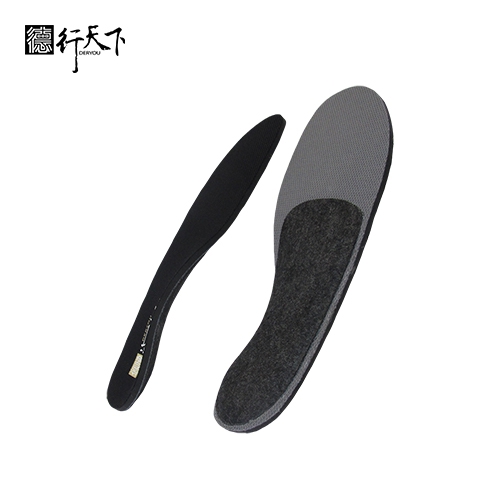
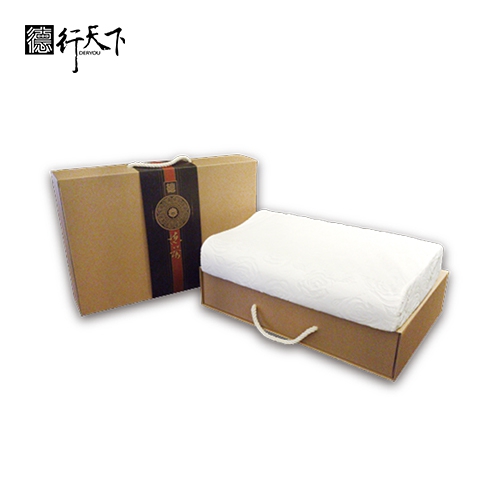
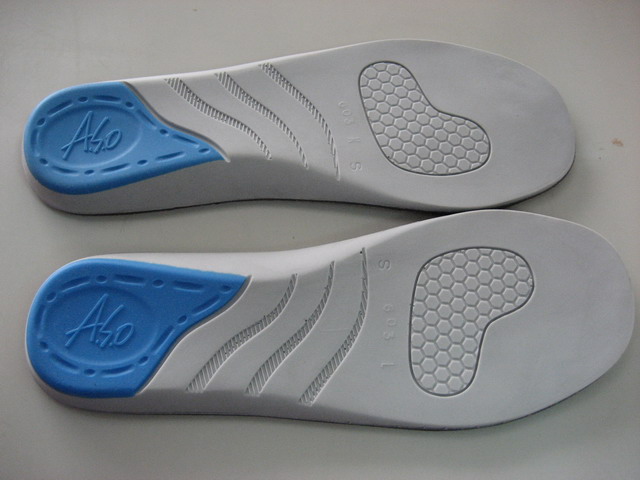
At GuangXin Industrial, our core strength lies in our deep expertise and versatility in insole and pillow manufacturing. We specialize in working with a wide range of materials, including PU (polyurethane), natural latex, and advanced graphene composites, to develop insoles and pillows that meet diverse performance, comfort, and health-support needs.
Whether it's cushioning, support, breathability, or antibacterial function, we tailor material selection to the exact requirements of each project-whether for foot wellness or ergonomic sleep products.
We provide end-to-end manufacturing capabilities under one roof—covering every stage from material sourcing and foaming, to precision molding, lamination, cutting, sewing, and strict quality control. This full-process control not only ensures product consistency and durability, but also allows for faster lead times and better customization flexibility.
With our flexible production capacity, we accommodate both small batch custom orders and high-volume mass production with equal efficiency. Whether you're a startup launching your first insole or pillow line, or a global brand scaling up to meet market demand, GuangXin is equipped to deliver reliable OEM/ODM solutions that grow with your business.
Customization & OEM/ODM Flexibility
GuangXin offers exceptional flexibility in customization and OEM/ODM services, empowering our partners to create insole products that truly align with their brand identity and target market. We develop insoles tailored to specific foot shapes, end-user needs, and regional market preferences, ensuring optimal fit and functionality.
Our team supports comprehensive branding solutions, including logo printing, custom packaging, and product integration support for marketing campaigns. Whether you're launching a new product line or upgrading an existing one, we help your vision come to life with attention to detail and consistent brand presentation.
With fast prototyping services and efficient lead times, GuangXin helps reduce your time-to-market and respond quickly to evolving trends or seasonal demands. From concept to final production, we offer agile support that keeps you ahead of the competition.
Quality Assurance & Certifications
Quality is at the heart of everything we do. GuangXin implements a rigorous quality control system at every stage of production—ensuring that each insole meets the highest standards of consistency, comfort, and durability.
We provide a variety of in-house and third-party testing options, including antibacterial performance, odor control, durability testing, and eco-safety verification, to meet the specific needs of our clients and markets.
Our products are fully compliant with international safety and environmental standards, such as REACH, RoHS, and other applicable export regulations. This ensures seamless entry into global markets while supporting your ESG and product safety commitments.
ESG-Oriented Sustainable Production
At GuangXin Industrial, we are committed to integrating ESG (Environmental, Social, and Governance) values into every step of our manufacturing process. We actively pursue eco-conscious practices by utilizing eco-friendly materials and adopting low-carbon production methods to reduce environmental impact.
To support circular economy goals, we offer recycled and upcycled material options, including innovative applications such as recycled glass and repurposed LCD panel glass. These materials are processed using advanced techniques to retain performance while reducing waste—contributing to a more sustainable supply chain.
We also work closely with our partners to support their ESG compliance and sustainability reporting needs, providing documentation, traceability, and material data upon request. Whether you're aiming to meet corporate sustainability targets or align with global green regulations, GuangXin is your trusted manufacturing ally in building a better, greener future.
Let’s Build Your Next Insole Success Together
Looking for a reliable insole manufacturing partner that understands customization, quality, and flexibility? GuangXin Industrial Co., Ltd. specializes in high-performance insole production, offering tailored solutions for brands across the globe. Whether you're launching a new insole collection or expanding your existing product line, we provide OEM/ODM services built around your unique design and performance goals.
From small-batch custom orders to full-scale mass production, our flexible insole manufacturing capabilities adapt to your business needs. With expertise in PU, latex, and graphene insole materials, we turn ideas into functional, comfortable, and market-ready insoles that deliver value.
Contact us today to discuss your next insole project. Let GuangXin help you create custom insoles that stand out, perform better, and reflect your brand’s commitment to comfort, quality, and sustainability.
🔗 Learn more or get in touch:
🌐 Website: https://www.deryou-tw.com/
📧 Email: shela.a9119@msa.hinet.net
📘 Facebook: facebook.com/deryou.tw
📷 Instagram: instagram.com/deryou.tw
ODM pillow factory in Taiwan
Are you looking for a trusted and experienced manufacturing partner that can bring your comfort-focused product ideas to life? GuangXin Industrial Co., Ltd. is your ideal OEM/ODM supplier, specializing in insole production, pillow manufacturing, and advanced graphene product design.
With decades of experience in insole OEM/ODM, we provide full-service manufacturing—from PU and latex to cutting-edge graphene-infused insoles—customized to meet your performance, support, and breathability requirements. Our production process is vertically integrated, covering everything from material sourcing and foaming to molding, cutting, and strict quality control.Vietnam flexible graphene product manufacturing
Beyond insoles, GuangXin also offers pillow OEM/ODM services with a focus on ergonomic comfort and functional innovation. Whether you need memory foam, latex, or smart material integration for neck and sleep support, we deliver tailor-made solutions that reflect your brand’s values.
We are especially proud to lead the way in ESG-driven insole development. Through the use of recycled materials—such as repurposed LCD glass—and low-carbon production processes, we help our partners meet sustainability goals without compromising product quality. Our ESG insole solutions are designed not only for comfort but also for compliance with global environmental standards.Flexible manufacturing OEM & ODM China
At GuangXin, we don’t just manufacture products—we create long-term value for your brand. Whether you're developing your first product line or scaling up globally, our flexible production capabilities and collaborative approach will help you go further, faster.ODM pillow factory for sleep product brands
📩 Contact us today to learn how our insole OEM, pillow ODM, and graphene product design services can elevate your product offering—while aligning with the sustainability expectations of modern consumers.Indonesia custom neck pillow ODM
Researchers at the University of Bonn and University Hospital Bonn have discovered that platelets enhance the inflammatory response of monocytes, a type of white blood cell crucial for immune reactions. This new understanding of platelet-monocyte interactions could lead to better treatments for immune disorders, as highlighted in their recent publication in EMBO Molecular Medicine. Researchers in Bonn have decoded the interaction between monocytes and platelets in human blood. Monocytes, a unique type of white blood cell, release cytokines as inflammatory signals essential for a proper immune response. Researchers at University Hospital Bonn (UKB) and the University of Bonn have discovered that platelets, also called thrombocytes, interact with monocytes, enhancing their inflammatory capability. By understanding the platelet-monocyte interaction, they hope to improve the treatment of immune disorders and associated diseases. The results of the study have now been published in the renowned journal EMBO Molecular Medicine and will be featured on the cover of August issue. Monocytes are white blood cells, known as leukocytes. They are an important part of the innate immune system and contribute to host defense in the blood by secreting large quantities of pro-inflammatory cytokines. Abnormal activity of monocytes leads to hyperinflammation, i.e. very severe inflammation, as well as life-threatening cytokine storms. On the other hand, disturbed monocyte function is associated with “immune paralysis.” In this condition, the immune system’s ability to fight off invaders such as viruses and bacteria is inhibited. This increases susceptibility to infections. (from left) Dr. Ibrahim Hawwari, Prof. Bernardo Franklin and Lukas Roßnagel discover new intercellular communication mechanism in which blood platelets, so-called thrombocytes, regulate the function of monocytes. Credit: University Hospital Bonn / Alessandro Winkler “It is, therefore, crucial to understand how the functions of monocytes are regulated,” says senior and corresponding author Prof. Dr. Bernardo Franklin from the Institute of Innate Immunity at the UKB and the Cluster of Excellence ImmunoSensation2 at the University of Bonn, explaining the motivation to investigate the role of platelets in the regulation of monocyte-induced inflammation. Platelets as a central checkpoint in immune defense Platelets play a central role in blood clotting, but are also thought to perform important functions in the immune system. Prof. Franklin’s research team has already identified platelets as an important regulator of inflammation. They now report that a low platelet count in the rare blood disorder immune thrombocytopenia (ITP) or the artificial removal of platelets from healthy monocytes results in “immunoparalysis”. This is characterized by a disturbed cytokine reaction and is an immunological challenge. “Remarkably, supplementing monocytes with fresh platelets reverses this condition and restores the monocyte cytokine response,” says corresponding and co-first author Dr. Ibrahim Hawwari, a postdoctoral fellow of the University of Bonn at the Institute of Innate Immunity at the UKB. The Bonn researchers discovered that the pro-inflammatory signals, including NF-κB and p38 MAPK, propagate from platelets to monocytes and maintain their inflammatory capacity. “Platelet vesicles as an extended arm of platelets control this intercellular communication,” says co-first author Lukas Roßnagel, PhD student ot the University of Bonn at the Institute of Innate Immunity of the UKB. The results of the study point to a new intercellular communication mechanism in which platelets regulate monocyte function. “Clinically, this suggests potential therapeutic strategies to counteract monocyte immune paralysis in conditions such as ITP and other inflammatory diseases with the addition of platelets,” says Prof. Franklin, who hopes that an understanding of platelet-monocyte interactions will lead to improved treatment of immune disorders and related diseases. Reference: “Platelet transcription factors license the pro-inflammatory cytokine response of human monocytes” by Ibrahim Hawwari, Lukas Rossnagel, Nathalia Rosero, Salie Maasewerd, Matilde B Vasconcelos, Marius Jentzsch, Agnieszka Demczuk, Lino L Teichmann, Lisa Meffert, Damien Bertheloot, Lucas S Ribeiro, Sebastian Kallabis, Felix Meissner, Moshe Arditi, Asli E Atici, Magali Noval Rivas and Bernardo S Franklin, 8 July 2024, EMBO Molecular Medicine. DOI: 10.1038/s44321-024-00093-3
MIT researchers have developed a new technique for mapping the 3D structure of the human genome with 100 times higher resolution than before, enabling them to observe previously unseen interactions between enhancers and promoters. By using a method called Region Capture Micro-C (RCMC), the team significantly reduced the cost of generating high-resolution 3D genome maps. This technique allows scientists to focus on specific genome segments of interest and could help researchers understand how genetic diseases arise and potentially develop new treatments. MIT engineers’ new technique analyzes the 3D organization of the genome at a resolution 100 times higher than before. Researchers at MIT have created a method called Region Capture Micro-C (RCMC) that maps the 3D structure of the human genome with 100 times higher resolution at a fraction of the cost, revealing previously unseen gene interactions and offering new insights into genetic diseases. Much of the human genome is made of regulatory regions that control which genes are expressed at a given time within a cell. Those regulatory elements can be located near a target gene or up to 2 million base pairs away from the target. To enable those interactions, the genome loops itself in a 3D structure that brings distant regions close together. Using a new technique, MIT researchers have shown that they can map these interactions with 100 times higher resolution than has previously been possible. “Using this method, we generate the highest-resolution maps of the 3D genome that have ever been generated, and what we see are a lot of interactions between enhancers and promoters that haven’t been seen previously,” says Anders Sejr Hansen, the Underwood-Prescott Career Development Assistant Professor of Biological Engineering at MIT and the senior author of the study. “We are excited to be able to reveal a new layer of 3D structure with our high resolution.” “Using this method, we generate the highest-resolution maps of the 3D genome that have ever been generated, and what we see are a lot of interactions between enhancers and promoters that haven’t been seen previously,” says Anders Sejr Hansen, the Underwood-Prescott Career Development Assistant Professor of Biological Engineering at MIT. Credit: Melanie Gonick/MIT The researchers’ findings suggest that many genes interact with dozens of different regulatory elements, although further study is needed to determine which of those interactions are the most important to the regulation of a given gene. “Researchers can now affordably study the interactions between genes and their regulators, opening a world of possibilities not just for us but also for dozens of labs that have already expressed interest in our method,” says Viraat Goel, an MIT graduate student and one of the lead authors of the paper. “We’re excited to bring the research community a tool that helps them disentangle the mechanisms driving gene regulation.” MIT postdoc Miles Huseyin is also a lead author of the paper, which appears today (May 8, 2023) in the journal Nature Genetics. High-Resolution Mapping Scientists estimate that more than half of the genome consists of regulatory elements that control genes, which make up only about 2 percent of the genome. Genome-wide association studies, which link genetic variants with specific diseases, have identified many variants that appear in these regulatory regions. Determining which genes these regulatory elements interact with could help researchers understand how those diseases arise and, potentially, how to treat them. Discovering those interactions requires mapping which parts of the genome interact with each other when chromosomes are packed into the nucleus. Chromosomes are organized into structural units called nucleosomes — strands of DNA tightly wound around proteins — helping the chromosomes fit within the small confines of the nucleus. From left to right: Researchers Miles Huseyin, and Viraat Goel. Credit: Melanie Gonick/MIT Over a decade ago, a team that included researchers from MIT developed a method called Hi-C, which revealed that the genome is organized as a “fractal globule,” which allows the cell to tightly pack its DNA while avoiding knots. This architecture also allows the DNA to easily unfold and refold when needed. To perform Hi-C, researchers use restriction enzymes to chop the genome into many small pieces and biochemically link pieces that are near each other in 3D space within the cell’s nucleus. They then determine the identities of the interacting pieces by amplifying and sequencing them. While Hi-C reveals a great deal about the overall 3D organization of the genome, it has limited resolution to pick out specific interactions between genes and regulatory elements such as enhancers. Enhancers are short sequences of DNA that can help to activate the transcription of a gene by binding to the gene’s promoter — the site where transcription begins. To achieve the resolution necessary to find these interactions, the MIT team built on a more recent technology called Micro-C, which was invented by researchers at the University of Massachusetts Medical School, led by Stanley Hsieh and Oliver Rando. Micro-C was first applied in budding yeast in 2015 and subsequently applied to mammalian cells in three papers in 2019 and 2020 by researchers including Hansen, Hsieh, Rando, and others at the University of California at Berkeley and at UMass Medical School. Micro-C achieves higher resolution than Hi-C by using an enzyme known as micrococcal nuclease to chop up the genome. Hi-C’s restriction enzymes cut the genome only at specific DNA sequences that are randomly distributed, resulting in DNA fragments of varying and larger sizes. By contrast, micrococcal nuclease uniformly cuts the genome into nucleosome-sized fragments, each of which contains 150 to 200 DNA base pairs. This uniformity of small fragments grants Micro-C its superior resolution over Hi-C. However, since Micro-C surveys the entire genome, this approach still doesn’t achieve high enough resolution to identify the types of interactions the researchers wanted to see. For example, if you want to look at how 100 different genome sites interact with each other, you need to sequence at least 100 multiplied by 100 times, or 10,000. The human genome is very large and contains around 22 million sites at nucleosome resolution. Therefore, Micro-C mapping of the entire human genome would require at least 22 million multiplied by 22 million sequencing reads, costing more than $1 billion. To bring that cost down, the team devised a way to perform a more targeted sequencing of the genome’s interactions, allowing them to focus on segments of the genome that contain genes of interest. By focusing on regions spanning a few million base pairs, the number of possible genomic sites decreases a thousandfold and the sequencing costs decrease a millionfold, down to about $1,000. The new method, called Region Capture Micro-C (RCMC), is therefore able to inexpensively generate maps 100 times richer in information than other published techniques for a fraction of the cost. “Now we have a method for getting ultra-high-resolution 3D genome structure maps in a very affordable manner. Previously, it was so inaccessible financially because you would need millions, if not billions of dollars, to get high resolution,” Hansen says. “The one limitation is that you can’t get the whole genome, so you need to know approximately what region you’re interested in, but you can get very high resolution, very affordably.” Many Interactions In this study, the researchers focused on five regions varying in size from hundreds of thousands to about 2 million base pairs, which they chose due to interesting features revealed by previous studies. Those include a well-characterized gene called Sox2, which plays a key role in tissue formation during embryonic development. After capturing and sequencing the DNA segments of interest, the researchers found many enhancers that interact with Sox2, as well as interactions between nearby genes and enhancers that were previously unseen. In other regions, especially those full of genes and enhancers, some genes interacted with as many as 50 other DNA segments, and on average each interacting site contacted about 25 others. “People have seen multiple interactions from one bit of DNA before, but it’s usually on the order of two or three, so seeing this many of them was quite significant in terms of difference,” Huseyin says. However, the researchers’ technique doesn’t reveal whether all of those interactions occur simultaneously or at different times, or which of those interactions are the most important. The researchers also found that DNA appears to coil itself into nested “microcompartments” that facilitate these interactions, but they weren’t able to determine how microcompartments form. The researchers hope that further study into the underlying mechanisms could shed light on the fundamental question of how genes are regulated. “Even though we’re not currently aware of what may be causing these microcompartments, and we have all these open questions in front of us, we at least have a tool to really stringently ask those questions,” Goel says. In addition to pursuing those questions, the MIT team also plans to work with researchers at Boston Children’s Hospital to apply this type of analysis to genomic regions that have been linked with blood disorders in genome-wide association studies. They are also collaborating with researchers at Harvard Medical School to study variants linked to metabolic disorders. Reference: “Region Capture Micro-C reveals coalescence of enhancers and promoters into nested microcompartments” by Viraat Y. Goel, Miles K. Huseyin and Anders S. Hansen, 8 May 2023, Nature Genetics. DOI: 10.1038/s41588-023-01391-1 The research was funded by the Koch Institute Support (core) Grant from the National Cancer Institute, the National Institutes of Health, the National Science Foundation, a Solomon Buchsbaum Research Support Committee Award, the Koch Institute Frontier Research Fund, an NIH Fellowship and an EMBO Fellowship.
Evolutionary biologist Jay T. Lennon and his team have been studying a synthetic minimal cell with 45% of the genes eliminated, reducing it to the smallest set of genes required for autonomous life. Despite its reduced genome, Lennon’s team found that this minimal cell evolved as quickly as a regular cell, showing the inherent resilience of life. Scientists discovered that a synthetic cell with a reduced genome could evolve as quickly as a normal cell. Despite losing 45% of its original genes, the cell adapted and demonstrated resilience in a laboratory experiment lasting 300 days, effectively showcasing that evolution occurs even under perceived limitations. “Listen, if there’s one thing the history of evolution has taught us is that life will not be contained. Life breaks free. It expands to new territories, and it crashes through barriers painfully, maybe even dangerously, but . . . life finds a way,” said Ian Malcolm, Jeff Goldblum’s character in Jurassic Park, the 1993 science fiction film about a park with living dinosaurs. You won’t find any Velociraptors lurking around evolutionary biologist Jay T. Lennon’s lab; however, Lennon, a professor in the College of Arts and Sciences Department of Biology at Indiana University Bloomington, and his colleagues have found that life does indeed find a way. Lennon’s research team has been studying a synthetically constructed minimal cell that has been stripped of all but its essential genes. The team found that the streamlined cell can evolve just as fast as a normal cell—demonstrating the capacity for organisms to adapt, even with an unnatural genome that would seemingly provide little flexibility. Electron micrograph of a cluster of minimal cells magnified 15,000 times. The synthetically streamlined bacterium, Mycoplasma mycoides, contains less than 500 genes. Credit: Image by Tom Deerinck and Mark Ellisman of the National Center for Imaging and Microscopy Research at the University of California at San Diego “It appears there’s something about life that’s really robust,” says Lennon. “We can simplify it down to just the bare essentials, but that doesn’t stop evolution from going to work.” For their study, Lennon’s team used the synthetic organism, Mycoplasma mycoides JCVI-syn3B—a minimized version of the bacterium M. mycoides commonly found in the guts of goats and similar animals. Over millennia, the parasitic bacterium has naturally lost many of its genes as it evolved to depend on its host for nutrition. Researchers at the J. Craig Venter Institute in California took this one step further. In 2016, they eliminated 45 percent of the 901 genes from the natural M. mycoides genome—reducing it to the smallest set of genes required for autonomous cellular life. At 493 genes, the minimal genome of M. mycoides JCVI-syn3B is the smallest of any known free-living organism. In comparison, many animal and plant genomes contain more than 20,000 genes. Electron micrograph of a cluster of minimal cells magnified 15,000 times. The synthetically streamlined bacterium, Mycoplasma mycoides, contains less than 500 genes. Credit: Image by Tom Deerinck and Mark Ellisman of the National Center for Imaging and Microscopy Research at the University of California at San Diego A Counterintuitive Evolutionary Potential In principle, the simplest organism would have no functional redundancies and possess only the minimum number of genes essential for life. Any mutation in such an organism could lethally disrupt one or more cellular functions, placing constraints on evolution. Organisms with streamlined genomes have fewer targets upon which positive selection can act, thus limiting opportunities for adaptation. Jay T. Lennon. Credit: Photo by Indiana University Although M. mycoides JCVI-syn3B could grow and divide in laboratory conditions, Lennon and colleagues wanted to know how a minimal cell would respond to the forces of evolution over time, particularly given the limited raw materials upon which natural selection could operate as well as the uncharacterized input of new mutations. “Every single gene in its genome is essential,” says Lennon in reference to M. mycoides JCVI-syn3B. “One could hypothesize that there is no wiggle room for mutations, which could constrain its potential to evolve.” The researchers established that M. mycoides JCVI-syn3B, in fact, has an exceptionally high mutation rate. They then grew it in the lab where it was allowed to evolve freely for 300 days, equivalent to 2000 bacterial generations or about 40,000 years of human evolution. The next step was to set up experiments to determine how the minimal cells that had evolved for 300 days performed in comparison to the original, non-minimal M. mycoides as well as to a strain of minimal cells that hadn’t evolved for 300 days. In the comparison tests, the researchers put equal amounts of the strains being assessed together in a test tube. The strain better suited to its environment became the more common strain. They found that the non-minimal version of the bacterium easily outcompeted the unevolved minimal version. The minimal bacterium that had evolved for 300 days, however, did much better, effectively recovering all of the fitness that it had lost due to genome streamlining. The researchers identified the genes that changed the most during evolution. Some of these genes were involved in constructing the surface of the cell, while the functions of several others remain unknown. Details about the study can be found in a paper recently featured in the journal Nature. Reference: “Evolution of a minimal cell” by R. Z. Moger-Reischer, J. I. Glass, K. S. Wise, L. Sun, D. M. C. Bittencourt, B. K. Lehmkuhl, D. R. Schoolmaster Jr, M. Lynch and J. T. Lennon, 5 July 2023, Nature. DOI: 10.1038/s41586-023-06288-x Roy Z. Moger-Reischer, a Ph.D. student in the Lennon lab at the time of the study, is first author on the paper. Understanding how organisms with simplified genomes overcome evolutionary challenges has important implications for long-standing problems in biology—including the treatment of clinical pathogens, the persistence of host-associated endosymbionts, the refinement of engineered microorganisms, and the origin of life itself. The research done by Lennon and his team demonstrates the power of natural selection to rapidly optimize fitness in the simplest autonomous organism, with implications for the evolution of cellular complexity. In other words, it shows that life finds a way.
DVDV1551RTWW78V
Indonesia pillow ODM development service 》helping your business stand out with material and functional innovationODM pillow factory in Taiwan 》where modern manufacturing meets timeless qualityODM service for ergonomic pillows Taiwan 》where craftsmanship meets innovation and ESG values
下一則: ESG-compliant OEM manufacturer in Indonesia 》empow
限會員,要發表迴響,請先登入


