Introduction – Company Background
GuangXin Industrial Co., Ltd. is a specialized manufacturer dedicated to the development and production of high-quality insoles.
With a strong foundation in material science and footwear ergonomics, we serve as a trusted partner for global brands seeking reliable insole solutions that combine comfort, functionality, and design.
With years of experience in insole production and OEM/ODM services, GuangXin has successfully supported a wide range of clients across various industries—including sportswear, health & wellness, orthopedic care, and daily footwear.
From initial prototyping to mass production, we provide comprehensive support tailored to each client’s market and application needs.
At GuangXin, we are committed to quality, innovation, and sustainable development. Every insole we produce reflects our dedication to precision craftsmanship, forward-thinking design, and ESG-driven practices.
By integrating eco-friendly materials, clean production processes, and responsible sourcing, we help our partners meet both market demand and environmental goals.


Core Strengths in Insole Manufacturing
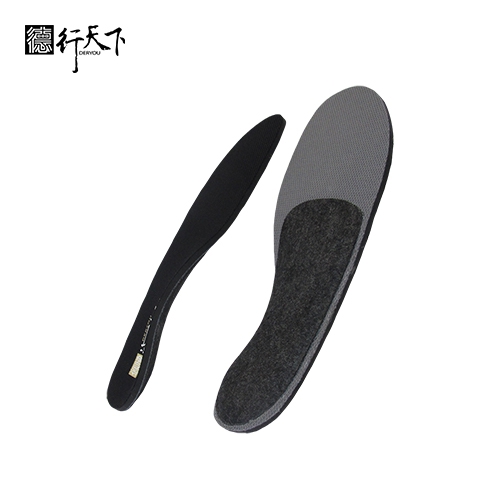
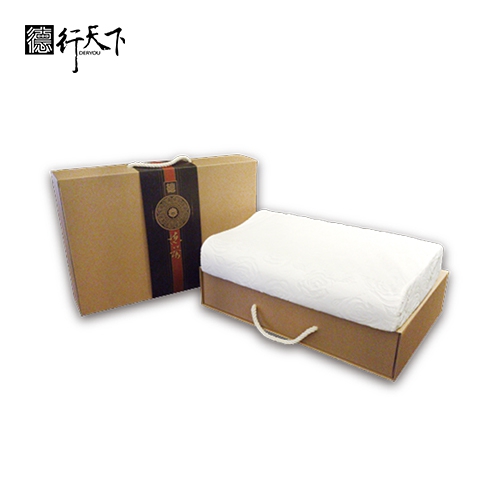
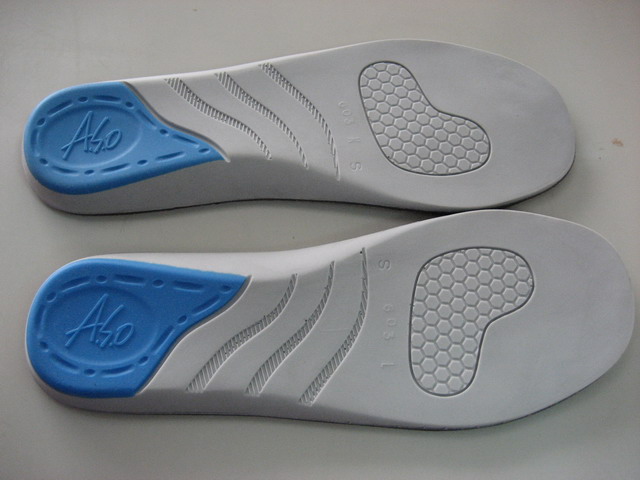
At GuangXin Industrial, our core strength lies in our deep expertise and versatility in insole and pillow manufacturing. We specialize in working with a wide range of materials, including PU (polyurethane), natural latex, and advanced graphene composites, to develop insoles and pillows that meet diverse performance, comfort, and health-support needs.
Whether it's cushioning, support, breathability, or antibacterial function, we tailor material selection to the exact requirements of each project-whether for foot wellness or ergonomic sleep products.
We provide end-to-end manufacturing capabilities under one roof—covering every stage from material sourcing and foaming, to precision molding, lamination, cutting, sewing, and strict quality control. This full-process control not only ensures product consistency and durability, but also allows for faster lead times and better customization flexibility.
With our flexible production capacity, we accommodate both small batch custom orders and high-volume mass production with equal efficiency. Whether you're a startup launching your first insole or pillow line, or a global brand scaling up to meet market demand, GuangXin is equipped to deliver reliable OEM/ODM solutions that grow with your business.
Customization & OEM/ODM Flexibility
GuangXin offers exceptional flexibility in customization and OEM/ODM services, empowering our partners to create insole products that truly align with their brand identity and target market. We develop insoles tailored to specific foot shapes, end-user needs, and regional market preferences, ensuring optimal fit and functionality.
Our team supports comprehensive branding solutions, including logo printing, custom packaging, and product integration support for marketing campaigns. Whether you're launching a new product line or upgrading an existing one, we help your vision come to life with attention to detail and consistent brand presentation.
With fast prototyping services and efficient lead times, GuangXin helps reduce your time-to-market and respond quickly to evolving trends or seasonal demands. From concept to final production, we offer agile support that keeps you ahead of the competition.
Quality Assurance & Certifications
Quality is at the heart of everything we do. GuangXin implements a rigorous quality control system at every stage of production—ensuring that each insole meets the highest standards of consistency, comfort, and durability.
We provide a variety of in-house and third-party testing options, including antibacterial performance, odor control, durability testing, and eco-safety verification, to meet the specific needs of our clients and markets.
Our products are fully compliant with international safety and environmental standards, such as REACH, RoHS, and other applicable export regulations. This ensures seamless entry into global markets while supporting your ESG and product safety commitments.
ESG-Oriented Sustainable Production
At GuangXin Industrial, we are committed to integrating ESG (Environmental, Social, and Governance) values into every step of our manufacturing process. We actively pursue eco-conscious practices by utilizing eco-friendly materials and adopting low-carbon production methods to reduce environmental impact.
To support circular economy goals, we offer recycled and upcycled material options, including innovative applications such as recycled glass and repurposed LCD panel glass. These materials are processed using advanced techniques to retain performance while reducing waste—contributing to a more sustainable supply chain.
We also work closely with our partners to support their ESG compliance and sustainability reporting needs, providing documentation, traceability, and material data upon request. Whether you're aiming to meet corporate sustainability targets or align with global green regulations, GuangXin is your trusted manufacturing ally in building a better, greener future.
Let’s Build Your Next Insole Success Together
Looking for a reliable insole manufacturing partner that understands customization, quality, and flexibility? GuangXin Industrial Co., Ltd. specializes in high-performance insole production, offering tailored solutions for brands across the globe. Whether you're launching a new insole collection or expanding your existing product line, we provide OEM/ODM services built around your unique design and performance goals.
From small-batch custom orders to full-scale mass production, our flexible insole manufacturing capabilities adapt to your business needs. With expertise in PU, latex, and graphene insole materials, we turn ideas into functional, comfortable, and market-ready insoles that deliver value.
Contact us today to discuss your next insole project. Let GuangXin help you create custom insoles that stand out, perform better, and reflect your brand’s commitment to comfort, quality, and sustainability.
🔗 Learn more or get in touch:
🌐 Website: https://www.deryou-tw.com/
📧 Email: shela.a9119@msa.hinet.net
📘 Facebook: facebook.com/deryou.tw
📷 Instagram: instagram.com/deryou.tw
Taiwan custom neck pillow ODM factory
Are you looking for a trusted and experienced manufacturing partner that can bring your comfort-focused product ideas to life? GuangXin Industrial Co., Ltd. is your ideal OEM/ODM supplier, specializing in insole production, pillow manufacturing, and advanced graphene product design.
With decades of experience in insole OEM/ODM, we provide full-service manufacturing—from PU and latex to cutting-edge graphene-infused insoles—customized to meet your performance, support, and breathability requirements. Our production process is vertically integrated, covering everything from material sourcing and foaming to molding, cutting, and strict quality control.Pillow OEM for wellness brands Taiwan
Beyond insoles, GuangXin also offers pillow OEM/ODM services with a focus on ergonomic comfort and functional innovation. Whether you need memory foam, latex, or smart material integration for neck and sleep support, we deliver tailor-made solutions that reflect your brand’s values.
We are especially proud to lead the way in ESG-driven insole development. Through the use of recycled materials—such as repurposed LCD glass—and low-carbon production processes, we help our partners meet sustainability goals without compromising product quality. Our ESG insole solutions are designed not only for comfort but also for compliance with global environmental standards.Taiwan foot care insole ODM expert
At GuangXin, we don’t just manufacture products—we create long-term value for your brand. Whether you're developing your first product line or scaling up globally, our flexible production capabilities and collaborative approach will help you go further, faster.Eco-friendly pillow OEM factory Taiwan
📩 Contact us today to learn how our insole OEM, pillow ODM, and graphene product design services can elevate your product offering—while aligning with the sustainability expectations of modern consumers.Innovative insole ODM solutions in Indonesia
Geneticists have conducted research to understand the genetic origins of skin pigmentation variations among different ethnicities, revealing that genes associated with East Asian and Native American ancestry are responsible for their lighter skin tones. This discovery provides insights into skin cancer prevention and treatment, as Europeans with similar skin tones have higher melanoma rates. The Discovery Could Have Implications for the Prevention of Certain Skin Cancers A team of Penn State geneticists is pursuing the answers to an age-old question of human biology: the genetic origin of fundamental variations in skin pigmentation between people of different ethnicities. The link between skin pigmentation and ethnicity is more complicated than previously believed, according to a recent study published in the journal eLife. The team has confirmed that genes associated with East Asian and Native American ancestry, rather than the genes underpinning lighter skin in people with European ancestry, explain the lighter skin of people of East Asian and Native American descent. Learning what genes are responsible for regulating skin tone, depending on a person’s ancestral origin, has broad implications for genetic research, according to the team, especially as it relates to preventing or treating certain skin cancers. “We’re a step closer to laying a foundation for understanding where we came from, how color change occurs molecularly, and why skin color change is more associated with sun-induced melanoma in Europeans,” said co-corresponding author Keith C. Cheng, distinguished professor of pathology and laboratory medicine, of biochemistry and molecular biology, and of pharmacology at Penn State. Nurses in the Kalinago community traveled with the researchers to connect with more distant members of the tribe and to assist in data collection. Credit: Khai C. Ang A key clue to understanding the evolution of human skin tones resides in the genome of a small population in the Commonwealth of Dominica, according to Cheng. Situated a two-hour ferry ride north of the popular island of Martinique, the tiny, rocky island of Dominica is home to the Kalinago people, who have the least European ancestry of any Native American population in the Caribbean. Cheng first connected with the tribe — whose ancestry comprises primarily Native American and African lines — 15 years ago, after his lab identified the gene responsible for lighter skin color in Europeans. The National Institutes of Health provided the initial funds in 2009 for Cheng and co-corresponding author Khai C. Ang to work with the geographically and genetically isolated Kalinago people to rule out the possibility that the same gene also regulates skin tone in Native Americans and East Asians. “After identifying the variant of the gene SLC24A5, the primary contributor to lighter skin color in Europeans in 2005, the next obvious question was: what about similar skin tones in Native Americans and East Asians?” said Cheng, who led the team that made this discovery. “Both populations are relatively light-skinned, but Europeans are at least 15 times more likely to get melanoma. Why don’t East Asians and Native Americans experience skin cancer at the same rate?” The Science of Skin Color “Skin color differences have long been a mystery of human biology,” said Ang, assistant professor of pathology and laboratory medicine at Penn State. All humans originated in Africa, and as they expanded their footprint to the rest of the world, two main migration branches emerged: the European branch, which includes peoples on the Indian subcontinent and Europe, and the East Asian branch, which includes East Asia and the Americas. People in both branches adapted to geographically and climatically different areas. One such adaptation involved melanin, the cellular pigment responsible for darker tones in skin, hair, and eyes. It offers some protection from sunlight’s ultraviolet (UV) rays, which can damage skin cells. But in the northern latitudes of Europe and Asia, melanin also limits the production of vitamin D, which is critical to human health, Ang said. Penn State researchers spent 15 years working with the Kalinago people in the Caribbean to better understand the genetics underpinning skin tone in people without significant European ancestry. Credit: Khai C. Ang “A biological benefit of sunlight is vitamin D, which the body produces from UV exposure,” Ang said. “In places with lower UV rays, people with less melanin make better use of whatever exposure they have.” For this reason, both Native Americans and East Asians appear to have less melanin than people with African ancestry, but they are less likely than Europeans to develop melanoma, according to Ang. “There are multiple modifications in the human genome that can influence skin tones, but humans have historically been classified by ancestry into three major groups: African, Native American/East Asian and European/South Asian,” Ang said. “European skin is more sensitive to UV damage despite having similar shades as East Asians and Native Americans. Some cellular and genetic mechanism must protect against such damage.” Now that the team has confirmed that different genes are responsible for skin tones in each migration branch of humanity, Cheng said, researchers can begin to better understand why the European mechanism of lighter skin results in higher rates of melanoma among Europeans. “This work confirms that separate genetic mechanisms were involved in the evolution of lighter skin in each of the human migration branches,” Cheng said. The Kalinago Collaboration The work was more involved than simply testing genes, though, according to the researchers. The Kalinago people were, Cheng said, “rightfully guarded before generously participating in this work.” “I went into this with a naïve, idealistic perspective — that science could benefit everyone, including this group,” Cheng said, noting that he quickly learned that many Kalinago had good reason to be skeptical. “Scientists have worked with populations like this before without benefitting them. The Kalinago people’s history of contact with the European world was fraught with colonialism. One can’t blame them for being suspicious.” Cheng, Ang, and their collaborators spent more than a decade building relationships with the Kalinago people and their leadership. Kalinago councils comprising elected officials oversee the community. New elections every few years meant that the researchers had to earn tribal buy-in with every leadership change. The Kalinago people live on Dominica, a small island in the Caribbean. Credit: Khai C. Ang “We had and continue to have discussions with the Kalinago Council and nurses in the community about the project and how they potentially can help solve of the mysteries of human skin pigmentation, emphasizing their contribution to science,” Ang said. “And they agreed to help. That was amazing.” The researchers made multiple data-collection trips, led by Ang, to Dominica, spending up to four months at a time with the Kalinago. While the tribe members speak English, they primarily converse in Creole. The researchers closely collaborated with Kalinago nurses, who traveled with them to the farthest reaches of the island, helping to collect saliva and skin shade measurements and to make the study participants more comfortable. In exchange, the researchers, who learned some conversational Kalinago, volunteered in the Kalinago clinic. “We earned a few small grants — including one from the Hershey Rotary Club — to buy medical equipment to donate,” Ang said. Cheng noted that the team also provided the community with satellite equipment, which became their main means of communication after Hurricane Maria in 2017. The symbiotic relationship reflected the researchers’ scientific intentions, the researchers said. “We’re looking at these tiny changes in DNA — biology that underpins all humans,” Ang said. “And no matter what our ancestry is, we’re all human and we’re all curious. We and the Kalinago worked together to understand this genetic mystery of our skin color.” Matters of Melanin The researchers suspected the Kalinago people have little European ancestry from their history, and they confirmed that they only have about 12% European genetics. “With this confirmation, we knew that we could use data from this population to focus on origins of lighter pigmentation that appears to have most likely come from shared ancestors in East Asia,” Cheng said. All humans have the same set of about 20,000 genes, but individuals carry different combinations of these genes, called alleles. Common combinations of gene alleles define a person’s ancestry — these are the maps that enable such genetic ancestry services as 23andMe to track individual ancestral history. Most alleles differ in subtle ways, such as the single letter change in SLC24A5 that is largely responsible for European peoples’ shared lighter skin color. “Combinations of those alleles define ancestry and make a huge impact on skin color,” Cheng said. “We all carry mutant forms of skin color genes, or alleles, that result in our individual skin tones. Skin color alleles program a person’s skin to have more or less melanin.” Ang measured each participant’s skin melanin by using a reflectometry device on their inner upper arm. The device flashes light and measures the amount of light reflection; darker skin, which has more melanin, reflects less light than lighter skin. These values are then studied quantitatively as melanin index units — the higher the value, the darker the skin. Ang also collected saliva samples to study each participant’s DNA. In total, the team collected measurements and samples from 458 people, or about 15% of the Kalinago population, including three people with albinism. They analyzed genetic ancestry and sequenced about three million markers for skin tone from each sample. “We found that Native American/East Asian ancestry alone contributed at least 20 melanin units,” Ang said. “For comparison, each European mutation, and the albinism allele we identified, contributed between -4 and -8 melanin units. It turns out that none of the published candidates for Native American/East Asian skin-lightening genes caused a detectable effect.” Overall, the researchers determined that the Kalinago people have more Native American ancestry — about 55% — and less European genetic ancestry — about 12% — than any other Caribbean population. About 32% of their ancestry is African. The melanin index measurements and genetic analysis also matched with the Kalinago’s oral histories, according to the researchers, in which participants reported “Black,” “Kalinago” or “mixed” heritage. “We now know that already identified pigmentation gene candidates are not responsible for skin color in this population,” Cheng said. “That means this population may help us to discover what genes are really responsible for the lighter skin of Native Americans and East Asians.” Reference: “Native American genetic ancestry and pigmentation allele contributions to skin color in a Caribbean population” by Khai C Ang, Victor A Canfield, Tiffany C Foster, Thaddeus D Harbaugh, Kathryn A Early, Rachel L Harter, Katherine P Reid, Shou Ling Leong, Yuka Kawasawa, Dajiang Liu, John W Hawley and Keith C Cheng, 9 June 2023, eLife. DOI: 10.7554/eLife.77514 Other project collaborators from the Penn State College of Medicine include Rachel L. Harter, Department of Pathology; Victor A. Canfield, Tiffany C. Foster, Thaddeus D. Harbaugh, Kathryn A. Early and Katherine P. Reid, all with the Department of Pathology and the Jake Gittlen Laboratories for Cancer Research; Shou Ling Leong, Department of Family & Community Medicine; Yuka Kawasawa, Departments of Biochemistry and Molecular Biology and of Pharmacology, and the Institute of Personalized Medicine; and Dajiang Liu, Departments of Biochemistry and Molecular Biology and of Public Health Sciences. The late John W. Hawley of the Salybia Mission Project in Dominica also participated. The National Institutes of Health’s National Institute of Arthritis and Musculoskeletal and Skin Diseases, the Cheng Family, the Penn State College of Medicine’s Jake Gittlen Laboratories for Cancer Research and Department of Pathology, the Hershey Rotary Club and Microryza also supported this research.
Research by Gustavo Caetano-Anollés and Fayez Aziz, University of Illinois, reveals a “big bang” during the evolution of protein subunits known as domains. The team looked for protein relationships and domain recruitment into proteins over 3.8 billion years across all taxonomic units. Their results could have implications for vaccine development and disease management. Credit: Fred Zwicky, University of Illinois Proteins have been quietly taking over our lives since the COVID-19 pandemic began. We’ve been living at the whim of the virus’s so-called “spike” protein, which has mutated dozens of times to create increasingly deadly variants. But the truth is, we have always been ruled by proteins. At the cellular level, they’re responsible for pretty much everything. Proteins are so fundamental that DNA – the genetic material that makes each of us unique – is essentially just a long sequence of protein blueprints. That’s true for animals, plants, fungi, bacteria, archaea, and even viruses. And just as those groups of organisms evolve and change over time, so too do proteins and their component parts. A new study from University of Illinois researchers, published in the journal Scientific Reports, maps the evolutionary history and interrelationships of protein domains, the subunits of protein molecules, over 3.8 billion years. “Knowing how and why domains combine in proteins during evolution could help scientists understand and engineer the activity of proteins for medicine and bioengineering applications. For example, these insights could guide disease management, such as making better vaccines from the spike protein of COVID-19 viruses,” says Gustavo Caetano-Anollés, professor in the Department of Crop Sciences, affiliate of the Carl R. Woese Institute for Genomic Biology at Illinois, and senior author on the paper. Caetano-Anollés has studied the evolution of COVID mutations since the early stages of the pandemic, but that timeline represents a vanishingly tiny fraction of what he and doctoral student Fayez Aziz took on in their current study. The researchers compiled sequences and structures of millions of protein sequences encoded in hundreds of genomes across all taxonomic groups, including higher organisms and microbes. They focused not on whole proteins, but instead on structural domains. “Most proteins are made of more than one domain. These are compact structural units, or modules, that harbor specialized functions,” Caetano-Anollés says. “More importantly, they are the units of evolution.” After sorting proteins into domains to build evolutionary trees, they set to work building a network to understand how domains have developed and been shared across proteins throughout billions of years of evolution. “We built a time series of networks that describe how domains have accumulated and how proteins have rearranged their domains through evolution. This is the first time such a network of ‘domain organization’ has been studied as an evolutionary chronology,” Fayez Aziz says. “Our survey revealed there is a vast evolving network describing how domains combine with each other in proteins.” Each link of the network represents a moment when a particular domain was recruited into a protein, typically to perform a new function. “This fact alone strongly suggests domain recruitment is a powerful force in nature,” Fayez Aziz says. The chronology also revealed which domains contributed important protein functions. For example, the researchers were able to trace the origins of domains responsible for environmental sensing as well as secondary metabolites, or toxins used in bacterial and plant defenses. The analysis showed domains started to combine early in protein evolution, but there were also periods of explosive network growth. For example, the researchers describe a “big bang” of domain combinations 1.5 billion years ago, coinciding with the rise of multicellular organisms and eukaryotes, organisms with membrane-bound nuclei that include humans. The existence of biological big bangs is not new. Caetano-Anollés’ team previously reported the massive and early origin of metabolism, and they recently found it again when tracking the history of metabolic networks. The historical record of a big bang describing the evolutionary patchwork of proteins provides new tools to understand protein makeup. “This could help identify, for example, why structural variations and genomic recombinations occur often in SARS-CoV-2,” Caetano-Anollés says. He adds that this new way of understanding proteins could help prevent pandemics by dissecting how virus diseases originate. It could also help mitigate disease by improving vaccine design when outbreaks occur. Reference: “Evolution of networks of protein domain organization” by M. Fayez Aziz and Gustavo Caetano-Anollés, 8 June 2021, Scientific Reports. DOI: 10.1038/s41598-021-90498-8 The work was supported by the National Science Foundation and the U.S. Department of Agriculture. The Department of Crop Sciences is in the College of Agricultural, Consumer and Environmental Sciences at the University of Illinois.
Research reveals a protein complex critical for brain connectivity and behavior, highlighting its role in disorders like anxiety, potentially guiding future therapies. Credit: SciTechDaily.com Scientists have found that a specific protein complex significantly influences brain connectivity and cognitive behaviors. Their studies on mice revealed that disruptions in this complex affect synapse formation and lead to behavioral changes, such as increased anxiety and impaired social interactions, pointing toward new treatment possibilities for mental health conditions. Protein Complex Roles in Brain Connectivity Researchers at the Université de Montréal and the Montreal Clinical Research Institute (IRCM) have discovered important functions of a protein complex in shaping the structure and function of brain cell connections and influencing certain cognitive behaviors. The study, led by Hideto Takahashi, director of the IRCM’s synapse development and plasticity research unit, in collaboration with teams from York University led by Steven Connor and Tokushima University led by Masanori Tachikawa, has been published in The EMBO Journal. Investigating Synapse Organization and Cognitive Behaviors The research addresses how disruptions in the organization of synapses—the junctions between brain cells—are connected to various neuropsychiatric disorders, an area that has remained largely unexplained. The team’s findings offer promising leads for developing new therapeutic approaches. Two goals are important to bear in mind with this research, said Takahashi, an associate research medical professor in molecular biology and neuroscience at UdeM. “One is to uncover novel molecular mechanisms for brain cell communication,” he said. “The other is to develop a new unique animal model of anxiety disorders displaying panic disorder- and agoraphobia-like behaviors, which helps us develop new therapeutic strategies.” Understanding the Underlying Mechanisms of Cognitive Disorders Mental illnesses, such as anxiety disorders, autism and schizophrenia are among the leading health disorders in Canada and worldwide. Despite their prevalence, drug development and treatment for many of these illnesses have proven to be very challenging, due to the complexity of the brain. Scientists have therefore strived to understand the underlying mechanisms that lead to cognitive disorders in order to advance therapeutic strategies. The junctions between two brain cells (neurons) are called synapses, which are essential for neuronal signal transmission and brain functions. Defects in excitatory synapses, which activate signal transmission to target neurons, and those in synaptic molecules predispose to many mental illnesses. Exploring the Impact of the TrkC-PTPσ Protein Complex Takahashi’s team has previously discovered a new protein complex within the synaptic junction, called TrkC-PTPσ, which is only found in excitatory synapses. The genes coding for TrkC (NTRK3) and PTPσ (PTPRS) are associated with anxiety disorders and autism, respectively. However, the mechanisms by which this complex regulates synapse development and contributes to cognitive functions are unknown. The work carried out in the new study by first author Husam Khaled, a doctoral student in Takahashi’s laboratory, showed that the TrkC-PTPσ complex regulates the structural and functional maturation of excitatory synapses by regulating the phosphorylation, a biochemical protein modification, of many synaptic proteins, while disruption of this complex causes specific behavioral defects in mice. Role of Neurons and Synapses in Brain Functions Neurons are the building blocks of the brain and the nervous system that are responsible for sending and receiving signals that control the brain and body functions. Neighboring neurons communicate through synapses, which act like bridges that allow the passage of signals between them. This process is essential for proper brain functions such as learning, memory, and cognition. Defects in synapses or their components can disrupt communication between neurons, and lead to various brain disorders. Consequences of Genetic Mutations on Brain Behavior By generating mice with specific genetic mutations that disrupt the TrkC-PTPσ complex, Takahashi’s team uncovered the unique functions of this complex. They demonstrated that this complex regulates the phosphorylation of many proteins involved in synapse structure and organization. High-resolution imaging of the mutant mice brains revealed abnormal synapse organization, and further study of their signaling properties showed an increase in inactive synapses with defects in signal transmission. Observing the behavior of the mutant mice, the scientists saw that they exhibited elevated levels of anxiety, especially enhanced avoidance in unfamiliar conditions, and impaired social behaviors. Reference: “The TrkC-PTPσ complex governs synapse maturation and anxiogenic avoidance via synaptic protein phosphorylation” by Husam Khaled, Zahra Ghasemi, Mai Inagaki, Kyle Patel, Yusuke Naito, Benjamin Feller, Nayoung Yi, Farin B Bourojeni, Alfred Kihoon Lee, Nicolas Chofflet, Artur Kania, Hidetaka Kosako, Masanori Tachikawa, Steven Connor and Hideto Takahashi, 27 September 2024, The EMBO Journal. DOI: 10.1038/s44318-024-00252-9 Funding was provided by the Natural Sciences and Engineering Research Council of Canada, the Canadian Institutes of Health Research grants, the Fonds de la recherche du Québec research scholars (FRQS) and the U.S. National Institutes of Health. Husam Khaled was a recipient of an FRQS Doctoral Scholarship and the IRCM Emmanuel-Triassi Doctoral Scholarship for this study.
DVDV1551RTWW78V
Memory foam pillow OEM factory Thailand 》your trusted source for functional product developmentIndonesia insole ODM service provider 》craftsmanship meets efficiency for maximum valueInsole ODM factory in Taiwan 》a trusted OEM/ODM partner across comfort-driven industries
限會員,要發表迴響,請先登入


