Colorado hailstorms can leave a vehicle looking significantly worse in a matter of minutes, and the decisions you make in the hours and days following a storm have a direct impact on how smoothly the repair process goes and how well your insurance claim is supported. Dent repair in Denver after a hailstorm is a well-established process, but it involves specific documentation steps, repair method decisions, insurance protocol, and shop vetting criteria that are worth understanding before you need them. Here is a complete guide to navigating the process from the moment a storm passes to the day you pick up your restored vehicle.
Documenting Damage Immediately After the Storm
Once a storm has fully passed and it is safe to be outside, start documenting before you do anything else. The quality of your documentation directly affects how your claim is processed and how thoroughly damage is accounted for.
Timing your photography matters more than most vehicle owners realize. Industry professionals refer to early morning and late afternoon as the golden hour for damage documentation because angled light reveals shallow dents that direct overhead sunlight completely hides. The shadows created by low-angle light expose the true extent of the damage in a way that midday photos cannot. If you photograph your vehicle at noon on a bright Colorado day, the insurance company sees a fraction of what actually happened.
Your photo set should include wide shots of all four corners of the vehicle to establish overall condition, followed by detailed close-up images of the primary impact zones: the hood, roof, trunk, and the metal rails running above the door frames. These are the areas most consistently struck during hailstorms and the ones adjusters focus on.
Record the specific date, time, and location of the storm. Insurance adjusters verify claims against meteorological data and local storm cell tracking, and having precise metadata on your documentation speeds the verification process and prevents disputes about when and where the damage occurred.
PDR vs. Traditional Bodywork: Understanding the Difference
Paintless Dent Repair is the standard methodology for hail damage in 2026 because it preserves the vehicles original factory paint and finish, which is the single most important factor in protecting resale value. Whether PDR is viable for your specific damage depends on the nature of the impact.
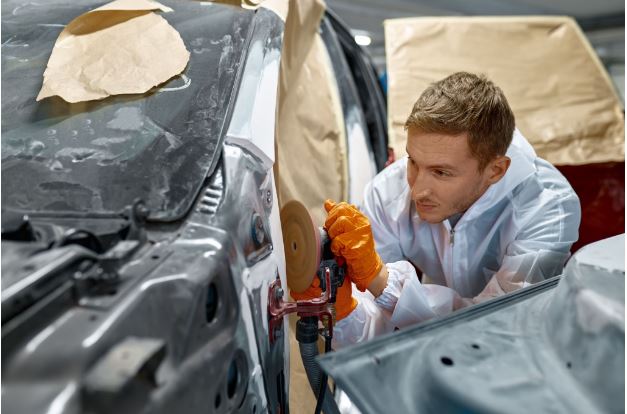
The intact paint test is the foundational preliminary assessment. If running a fingernail over the dent surface reveals cracked, chipped, or spider-webbed paint, the damage falls outside PDRs scope and requires traditional bodywork. Traditional repair involves sanding, filler application, and repainting the affected panels, which adds time and cost but is the correct approach when paint integrity is compromised.
Stretched metal is the other limiting factor for PDR. When a dent is deep enough to have stretched the metal beyond its structural memory, specialized PDR tools cannot manipulate it back into position without affecting the paint surface. Exceptionally deep dents with a sharp point at the base typically indicate this condition. An experienced technician can identify stretched metal during inspection and will recommend the appropriate repair path.
Glass and trim inspection is a necessary part of any complete hail damage assessment. Star chips in windshields and hairline cracks in plastic roof trim fall outside the scope of either PDR or traditional bodywork. These require the specialized expertise of an auto glass professional. Missing these elements during the initial assessment means discovering them later, which complicates the claim and extends the repair timeline.
Navigating the Insurance Claim Process
Colorado law protects vehicle owners from individual rate increases resulting from hail damage claims. Because severe weather qualifies as an Act of God under state statute, a comprehensive hail claim does not trigger premium increases the way an at-fault accident would. Confirming that you carry comprehensive coverage is the prerequisite step, since hail damage is not covered under liability or collision policies.
The modern claims process frequently begins with a first notice of loss filed through your insurers mobile app. Many major insurers now use AI photo estimation to generate an initial repair quote, and according to the Insurance Information Institute, comprehensive coverage is specifically designed for non-collision events like hail, but the initial estimate generated by automated systems routinely misses the micro-dents that require trained inspection to detect.
Treat the initial insurance disbursement as a preliminary payment rather than a final settlement. Reputable repair facilities routinely file supplemental claims directly with the insurance company to cover damage that was not captured in the AI estimate. This is standard practice in the Denver hail repair market and is not an unusual or contentious process with established insurers.
Verify your deductible amount, which is commonly set at $250, $500, or $1,000. Some PDR facilities in the Denver area offer deductible assistance programs that reduce your out-of-pocket expense. Ask about this when requesting estimates.
How to Vet a Denver Repair Facility
Severe hailstorms in the Denver metro area attract what the industry calls storm chasers: temporary, out-of-state repair operations that establish transient setups in parking lots immediately following a major weather event and then disappear once the wave of work subsides. Using these operations is risky because warranty fulfillment depends on the company still being in business and accessible when a problem surfaces months later.
Verify that any facility you consider maintains a permanent physical Denver address with a commercial lease, not a temporary pop-up setup. A reputable local shop should provide a written lifetime warranty that covers the repairs for as long as you own the vehicle.
You have a legally protected right to choose your own repair facility and are not obligated to use a shop your insurance company designates as a preferred provider. You can select any qualified shop you trust, and your insurer is required to work with that shop.
Rental vehicle coordination is a practical consideration that carries more weight during peak hail season than most vehicle owners anticipated. Denver rental inventories can be completely depleted for weeks following a major storm that affects thousands of vehicles simultaneously. Ask upfront whether the shop provides a loaner vehicle or coordinates directly with rental agencies. Shops with established rental relationships can often secure vehicles that are unavailable through standard channels.
Check the Better Business Bureau of Colorado and local review platforms to assess a shops accreditation status and complaint history before committing. An established local business with years of reviews in the Denver market is a meaningfully different risk profile than an operation that appeared two weeks ago.
Preparing Your Vehicle for Drop-Off
A few straightforward preparation steps make the repair process more efficient and reduce the likelihood of damage to personal items or missed damage during inspection.
Clean the interior thoroughly and remove all personal belongings before the vehicle is dropped off. PDR technicians frequently need to dismantle interior components including headliners and door panels to access the reverse side of damaged metal. A cleared cabin allows them to work without interruption and without risk to items left inside.
Wash the exterior before the vehicle is assessed at the shop. A clean surface allows technicians to identify every micro-dent under specialized LED inspection lights. Road dust and debris act as camouflage that conceals small impacts from the initial assessment and leaves hidden damage that may surface after the vehicle is returned.
Ensure the vehicle has at least a quarter tank of fuel before drop-off. Shops may need to transport the vehicle to partner facilities during the repair process, particularly if Advanced Driver Assistance Systems recalibration is required following bodywork. ADAS sensors and cameras frequently need specialist resetting after panels are restored, and having sufficient fuel prevents delays in that coordination.
Following these steps reduces friction throughout the repair process and allows technicians to focus entirely on restoring your vehicle to its pre-storm condition without avoidable interruptions.
下一則: What to Expect: Deep Plane Facelift in Denver
- Building a Reliable Reloading Bench: Components That Make the Biggest Difference
- How Apparel Decorators Can Reduce Material Waste Without Sacrificing Quality
- How Divorce Mediation Can Help Parents Prepare for Future Life Changes
- Why Professional Jewelry Evaluations Can Help You Maximize Value
- Summer Plans with Fencing Upgrades
- After the Storm: 5 Costly Errors in Car Hail Damage Repair
限會員,要發表迴響,請先登入


