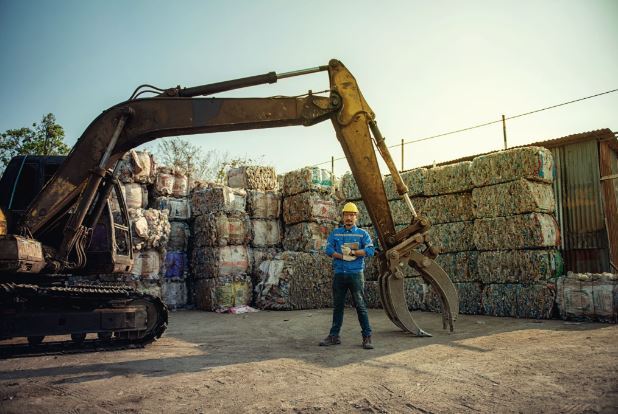
The economics of industrial waste have shifted considerably. Material recovery has moved from a compliance obligation into a genuine cost management tool, with documented evidence that implementing a commercial recycling program can cost up to 40 percent less than traditional trash disposal. Industrial recycling services now encompass far more than collection: they include comprehensive waste characterization, specialized processing technologies, and coordination with licensed treatment, storage, and disposal facilities. Heres what facilities need to understand about how these programs work, what the regulatory framework requires, and how to build a program that generates measurable returns.
The Regulatory Framework Every Generator Must Know
The federal Resource Conservation and Recovery Act (RCRA) establishes the baseline legal structure for industrial waste management in the United States. RCRA makes a fundamental distinction between hazardous waste under Subtitle C and non-hazardous waste under Subtitle D, and the category your waste falls into determines almost everything about how it must be handled.
For hazardous waste, the EPA classifies generators into three tiers based on monthly production volume. Very Small Quantity Generators produce 100 kilograms or less per month. Small Quantity Generators produce between 100 and 1,000 kilograms. Large Quantity Generators produce 1,000 kilograms or more. Each tier carries different accumulation limits and storage timeframes: Large Quantity Generators may accumulate waste on-site for 90 days with no volume cap, while Small Quantity Generators can store waste for up to 180 days but cannot exceed 6,000 kilograms on-site.
The Uniform Hazardous Waste Manifest system tracks every shipment of hazardous waste from the moment it leaves a generator through final disposal or recycling. This cradle-to-grave tracking creates a complete accountability chain that regulators can audit at any point, which is why documentation discipline matters as much as physical handling.
How Different Material Streams Are Processed
Different materials require fundamentally different processing approaches, and understanding these distinctions helps facilities match their waste streams to the right service providers.
For metals and scrap, mechanical and technological sorting handle the separation work. Magnetic separation isolates ferrous metals, while eddy current separators induce electrical currents that eject non-ferrous materials like aluminum and copper. Recovered metals are then shredded to increase density and compacted for transport. The scrap metal market provides direct financial return for this material, making it one of the most straightforward industrial recycling categories from a cost recovery standpoint.
Electronic waste is considerably more complex. E-waste contains both valuable materials and hazardous substances, and processing involves manual sorting, industrial shredding, and mechanical separation techniques including water separation for plastics and glass. Battery processing requires specific protocols to capture harmful gases during treatment. When selecting e-waste recyclers, facilities should verify e-Stewards or R2 (Responsible Recycling) certifications, which confirm that processors meet documented environmental and worker safety standards.
Fluids, solvents, and paint each have distinct regulatory requirements. Used motor oil falls under 40 CFR Part 279, with regulated collection services widely available. Latex or water-based paint can often be sorted by color, tested, filtered, and reused. Oil-based paints face market limitations and regulatory constraints that typically route them to permitted facilities for energy recovery rather than direct reuse. Aerosol cans require controlled puncturing to safely separate propellants from residual paint before either component can be properly processed.
Technology Expanding What Can Be Recovered
Processing technology continues to push the boundaries of recoverable materials, which changes the economics of programs that were previously cost-prohibitive.
Advanced infrared and X-ray sorting technologies are now deployed in modern facilities to distinguish between types of plastics and non-metallic materials in mixed industrial scrap streams, enabling separation that manual sorting cannot achieve at scale.
One of the more remarkable developments in high-value material recovery comes from Oak Ridge National Laboratory research, which developed a process to extract rare earth elements from scrapped hard drive magnets. By dissolving magnets in nitric acid and using polymer membranes with porous hollow fibers, the process recovers more than 97 percent of rare earth elements including neodymium, praseodymium, and dysprosium at purities exceeding 99.5 percent. As rare earth elements become increasingly critical to electronics manufacturing, recovery efficiency at this level represents a meaningful shift in what e-waste processing can return.
Facilities managing contaminated soils and complex industrial byproducts increasingly use thermal desorption technology to safely handle volatile and semi-volatile contaminants without routing material to landfill.
Building a Compliant and Profitable Program
A successful industrial recycling program starts with a comprehensive cost-benefit analysis that identifies the types and volumes of materials generated, the optimal storage locations within the facility, and the pickup frequencies needed to avoid operational bottlenecks. This analysis also establishes the baseline data for tracking program performance over time.
Infrastructure requirements typically include clearly labeled collection bins for material segregation, and often heavy-duty balers, industrial compactors, or roll-off dumpsters to reduce transportation costs by increasing load density. The right equipment choice depends on the volume and type of material generated.
Provider vetting is one of the most important and most frequently underestimated steps in program development. According to the EPAs guidance on recycling industrial hazardous waste, facilities should audit potential recycling partners by reviewing site history, environmental compliance records, permit status, waste screening procedures, and financial stability before entering into any service agreement. A recycler that fails mid-contract can leave a generator with an unmanaged waste stream and potential compliance exposure.
Performance metrics should be established from the start. Tracking the weight of materials recycled and calculating landfill disposal cost savings against program costs gives facility managers the data needed to justify continued investment and identify areas for improvement.
Liability, Insurance, and Financial Risk
The cradle-to-grave liability principle under RCRA is the most important concept for any facility manager to internalize. Generators remain legally responsible for their waste from the point of generation through ultimate disposal, regardless of how many licensed intermediaries handle it in between. If a transporter or disposal facility causes environmental contamination using your waste, your facility retains legal exposure.
Improper disposal consequences are severe. Defense costs, cleanup fees, government fines, and criminal liability can collectively reach into the millions for significant violations. This is not a theoretical risk: enforcement actions under RCRA are documented and ongoing.
Risk transfer tools exist to manage this exposure. Site Specific Pollution Liability insurance, non-owned disposal site coverage, and transportation liability coverage can protect facilities from the financial consequences of environmental contamination events. The critical distinction to understand is that insurance transfers financial risk but does not eliminate legal responsibility. Maintaining RCRA compliance and proper waste management practices at every step is the only way to reduce underlying liability, not just its financial consequence.
When evaluating insurance coverage for industrial waste programs, verify that policies explicitly cover the specific waste streams and transportation scenarios your facility generates. Standard commercial general liability policies frequently exclude pollution-related claims, making specialized environmental coverage a separate and necessary procurement.
What to Look for When Selecting a Service Provider
Provider selection comes down to five factors that matter more than price: demonstrated regulatory compliance history, appropriate certifications for the specific materials you generate, transparent weighing and documentation practices, financial stability, and responsiveness to your operational schedule.
For hazardous waste, verify that the provider is a licensed transporter under RCRA and that their designated disposal or recycling facilities hold current EPA permits. Request copies of their insurance certificates and confirm that coverage limits are appropriate for the scale of material they handle. Ask specifically how they handle manifest documentation and whether they provide copies of completed manifests as a standard part of their service, since those records are your legal proof of proper disposal.
For non-hazardous recyclables, competitive payout rates and transparent weighing practices are the primary evaluation criteria. Request references from comparable facilities and verify that payment calculations are auditable, not simply reported by the service provider.
A well-structured industrial recycling program does not require the cheapest provider. It requires a provid
下一則: Mesureur de Rapport de Transformation : Contrôler les Performances des Transformateurs
- Why Professional Jewelry Evaluations Can Help You Maximize Value
- Comparing GAE, PAE, and UFE: Which Embolization Treatment Is Right for You?
- Why Personalized Physiotherapy Treatment Plans Work Better Than Generic Exercises
- Navigating Vehicle Hail Damage Repair in Denver: Documentation, Insurance, and Shop Selection
- Mesureur de Rapport de Transformation : Contrôler les Performances des Transformateurs
- Medicare Advantage Enrollment Dates and Deadlines 2027: A Clear Guide to Timing, Coverage Changes, and Important Medicare Windows
限會員,要發表迴響,請先登入


