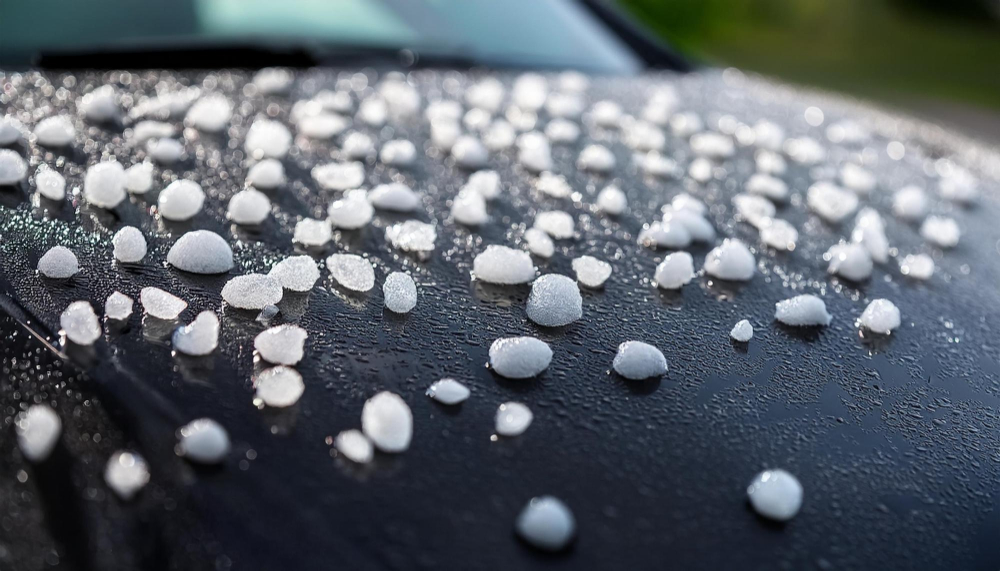
The sound of a hailstorm is unmistakable. Once it passes, a moment of relief is common. Then comes the inspection of the cars hood, roof, and trunk. They often look like the dimpled surface of a golf ball. The initial shock quickly turns into a new kind of stress: navigating the world of insurance claims and auto body work. This is where the most expensive mistakes happen, and its a widespread issue; a 2025 market study from DataIntelo estimated that approximately 2.2 million vehicles in North America are affected by hailstorms each year.
Getting a vehicle fixed correctly is crucial. The right process preserves the cars value. The wrong one can lead to a bad repair, a lowered resale price, and endless headaches with the insurer. Understanding the common pitfalls is the first step to avoiding them. Your goal should be a seamless process that leaves the car looking like the storm never happened.
Quick answer: To avoid common mistakes with car hail damage repair, your first step is to call your insurance provider to start a claim. Next, you should find a local specialist who uses Paintless Dent Repair (PDR) and has a permanent physical address. The specialist should manage the insurance process directly. This prevents you from getting stuck with a low-quality fix from a temporary "storm chaser."
Whats inside
-
Mistake 2: Choosing the Wrong Type of Repair (Body Filler vs. PDR)
-
Mistake 3: Falling for a "Storm Chaser" Deal
-
Mistake 4: Not Understanding Your Insurance Coverage
-
Mistake 5: Thinking Minor Hail Damage Isnt a Big Deal
-
How to Choose the Right Hail Repair Specialist
────────────────────────────────────────
Mistake 2: Choosing the Wrong Type of Repair (Body Filler vs. PDR)
Choosing a repair method that preserves the cars original factory paint is critical. This single decision has the biggest impact on a vehicles long-term value. Not all dent repair techniques are created equal.
Many conventional body shops fix hail by sanding down the original paint. They then apply a thick putty, known as body filler, to level the surface. Finally, they repaint the panel. This invasive process permanently alters the vehicle and is a red flag to future buyers.
A repainted panel is never as durable as the finish applied at the factory. It can also be reported on a vehicle history report like CarFax. This note can significantly lower the cars resale value. You essentially pay for a repair that costs you more money down the road.
❝ Ask any potential shop one critical question. "Will this repair be reported to CarFax?" A reputable PDR specialists work wont be. Thats because the original factory finish isnt compromised. A conventional body shops work often is.
The modern, preferred solution is Paintless Dent Repair (PDR). PDR is a highly skilled technique that requires no sanding, filler, or new paint. Technicians use specialized tools to get behind the dent. They carefully massage the metal back to its original form, keeping the factory paint intact. You can see examples of high-quality car hail damage repair that show the flawless results possible. The goal is a finish so clean it is impossible to tell a dent was ever there.
────────────────────────────────────────
Mistake 3: Falling for a "Storm Chaser" Deal
You should exercise caution when dealing with repair shops that suddenly appear after a storm. These temporary outfits, known as "storm chasers," often lack the accountability of a permanent local business. They prioritize volume over quality, which can leave you with a bad repair.
After a major hailstorm, these shops pop up everywhere. They set up tents in shopping mall parking lots or rent a temporary garage bay for a few months. These are often out-of-state technicians who follow bad weather to make quick money from the surge in demand.
They make offers that seem too good to pass up. They might promise to waive the insurance deductible entirely. Some even offer cash-back deals to secure the business. This immediate savings is tempting when you are facing a big repair bill.
The Hidden Costs of a "Great" Deal
The problem is what happens after you drive your car away. Storm chasers need to work fast. Their business model relies on completing as many jobs as possible before moving to the next storm-hit town. This rush often leads to subpar work.
When they leave town, their "lifetime warranty" leaves with them. You have no one to call if a problem with the repair is found a few months later. A warranty is only as good as the company standing behind it.
❝ The simplest way to vet a shop is to check its physical address. Look it up online. Is it a permanent, established business with a local history? Or is it a temporary tent or a recently rented, empty-looking bay? A real business has roots in the community.
Waiving a deductible can also be a red flag for insurance fraud. A shop might inflate the estimate to the insurer to cover the cost. More often, they will skip parts of the repair but bill for them anyway. This leaves your car improperly fixed and can cause you major issues with your claim.
Why a Local Specialist is Your Best Bet
A local PDR specialist has a reputation to protect. They live and work in the community. They rely on word-of-mouth and positive reviews to stay in business. This gives them a powerful incentive to do the job right the first time.
They also have established relationships with local insurance adjusters. This experience can make the claims process much smoother. They understand how to document damage and communicate effectively with insurers, serving as your dedicated partner, not just a temporary technician.
────────────────────────────────────────
Mistake 4: Not Understanding Your Insurance Coverage
Auto policies can feel complex. It is essential that you understand your comprehensive coverage and deductible before agreeing to any repairs. This knowledge prevents you from paying more than necessary or accepting a bad deal from an insurer.
Hail damage is not covered by basic liability or collision insurance. It falls under your policys comprehensive coverage. This part of your plan protects your vehicle from non-accident events like weather, theft, or vandalism. If you live in a hail-prone region, this coverage is essential.
The key number you need to know is your deductible. This is the portion of the bill you pay out-of-pocket. If a repair costs $4,000 and your deductible is $500, you pay the first $500. The insurer then pays the remaining $3,500 directly to the shop. This is a realistic example, as CARFAX reports that repairing hail damage can cost anywhere from $750 to $10,000.
Not all comprehensive plans are the same. Some insurers have special rules for hail. Your policy might have a separate, percentage-based deductible just for hail damage, for example, 1% of the cars value. This could be much higher than your standard deductible.
❝ Before filing, ask the agent a direct question. "Does this policy have any specific limitations or a separate deductible for hail damage?" Knowing this upfront prevents major financial surprises.
Watch out for an offer of an "appearance allowance" or "cash-out" option. An adjuster might offer you a check for, say, $1,500. This is to settle the claim without a full repair, which might cost $4,000. It seems like easy money at a stressful time.
Taking this deal is almost always a mistake. The hail damage could decrease the cars resale value by $5,000 or more. Thats a huge loss compared to the small check you receive. It also means the damage remains on your vehicles record.
A future hailstorm hitting the same panels can create a nightmare claims scenario. The insurer will argue they already paid for that damage, leaving you with a bigger problem and less coverage. Always opt for a complete, professional repair.
An experienced PDR specialist acts as your advocate. They will review the initial insurance estimate line-by-line. They often find missed dents or necessary steps the adjuster overlooked. They then file a supplement with the insurer to get the full repair cost approved.
────────────────────────────────────────
Mistake 5: Thinking Minor Hail Damage Isnt a Big Deal
You might be tempted to ignore a few small dings. It seems like a cosmetic issue that isnt worth the hassle of a claim. This is a financial mistake that can cost you thousands in the long run. For example, a Killeen, Texas PDR shop reported that in their 2024 to 2025 hail events, the average hail damage repair cost per vehicle was $10,000 to $12,000. Your cars value is directly tied to its condition. Even minor hail damage can significantly reduce its trade-in or private sale price. A dealer will use the damage as a major negotiating point. They will quote a high repair cost and deduct that amount, plus more, from their offer. You lose far more value than the cost of a proper repair.
Ignoring the damage also creates a problem for future insurance claims. If another hailstorm hits your car, the insurer will see the pre-existing damage. They will refuse to pay for a full repair, arguing that they are not responsible for the old dents. This results in a much bigger problem and a smaller payout for you.
Finally, the damage can get worse. Dents can sometimes create tiny fractures in your cars paint or clear coat. Over time, moisture can seep in and cause rust to form under the paint. What started as a small dimple can become a bubbling rust spot that requires a much more invasive and expensive fix.
────────────────────────────────────────
How to Choose the Right Hail Repair Specialist
Finding a trustworthy shop is the most important step. You need a partner who will advocate for you and restore the vehicle correctly. Look for a few key signs of a high-quality, professional operation.
First, confirm they specialize in Paintless Dent Repair. A general body shop may offer PDR, but a specialist lives and breathes this technique. Their technicians have the advanced skills needed for a flawless finish. They will have invested in specialized lighting and tools that a conventional shop might lack.
Next, verify they have a permanent physical location. As discussed earlier, a shop with deep local roots will still be there to honor its warranty long after the storm chasers have moved on.
下一則: Replacement Windows vs. Alternatives: How to Decide
- How Divorce Mediation Can Help Parents Prepare for Future Life Changes
- Replacement Windows vs. Alternatives: How to Decide
- Comparing GAE, PAE, and UFE: Which Embolization Treatment Is Right for You?
- How to Modernize an Older Hotel Property
- The New Architecture of Wealth: What Investors Need to Know in 2026
- Navigating Vehicle Hail Damage Repair in Denver: Documentation, Insurance, and Shop Selection
限會員,要發表迴響,請先登入


