Delilah
Delilah is a character in the Hebrew bible Book of Judges, where she is the "woman in the valley of Sorek" whom Samson loved, and who was his downfall. Her figure, one of several dangerous temptresses in the Hebrew Bible, has become emblematic: "Samson loved Delilah, she betrayed him, and, what is worse, she did it for money," Madlyn Kahr begins her study of the Delilah motif in European painting.
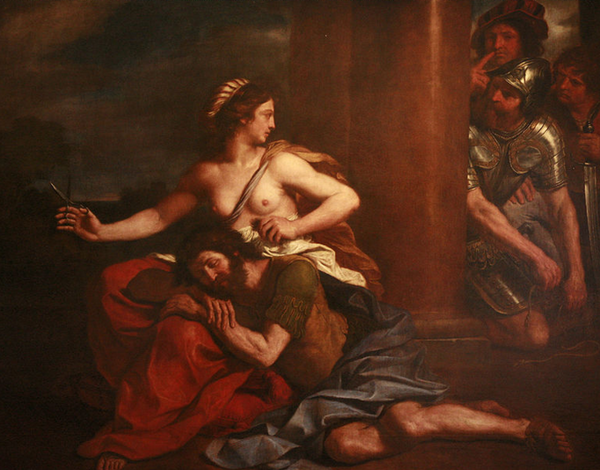
Delilah was approached by the lords of the Philistines, to discover the secret of Samson's strength, "and we will give thee, every one of us, eleven hundred pieces of silver." Three times she asked Samson for the secret of his strength, and all three times he gave her a false answer. The first time, he told her, "If they bind me with seven green withes that were never dried, then shall I be weak, and be as another man." Then he told her, "If they bind me fast with new ropes that never were occupied, then shall I be weak, and be as another man." The third time, he told her, "If thou weavest the seven locks of my head with the web...." On the fourth occasion, he gave her the true reason: that he did not cut his hair in fulfillment of a vow to God; and Delilah, when Samson was asleep on her knees, called up her man to shave off the seven locks from his head, then betrayed him to his enemies: "The Philistines took him, and put out his eyes, and brought him down to Gaza, and bound him with fetters of brass; and he did grind in the prison house."
Samson's Fight with the Lion
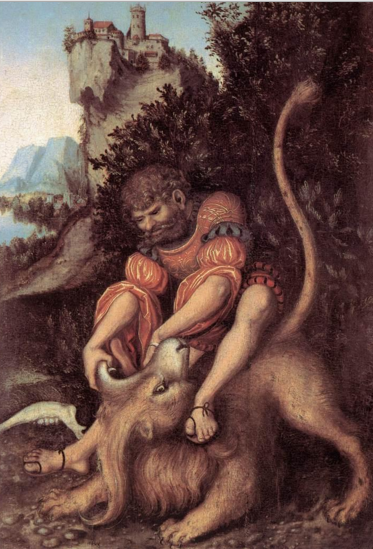
Samson, Shamshoun , or Sampson , is one of the last of the judges of the ancient Israelites mentioned in the Hebrew Bible (Book of Judges chapters 13 to 16).
According to the biblical account, Samson was given supernatural strength by God in order to combat his enemies and perform heroic feats such as killing a lion, slaying an entire army with only the jawbone of an ass, and destroying a pagan temple. Samson had two vulnerabilities, however: his attraction to untrustworthy women and his hair, without which he was powerless. These vulnerabilities ultimately proved fatal for him.
Goldilocks and the Three Bears
It's common to find out forest settings and a girl with golden curved hair in German's tales.
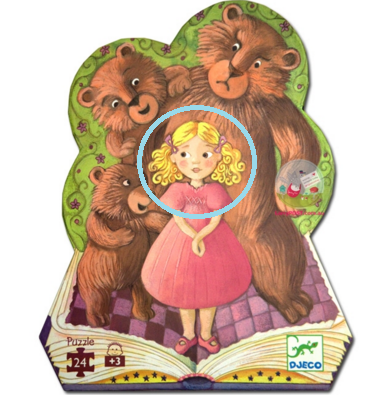
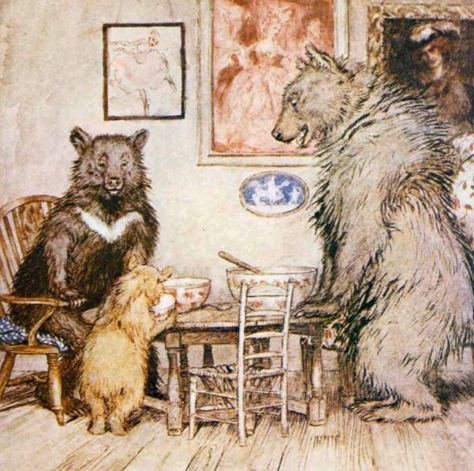
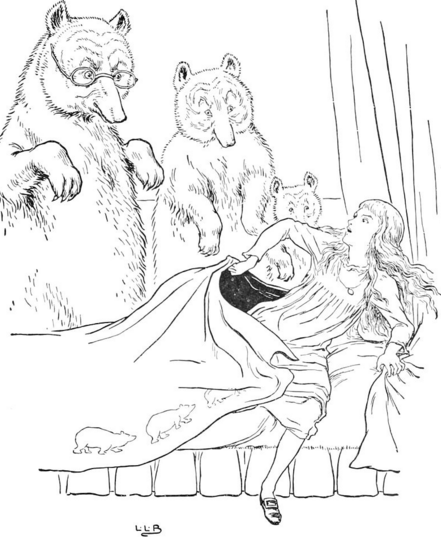
"Goldilocks and the Three Bears" and the older "The Story of the Three Bears" are two variations of an old fairy tale. The original tale tells of an ugly, old woman who enters the forest home of three bachelor bears whilst they are away. She sits in their chairs, eats some of their porridge, and falls asleep in one of their beds. When the bears return and discover her, she starts up, jumps from the window, and is never seen again. The other major version brings Goldilocks to the tale (replacing the old woman), and an even later version retained Goldilocks, but has the three bachelor bears transformed into Papa, Mama, and Baby Bear.
What was originally a fearsome oral tale became a cosy family story with only a hint of menace. The story has elicited various interpretations and has been adapted to film, opera, and other media. "The Story of the Three Bears" is one of the most popular fairy tales in the English language.
⇓ Goldilocks caught in Baby Bear's bed
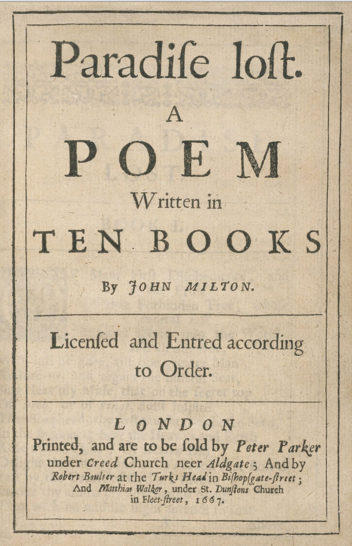
Paradise Lost is an epic poem in blank verse by the 17th-century English poet John Milton
The poem concerns the Biblical story of the Fall of Man: the temptation of Adam and Eve by the fallen angel Satan and their expulsion from the Garden of Eden. Milton's purpose, stated in Book I, is to "justify the ways of God to men"
Satan is the first major character introduced in the poem. Formerly called Lucifer, he was the most beautiful of all angels in Heaven
Satan as presented in John Milton's Paradise Lost
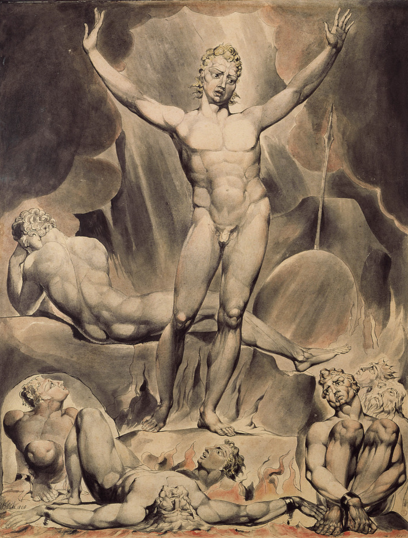
Satan(Lucifer; Prince of Darkness) is a figure appearing in the texts of the Abrahamic religions who brings evil and temptation, and is known as the deceiver who leads humanity astray. Some religious groups teach that he originated as an angel who fell out of favor with God, seducing humanity into the ways of sin, and who has power in the fallen world. In the Hebrew Bible and the New Testament, Satan is primarily an accuser and adversary, a decidedly malevolent entity, also called the devil, who possesses demonic qualities.
In Theistic Satanism, Satan is considered a positive force and deity who is either worshipped or revered. In LaVeyan Satanism, Satan is regarded as holding virtuous characteristics.
seven deadly sins
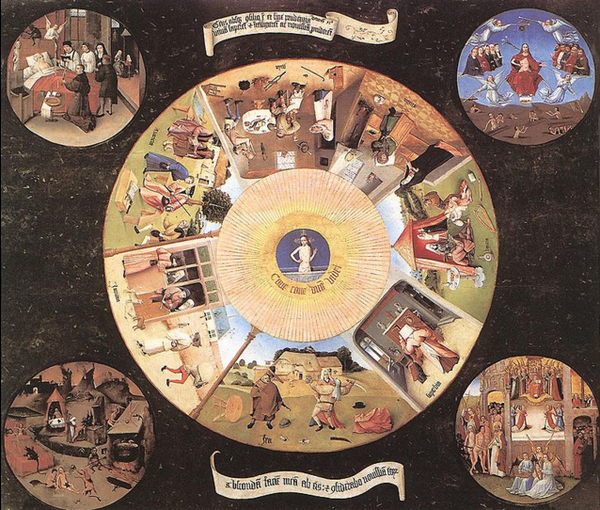
The seven deadly sins, also known as the capital vices or cardinal sins, is a Western religious grouping and classification of vices. This grouping emerged in the fourth century AD and was used for Christian ethical education and for confession. According to the Catechism of the Catholic Church, a mortal or deadly sin is believed to destroy the life of grace and charity within a person. Though the sins have fluctuated over time, the currently recognized list includes pride, greed, lust, envy, gluttony, wrath and sloth. There is a parallel tradition of seven virtues.
⇓ Four small circles, detailing the four last things — "Death of the Sinner", "Judgment", "Hell" and "Glory" — surround a larger circle in which the seven deadly sins are depicted: wrath at the bottom, then (proceeding clockwise) envy, greed, gluttony, sloth, extravagance (later called lust), and pride, in scenes from life rather than in allegorical representations of the sins.
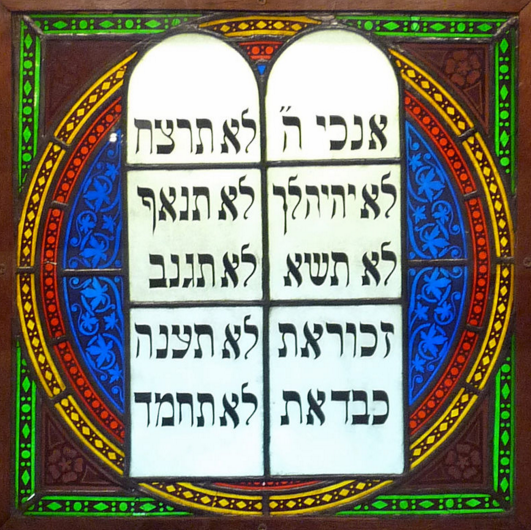
Ten Commandments
The Ten Commandments, also known as the Decalogue, are a set of commandments which the Bible describes as having been given to the Israelites by God at biblical Mount Sinai. The Ten Commandments are listed twice in the Hebrew Bible, first at Exodus 20:1–17, and then at Deuteronomy 5:4–21. Both versions state that God inscribed them on two stone tablets, which he gave to Moses. According to New Testament writers, the Ten Commandments are clearly attributed to Moses (Mark 7:10, see also John 7:19).
Modern scholarship has found likely influences in Hittite and Mesopotamian laws and treaties, but is divided over exactly when the Ten Commandments were written and who wrote them.
The commandments include instructions to worship only God, to honour parents, and to keep the sabbath; as well as prohibitions against idolatry, blasphemy, murder, adultery, theft, dishonesty, and coveting. Different religious groups follow different traditions for interpreting and numbering them.
Manna
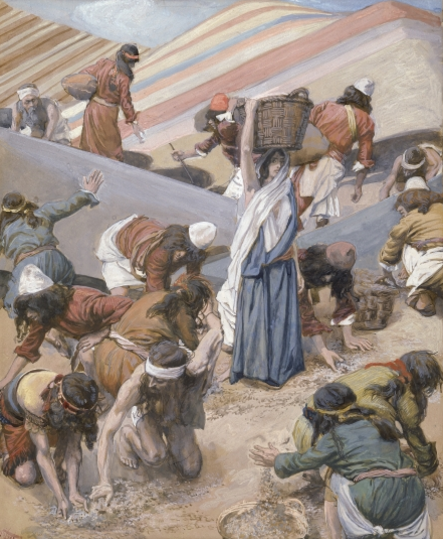
Manna or al-Mann wa al-Salwa, sometimes or archaically spelled mana, is an edible substance that, according to the Bible and the Quran, God provided for the Israelites during their travels in the desert.
The Gathering of the Manna
Plagues of Egypt
The Plagues of Egypt , also called the ten biblical plagues, were ten calamities that, according to the biblical Book of Exodus, the God of Israel inflicted upon Egypt to persuade the Pharaoh to release the ill-treated Israelites from slavery. Pharaoh capitulated after the tenth plague, triggering the Exodus of the Hebrew people. The plagues served to contrast the power of the God of Israel with the Egyptian gods, invalidating them. Some commentators have associated several of the plagues with judgment on specific gods associated with the Nile, fertility and natural phenomena. According to Exodus 12:12, all the gods of Egypt would be judged through the tenth and final plague: "On that same night I will pass through Egypt and strike down every firstborn of both people and animals, and I will bring judgment on all the gods of Egypt. I am the LORD."
Death of firstborn
This is what the LORD says:
"About midnight I will go throughout Egypt. Every firstborn in Egypt will die, from the firstborn son of Pharaoh, who sits on the throne, to the firstborn of the slave girl, who is at her hand mill, and all the firstborn of the cattle as well. There will be loud wailing throughout Egypt—worse than there has ever been or ever will be again."
— Exodus 11:4–6
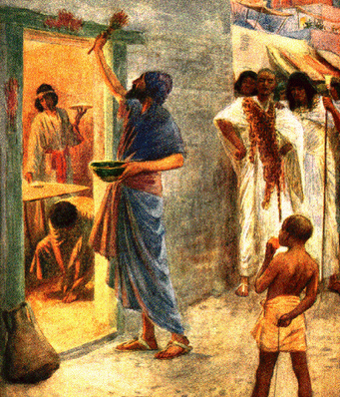
Before this final plague, God commanded Moses to inform all the Israelites to mark lamb's blood above their doors on every door in which case the LORD will pass over them and not "suffer the destroyer to come into your houses and smite you" (chapter 12, v. 23), thus sparing all the Israelite first-borns. This was the hardest blow upon Egypt and cries of grief spread throughout the land as the Egyptians mourned the loss of their first-born child.
After this, Pharaoh, furious, saddened, and afraid that he would be killed next, ordered the Israelites to leave, taking whatever they wanted, and asking Moses to bless him in the name of the Lord. The Israelites did not hesitate, believing that soon Pharaoh would once again change his mind, which he did; and at the end of that night Moses led them out of Egypt with "arms upraised".
Passover
Passover or Pesach, is an important, biblically derived Jewish festival. The Jewish people celebrate Passover as a commemoration of their liberation by God from slavery in Egypt and their freedom as a nation under the leadership of Moses.
✦ Genesis 12:7-10
And they shall take some of the blood and put it on the two doorposts and on the lintel of the houses where they eat it. Then they shall eat the flesh on that night; roasted in fire, with unleavened bread and with bitter herbs they shall eat it. Do not eat it raw, nor boiled at all with water, but roasted in fire—its head with its legs and its entrails. You shall let none of it remain until morning, and what remains of it until morning you shall burn with fire.
★ Parable
A parable is a succinct, didactic story, in prose or verse, which illustrates one or more instructive lessons or principles. It differs from a fable in that fables employ animals, plants, inanimate objects, or forces of nature as characters, whereas parables have human characters. A parable is a type of analogy.
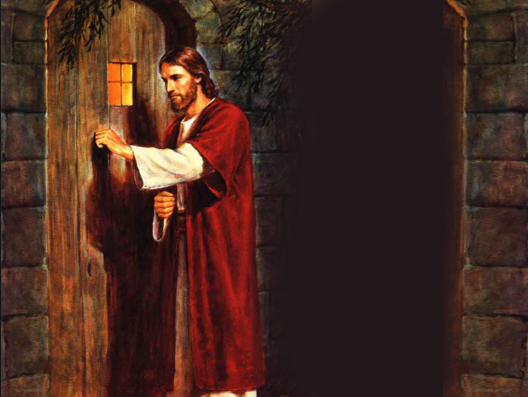
“Here I am! I stand at the door and knock.
If anyone hears my voice and opens the door,
I will come in and eat with that person, and they with me”
✦ Jesus often told stories when he was teaching people. This is a very good way to teach, because people remember stories. We call his stories parables. (A parable is a story that teaches us a truth about God. Or, the story shows us behaviour that pleases God.) The stories of Jesus are very easy to remember. They are very important. They help us to know what God wants.
A favourite story is the parable of the farmer and his field. This is often called 'the parable of the sower.'
[A sower is a farmer who is sowing his seed.]
The story of the parable of the sower [that is, the story of the farmer and his field]
The story is simple. A farmer sows seed in a field:
✦ Some seed falls on the paths, and the birds quickly eat it.
✦ Some seed falls where there are rocks, and not much soil. Plants grow quickly, but soon the sun dries them. There is not enough soil, and the plants die.
✦ Some seed begins to grow in a place where there are too many weeds. The weeds stop the growth of the plants, and the plants die.
✦ But other seed falls on good ground. So, the plants grow well. The farmer has a harvest from these plants.
★Fable
Fable is a literary genre: a succinct fictional story, in prose or verse, that features animals, mythical creatures, plants, inanimate objects, or forces of nature that are anthropomorphized (given human qualities, such as verbal communication) and that illustrates or leads to an interpretation of a moral lesson (a "moral"), which may at the end be added explicitly as a pithy maxim.
Anthropomorphism
Anthropomorphism is the attribution of human traits, emotions, and intentions to non-human entities. Anthropomorphism is considered to be an innate tendency of human psychology.
★Allegory
As a literary device, an allegory in its most general sense is an extended metaphor. Allegory has been used widely throughout history in all forms of art, largely because it can readily illustrate complex ideas and concepts in ways that are comprehensible or striking to its viewers, readers, or listeners.
Life is a game.
When we are faced some difficulties,
"face it; solve it, and let it go."
限會員,要發表迴響,請先登入


