Penelope
Penelope is the wife of the main character, the king of Ithaca, Odysseus (Ulysses in Roman mythology), and daughter of Icarius and his wife Periboea. She only has one son by Odysseus, Telemachus, who was born just before Odysseus was called to fight in the Trojan War. She waits twenty years for the final return of her husband, during which she devises various strategies to delay marrying one of the 108 suitors.
On Odysseus's return, disguised as an old beggar, he finds that Penelope has remained faithful. She has devised tricks to delay her suitors, one of which is to pretend to be weaving a burial shroud for Odysseus's elderly father Laertes and claiming that she will choose a suitor when she has finished. Every night for three years, she undoes part of the shroud, until Melantho, one of twelve unfaithful serving women, discovers her chicanery and reveals it to the suitors.
The return of Ulysses
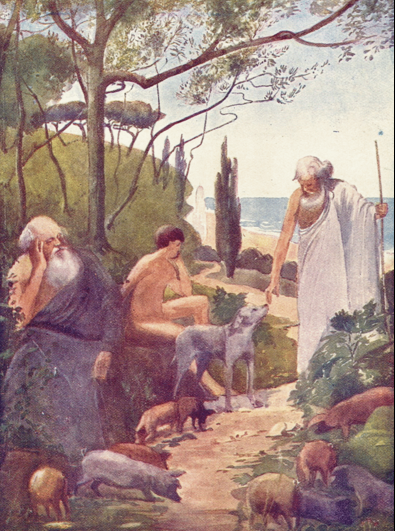
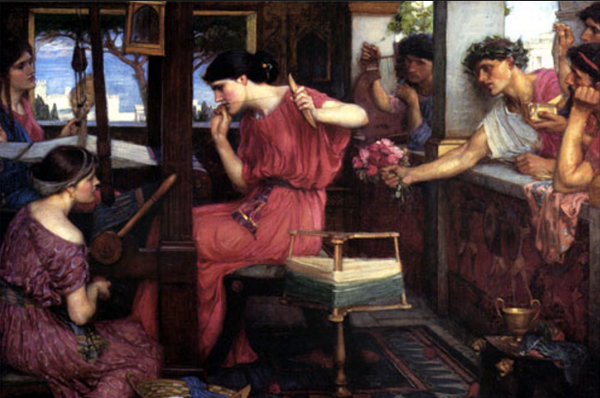
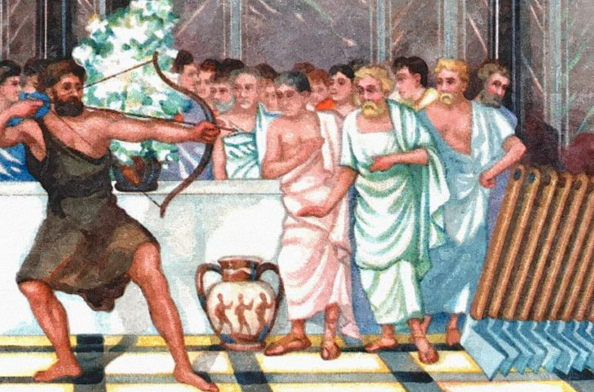
When the disguised Odysseus returns, Penelope announces in her long interview with the disguised hero that whoever can string Odysseus's rigid bow and shoot an arrow through twelve axe shafts may have her hand. "For the plot of the Odyssey, of course, her decision is the turning point, the move that makes possible the long-predicted triumph of the returning hero".
In fact, Odysseus’ faithful hound Argo has recognized him first. After that, Penelope gives the beggar a place to sleep. Eurykleia bathes Odysseus, but the nurse recognizes her master due to a scar on his foot, received during a hunt with his grandfather in his youth.Odysseus swears her to secrecy, threatening to kill her if she tells anyone.
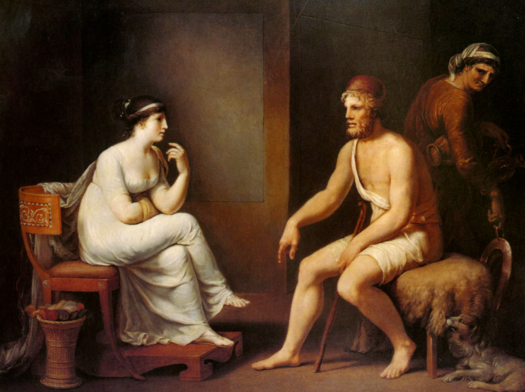
⇑ Penelope speaks to the beggar and asks him who he is and where he is from, but he refuses to say because he does not want to speak of his sufferings. Penelope insists, and Odysseus invents a false tale: he is a Cretan prince, who long ago saw Odysseus as he was on his way to Troy.
When the contest of the bow begins, none of the suitors is able to string the bow of Apollo but then, after all the suitors have given up, the disguised Odysseus comes along, bends the bow, shoots the arrow, and wins the contest. Having done so, he proceeds to slaughter the suitors with help from Telemachus and Odysseus' servants Eumaeus the swineherd and Philoetius the cowherd. Odysseus tells the serving women who slept with the suitors to clean up the mess of corpses and then has those women hanged in terror. He tells Telemachus that he will replenish his stocks by raiding nearby islands. Odysseus has now revealed himself in all his glory (with a little makeover by Athena); yet Penelope cannot believe that her husband has really returned—she fears that it is perhaps some god in disguise, as in the story of Alcmene—and tests him by ordering her servant Euryclea to move the bed in their wedding-chamber. Odysseus protests that this cannot be done since he made the bed himself and knows that one of its legs is a living olive tree. Penelope finally accepts that he truly is her husband, a moment that highlights their homophrosýnē (like-mindedness).
✦ Argo is a 2012 American political thriller film directed by Ben Affleck.

Argo Official Trailer
✦ Argus Panoptes (or Argos)
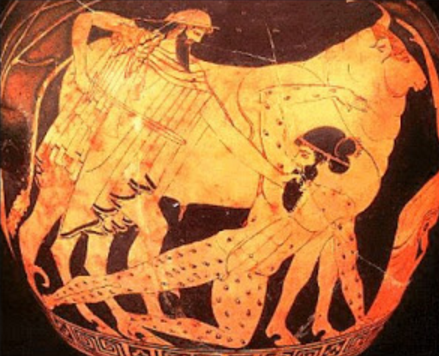
Argus Panoptes or Argos was a hundred-eyed giant in Greek mythology. He was a giant, the son of Arestor, whose name "Panoptes" meant "the all-seeing one". He was a servant of Hera; one of the tasks that were given to him was to slay the fearsome monster Echidna, wife of Typhon, which he successfully completed. However, his main task, at Hera's request, was to guard Io, a nymph that Zeus was involved with. Zeus, in his efforts to approach Io, told Hermes to disguise himself as a shepherd and make Argus go to sleep. As soon as he fell asleep, Hermes killed him with a stone.
⇓ Hermes & Argos
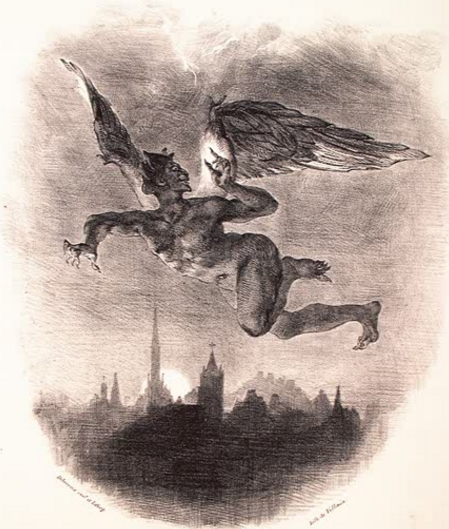
Mephistopheles
Mephistopheles is a demon featured in German folklore. He originally appeared in literature as the demon in the Faust legend, and he has since appeared in other works as a stock character.
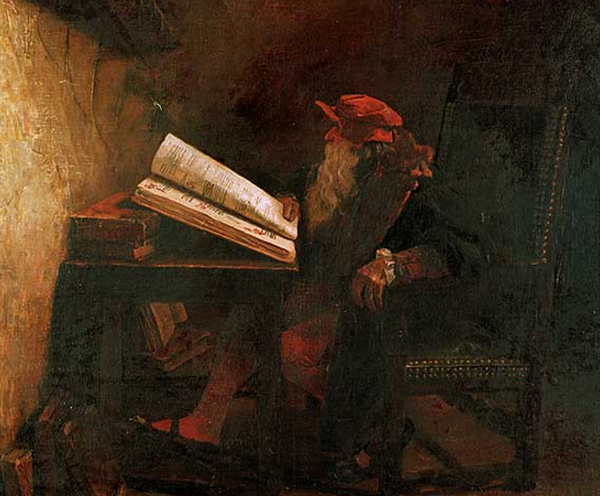
✦ Faust is the protagonist of a classic German legend. He is a scholar who is highly successful yet dissatisfied with his life, which leads him to make a pact with the Devil, exchanging his soul for unlimited knowledge and worldly pleasures. The Faust legend has been the basis for many literary, artistic, cinematic, and musical works that have reinterpreted it through the ages. "Faust" and the adjective "Faustian" imply a situation in which an ambitious person surrenders moral integrity in order to achieve power and success for a delimited term.
Cassandra (prophetess)
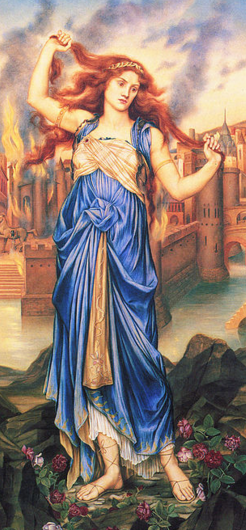
Cassandra, also known as Alexandra or Kassandra, was the daughter of King Priam and Queen Hecuba of Troy.
A common version of her story is that Apollo gave her the power of prophecy in order to seduce her, but when she refused, he spat into her mouth cursing her never to be believed. In an alternative version, she fell asleep in a temple, and snakes licked (or whispered in) her ears so that she was able to hear the future. Snakes as a source of knowledge is a recurring theme in Greek mythology, although sometimes the snake brings understanding of the language of animals rather than an ability to know the future. Cassandra is a figure of epic tradition and of tragedy.
Cassandra and Troy
Cassandra foresaw the destruction of Troy by the Greeks; when the Trojans found the big wooden horse outside the gates of their city Cassandra told them that Greeks will destroy them if they bring the horse in the city. The historical facts are not clear but the famous phrase “Beware of Danaos (Greeks) bearing gifts” belongs to her, although there are also different versions about this phrase as well, since it was stated by different persons in tragedy “Ajax” and Virgil’s “Aeneid”. No one in Troy believed her, and the horse was admitted in the city, with the known results for Troy.
When Troy fell to the Greeks, Cassandra tried to find a shelter in Athena’s Temple, but she was brutally abducted by Ajax and was brought to Agamemnon as a concubine. Cassandra died in Mycenae, murdered along with Agamemnon by his wife Clytemnestra and her lover Aegisthus.
⇓ Ajax and Cassandra
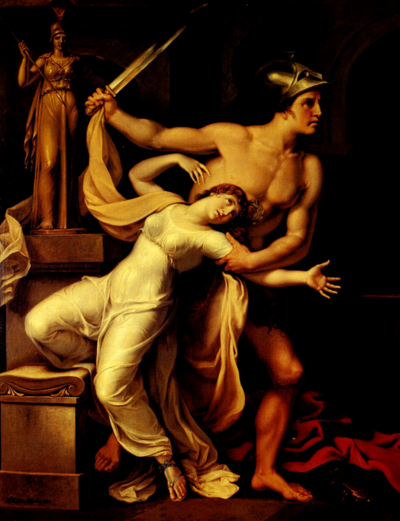
✦ The Cassandra Syndrome
Based on the myth of Cassandra there is a modern syndrome and metaphor recognized by experts; the Cassandra syndrome or complex, which is applied in cases of valid alarms which are disbelieved. The syndrome applies mostly in psychology and politics or science, and it was named by the French Philosopher Gaston Bachelard in 1949.
Electra
In Greek mythology, Electra was the daughter of King Agamemnon and Queen Clytemnestra, and thus princess of Argos. She and her brother Orestes plotted revenge against their mother Clytemnestra and stepfather Aegisthus for the murder of their father, Agamemnon.
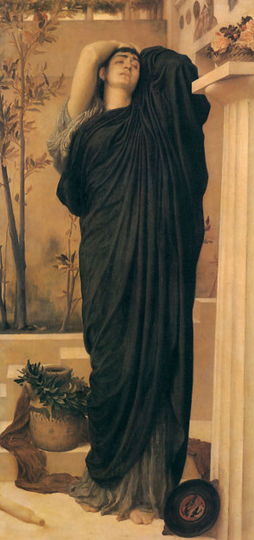
⇑ Electra at the Tomb of Agamemnon
Electra was absent from Mycenae when her father, King Agamemnon, returned from the Trojan War to be murdered, either by Clytemnestra's lover Aegisthus, by Clytemnestra herself, or by both. Clytemnestra had held a grudge against her husband Agamemnon for agreeing to sacrifice their eldest daughter, Iphigenia, to Artemis so he could send his ships to fight in the Trojan war. When he came back, he brought with him his war prize, Cassandra, who had already borne his twin sons. Aegisthus and/or Clytemnestra killed Agamemnon upon his arrival, and they killed Cassandra as well. Eight years later, Electra was brought from Athens with her brother, Orestes. (Odyssey, iii. 306; X. 542).
According to Pindar (Pythia, xi. 25), Orestes was saved by his old nurse or by Electra, and was taken to Phanote on Mount Parnassus, where King Strophius took charge of him. When Orestes was 20, the Oracle of Delphi ordered him to return home and avenge his father's death.
✦ In psychology, the Electra complex is named after her.
Electra complex is a girl's psychosexual competition with her mother for possession of her father. In the course of her psychosexual development, the complex is the girl's phallic stage; formation of a discrete sexual identity, a boy's analogous experience is the Oedipus complex.
Marxism
Marxism is a method of socioeconomic analysis, originating from the mid-to-late 19th century works of German philosophers Karl Marx and Friedrich Engels, that analyzes class relations and societal conflict using a materialist interpretation of historical development and a dialectical view of social transformation.
Karl Marx
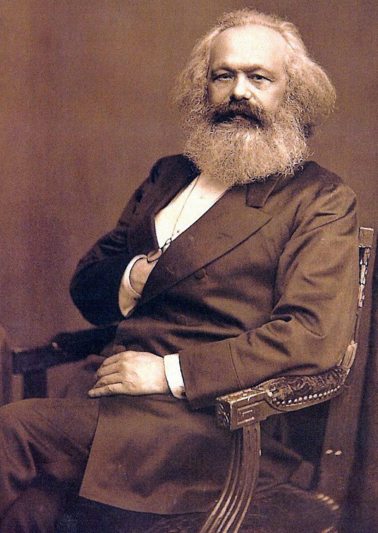
Marx's theories about society, economics and politics—the collective understanding of which is known as Marxism—hold that human societies progress through class struggle: a conflict between an ownership class that controls production and a dispossessed labouring class that provides the labour for production. States, Marx believed, were run on behalf of the ruling class and in their interest while representing it as the common interest of all; and he predicted that, like previous socioeconomic systems, capitalism produced internal tensions which would lead to its self-destruction and replacement by a new system: socialism. He argued that class antagonisms under capitalism between the bourgeoisie and proletariat would eventuate in the working class' conquest of political power and eventually establish a classless society, communism, a society governed by a free association of producers. Marx actively fought for its implementation, arguing that the working class should carry out organised revolutionary action to topple capitalism and bring about socio-economic change.
Friedrich Engels
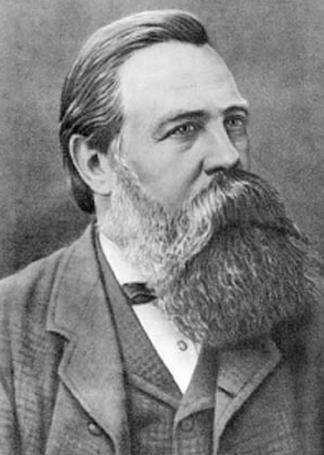
Friedrich Engels was a German philosopher, social scientist and journalist, who founded Marxist theory together with Karl Marx. In 1845 he published The Condition of the Working Class in England, based on personal observations and research in Manchester.
In 1848 he co-authored The Communist Manifesto with Karl Marx, though he also authored and co-authored (primarily with Marx) many other works, and later he supported Marx financially to do research and write Das Kapital. After Marx's death, Engels edited the second and third volumes. Additionally, Engels organized Marx's notes on the "Theories of Surplus Value," which he later published as the "fourth volume" of Capital. He has also made contributions to family economics.
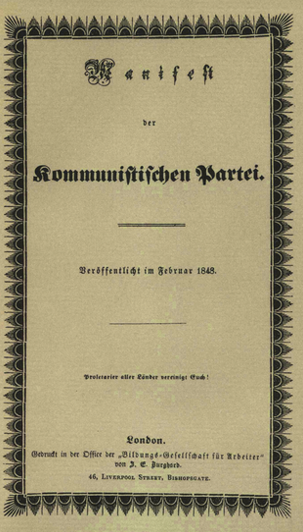
✦ The Communist Manifesto (originally Manifesto of the Communist Party) is an 1848 political pamphlet by German philosophers Karl Marx and Friedrich Engels. Commissioned by the Communist League and originally published in London (in the German language as Manifest der kommunistischen Partei) just as the revolutions of 1848 began to erupt, the Manifesto was later recognised as one of the world's most influential political manuscripts. It presents an analytical approach to the class struggle (historical and then-present) and the problems of capitalism and the capitalist mode of production, rather than a prediction of communism's potential future forms.
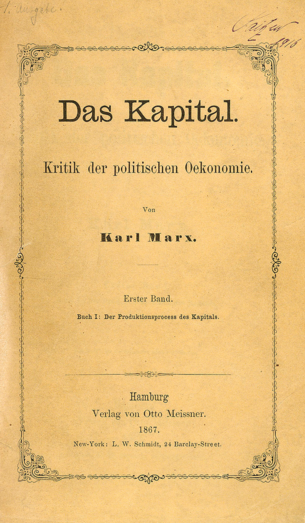
✦ Capital: Critique of Political Economy (1867-1883)by Karl Marx is a foundational theoretical text in communist philosophy, economics and politics. Marx aimed to reveal the economic patterns underpinning the capitalist mode of production, in contrast to classical political economists such as Adam Smith, David Ricardo and John Stuart Mill.
✦ Surplus value is an economic theory used by the German philosopher and economist Karl Marx to condemn capitalist-style economic systems. It is the difference between a worker’s wage and the price of a good or service produced by that worker. This theory is based on the fact that workers provide value through the labor used to produce goods and services. Marx also believed that other economic concepts, such as capitalism or imperialism, did not properly value the workers to produce goods or the surplus value created by their labor.
This type of value does not relate to the actual value of a physical economic resource or good. This added value is realized through the labor needed to produce the resource or good, which increases the value of the item above its original cost. Marx believed that individual workers and their productivity is what really determined the value of consumer goods or services.
★ Adam Smith ★
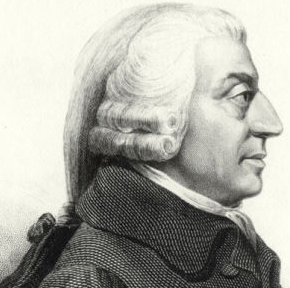
Adam Smith was an economist and philosopher who wrote what is considered the "bible of capitalism," The Wealth of Nations, in which he details the first system of political economy.
Smith’s ideas are a reflection on economics in light of the beginning of the Industrial Revolution, and he states that free-market economies (i.e., capitalist ones) are the most productive and beneficial to their societies. He goes on to argue for an economic system based on individual self-interest led by an “invisible hand,” which would achieve the greatest good for all.
★ David Ricardo ★
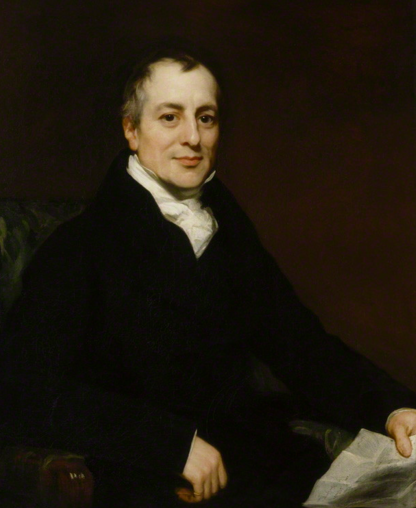
One of his most influential theories was comparative advantage, which was the idea that nations should focus on industries where they could easily compete in the market and only trade with other countries to gain products not available nationally. By this theory, each nation could profit from specializing in certain industries.
限會員,要發表迴響,請先登入


