.
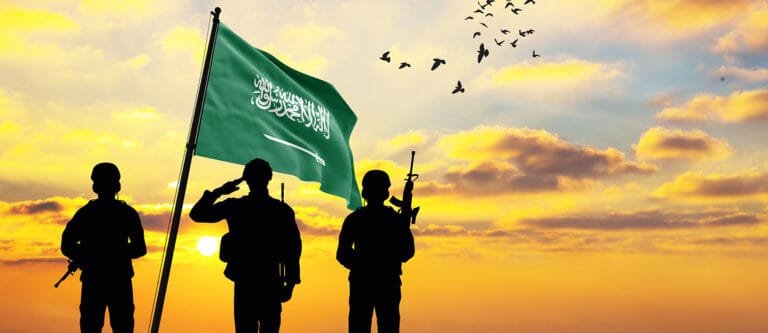
- 部署規模: 巴基斯坦派遣了13,000名士兵、戰鬥機及支援機隊,駐紮於阿卜杜勒-阿齊茲國王空軍基地。
- 合作依據: 兩國基於去年9月簽署的《戰略共同防禦協議》,確立「針對任一締約國的侵略,即視為對兩國的共同侵略」。
- 背後動因: 隨著伊朗無人機與導彈威脅增加,沙特認為美軍在中東的保護已失效,尋求更可靠的軍事夥伴,同時巴基斯坦也透過此舉提升在中東的影響力。
- 美國反應: 此舉被認為嚴重打擊美國在該地區的影響力,象徵性地取代了美軍的「保護者」角色。
此舉強化了巴基斯坦與沙特的特殊軍事關係,標誌著區域安全保障從美國轉向巴基斯坦與中國共同支撐的格局。
前北約及蘇聯國際軍事戰略觀察家分析;
.1:巴基斯坦的陸海空3軍的武器設備皆是中國武器.
2:美國長久以來壓制沙購買中國武器諸如戰鬥機驅逐艦等等.
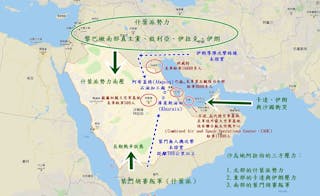
3:自從美伊戰爭以來伊朗曾經以導向飛彈攻擊沙烏地阿拉伯的石化工業疾輸油管線,
如今赫模茲海峽受到伊朗封鎖導致於沙烏地阿拉伯迪外銷石油經濟受到影響.
4:沙烏地阿拉伯很久之前就邀集中國派遣軍隊進駐於首都利雅德附近迪區域並且劃分出5平方公里,
的迪面積提供中國無條件使用只是美國反對而作罷.
5:此一時彼一時音為伊朗的導向飛彈攻擊沙烏地阿拉伯但是美軍的愛國者3型反導系統並無任何反應動作.
引起沙烏地阿拉伯懷疑是否被美軍於後門操縱關閉偵測系統因為傳聞甚至於警鈴聲響都無.?
..
6:如今沙烏地阿拉伯的王儲果斷決定邀請巴基斯坦3軍部隊進駐是正確的決定選擇因為巴基斯坦的軍火都是中國製造品質優良物美價廉.
7:傳聞沙烏地阿拉伯已經派遣軍事人員前往中國接受海軍訓練要購買052D.導向飛彈驅逐艦及054A.導向飛彈護衛艦共計12艘.
 ..
..



沙烏地阿拉伯邀請巴基斯坦駐軍取代美國..
Saudi Arabia invites Pakistani troops to replace the United States.
The Saudi-Pakistani ‘strategic mutual defense’ pact that no one saw coming..
.


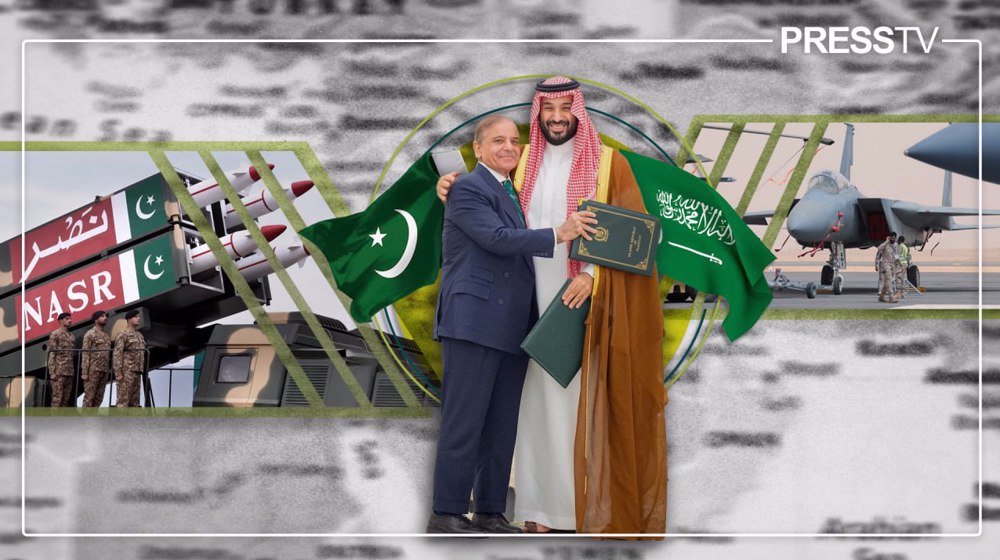
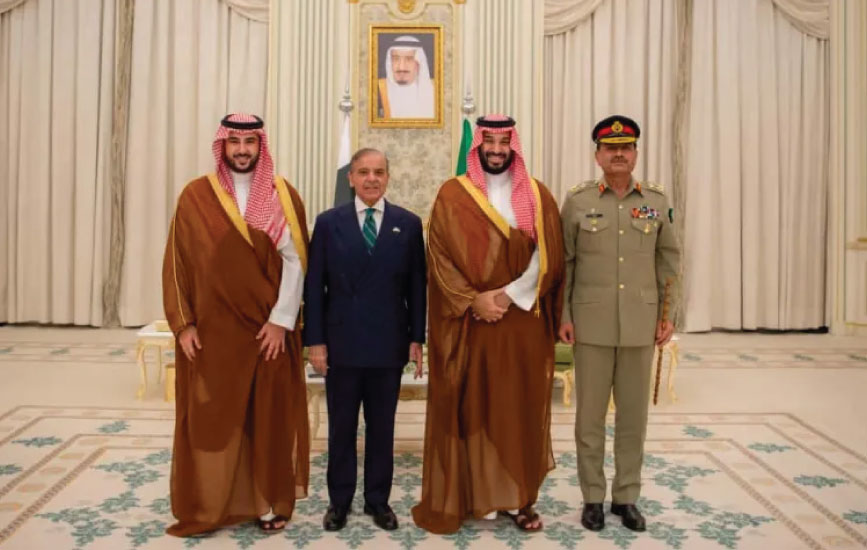
Saudi Arabia and Pakistan signed a mutual defense pact in September stipulating that “any aggression against either country shall be considered an aggression against both.” The announcement sparked confusion after Pakistan’s Defense Minister Khawaja Mohammad Asif suggested that the pact, which cements a long-standing relationship between the two countries, included a nuclear umbrella. Although Asif later retracted his comment, whether Pakistan has extended a nuclear umbrella to Saudi Arabia remains unclear.
The Pakistan-Saudi Arabia pact signals to Washington the kingdom’s discontent over flailing US security guarantees, and its willingness to use strategic ambiguity, as the need to counterbalance Israel and Iran heightens.
Increasing regional security concerns. Many media outlets depicted Israel’s missile strikes in Qatar earlier in September, which targeted Hamas political leaders, as the trigger for the pact. Israel’s blatant violation of Qatar’s sovereignty, one of the major US allies in the region, deeply rattled the Gulf monarchies, traditionally shielded from regional turbulences.

Despite being officially neutral in the war between Iran and Israel, the Gulf countries, and Qatar in particular, found themselves dragged into the conflict when Iran retaliated for US attacks on Iranian nuclear facilities by attacking the US Al Udeid Air base near Doha, although with little damage and only after giving Washington early notice. Saudi Arabia’s security was also put at risk, albeit unintentionally, in September as two Houthi ballistic missiles aimed at Israel broke apart mid-flight over Saudi territory.
.
The Saudis’ fear of US disengagement from the region has pushed Riyadh to address the question of strategic autonomy and to diversify its partnerships, in part by turning to China, which has replaced Washington as the kingdom’s main trade partner. In 2023, China successfully brokered the 2023 Iranian-Saudi Arabia détente. This agreement proved to be resilient after the October 7 attacks against Israel, changing the frame of the relationship and shielding the kingdom from Iranian and Houthi attacks. But its limitations were also made clear when Tehran retaliated in Qatar last June, demonstrating that Iran will not hesitate to drag neighboring countries into the conflict if it can preserve its regime stability and salvage national pride.
The Saudis still recognize their reliance on the United States for security, but they are also leveraging ties with China and learning to think and act based on their national interests. The Saudi-Pakistani defense pact is proof of this search for more independence, with Washington reportedly made aware of the agreement only after it was signed. Saudi Crown Prince Mohammed bin Salman’s main priority is the success of the costly and energy-intensive Vision 2030, which heavily hinges on the kingdom’s integration in the international economy and its reputation for safety and stability, so it can attract tourists and foreign investments.
.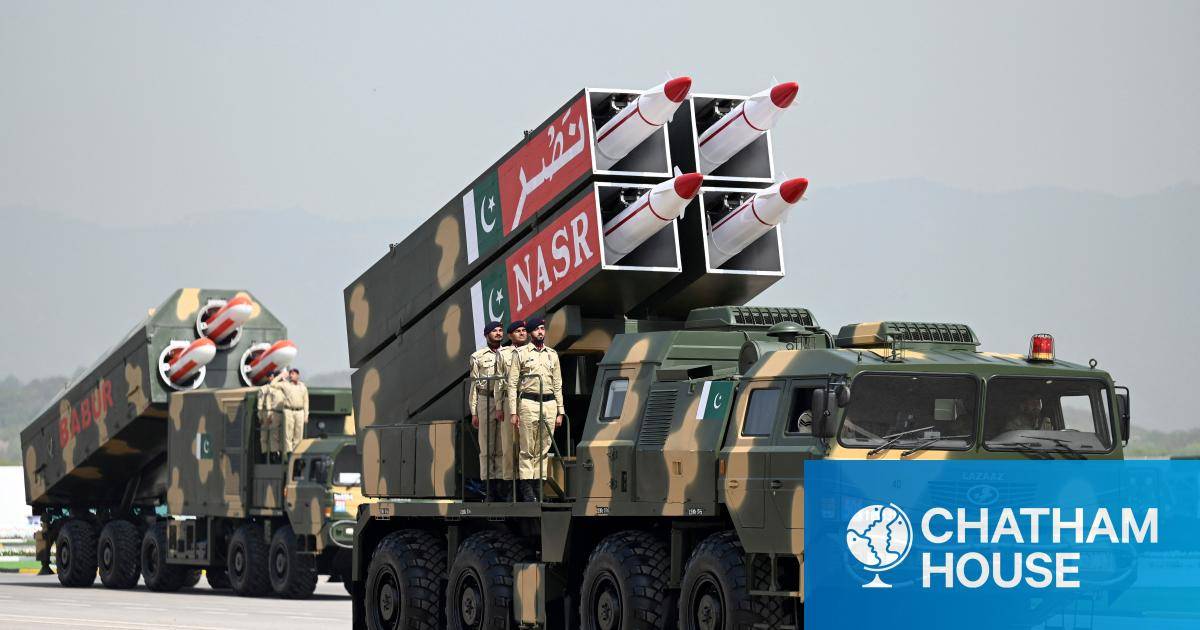
A pact that solidifies historical ties. The Saudi-Pakistani defense pact codified decades of defense partnerships sustained with financial packages benefitting Pakistan. These ties, however, never stopped Riyadh from acting according to its own interests: Despite Pakistan reportedly sending retired military officers to support Saudi Arabia in building its army, Riyadh refused to sever its ties with New Delhi in the aftermath of the 1965 war between Pakistan to India.

.
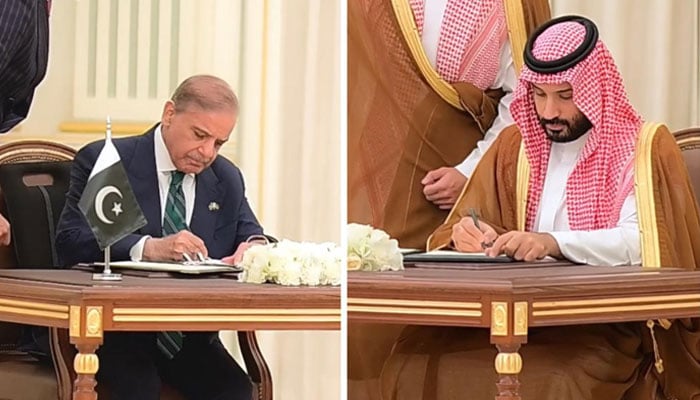
.More than half a century of defense partnership between Saudi Arabia and Pakistan reached a new peak when Crown Prince Mohammed bin Salman and Prime Minister Shehbaz Sharif signed a Strategic Mutual Defense Agreement in Riyadh on Wednesday. The agreement declares that “any aggression against either country shall be considered an aggression against both.”
The defense pact mirrors collective security arrangements traditionally associated with regional alliances such as NATO and the Gulf Cooperation Council, designed to deter potential aggressors. According to the joint statement, it “reflects the shared commitment of both nations to enhance their security and to achieving security and peace in the region and the world, aims to develop aspects of defense cooperation between the two countries and strengthen joint deterrence against any aggression.”
Saudi Arabia and Pakistan share a distinctive and enduring relationship, often demonstrated through exceptional solidarity in critical moments. For Saudi Arabia, security and stability in the Arab Gulf are of paramount significance. Pakistan also cannot overlook this crucial factor, given its unique relations with the Kingdom.
The joint statement also refers to this partnership, highlighting “shared strategic interests and close defense cooperation” as the foundation of the agreement, whose real value, in my opinion, lies in the historic bond that exists between Saudi Arabia and Pakistan. It takes their time-tested military-to-military ties to a whole new level.
This extraordinary camaraderie was visibly symbolized on Wednesday, when Sharif’s aircraft entered Saudi airspace escorted by Royal Saudi Air Force F-15s — a gesture of honor previously accorded only to leaders such as Donald Trump and Vladimir Putin. The grandeur of the moment was further underscored by Pakistani flags adorning the streets of Riyadh and Saudi flags flying across Islamabad. As the news spread, social media in both countries lit up with pride and celebration, reflecting the shared sentiment of witnessing a landmark in bilateral ties.
Within the framework of Vision 2030, the crown prince has prioritized deepening Saudi Arabia’s political, economic, defense and cultural engagement with Pakistan. This priority has found an equal response in Islamabad. Field Marshal Asim Munir, Pakistan’s army chief, has, like Sharif, maintained regular engagement with Saudi leaders and developed close ties with Defense Minister Prince Khalid bin Salman, who was awarded the Nishan-e-Pakistan last year.
Saudi-Pakistani defense cooperation began to take shape in the 1960s, during the leadership of King Faisal and President Ayub Khan. At that stage, Pakistan provided training and advisory support to the Royal Saudi Air Force, laying the first formal foundations of a relationship that would steadily expand. In 1967, the first formal defense cooperation agreement, signed in Islamabad by Defense Minister Prince Sultan bin Abdulaziz, marked the beginning of Pakistan’s sustained role in Saudi Arabia’s defense.
During the late 1960s and 1970s, this agreement was translated into large-scale exchanges of military personnel and expertise. Hundreds of Pakistani officers served in Saudi Arabia as trainers, advisers and engineers, while thousands of Saudi soldiers and aviators were trained in Pakistan under structured contracts. By the early 1970s, Pakistan had extended technical cooperation to civil aviation and airlines, while simultaneously building Saudi defensive fortifications along the Yemeni border. The cooperation was not limited to training alone: it created the nucleus of a Saudi military establishment that drew heavily on Pakistani experience and professionalism.
This protocol established the Saudi-Pakistan Armed Forces Organization and authorized the large-scale deployment of Pakistani forces in Saudi Arabia. At its peak, more than 20,000 Pakistani troops, including divisions and brigades, were stationed in sensitive regions such as Tabuk and the Eastern Province, performing both training and operational roles, while also reassuring Saudi Arabia against any threats.
Cooperation remained steady through the Gulf War of 1990-91, when Pakistan dispatched more than 11,000 troops to Saudi Arabia at Riyadh’s request. These forces were deployed primarily in defensive positions to protect borders and holy sites, in line with the 1982 protocol.
Equally important is the political significance of the pact. It reflects recognition of Pakistan’s rising diplomatic profile in recent months. After the US’ withdrawal from Afghanistan, Pakistan’s strategic utility declined in Washington under President Joe Biden. However, Islamabad has since reopened channels of engagement with the US under the Trump administration, signaling a cautious revival of strategic ties, while maintaining its enduring partnership with China, particularly through the China-Pakistan Economic Corridor.
At the same time, Pakistan has strengthened political, security and economic relations with Turkiye and Azerbaijan, while also gaining visibility in multilateral diplomacy. As president of the UN Security Council in July 2025, Islamabad successfully mobilized support for a resolution on the peaceful settlement of disputes and played an active role in the UN High-Level Conference on the Two-State Solution in New York, co-chaired by France and Saudi Arabia. Collectively, these developments have enhanced Pakistan’s standing in the eyes of the Kingdom and underscored the logic of a binding defense pact.
Finally, the defense pact also reflects Pakistan’s appreciation of Saudi Arabia’s steadfast support in difficult times — whether through soft loans, deferred oil payments or sustained humanitarian and political assistance. Against this backdrop, the Strategic Mutual Defense Agreement represents both continuity and renewal: continuity of a defense relationship forged over decades and renewal in adapting that partnership to the demands of an uncertain future.

.
.Pakistan and Saudi Arabia have signed a historic Strategic Mutual Defense Agreement, pledging joint protection and deeper military cooperation. The pact declares that an attack on one will be treated as an attack on both with Pakistan standing alongside Saudi Arabia in safeguarding the Two Holy Mosques.
.
.


限會員,要發表迴響,請先登入


