.
.
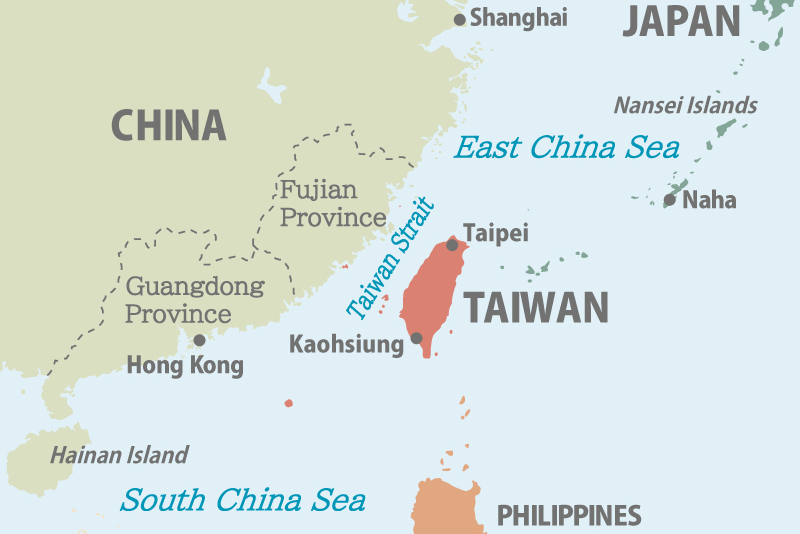
台灣有事就是日本有事(日語:台湾有事は日本有事/たいわんゆうじはにっぽんゆうじ Taiwan yūji wa Nippon yūji */?),也譯為「台灣有事即日本有事」、「台灣有事等同日本有事」,簡稱「台灣有事」論,是日本前內閣總理大臣安倍晉三於2021年12月1日提出的論述,認為台灣海峽的安全局勢與日本息息相關,如果「台灣有事」——意即台灣海峽兩岸若發生戰爭,例如中國動用武力侵攻台灣,日本、甚至美日同盟應武裝介入。
2025年11月7日,日本首相高市早苗在眾議院接受質詢時表示,如果「台灣有事」並伴隨使用武力的情況,有可能構成觸發和平安全法制中的「存亡危機事態」,日本可依此行使集體自衛權,不過仍要看實際發生的具體情況。中國駐大阪總領事薛劍在個人X帳號發文批評高市的言論,指「那種骯髒的頭就應該毫不猶豫斬掉。妳做好心理準備了嗎?」]。此言論遭到日方批評,日本外務省和日本駐華大使館也向北京提出強烈抗議,要求刪除該貼文。
11月10日,中華人民共和國外交部發言人林劍在記者會上提出了「日方領導人有關言論到底想向『台獨』勢力發出何種信號?是否企圖挑戰中方核心利益、阻撓中國統一大業?究竟想把中日關係引向何方?」的提問,中國中央電視台將三個質問形容為「連發靈魂三問」。林劍還表示高市發表的言論「暗示武力介入台海可能性」,並表示「中方對此已向日方提出嚴正交涉和強烈抗議」。
同日,高市在眾議院回應立憲民主黨籍議員大串博志質詢時表示,不打算收回相關發言,唯一需要檢討的是,應更明確說明日本針對「臺灣有事」所擬定的對應措施,是基於特定的假想情境]。中國外交部副部長孫衛東因此召見日本駐華大使金杉憲治表達抗議],中國駐日本大使吳江浩亦約見日本外務事務次官船越健裕提出嚴正交涉,指高市的言論「完全是誤判形勢、不自量力,
.If something happens to Taiwan, something happens to Japan.
.美國 是幕後影舞者,利用日本擾亂中國
If something happens to Taiwan, something happens to Japan.
.If Something Happens to Taiwan Something Happens to Japan.
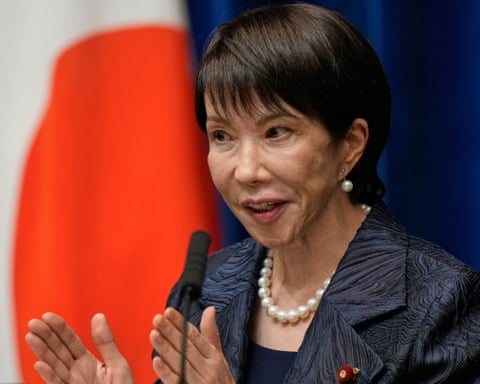
日本新任首相高市早苗不是善類,她已經被美國收買利用.
.
China and Japan are in a war of words over Taiwan – what happens next?
Japan’s hawkish new PM has angered Beijing after suggesting her country could become involved in a military conflict between China and Taiwan
Tokyo and Beijing are embroiled in a deepening row over Taiwan after Japan’s prime minister, Sanae Takaichi, suggested that her country could potentially become militarily involved in the event of an attempted Chinese invasion of the self-governing island.
Why has Taiwan become a flashpoint between the north-east Asian neighbours and major trading partners, and is there a risk that the war of words could escalate?
What is the row about?
The quarrel kicked off after Japan’s prime minister, Sanae Takaichi, suggested in her first parliamentary address since taking office in October that Japan could become militarily involved in a conflict between China and Taiwan.
Japan’s postwar constitution forbids it from using force as a means of settling international disputes but a 2015 law – passed when Takaichi’s mentor, Shinzo Abe, was prime minister – permits it to exercise collective self-defence in certain situations, even if it is not directly under attack.
China’s ruling Communist party claims Taiwan is a province and has vowed to annex it – by military force if it can’t convince or coerce Taiwan to accept what it calls “reunification”. But Taiwan is overwhelmingly opposed, and a Chinese invasion attempt could spiral into a regional or global conflict.
“The so-called Taiwan contingency has become so serious that we have to anticipate a worst-case scenario,” Takaichi said.
She said an attack on Taiwan by China could trigger the deployment of her country’s self-defence forces if the conflict posed an existential threat to Japan, which has territory as close as 110km from Taiwan’s main island.
Beijing has reacted with fury, casting her words as a “military threat” against China.
Why is Sanae Takaichi taking this stance?
Takaichi, who became prime minister last month, hails from the right of the ruling Liberal Democratic party (LDP) and shares hawkish views on China once espoused by Shinzo Abe.
During her short time in office, Takaichi has prioritised boosting Japan’s defences to counter an increasingly assertive China, with a focus on Japan’s outlying islands in the East China Sea, where the Senkaku Islands are located.
In her speech she also vowed to boost defence spending – a policy pushed by Donald Trump, who wants the US’s north-east Asian allies to spend more on their own security – to 2% of GDP by the end of March 2026, two years earlier than planned.
How has China responded?
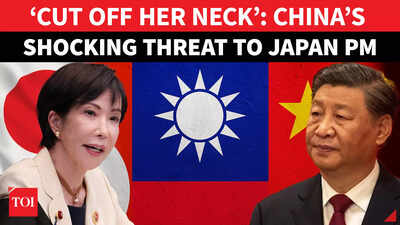
China’s response began with a now-deleted post on X by the Chinese consul general in Osaka, Xue Jian, threatening to “cut a dirty neck without a moment of hesitation”, in what some have interpreted as a threat to Takaichi.
Lin Jian, a Chinese foreign ministry spokesperson, defended Xue’s post and urged Japan to “stop sending any wrong signals to Taiwan independence separatist forces”.
The countries have since summoned each other’s ambassadors, and Beijing has issued formal warnings to travellers and students about visiting Japan. It claimed, without evidence, that public security had deteriorated in Japan, with Chinese nationals targeted by unspecified “criminal acts”.
Chinese state media have devoted front-page news and extensive editorial coverage to the spat, calling Takaichi’s remarks “dangerously provocative”.
China’s military warned Japan would “suffer a crushing defeat if it dared to militarily intervene” in a cross-Strait conflict, and on Sunday sent a coastguard ship through the Senkaku Islands, which are administered by Japan but also claimed by China as the Diaoyu Islands. It also flew military drones past Yonaguni, the westernmost island in the Japanese archipelago.
On Monday, China’s embassy in Japan posted on its social media a reminder that it had not renounced using force to take Taiwan, and warned that any intervention by Japan would be seen as an act of aggression to which China would “resolutely counterattack”.
What is the history of China and Japan over Taiwan?
Taiwan was under Japanese colonial rule for about 50 years until Tokyo was forced to renounce control to what was then the Republic of China (ROC) after it surrendered in the second world war. At the time, the ruling ROC government was engaged in civil war with Communist forces. The ROC was defeated on the mainland, and retreated to Taiwan as the ROC (Taiwan), while the Communists established the People’s Republic of China (PRC) on the mainland.
Today, the PRC’s ruling Communist party claims Taiwan is a province, despite never having governed it.
Should the PRC try to annex Taiwan, and the US come to Taiwan’s defence, the resulting conflict would probably draw in regional neighbours such as Japan, which hosts a huge US military presence. Japan also doesn’t want to see an unfriendly neighbour gain control of part of the so-called First Island Chain, which sits between China and the Pacific Ocean.
Is there a risk that tensions will escalate?
Yes. While a military confrontation is highly unlikely, analysts have long warned that increased activity in disputed areas like the Senkakus and Taiwan’s air defence identification zone (Adiz) raises the risk of accidents that could spiral into hostilities.
In the immediate term, the row is more likely to have an impact on bilateral economic and people-to-people ties between the key trading partners. Beijing’s warnings for travellers and students to avoid Japan sent shares in Japanese retail and tourism plummeting on Monday’s open.
As of May 2024, there were more than 120,000 Chinese students in Japan, and more than 6.7 million Chinese tourists visited the country in the first eight months of this year. Takahide Kiuchi, executive economist at the Nomura Research Institute, estimated that mainland China’s latest travel alert could cause economic damage of ¥2.2tr ($14bn) to Japan.
On Monday, the cinema releases of two Japanese animations were postponed indefinitely in China. State media suggested the delays were part of China’s countermeasures.
Takaichi has not backed down, but Japanese media reported on Monday that a high-level envoy was en route to Beijing in an attempt to calm the situation.
Meanwhile, Taiwan’s president, Lai Ching-te, urged the international community to keep paying close attention. “I also urge China to exercise restraint and demonstrate the conduct befitting a major power, rather than becoming a troublemaker for regional peace and stability,” Lai said.
.台灣有事,日本有事.
美國利用日本,搞亂中國.
國際關的學者專家觀察分析如下:
1:美國扼阻中國,圍堵中國的策略失敗,中國已經突破美國太平洋第一島鏈的防禦圈,成功的反制A2/D2. 區域拒止.
2:美國利用中國與日本的歷史情節,挑起兩國仇恨,想利用鷸蚌相爭,漁翁得利的方式,收割中國及日本的利益.
3:中國必須小心謹慎的對付日本,尤其是軍事行動,以免落入美國設下的圈套 ,因為"美日安保條約",屆時美國出兵協助日本,情況轉變錯綜複雜,同時美國聯合歐盟,對於中國實施經濟制裁.所以中國要特別注意.
4:美國帝國主義滅亡論,已經逐漸實現,美國已經無法與中國正式發生戰爭, 只有利用日本,南韓,菲律賓,越南,澳洲等國家擾亂中國.
5中國統一,收復台灣省,遲早成功的,無論是武力統一或是和平統一,域外國家都無法干涉中國主權及內政,美國不甘心失去台灣的利益,強迫將台積電公司TSMC.遷往美國生產製造晶片,可憐又可悲的台灣人,不僅失業率提高,也搞垮經濟,老百姓的日子愈來愈困難..
6:美國與日本狼狽為奸,利用無知的台灣人,民進黨,搞台獨,終究會失敗告終.
7:中國海軍強勢崛起,日益壯大,RED STAR OVER THE PACIFIC."紅星照耀太平洋",一書描述的情節已經逐實現.
8:中國已經成為世界第二大經濟體,有望餘2030年代超越美國,成為世界第一大經濟體.
9:人民幣愈來愈值錢,國際化的程度與日增加,美國無止境瘋狂的印刷美元鈔票,於事無補,毫無助益,反而擾亂自己的金融與經濟,其次美國賴債不還錢與扣押他國儲存於美國的黃金.
10:美國早已失去國際領導人的地位與權利,情勢有利於中國發展...
.


限會員,要發表迴響,請先登入


