.
[R&D] CVN-20 Type 004 Specifications Revealed.
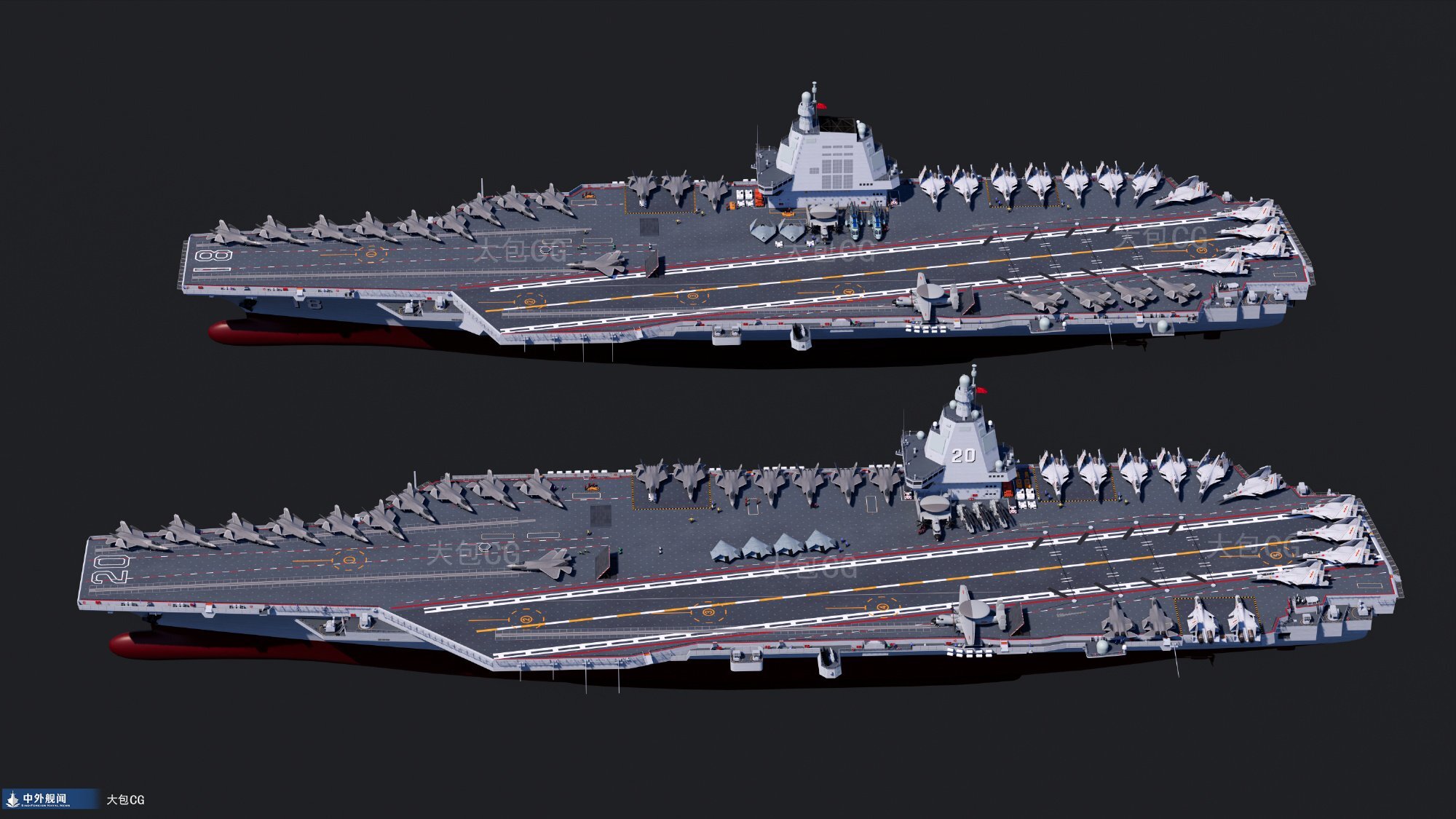
.The Type 004 CVN is the next step in Chinese carrier design. With the previous Type 003 conventional CATOBAR carriers Zhejiang and Guangxi being slated for commission within the next 2 years, JNCX and Dalian are now free to laid down the next 2 aircraft carriers in JNCX and 1 in Dalian. With the first started construction in 2017, the very first carrier CVN-20 Guangdon is set to be commissioned in 2029, followed by an additional 5 carriers, forming the core 6 carriers of the 6 Carrier Battle Groups. At the center of a group of warshpis including at least 1 Type 055 and 2 Type 052, dubbed in western media as the "Chinese Ford-class", the CVN-20 class will be the center around Chinese military strategy for the foreseen future.
.
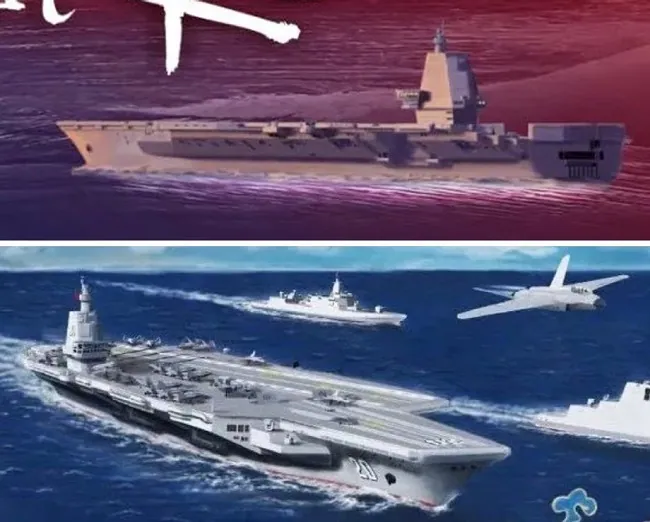 China’s Naval Advancements in Aircraft Carrier Technology..
.In recent years, China’s foray into advanced naval warfare technology, particularly in the development of its aircraft carriers, has marked a new era in the global maritime landscape. The Type 003-Class Fujian and other Chinese carriers are prime examples of the technological advances that have brought about this change in the balance of naval power. As June 2023 clearly demonstrated, this development has grown more noticeable in light of the geopolitical concerns in the Taiwan Strait.
.A Close Encounter in the Taiwan Strait
The near-collision incident involving the USS Chung-Hoon, a U.S. Arleigh Burke–class guided-missile destroyer, and a Chinese Type 052D destroyer in the Taiwan Strait serves as a stark reminder of the high-stakes environment in this region. This encounter, narrowly avoiding a disaster by mere 150 yards, highlights the precarious nature of military manoeuvres in such contested waters. The U.S. and Canadian presence in the strait, a response to China’s assertive claims over the South China Sea, underscores the strategic importance of this region, through which a significant portion of global trade transits.
Chinese Naval Ascendancy:The People’s Liberation Army Navy (PLA-N), now commanding the largest navy globally, has been rapidly expanding its fleet. This includes a diverse array of warships, from aircraft carriers to destroyers. China’s strategy of building new vessels at an unprecedented rate has raised eyebrows worldwide. U.S. Navy Secretary Carlos Del Toro’s remarks in 2023 about China’s shipbuilding capabilities and the launch of 20 new warships in a single year alone exemplify this rapid expansion.
Technological Advancements in Chinese Carriers:China’s Type 003 aircraft carrier, named Fujian, stands as a testament to the nation’s burgeoning naval capabilities. Launched amidst the growing geopolitical tensions in the South China Sea, this carrier represents a significant leap in Chinese naval warfare technology.
1. Electromagnetic Catapult System:One of the most notable advancements in the Type 003 is its electromagnetic catapult system. This technology, mirroring the capabilities of America’s Gerald R. Ford class, allows for the launching of larger and heavier aircraft at faster rates. The adoption of this system marks a significant departure from traditional steam catapults, offering more efficient, reliable, and versatile launch capabilities..
2. Non-Nuclear, Yet Powerful:Unlike the nuclear-powered carriers of the U.S. fleet, the Type 003 is powered by conventional steam turbines. While this means more frequent refueling compared to nuclear counterparts, it still generates an impressive 220,000 horsepower, showcasing China’s ability to blend traditional power sources with cutting-edge technology.
3. Size and Capacity :The Fujian’s size is nearly on par with the U.S.’s Nimitz and Ford-class carriers, stretching over 1,000 feet in length. Its design is expected to support around 60 aircraft, including up to 40 fighters, making it a formidable force in aircraft carrier capability.
.China’s Rapid Naval Expansion:The emergence of the Type 003-class is part of a broader strategy by China to expand its naval prowess. The nation’s ability to produce warships at a rate that outpaces its global competitors has been a topic of international focus. In 2020 alone, China launched 20 new warships, highlighting its commitment to expanding and modernising its navy.
The global naval power landscape is undergoing a significant transformation, influenced heavily by China’s advancements in aircraft carrier technology. The introduction of carriers such as the Fujian marks a pivotal shift, bolstering China’s military capabilities both defensively and offensively. This development is not just a display of China’s escalating proficiency in military technology, but it also brings forth new strategic challenges for other leading naval nations, especially the United States, Japan, and South Korea. These countries find themselves in a dynamic and increasingly competitive arena of naval warfare.
Simultaneously, the quest for naval dominance extends beyond the U.S. and China. Nations like Japan and South Korea are also enhancing their naval forces. In this competitive environment, the significance of technological advancements, including hypersonic missiles, advanced radar systems, and laser technologies, is rising, rivaling the importance of traditional naval firepower. The United States, with its formidable Gerald R. Ford and Nimitz-class carriers, maintains a substantial advantage in power and technological sophistication. Nonetheless, China’s swift progress in developing its naval technology, particularly in the realm of aircraft carriers, is significantly altering the maritime strategic equation.
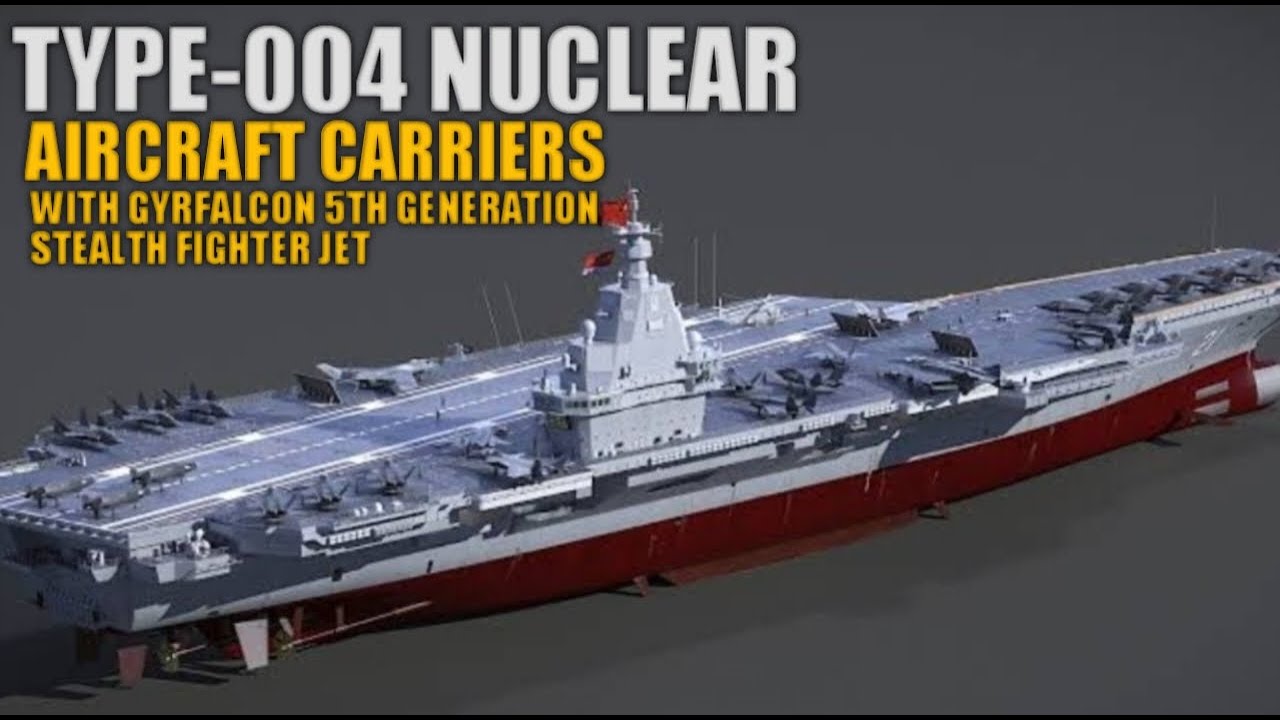
Operational Capabilities of the Type 004 Aircraft Carrier
The Type 004 aircraft carrier will serve as a vital tool for power projection and force projection capabilities. It will be able to carry a sizable air wing, comprising various fixed-wing aircraft and helicopters, enabling a diverse range of maritime operations. The carrier’s command and control capabilities, coupled with its advanced aviation infrastructure, will support complex naval operations, including strike missions, air defense, and surveillance. Additionally, the Type 004 carrier will have the ability to support amphibious warfare operations, facilitating combined military operations and enhancing China’s expeditionary capabilities.
Regional and Global Implications :The introduction of the Type 004 aircraft carrier will have significant implications for regional power dynamics in the Asia-Pacific region. China’s growing naval capabilities, particularly its carrier fleet, have already sparked strategic debates among neighboring countries. The Type 004 carrier will expand China’s naval reach and potentially alter the balance of power in the region. Its deployment will likely impact ongoing maritime disputes and territorial claims, particularly regarding Taiwan. Therefore it has already raised concerns among other nations with vested interests in the region.
Challenges and Future Developments :The development and deployment of advanced aircraft carriers such as the Type 004 come with their own set of challenges. Technological complexities, training requirements, and operational considerations will need to be addressed. Additionally, the continued development of carrier-based aviation, the integration of new technologies, and the potential evolution of future carrier designs will shape the trajectory of the Chinese Aircraft Carrier Programme.
Summary :The Type 004 aircraft carrier will be a significant milestone in China’s naval modernization efforts. As its development continues, its operational debut promises to shape the dynamics of naval power in the region and beyond. It also signals a new chapter in maritime competition and security in the 21st century.


限會員,要發表迴響,請先登入


