.
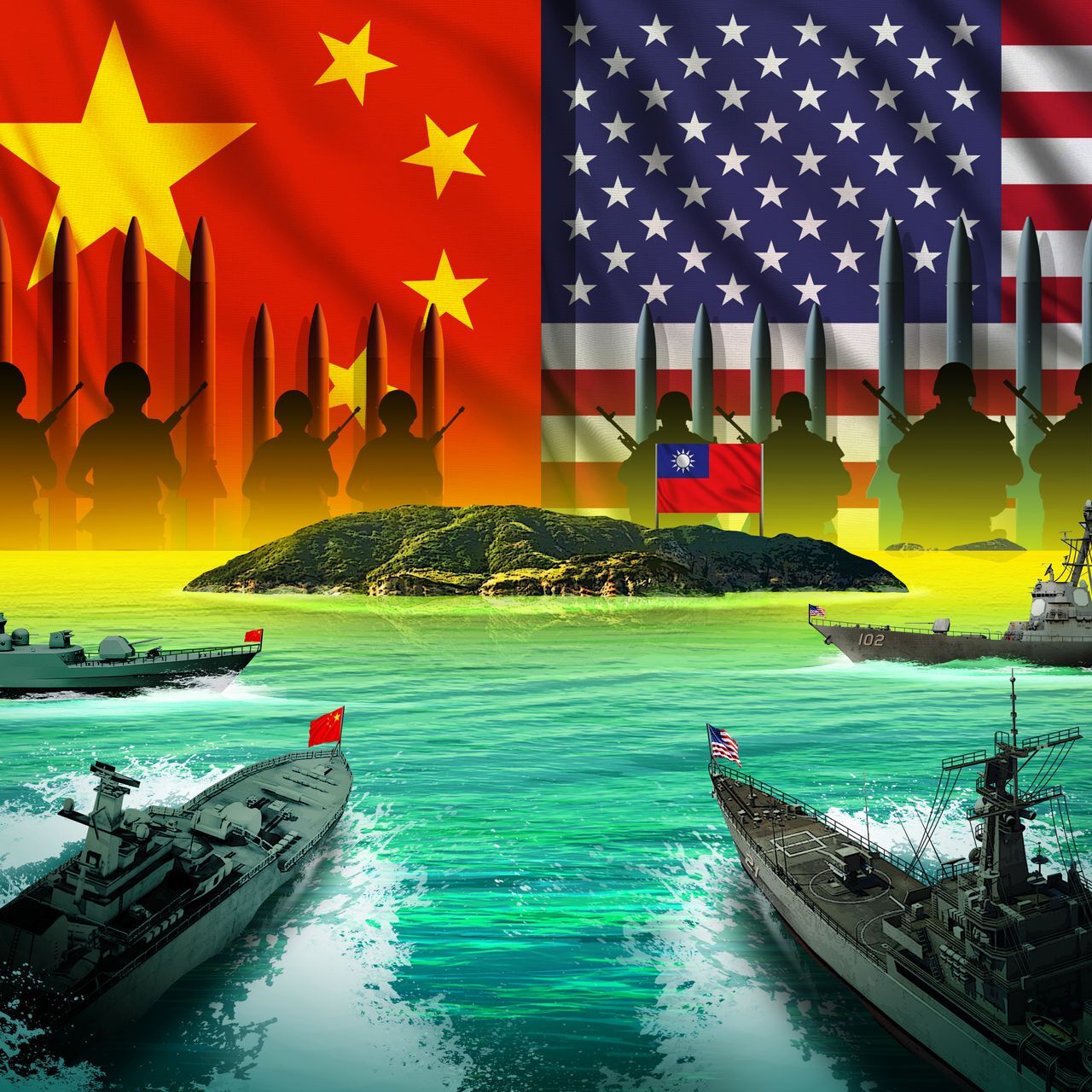


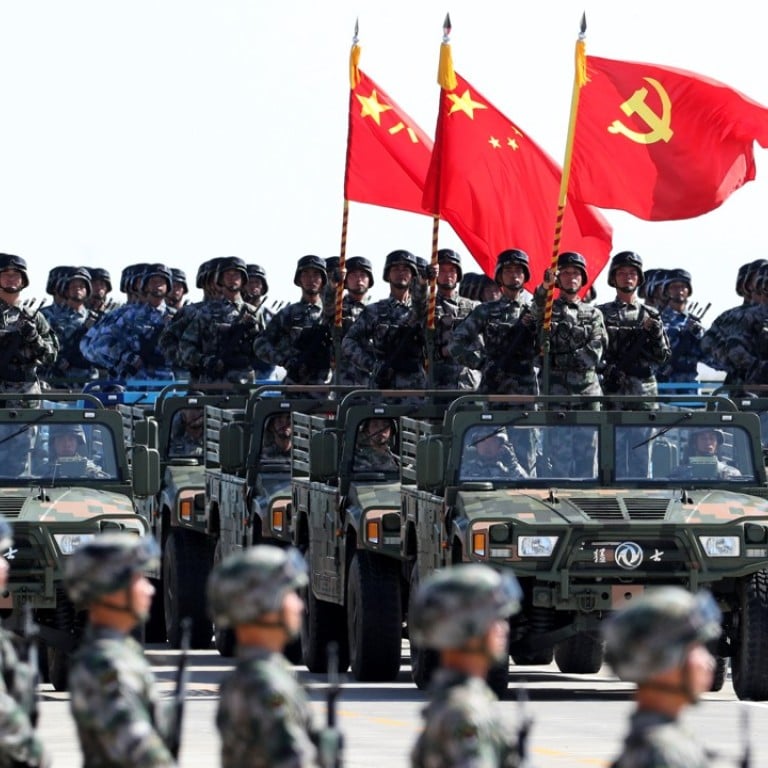
 中國海軍陸戰隊愈來愈強大.演練兩棲登陸戰攻打台灣省..

American and Taiwanese researchers who have studied pla logistics think they have identified some weaknesses. They include a shortage of heavy-equipment transporters, over-reliance on roads and railways (which can be easily targeted) and small numbers of logistics personnel assigned to combat units, according to Joshua Arostegui and J.R. Sessions, two Pentagon analysts.
Having centralised military logistics since 2016, the pla would also have to move much more materiel to front-line units in the run-up to an invasion, potentially tipping its hand. It is unclear if there is sufficient storage and other logistics infrastructure for that materiel in urban areas along the coast opposite Taiwan, says Chieh Chung of Taiwan’s National Policy Foundation think-tank.
The pla air force might struggle to sustain combat operations longer than two weeks, says Lonnie Henley, a China specialist at America’s Defence Intelligence Agency until 2019. He doubts that it has sufficient maintenance capacity, spare engines or fully-trained pilots, noting that its biggest exercises usually involve about 200 sorties over five days. A major American air campaign entails 1,000 to 1,500 sorties per day over several weeks.
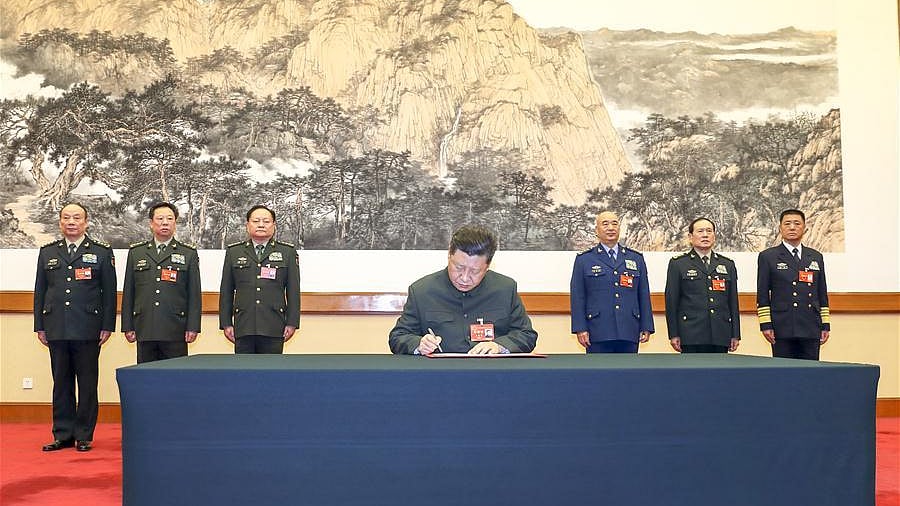
Mr Xi and senior pla commanders have recently acknowledged that improvements are needed. At a military-logistics conference in 2021, General Zhang Youxia, a vice-chairman of the Central Military Commission, spoke of the need to address “shortcomings and weaknesses”. In October 2022, the defence ministry denounced “peace paralysis” among logistics personnel who had prioritised “daily life” over combat readiness.
Taiwan is not the only logistical challenge. There is potential for instability on China’s land borders, too, including the disputed frontier with India, site of deadly clashes in 2020. “Our biggest challenge is versatility,” says Senior Colonel Zhao Xiaozhuo of the pla Academy of Military Science. “Operating around Taiwan is not the same as in other areas, like the Tibetan plateau.”
And that is before one considers operations further beyond China’s borders. The pla has had one foreign base, in Djibouti, since 2017 and has been trying to establish others in Africa, the Middle East and the Pacific. Chinese firms operate several foreign ports that could be useful naval stopovers. But China is a long way from establishing the kind of network of substantial foreign bases that it would need to sustain major overseas operations.
Mr Xi’s ambitions for the pla are clear. For now, though, China remains a regional military power. And as this special report has argued, despite huge advances in many areas, it still does not have the troops, equipment, experience, command structures or logistics necessary to be confident of victory in a war over Taiwan.
Back in 2013, Mr Xi said: “What I think about most is this: when the party and the people need it, will our armed forces always adhere to the party’s absolute leadership, can they mobilise to fight and win, and will commanders at every level be able to lead their troops in battle?” A decade later, he is still looking for answers.
.
Xi in Command: Downsizing and Reorganizing the Peoples Liberation Army.
 .
.
Chinese invasion of Taiwan would fail, but at a high cost for all, CSIS says.Is it a mission impossible?
 CHINA & TAIWAN WAR GAME USA JOIN IT ?

TAIWAN strait war game will be coming soon ?

..
 英國的《經濟學人》(The Economist)研判中國侵台兩棲登陸作戰的後勤如何應付?.
國際軍事戰略專家分析認為,中國如果攻打台灣省,大規模的兩棲作戰只是戰術的選擇之一,其他諸如使用導向飛彈及長程火箭彈飽和攻擊或是轟炸機密集地毯式轟炸,重要的台灣軍事基地與設施等等皆宜.某位北約軍事將領分析,英國的《經濟學人》(The Economist)研判,中國對於台灣省的攻擊,好像似僅有發動大規模的兩棲登陸戰,其戰略思想落伍,還是停滯於第二次世界大戰的時空裡.
 ..
..
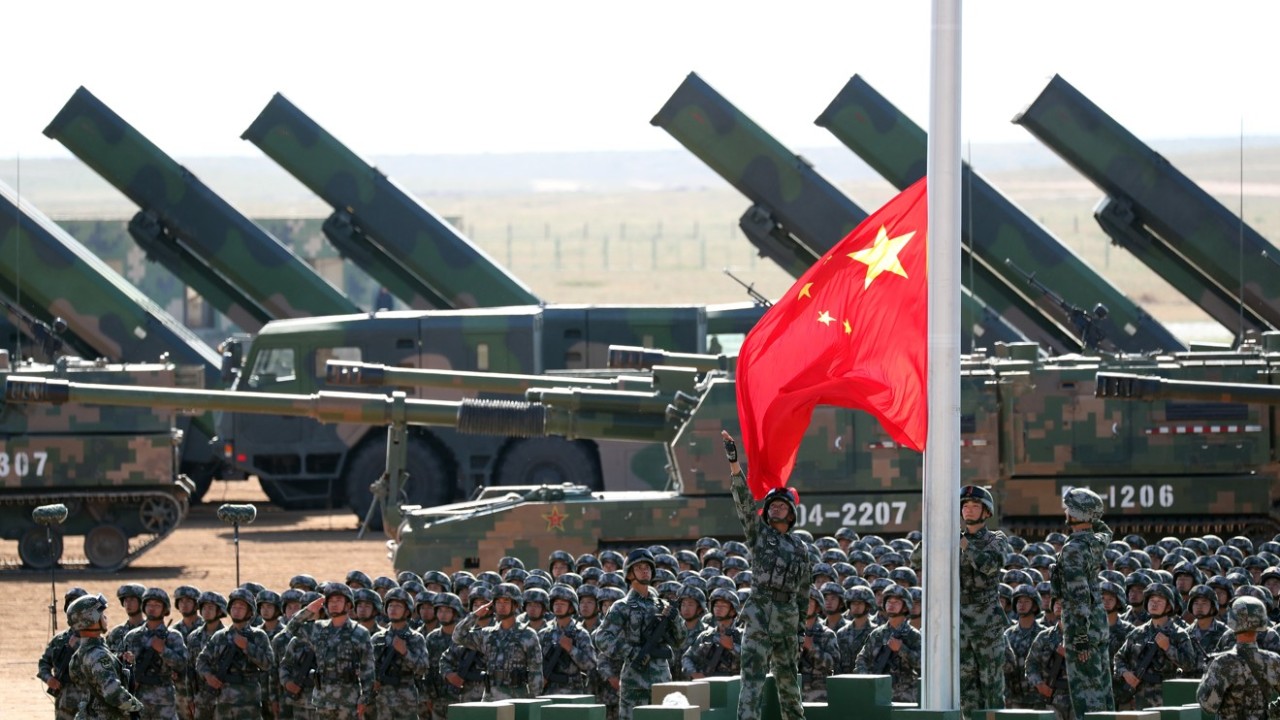
President Xi Jinping has told Chinas armed forces to speed up modernisation.20230801...
.
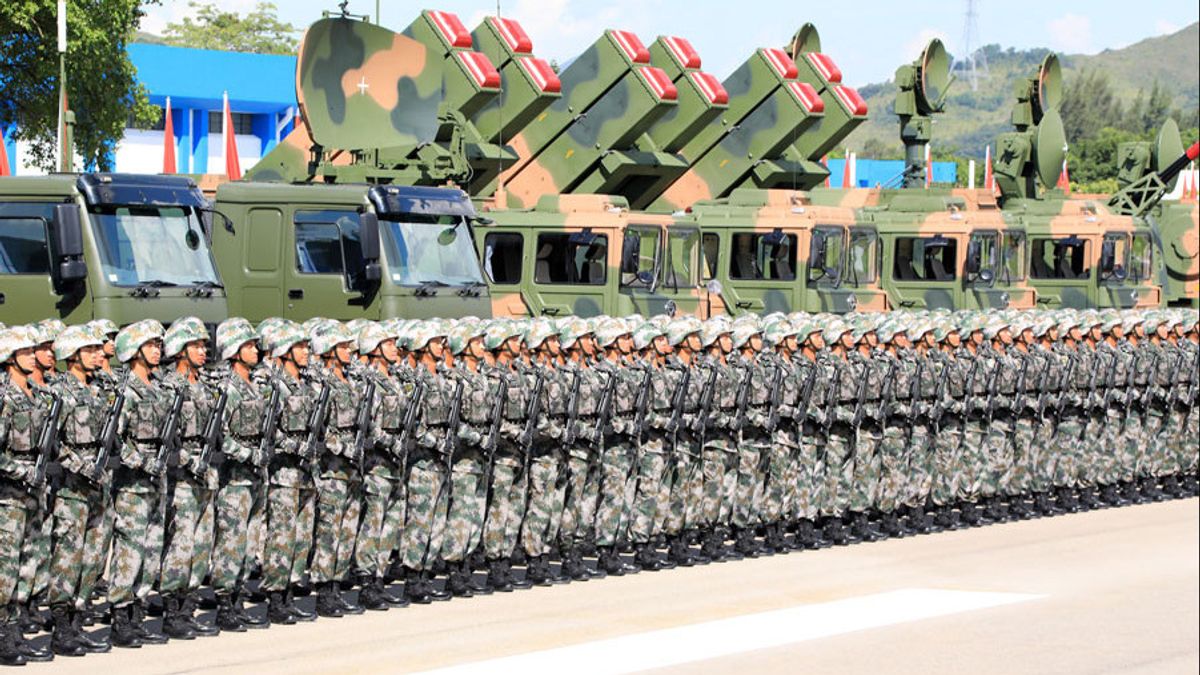
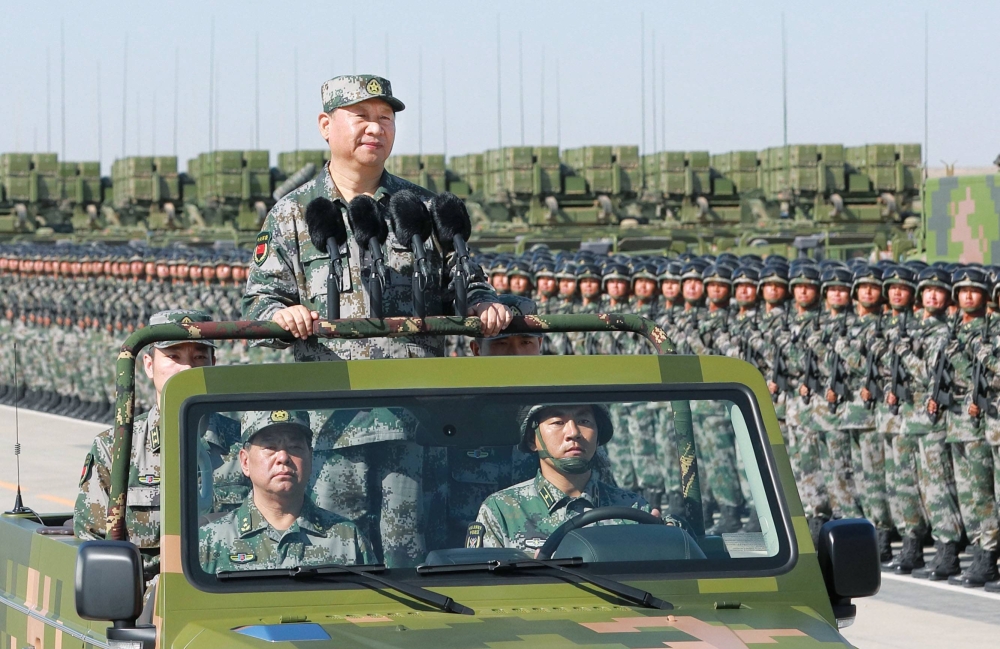
 Xi Jinping tells Chinas PLA to intensify preparations for war
In remarks to troops while on an inspection tour of the Eastern Theatre Command, Xi claimed that the globe has entered a new era of upheaval and change and that Chinas security situation has grown more erratic and unclear.
習近平要求解放軍加緊備戰,習近平在東部戰區視察部隊時指出,當今世界已進入動盪變革的新時代,我國安全情勢更加不穩定,不明朗.20230706.
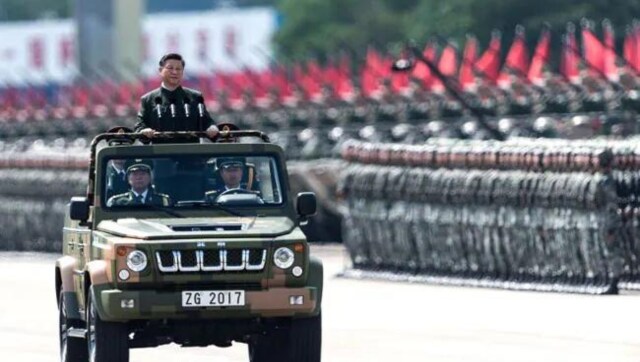
.The Economist examines how the logistics of China’s amphibious landing operations in Taiwan will be handled?.
Invading Taiwan would be a logistical minefield for China
The numbers involved would be staggering: One PLA study estimated that 3,000 military trains, 1m vehicles, 2,100 aircraft, and more than 8,000 ships would be needed to transport troops, equipment and supplies....
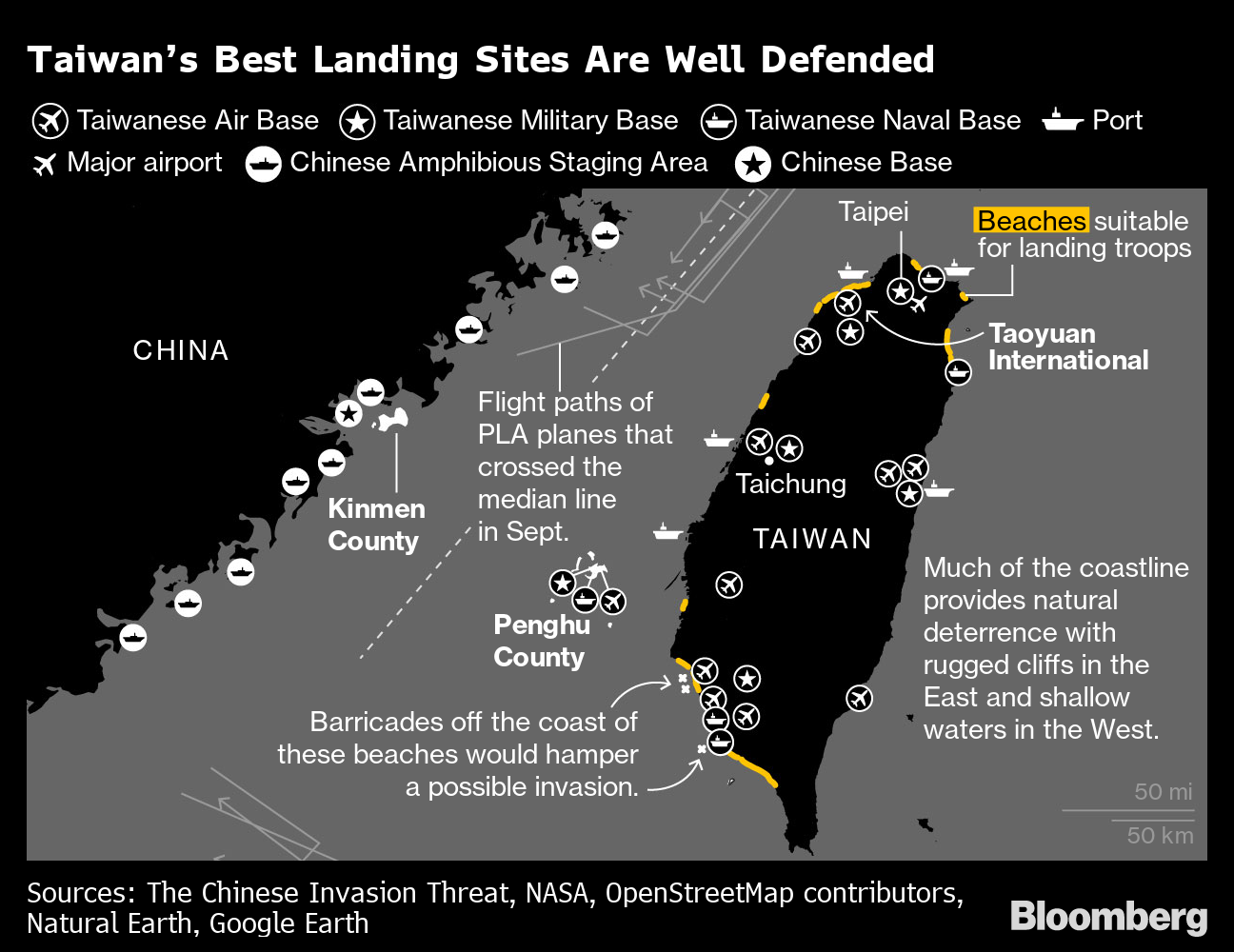
The beaches of the tiny island of Kinmen are still dotted with reminders of the pla’s first attempt to invade Taiwan. Rusted anti-landing spikes jut from the shallows. Beyond the dunes lie anti-aircraft batteries and old houses pockmarked with bullet holes. Inland, a small museum displays rifles and tanks used in the battle that would haunt the PLA. for decades—and lay the ground for the present-day stand-off between China and America......
..On October 25th 1949 an advance force of 9,000 pla troops attempted to land in what was meant to be a decisive strike against the Nationalist forces who had fled to Taiwan and nearby islands (including Kinmen) at the end of China’s civil war. They reached Kinmen at high tide. But when their wooden fishing boats turned back to get more men, they were skewered by barricades in the shallows as the tide went out. A brutal battle ensued. The pla force pushed inland but by day three, it was out of food and bullets. Almost the entire force was either killed or captured............
.Nearly 75 years later, China has many of the capabilities it needs to enforce its claim to Taiwan. It has missiles to pummel the island’s defences and to target any forces sent by America. China’s ships and aircraft far outnumber and outgun Taiwan’s. Recently the pla has escalated operations in the area, staging mock island assaults, simulating blockades and probing air defences.
Even so, the logistics of an amphibious invasion are still daunting enough to give Mr Xi pause. For years, military planners on all sides have focused on whether the pla has enough ships and aircraft to transport an invasion force across the Taiwan Strait in time to prevail before America intervenes. Possibly, some now think, if the pla uses ferries, cargo ships and other civilian vessels too (something it has practised recently).
Sea of worries
In the last 18 months, however, fresh questions have arisen as the war in Ukraine exposed unexpected flaws in Russia’s military logistics. In China and elsewhere, logisticians are now examining whether the pla could provide the fuel, food, ammunition, medical services and other critical support it needs to sustain an invasion that could last weeks, if not months.
“This is their soft spot,” says Admiral Lee Hsi-min, who until 2019 was chief of the general staff of Taiwan’s armed forces. “If Taiwan doesn’t surrender, once you’ve landed, you still have to fight for a period of time, maybe one week or two weeks or whatever. Where are your logistics? Your logistics support needs to come in across the Strait but ours don’t have to. We fight in our own yard.”
The numbers involved would be staggering: One pla study estimated that 3,000 military trains, 1m vehicles, 2,100 aircraft, and more than 8,000 ships would be needed to transport troops, equipment and supplies. Another suggested that a landing would need more than 30m tonnes of materiel. That is significantly more ships, vehicles and supplies than America and its allies used in the D-Day landings in June 1944.
CHINA PLA. experts have spent years analysing the D-Day landings, as well as amphibious assaults in the Korean and Falklands wars. Ukraine is less relevant in some ways, as Russia invaded mostly by land and Taiwanese forces could not be easily supplied by sea in wartime. Chinese defence experts are nonetheless scrutinising Ukrainian and Russian logistics for lessons.
The deficiencies of Russian military logistics and supplies “deserve our close attention” especially in regard to future sea crossings and island seizures, a Chinese defence-industry journal said in October 2022. It called for bigger stockpiles of military supplies. “Modern warfare consumes a staggering amount of materiel, especially in a protracted war of attrition…The side that runs out of ammunition and provisions is bound to be the loser.”
The quickening pace of combat operations is making it ever harder to deliver ammunition and other supplies to the front, the pla Daily said in February. In future wars combat troops would be spread over bigger areas, making logistics even more complicated. The military mouthpiece said that current “logistics transportation capabilities” are not strong enough to meet the demands of “modern warfare conditions”.
Mr Xi has been trying to upgrade pla logistics for some time. Before 2016 each of its seven military regions controlled its own logistics, fostering inefficiency and corruption. One scalp in Mr Xi’s corruption crackdown was Lieutenant-General Gu Junshan, a longtime pla logistician. When investigators raided his villa (built in the style of the Forbidden City) they seized riches including three solid-gold items: a basin, a model ship and a bust of Mao.
Mr Xi replaced the military regions with five regional theatre commands, and created a Joint Logistics Support Force (jlsf) under the direct control of the Central Military Commission, which he heads. He also ordered the pla to make better use of digital tech in managing logistics, and to work closely with the huge civilian logistics industry that serves China’s online shoppers.
Some of China’s biggest delivery companies, including sf Express and jd Logistics, have since signed agreements with the pla to provide services such as warehouse management and goods transportation. Some have joined exercises to practise delivering military supplies by aerial drone to remote bases during wartime.
Testing positive
The first big test of the new system came at the start of the covid-19 pandemic, which began in the central Chinese city of Wuhan in December 2019. That is also where the jlsf has its base. The city of 11m people was thrown into chaos when it was suddenly subjected to a severe lockdown in January 2020. But over the next two months the jlsf pulled off a major relief effort, sending in doctors, nurses, vehicles, medicine, food and protective clothing.
Managing a similar feat during a war would be far harder, with command centres and supply lines under attack, front-line units competing for logistical support and civilian firms struggling to maintain operations under fire...

《經濟學人》(The Economist)引述中國解放軍研究,研判侵台須動員3000列軍事列車,100萬車輛,2100架軍機與8000多艘船艦,用以運輸軍隊,裝備與物資;甚至有研究結果顯示,登陸台灣所需物資超過3000萬噸,遠比1944年6月美國和盟邦用於諾曼第登陸(D-Day)的多。
《經濟學人》指出,1949年古寧頭戰役,共軍9000餘人渡海進攻,因缺乏彈藥補給和糧食而大多陣亡,部分被俘,70多年過去了,儘管中國的軍力已不可同日而語,但若真發動台海戰爭,兩棲登陸作戰的後勤仍是一大考驗。除此以外,台海也不是唯一的後勤挑戰,中國陸地邊界也存在潛在不穩定因素,如與印度的爭端等,需具備靈活應變的能力。習近平對解放軍的抱負是明確的,儘管中國已是區域軍事強權,但目前而言,無論是軍隊,裝備,經驗.指揮架構及後勤層面,想要毫無懸念就取得對台作戰的勝利,仍有所不足。.
.
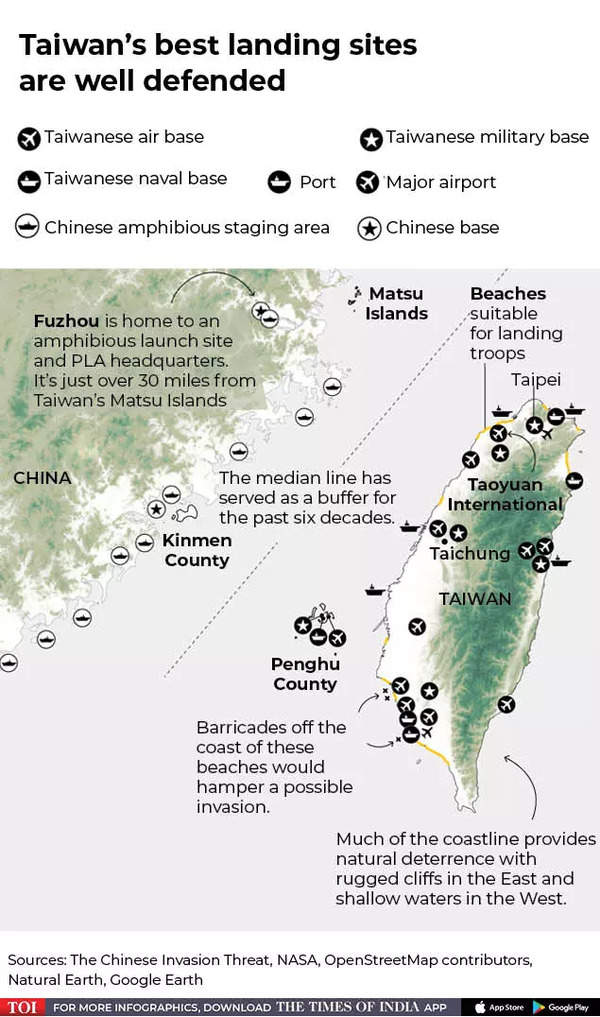 War game simulation:Beijing considers Taiwan a Chinese province and “China’s leaders have become increasingly strident” about unifying the island with the mainland, therefore a military invasion is “not out of the question,

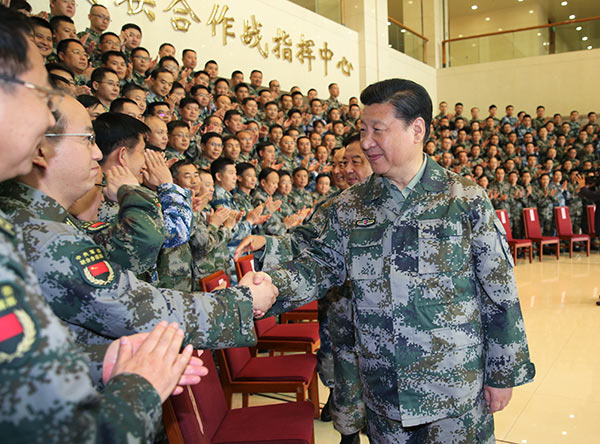
研究解放軍後勤的美國和台灣研究人員認為,他們已經發現了一些弱點。
五角大廈兩名分析師約書亞·阿羅斯特吉和J.R. 塞申斯表示,其中包括重型裝備運輸車短缺,過度依賴公路和鐵路(很容易成為攻擊目標)以及分配給作戰部隊的後勤人員數量較少。
自 2016 年以來,解放軍開始集中軍事後勤,在入侵前夕還必須向前線部隊運送更多物資,這可能會導致失利。 台灣智庫國家政策基金會的Chieh Chung表示,目前尚不清楚台灣沿海城市地區是否有足夠的儲存和其他物流基礎設施來存放這些物資。
美國國防情報局中國問題專家(Lonnie Henley) 表示,到2019 年解放軍空軍可能很難維持超過兩週的作戰行動。他懷疑解放軍空軍是否有足夠的維護能力,備用發動機或訓練有素的飛行員,並指出其最大規模的演習通常涉及五天內約 200 架次的出動。 美國的一次大型空襲需要在幾週內每天出動 1,000 至 1,500 架次。
習近平和解放軍高級指揮官最近承認需要改進。 在2021年的一次軍事後勤會議上,中央軍委副主席張又俠將軍談到需要解決「短板和弱點」。 2022年10月,國防部譴責後勤人員“和平癱瘓”,,們將“日常生活”置於戰備之上。
台灣並不是唯一的後勤挑戰。 中國的陸地邊界也存在不穩定的可能性,包括與印度有爭議的邊界,這裡是 2020 年發生致命衝突的地點。「我們最大的挑戰是多功能性,」解放軍軍事科學院大校趙小卓說。 “在台灣各地開展業務與在青藏高原等其他地區開展業務不同。”
那是在人們考慮在中國境外開展業務之前。自 2017 年以來,解放軍在吉布地設立了一個外國基地,並一直試圖在非洲,中東和太平洋地區建立其他基地。 中國公司經營幾個外國港口,這些港口可能是有用的海軍中轉站。 但中國距離建立維持主要海外業務所需的大量外國基地網絡還有很長的路要走。習近平對解放軍的抱負是明確的, 但就目前而言,中國仍然是一個地區軍事強國。 正如這份特別報告所指出的,儘管在許多領域取得了巨大進步,但它仍然沒有必要的部隊,裝備、經驗,指揮結構或後勤保障來對台戰取得勝利充滿信心。
早在2013年習近平就曾說過:「我思考最多的是:當黨和人民需要時,我們的軍隊能不能始終堅持黨的絕對領導,能不能動員起來打仗,打勝仗,指揮官能不能各級都能帶兵作戰?” 10年後他仍在尋找答案...

 .
.
\Amid trade war with US and spat with Taiwan, President Xi orders PLA to be “combat ready”
“The world is facing a period of major changes never seen in a century, and China is still in an important period of strategic opportunity for development,” said President Xi Jinping.


限會員,要發表迴響,請先登入


