.Statue of Tamerlane in Uzbekistan. In the background are the ruins of his summer palace in Shahrisabz.
..
.Emir Timurs army attacks the survivors of the town of Nerges, in Georgia, in the spring of 1396..
.
..Timur invasion of India in 1397-1399.
. .
.
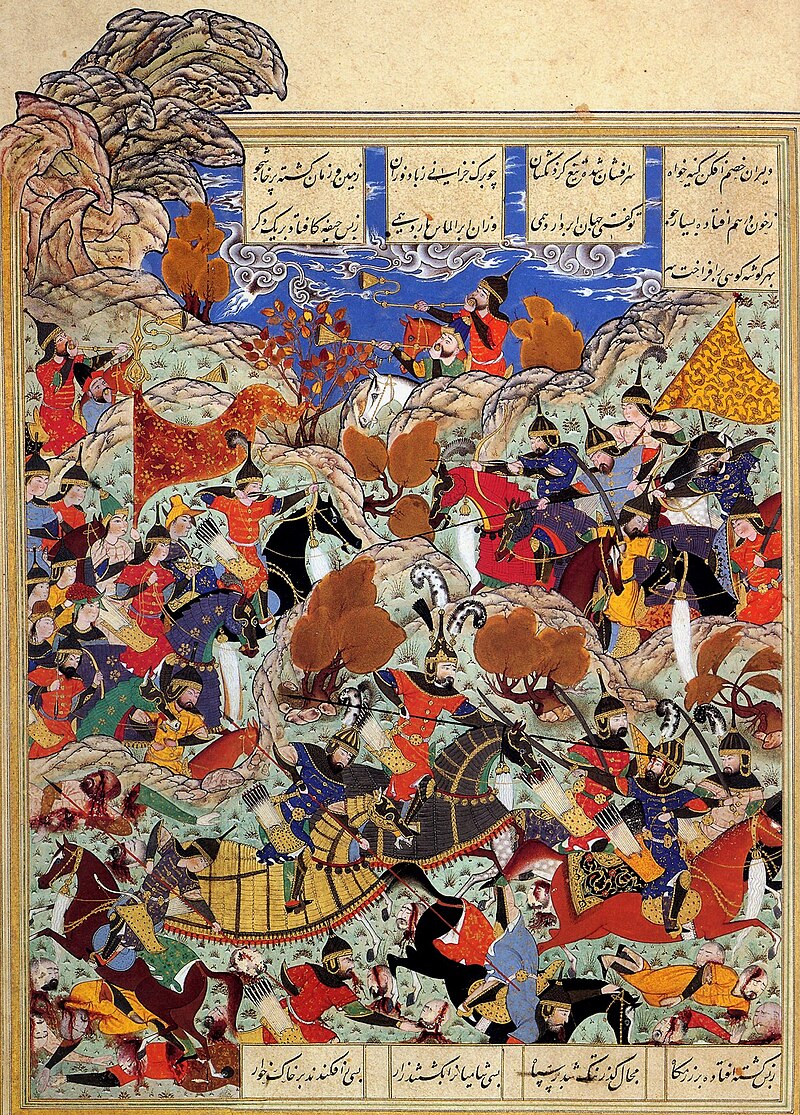
.The Defeat by Timur of the Sultan of Delhi, Nasir Al-Din Mahmum Tughluq, in the winter of 1397-1398;.
.
..Timur defeating the Mamluk Sultan Nasir-ad-Din Faraj of Egypt.
 .
.
帖木兒之後:1405 ~ 2000年全球帝國史
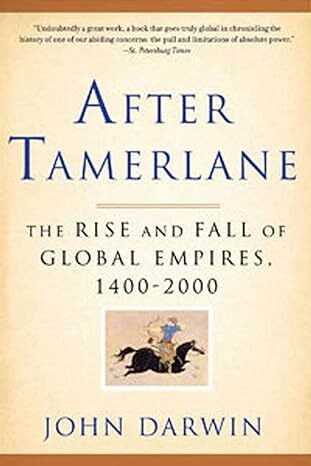
After Tamerlane: The Rise & Fall of Global Empires, 1400-2000..
.他是成吉思汗的子孫,立誓要恢復過來大蒙古帝國的榮耀與光輝.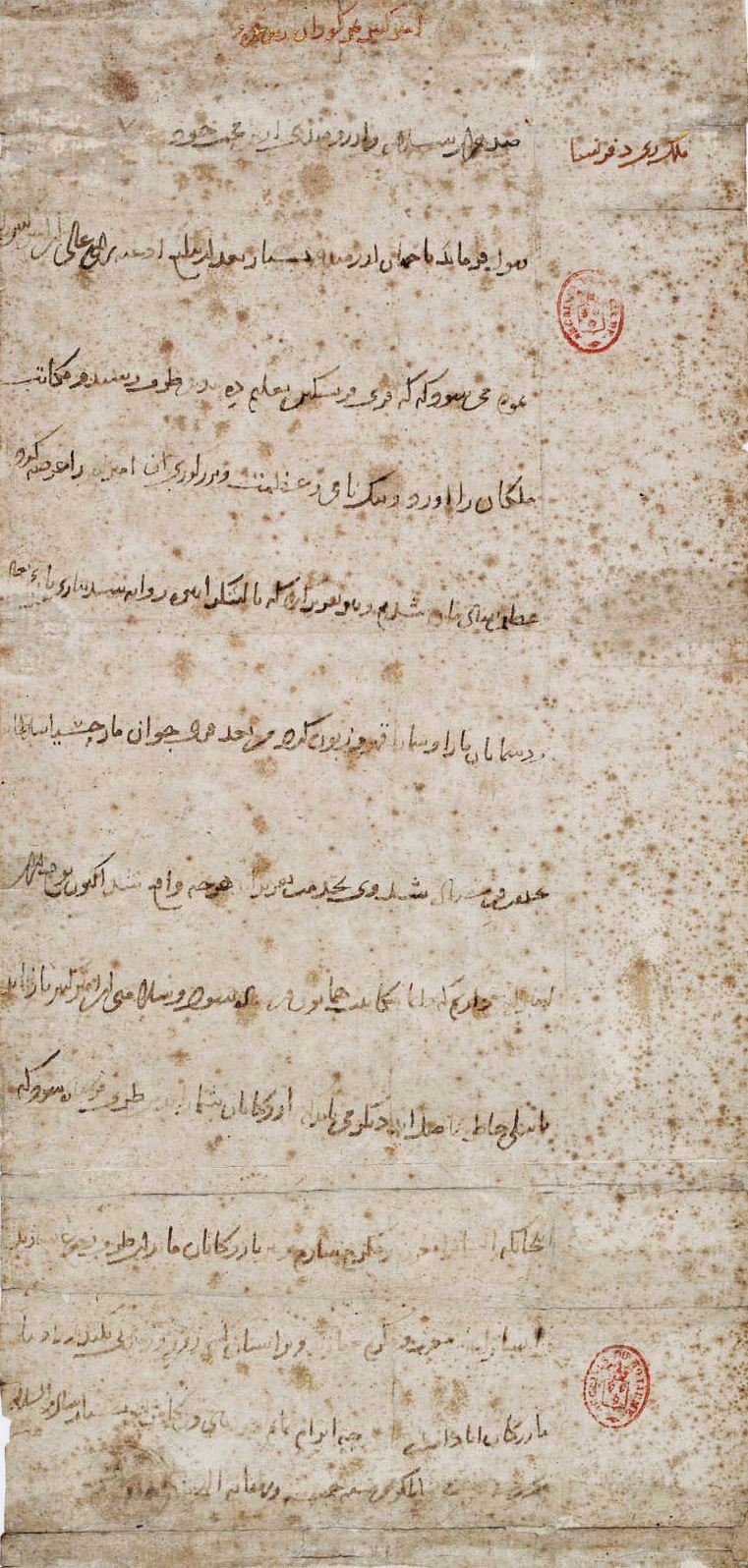
..Letter of Timur to Charles VI of France, 1402, a witness to Timurid relations with Europe. Archives Nationales, Paris.
19th century painting depicting Bayezid I being held captive by Timur..
 Timurid Empire at Timurs death in 1405..
 ..
..
Emir Timur feasts in the gardens of Samarkand..
為什麼1405年帖木兒死後,世界上再無全球帝國?!
帖木兒之後》將世界視為一個完整的有機體,用真正的全球視野,全方位視角,為人類現代史提供了嶄新(但平衡可靠)的觀點。歷來史學名著與此鉅作相比,都顯得有所侷限,日後我們也很難期待再有超越之作。
帖木兒是史上最後一位「世界征服者」。他的部隊燒殺劫掠,征討範圍西達地中海濱,東抵中國邊境,似乎再過不久,就能恢復其祖先成吉思汗時期的帝國版圖。然而,當他於一四○五年去世,一統天下的帝國也從此告終,至今再不復見.
從帖木兒去世到二十世紀結束,這六百年之間,亞洲的幾大帝國並未受到歐洲入侵者的深刻撼動。中華帝國歷經種種內憂外患,至今屹立不搖,反倒是曾經「日不落」的大英帝國走向了滅亡,而納粹帝國更在竄起後不旋踵間就遭擊潰.
Tamerlane, the Ottomans, the Mughals, the Manchus, the British, the Japanese, the Nazis, and the Soviets: All built empires meant to last forever; all were to fail. But, as John Darwin shows in this magisterial book, their empire-building created the world we know today.From the death of Tamerlane in 1405, to Americas rise to world "hyperpower," to the resurgence of China and India as global economic powers, After Tamerlane is a grand historical narrative that offers a new perspective on the past, present, and future of empires...
.
.Timur leading his troops at the 1393 Conquest of Baghdad. Near-contemporary portrait in Zafarnama, commissioned by his grandson Ibrahim Sultan in 1424–28. Published in 1435–36.
Tamerlane was the last of the world conquerors: his armies looted and killed from the shores of the Mediterranean to the frontier of China. Nomad horsemen from the Steppes had been the terror of Europe and Asia for centuries, but with Tamerlanes death in 1405, an epoch of history came to an end. The future belonged to the great dynastic empires - Chinese, Mughal, Iranian and Ottoman - where most of Eurasias culture and wealth was to be found, and to the oceanic voyagers from Eurasias Far West, just beginning to venture across the dark seas.
After Tamerlane is an immensely important and stimulating work. It takes a fresh look at our global past. Our idea of world history is still dominated by the view from the West: it is Europes expansion that takes centre-stage. But for much of the six-hundred year span of this book. Asias great empires seemed much more than a match for the intruders from Europe. It took a revolution in Eurasia to change this balance of power, although never completely. The Chinese empire, against all the odds, has survived to this day. The British empire came and went. The Nazi empire was crushed almost at one. The rise, fall and endurance of empires - and the causes behind them - remain one of the most fascinating puzzles in world history...
.
.
Timur invasion of India in 1397-1399.
.
.作者簡介 :(John Darwin),長期關注歐洲去殖民化議題,熱衷探討帝國的興衰史,針對大英帝國的衰亡,著有多部著作《大不列顛和去殖民化》(Britain and Decolonization),《大不列顛帝國的終結》(The End of the British Empire and Britain),《埃及和中東》(Egypt and the Middle East)。目前是牛津大學納菲爾德學院的研究員,且在該校教授帝國史和全球史。
Marvellously illuminating…Darwin sustains an intricate thesis with enormous panache.” ―Independent (UK )
“Elegant and brilliant….wonderful and imaginative…a deeply significant book.” ―Sunday Times (UK )
“Undoubtedly a great work, a book that goes truly global in chronicling the history of one of our abiding concerns: the pull and limitations of absolute power.” ―St. Petersburg Times
John Darwin is a University Lecturer and a Fellow of Nuffield College, Oxford. His books include Britain and Decolonization and The End of the British Empire...
Rise and Fall of the Great Powers for the post–Cold War era—a brilliantly written, sweeping new history of how empires have ebbed and flowed over the past six centuries.
The death of the great Tatar emperor Tamerlane in 1405, writes historian John Darwin, was a turning point in world history. Never again would a single warlord, raiding across the steppes, be able to unite Eurasia under his rule. After Tamerlane, a series of huge, stable empires were founded and consolidated; Chinese, Mughal, Persian, and Ottoman—realms of such grandeur, sophistication, and dynamism that they outclassed the fragmentary, quarrelsome nations of Europe in every respect. The nineteenth century saw these empires fall vulnerable to European conquest, creating an age of anarchy and exploitation, but this had largely ended by the twenty-first century, with new Chinese and Indian super-states and successful independent states in Turkey and Iran.
.
帖木兒之後(十五世紀).帝國不是原罪,而是世界史上的常態:簡述帖木兒駕崩之後,世界局勢為歐洲,中亞,遠東之間達成某種平衡,歐洲所代表的現代性只是其一,亦非主流。從帖木兒時代到今日這段期間的歷史,其實遠比那則傳說所顯示的更為混亂,更受偶然事件的影響,更富爭議性。其實現代世界史並非呈線性發展,從「歐亞世界」的角度看歐洲的版圖擴張,重新定義「歐洲」,帝國也不是一種原罪,而是世界史上的一個階段。
今日的全球化世界,為何會有個國家獲致如此超強地位?
中國,印度的經濟復興為何如此晚近才出現?
西方諸國(這時包括日本)為何在科技和生活水準上如此長期領先他國,直到晚近才有所改觀?
為何(科學,醫學,文學.藝術上)西化文化的產品大體上仍舊最令人趨之若鶩?
為何各國的政治體制和其法律,規範,反映了歐洲治國術的理念和實際作為,
為何領土劃分按照歐洲模式?二十世紀末期的全球化世界,並非全球自由市場下可預測的結果;我們也無法根據五百年前世界的狀態,推斷出如今的景況。
那是漫長,混亂而往往充滿暴力的歷史產物,那是運氣突然逆轉和意想不到之失敗的產物。它的根源遠溯至大家普遍深信的「發現時代」,甚至遠溯至帖木兒死時。
. .
.
.帖木兒(波斯-阿拉伯文:تیمور,拉丁轉寫:Tēmōr,1336年4月8日—1405年2月18日),突厥化蒙古人,或譯帖木耳,帖木兒汗國的創始埃米爾,為察合臺語「鐵」之意,出身於蒙古巴魯剌思氏部落,1362年起事時被打傷,從此跛腳,因此人稱跛子帖木兒,另外帖木兒可操流利波斯語,土耳其語及蒙古語。因為他娶了東察合台汗國可汗黑的兒火者的女兒為妻,所以又被稱為駙馬帖木兒。他打敗了西亞,南亞和中亞的其他國家,是帖木兒帝國的奠基人。
他的後代兒子沙哈魯與孫子烏魯伯格在1411至1449年統治中亞,成為伊斯蘭文化中心,曾孫巴卑爾則南侵印度,建立了蒙兀兒帝國,此帝國在1526至1857年統治南亞,約有四個世紀的時間[]。.
1363年忽辛終於扶持合不勒沙為西察合台可汗。1369年帖木兒殺死結義兄弟忽辛,控制了西察合台可汗合不勒沙。第二年帖木兒處死合不勒沙,自稱為蘇丹,建立了帖木兒帝國。
首先恢復西察合台汗國的秩序與疆土之後(也就是征服中亞河中地區),再七次征伐東察合台汗國之後,將其納入疆土。隨後征服東伊朗(1381年),花剌子模(1387年)。
1393年最終征服西波斯,並在1391年,1394—1395年兩次征伐金帳汗國。但由於撒拉伯卡(今伊朗境內)發生異族叛亂,使其一改恢復蒙古帝國光榮之進軍方向,將征服目標由蒙古金帳汗國、察合台汗國轉向周圍各國。帖木兒原來希望恢復蒙古帝國的光榮,因此本來皆以各蒙古汗國為攻擊目標。但在之後卻發現到蒙古人不是敵人,異族較蒙古人更可能阻礙他的大業。
從此以後他師法蒙古人的屠殺掠奪策略,屠殺反叛之撒拉伯卡,他之後1394年,1398年征伐德里蘇丹國時,也維持同樣的策略。最著名一戰是與金帳汗國脫脫迷失汗的昆都爾察河谷大戰,徹底擊敗金帳汗國[。
.1402年7月20日在安卡拉戰役大敗鄂圖曼帝國,俘其蘇丹拜牙(即「閃電」巴耶塞特一世),使其帝國疆域成為從印度德里到小亞細亞,美索不達米亞的大帝國。他擊敗當時如日中天.不斷擴張中的鄂圖曼帝國,間接地緩解了伊斯蘭文化對基督宗教文化與整個歐洲的滲透。而從小亞細亞帶回的藝術家,工匠與學者,留給撒馬爾罕無數無價的傳世建築,使該處在其孫兀魯伯的經營下,成為了中亞伊斯蘭文化的重心。
1404年11月27日率領20萬士卒進攻明朝,結果1405年2月18日在進軍途中,在訛答剌病死,終結了其輝煌的征戰歷史。
.By 1368, Han Chinese forces had driven the Mongols out of China. The first of the new Ming dynastys emperors, the Hongwu Emperor, and his son, the Yongle Emperor, produced tributary states of many Central Asian countries. The suzerain-vassal relationship between Ming empire and Timurid existed for a long time. In 1394, Hongwus ambassadors eventually presented Timur with a letter addressing him as a subject. He had the ambassadors Fu An, Guo Ji, and Liu Wei detained.[110] Neither Hongwus next ambassador, Chen Dewen (1397), nor the delegation announcing the accession of the Yongle Emperor fared any better.]
Timur eventually planned to invade China. To this end Timur made an alliance with surviving Mongol tribes based in Mongolia and prepared all the way to Bukhara. Engke Khan sent his grandson Öljei Temür Khan, also known as "Buyanshir Khan" after he converted to Islam while at the court of Timur in Samarkand.[
Timur preferred to fight his battles in the spring. However, he died en route during an uncharacteristic winter campaign. In December 1404, Timur began military campaigns against Ming China and detained a Ming envoy. He became ill while encamped on the farther side of the Syr Daria and died at Farab on 17 February 1405,[ before ever reaching the Chinese border] After his death the Ming envoys such as Fu An and the remaining entourage were released[ by his grandson Khalil Sultan.
.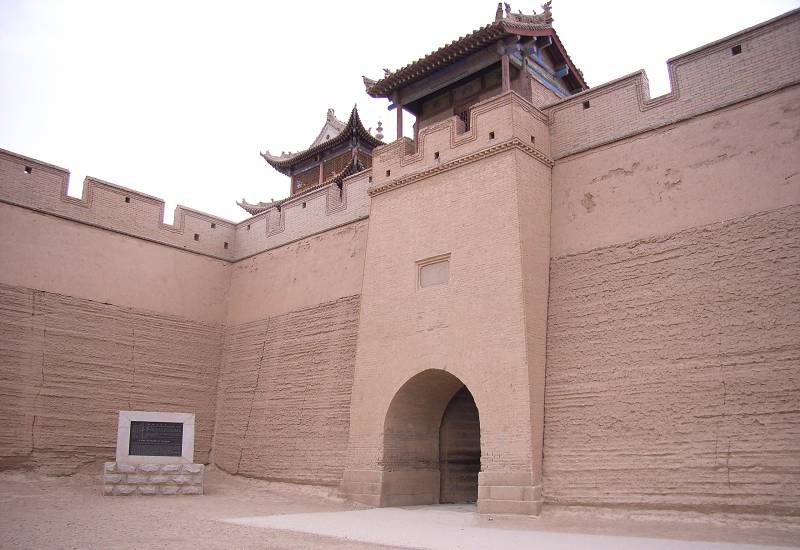
.The fortress at Jiayu Pass was strengthened due to fear of an invasion by Timu
.Timur] or Tamerlane[] (8 April 1336 – 17–19 February 1405) was a Turco-Mongol conqueror who founded the Timurid Empire in and around modern-day Afghanistan, Iran, and Central Asia, becoming the first ruler of the Timurid dynasty. An undefeated commander, he is widely regarded as one of the greatest military leaders and tacticians in history, as well as one of the most brutal and deadly.[8][9][10] Timur is also considered a great patron of art and architecture as he interacted with intellectuals such as Ibn Khaldun, Hafez, and Hafiz-i Abru and his reign introduced the Timurid Renaissance.
Born into the Turkicized Barlas confederation in Transoxiana (in modern-day Uzbekistan) in the 1320s, Timur gained control of the western Chagatai Khanate by 1370. From that base, he led military campaigns across Western, South, and Central Asia, the Caucasus, and Southern Russia, defeating in the process the Khans of the Golden Horde, the Mamluks of Egypt and Syria, the emerging Ottoman Empire, and the late Delhi Sultanate of India and emerging as the most powerful ruler in the Muslim world.[] From these conquests, he founded the Timurid Empire, which fragmented shortly after his death. He spoke several languages, including Chagatai, an ancestor of modern Uzbek, Mongolic and Persian, in which he wrote diplomatic correspondence.[.
.Timurs armies were inclusively multi-ethnic and were feared throughout Asia, Africa, and Europe,[] sizable parts of which his campaigns laid waste.[] Scholars estimate that his military campaigns caused the deaths of millions of people.[] Of all the areas he conquered, Khwarazm suffered the most from his expeditions, as it rose several times against him.[ Timurs campaigns have been characterized as genocidal.[]
Timur was the grandfather of the Timurid sultan, astronomer and mathematician Ulugh Beg, who ruled Central Asia from 1411 to 1449, and the great-great-great-grandfather of Babur (1483–1530), founder of the Mughal Empire, which then ruled almost all of the Indian subcontinent.[
.
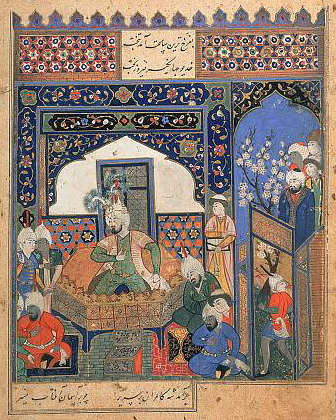
.Depiction of Timur granting audience on the occasion of his accession, in the near-contemporary Zafarnama (1424–1428), 1467 edition.
. .
.
.Timur enthroned at Balkh.
. .
.
.Timur besieges the historic city of Urganj..
.
.Timurs mausoleum is located in Samarkand, Uzbekistan..
.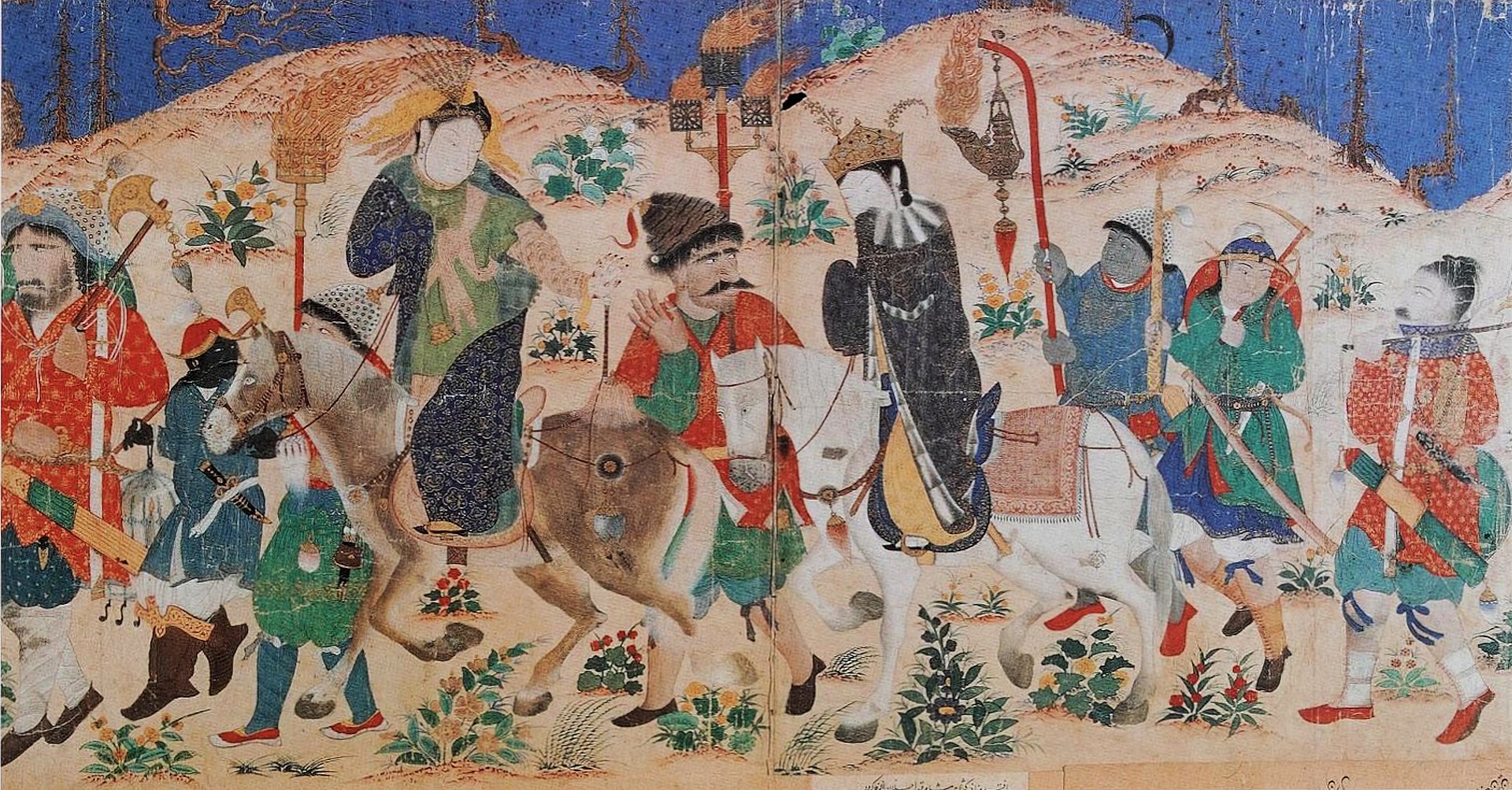
.Lady travelling. Samarkand or Central Asian painting, circa 1400. Possibly depicting the wedding of Timur with Dilshad Aqa in 1375.
.


- 非洲的動物世界123.
- 法國歸還中國文物 為什麼? 可能性 ? Will French bill on looted artifacts bring home Chinese treasures?
- 春季旅遊義大利托斯卡納品嚐美食與葡萄酒.Tuscany Wine Tour & Food Pairing Session
- 普羅旺斯的春季降臨001 (Provence & French )
- 美軍特種部隊突擊伊朗成功救出F-15E.飛行員.US rescues second crew member of downed F-15E fighter jet from Iran
- 俄羅斯參戰協助伊朗 2艘 SSBN. 戰略核潛艦 奔向赫摩斯海峽抵抗美國
限會員,要發表迴響,請先登入


