. .
.
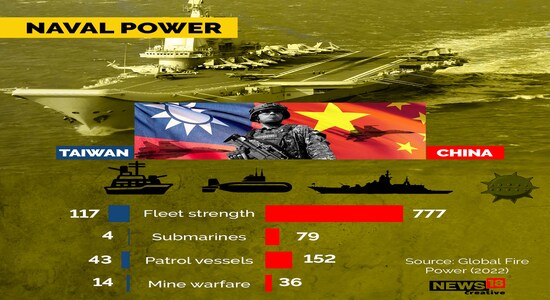
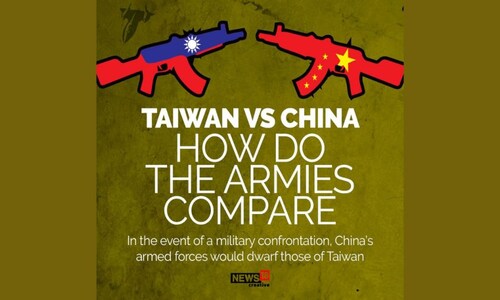
.

“一團糟”和“可怕的生命損失”:.
中國與美國在"台灣問題"上的衝突會如何發展?.
美國戰略學者專家JK & VI.,透過學術研討會發表,中國與美國在"台灣問題"上的衝突會如何發展的言論,引起兩岸3地的關切,國際戰略學者專家分析認為它們的背面正是美國各大軍火武器製造業,提供所謂的研究基金,讓他們有所作為利用"台灣問題",進行各式各樣的理論分析,發表所謂可行性的海峽兩岸衝突策略,美國製造問題,卻沒有能力解決問題,再加上野心政客的推波助瀾,鼓吹海峽兩岸終將一戰的言論,其實美國與西方國家就是希望海峽兩岸開戰,好生產武器,銷售武器發戰爭財,當然死傷慘重的依舊是台灣人,至於是否引起美國與中國戰爭,未置可否,必竟兩國需要正式宣戰召告天下?.
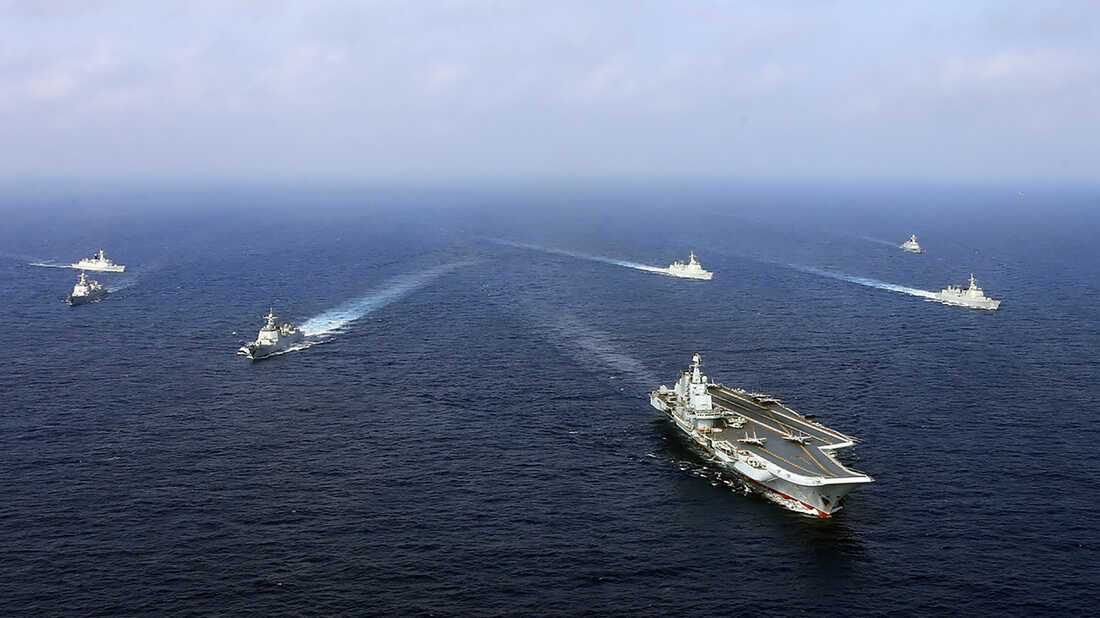
U.S. should prepare for drawn-out conflict if China invades Taiwan, war game suggests
An attack would plunge the region into a broad, drawn-out war that could include direct attacks on the U.S., war game participants concluded.
Early results from a DC think tanks wargame suggest the US would prevail in defending Taiwan from China, but at a heavy cost that would leave it ill-prepared for new threats from Russia or Iran..
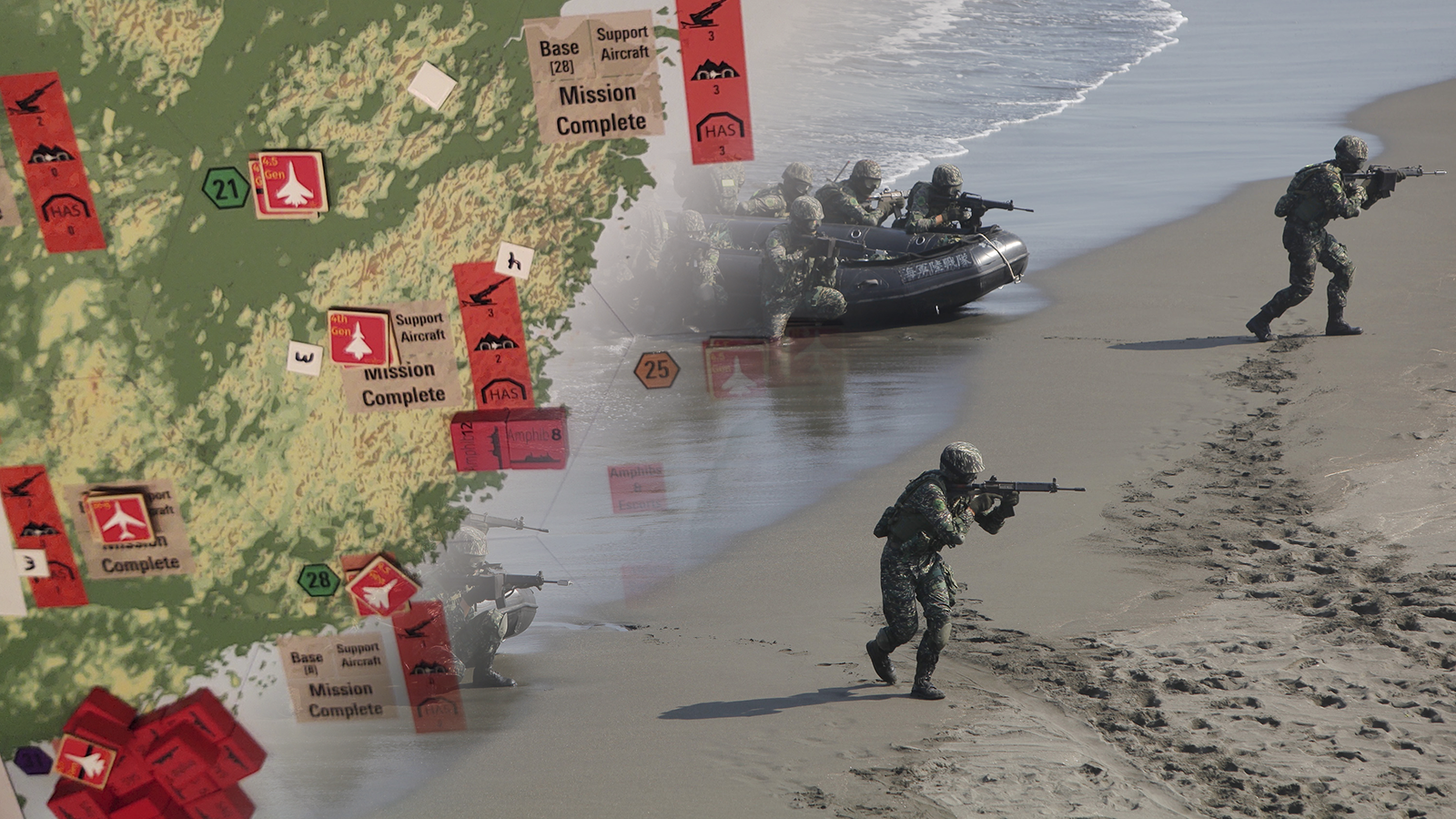 .
.
A US Marine Littoral Regiment stationed in southern Taiwan is holding off hostile forces conducting an amphibious invasion near Tainan City. The MLR’s land-based, anti-ship missiles have slowed the Chinese fleet’s advances considerably, but the unit is running low on ammunition. It will need to be resupplied soon or face long odds in continuing to repel the invaders.
Despite the risks, the US sends in a C-17 Globemaster to restock the Marines’ precious supply of missiles — and the plane is summarily shot down by the Chinese. It’s a tragedy the kind the US has rarely faced for decades, but this far into the first major war between the US and China, with tens of thousands of lives committed to the conflict, the grim reality is this: There is no turning back for anyone. It’s not a pleasant scene, but it is a realistic one, according to a series of wargames hosted in early August at the Center for Strategic and International Studies, a DC-based think tank. The goal of the wargames — determining what would happen if China tried to take Taiwan through military force — is both an existential one for America’s security posture and an unintentionally timely one.
The simulation made some significant assumptions, but the results so far suggest that if the US intervened, it could likely prevent a complete takeover or at least reach a stalemate. But any successes would be marred by heavy losses on both sides in terms of ships, planes, submarines and, most importantly, people.
“It is a very tough sell for China such that if Taiwan resisted and the US came to Taiwan’s aid, there’s an extremely low possibility that China would be successful,” said Matthew Cancian, who partnered with CSIS as one of the wargame’s chief architects. “But, the US takes a lot of losses… In a lot of games, the US will lose almost its entire global fleet of tactical aviation.”
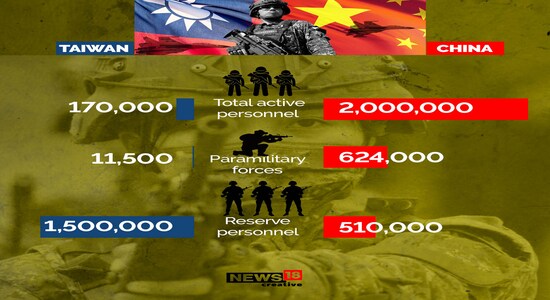
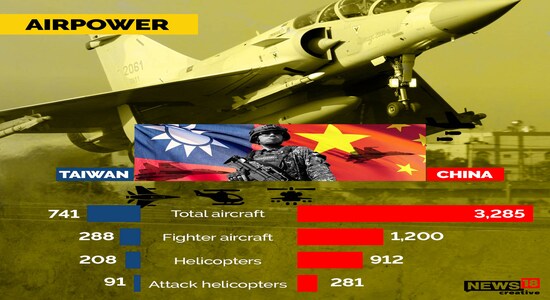
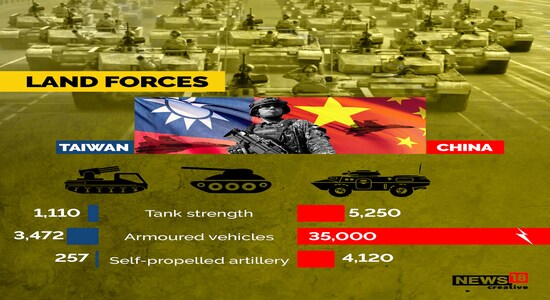
CSIS had not finished calculating the number of assets lost across all its games by the time of publication, but, in general, project staff said the US usually loses around 500 aircraft, 20 surface ships and two aircraft carriers per game — a staggering loss unseen for the US since World War II, in just a matter of weeks. The loss of the carriers alone – the US has only 11 total, and each carries at least 5,000 souls — would have potentially disastrous results on the nation’s ability to project power abroad.
The scenario, which the think tank is playing out 22 times this year with various defense experts, retired military officers and former Pentagon officials, will culminate in a public report by CSIS in December, which staff hope to brief to lawmakers and the Defense Department.
With its global power at a peak and domestic problems mounting, China is likelier than ever before to make good on its threats.
Will USA troops save Taiwan ? 
While such experiments usually only interest those inside the Washington, DC beltway, CSIS’s wargames were underway while House Speaker Nancy Pelosi, D-Calif., made global headlines by visiting Taiwan despite increasingly hostile statements from Beijing. The visit, and China’s subsequent reaction, has shed new urgency on the question of how the US could actively defend the island democracy.
When Breaking Defense arrived at the think tank on Aug. 3, in the midst of the 17th game, China had begun its assault near Tainan City, but was struggling to make headway further inland. Meanwhile, the US players were running short of their favored air-launched, long-range anti-ship missiles. To none of the staffers’ surprise, the war was quickly turning into a bloodbath.“The outcome varies from game to game, and a lot depends on the initial conditions. But what almost never changes is [that] it’s a bloody mess, and both sides take some terrible losses,” said Bradley Martin, a senior policy researcher at the RAND Corp, who participated in the wargame that day.
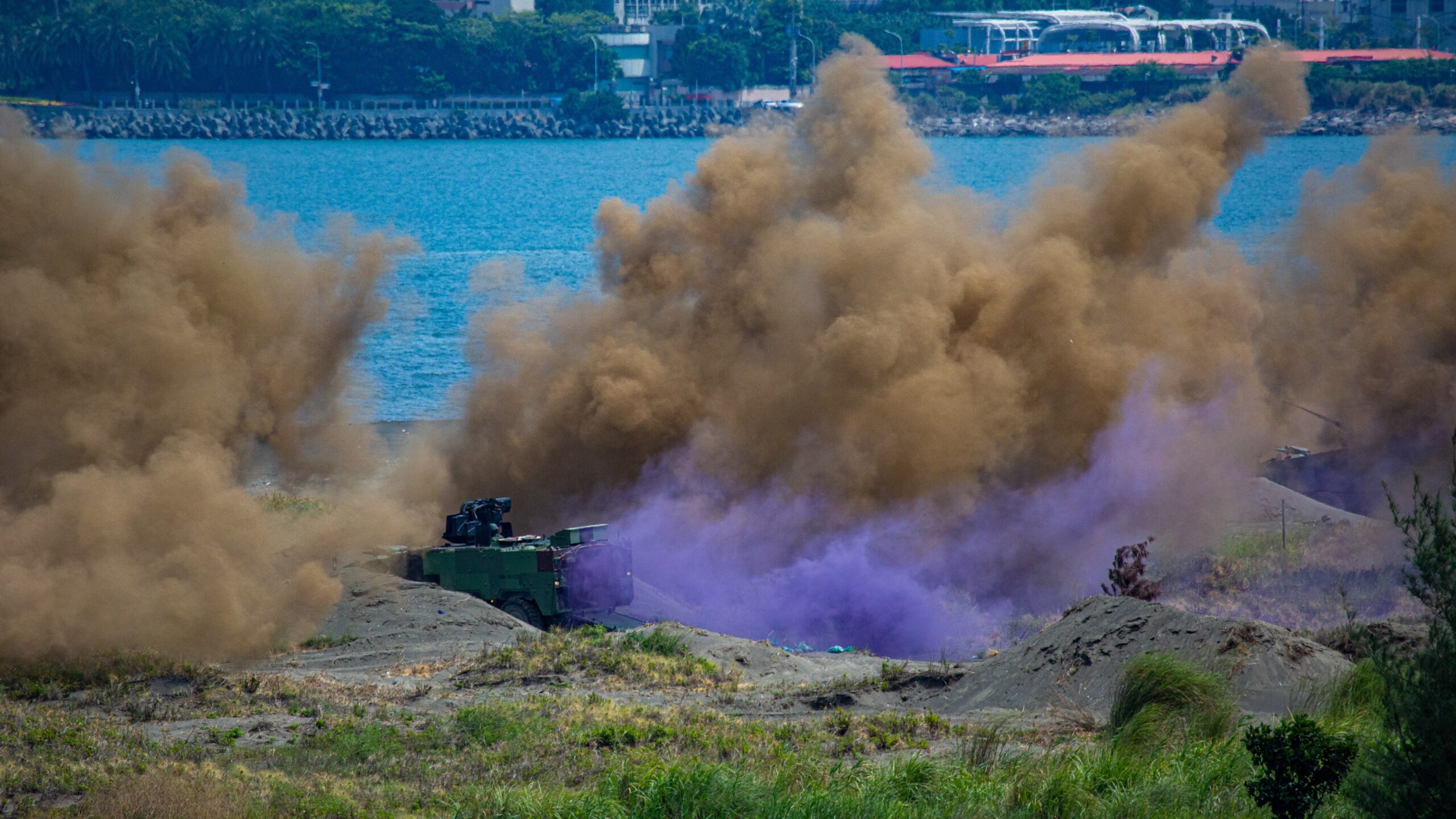
.An explosion is seen during the Han Kuang military exercise, which simulates China’s People’s Liberation Army (PLA) invading the island on July 27, 2022 in New Taipei City, Taiwan.
Mark Cancian, a senior advisor at CSIS and one of the staff members overseeing the game, called the US government’s ability to deploy a MEB to Taiwan before the war a “huge if,” and once the war began, “it’s impossible,” he added. (Mark Cancian is the father of Matthew Cancian, one of the game’s adjudicators and designers.).In most games, the scenarios assume the US does not attempt to preposition the Marines “because it would be too provocative.
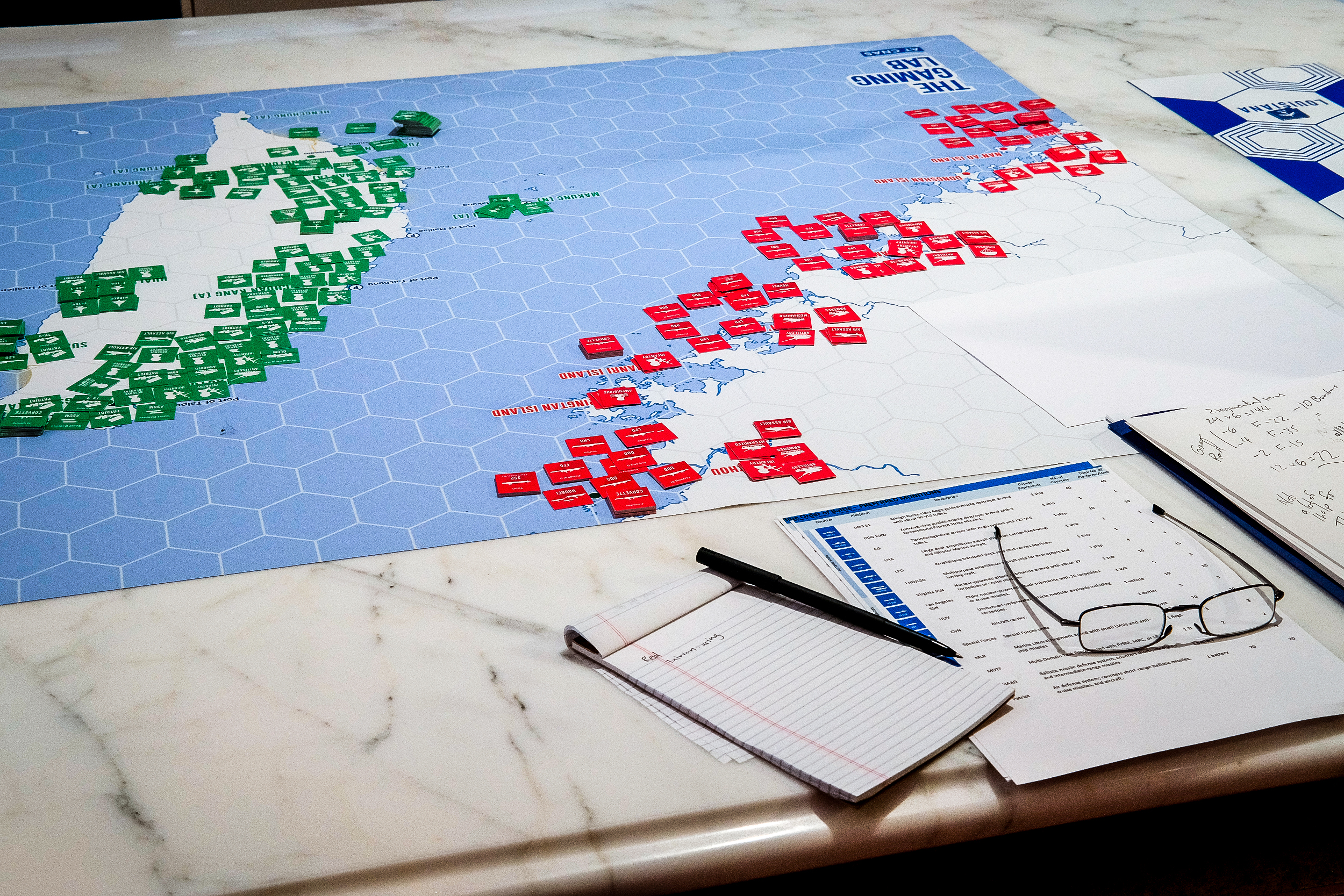
“The events of the last 24 to 48 hours convinced us that is a good assumption,” the elder Cancian told Breaking Defense last week, while looking at a map of the island the players were using to simulate ground combat. “If Nancy Pelosi’s visit to Taiwan causes this huge emergency…what would moving a Marine brigade create?”
A Chinese invasion would likely start in the south where the Taiwanese army is less concentrated, but, like for the US Marines, resupplying Chinese amphibious forces would be difficult.
From the Chinese perspective, the landing site where the invasion of Taiwan was to begin was left up to player discretion. Both Cancians said most players favored the southern end of the island because the Taiwanese army was well-positioned to defend Taipei in the north. A few players did take their chances invading from the north, and they were repelled quickly.
“Some of the overall patterns of what is best for them [China] are invading in the south, just because Taiwan has so many forces around Taipei because that’s towards the crown jewels,” said the younger Cancian.But invading from the south is not a surefire strategy either. Over the course of more than a dozen games, the red teams found it difficult to make headway inland because, with a naval and air battle raging behind them at sea, they lacked a desperately needed resupply capability.
At the strategic level, the game Breaking Defense observed had progressed like many before it: numerous Chinese amphibs sunk, hundreds of US warplanes destroyed after being stashed on lightly defended airfields in the region and, ultimately, the makings of the protracted, bloody fight analysts fear is coming.
If China does move on Taiwan, it’ll need to fully commit its military or risk being overwhelmed by the US.During a separate game Breaking Defense did not see, featuring the same players, the conflict ended quickly and “spectacularly” in favor of the US.In that scenario, China withheld numerous units to protect the mainland while sending a limited force forward to begin an assault on Taiwan. The problem, the players found, was that the US wasted no time in using its tactical air forces to assault every amphibious ship it could..
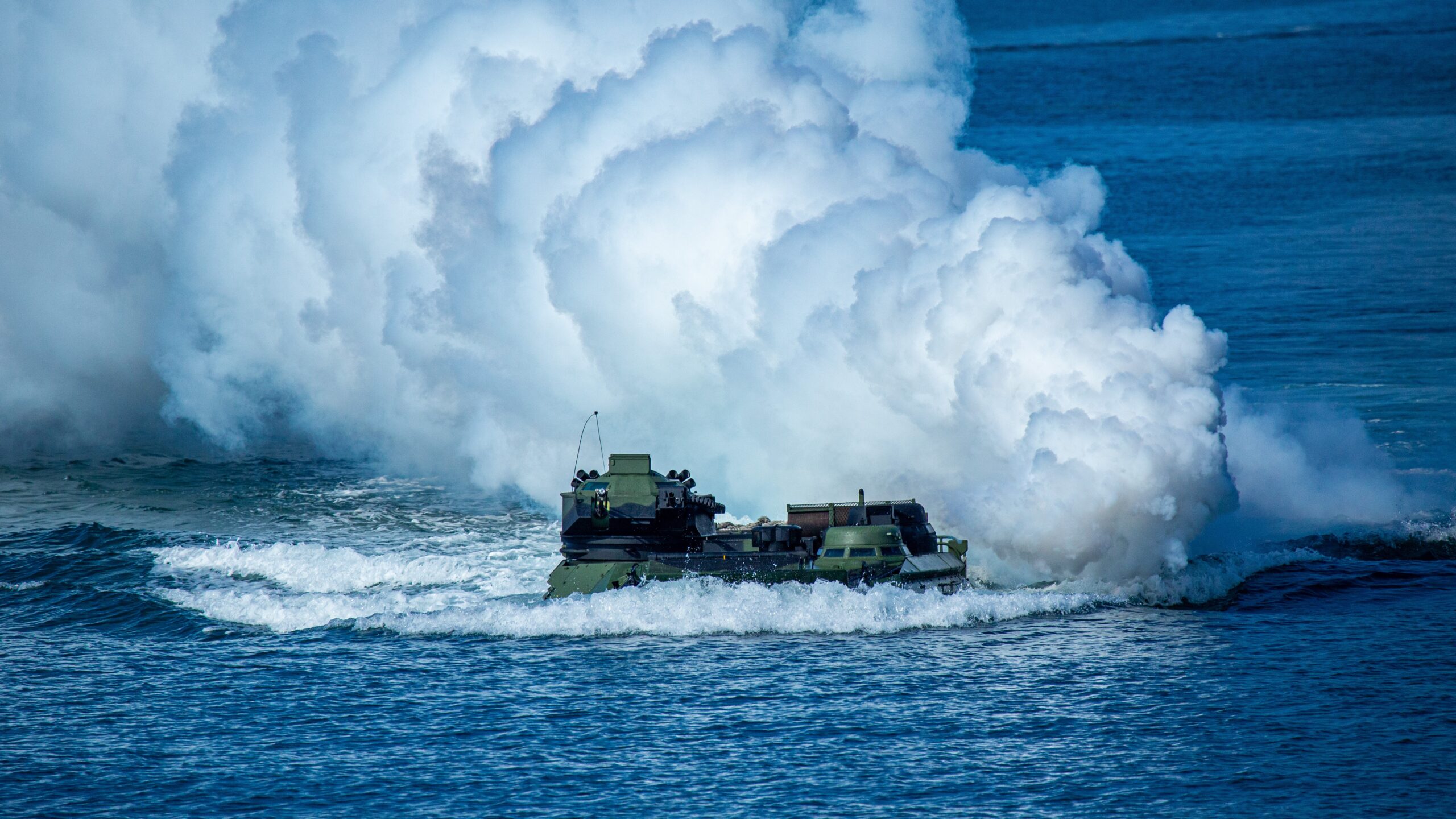
.Taiwan’s AAV7 amphibious assault vehicle maneuvers across the sea during the Han Kuang military exercise, which simulates China’s People’s Liberation Army (PLA) invading the island, on July 28, 2022 in Pingtung, Taiwan.
With the US claiming air superiority in short order, China’s position rapidly deteriorated and the US claimed a quick victory.
The “Chinese” players tried to “defend the mainland and defend [the] ports. Well, if China does that, then they fall flat on their face… We played one turn and China was completely defeated right off the bat,” said Matthew Cancian.
China’s amphibious fleet will be a surefire target for allied forces. The country’s ability to defend those ships against US submarines and tactical aviation will be a deciding factor in their success.Wasser, the wargaming expert from CNAS, took part in the CSIS wargame on Aug. 4, acting as part of the red team. During that exercise, China pursued an aggressive war plan, bombing US bases in Guam and Japan right out of the gate before starting an amphibious invasion of Taiwan.
Eventually, however, US and Japanese submarines struck back at Chinese amphibs, which impacted China’s ability to field troops ashore and also to resupply ground forces already battling to control the island.Ultimately, the red team’s decision to attack Japan may have been ruinous for China, giving the US military an ally willing to lend its own advanced capabilities and trained forces to the fight.
PLA patrols, missile launches ‘new normal’ for Taiwan
“When you decide to attack Japan, you have to attack all of Japan and really clobber [them]. You can’t just attack once and bring in the [Japanese Self-Defense Forces] and allow them to run riot,” Matthew Cancian said of the choice to engage the Japanese.
By the end of that game — again, simulating three to four weeks of combat — there were sizable losses on each side, with China successful in sinking a US carrier strike group and holding about a third of Taiwan. However, Wasser believes those gains would have ultimately been short-lived, as China was not able to resupply its forces and the United States was postured to flow more forces into the region.
Nuclear weapons can change how everyone thinks.
CSIS isn’t the first think tank to run a Taiwan invasion scenario this year. In June, the Center for a New American Security published the results of its own wargame, set in 2027, in which a five-person blue team playing as the United States sought to stop the five-person red team playing as China from taking over Taiwan. This wargame was played only once, as it was filmed for an episode of Meet the Press.Unlike CSIS, CNAS allowed players to use nuclear weapons and that played a powerful role in shaping both teams’ behavior. The red team’s first move “took a page from “[Russian Federation President Vladimir] Putin’s playbook in Ukraine,” with China threatening to use nukes should the West decide to interfere in an “internal affair” concerning Taiwan. While the blue team believed the size of the US nuclear arsenal would deter China from using its own nuclear weapons, it “was also careful to avoid attacking targets that might threaten the Chinese regime,” CNAS stated in its report on the game.However, the blue team was proven wrong in the last move of the game, when the red team conducted a nuclear demonstration near Hawaii — far enough away to not result in loss of life, but close enough to signal the credibility of its threats..
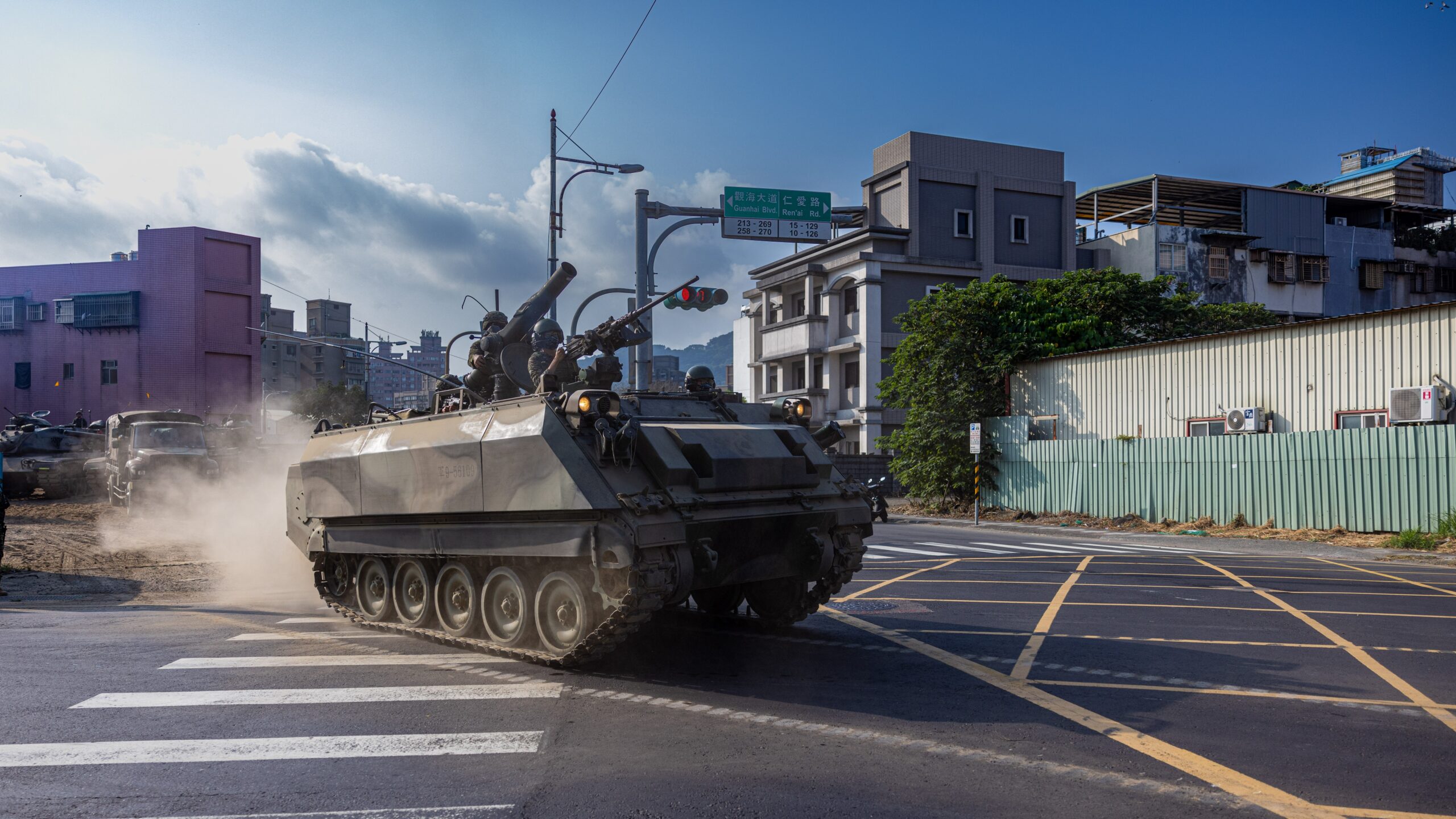
Taiwanese military personnel drive a CM-25 armoured vehicle across the street during the Han Kuang military exercise, which simulates China’s People’s Liberation Army (PLA) invading the island on July 27, 2022 in New Taipei City, Taiwan.
Despite some key differences in game mechanics, Wasser said the CSIS and CNAS games present very similar conclusions. For one, while US officials such as former US Indo-Pacific Command head Adm. Phil Davidson have warned lawmakers that China hopes to develop the capability to invade Taiwan by 2027, wargames set in that timeframe highlight the difficulty China would have in conducting an amphibious invasion — even if its military modernization goes as planned.
“That suggests that perhaps maybe the window is a bit further afield, and that perhaps maybe we need to be looking at 2030, 2035 and beyond,” Wasser said. “That said, because this is such a difficult problem for China … perhaps in the more near term, we need to think about China’s ability to do other forms of coercion.”
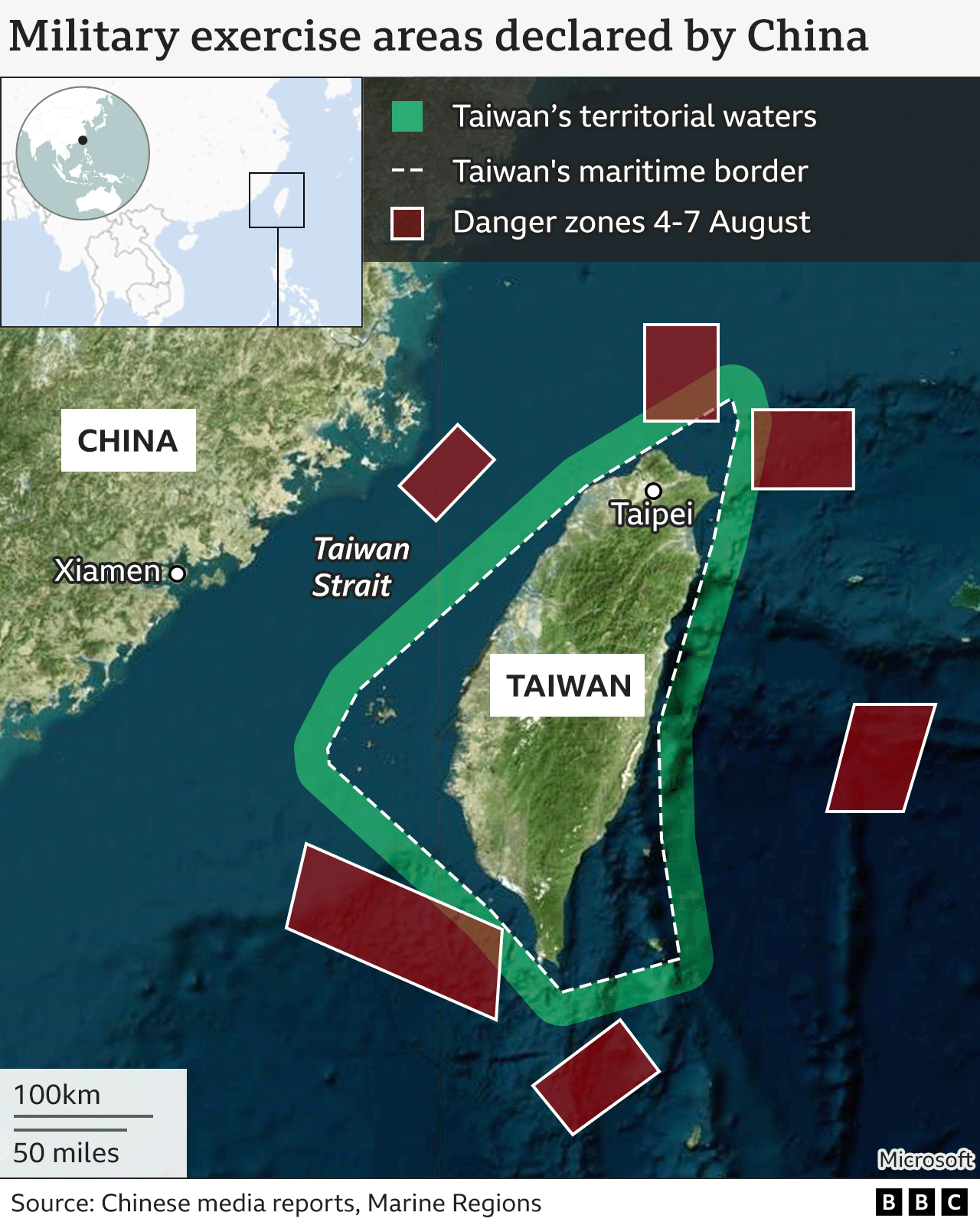
Those measures could include a blockade of Taiwan — a scenario that China practiced earlier this month when Chinese ships and aircraft encircled Taiwan, launching almost a dozen missiles into the waters surrounding the island, with five missiles landing in Japan’s exclusive economic zone.
Both wargames also stress the importance of undersea capabilities, mainly Virginia-class attack submarines, used to pick off Chinese amphibious ships before they could deploy troops ashore, as well as the need to buy much more long-range precision guided munitions, Wasser said.
“Every single time I have ever run a US-China conflict over Taiwan, and this is going back years and years … the United States begins to run out of preferred munitions. There’s not enough to go around,” she said. “And if you look at how this could unfold into protracted conflicts, if we are already expending so much of our PGMs in the early days of the fight, and the conflict continues to go on and on, that doesn’t look very good for us.”
And even once that fight concludes, there still may be others looming, Mark Cancian said. With hundreds of planes shot down and potentially more than a dozen ships sunk, the United States’ ability to project power forward will be deeply diminished.
“It would take years for the United States to rebuild its forces because of low production rates. Other nations like Russia and Iran might take advantage of US weakness,” said Cancian. “Further, a costly victory might turn the US population towards isolationism as it did after World War I. So, victory is not enough.”
Another commonality between the two games was their eventual outcome: a situation in which China is unlikely to successfully take over the whole of Taiwan, but where the US and China would be locked into a protracted war with massive losses of equipment and personnel by both the Chinese and US sides in the initial weeks of the campaign — a devastating scenario unlike any conflict since World War II.
“Fighting a peer military is incredibly different than trying to bomb ISIS into submission in Iraq and Syria. And not only does it require a change to the way in which the US military operates, but it also requires a change in how the US military thinks about risk,” Wasser said. “There is going to be massive loss of life, there are going to be ships sunk at the bottom of the ocean, and we haven’t had to deal with that. That’s going to be a massive change in the American psyche, for the average American citizen watching this unfold, but also for our military.”
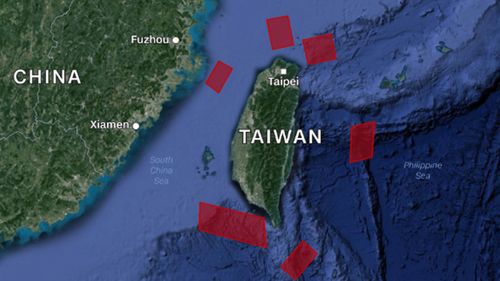
 中國與美國的搏奕,顯示出台灣是棋子.