.
.
.

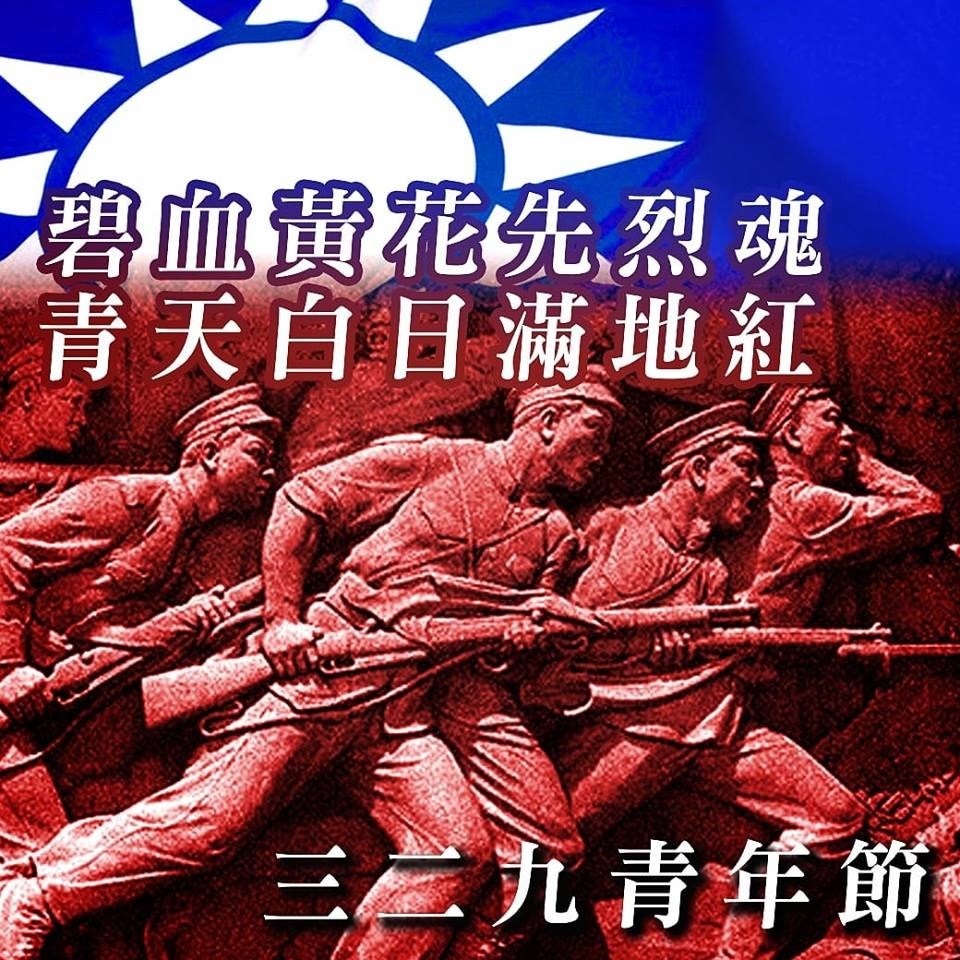
青天白日放光明,江山一統慶太平.
碧血黃花英雄淚.出師未捷身先死.
.

.
.
台灣同胞早已忘記0329.青年節的由來,也就是說再也沒有紀念,革命先烈紀念日,因為不是國定假日,中國國民黨的衰弱,也無法影響到當今台灣省的青年,歷史檔案資料早已封存,不再緬懷革命先烈的愛國情節,曾幾何時紀念意義僅存於政黨間的政治鬥爭,在於選舉的選票,對於革命先烈而言,江山是打殺革命換取政權,而不是依賴騙取選票,玩弄政治遊戲,又有何意義存在? 中國2020-2022因為新冠肺炎疫病某種因素,暫停舉辦革命先烈紀念日的活動.

.
碧血黃花:
我們來看、神聖的黃花崗,我們來看、不朽的黃花崗,碧血化為怒潮湧向珠江,黃花滿地萬世流芳。為自由戰、要舉起刀和槍,為自由死、要昂首上戰場,燃起革命火花燦爛輝煌,照耀神州日月同光。拯救民族、要認清方向,爭取民權、要團結力量,安定民生、要奮發圖強,萬眾一心莫徬徨。我們來看、神聖的黃花崗,我們來看、不朽的黃花崗,歌頌碧血精神黃花馨香,振臂高唱國土重光。.

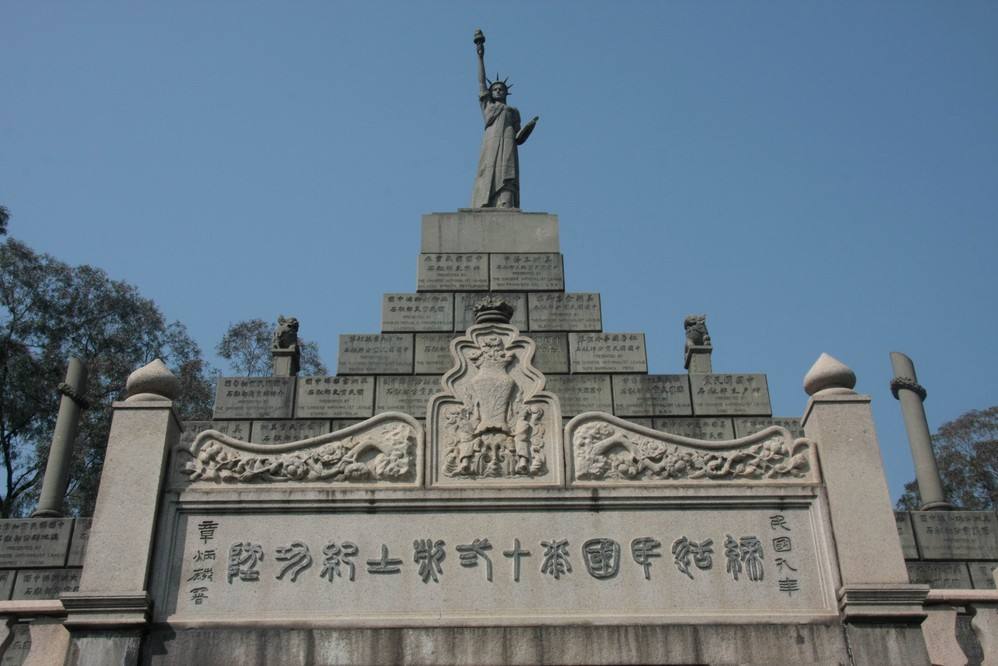
.中國廣東省廣州黃花崗七十二烈士之墓.
The Mausoleum of the 72 Martyrs,
1943年3月29日,中國國民黨三民主義青年團召開第1次全國代表大會,認為黃花崗烈士的事蹟更勝於五四運動,因此定此日為青年節,成為今日329青年節的由來。1948年,中華民國總統蔣中正公布此日為革命先烈紀念日,自此中華民國春殤定為此日(秋殤為9月3日軍人節).黃花崗起義,是中國同盟會於1911年4月27日(清宣統三年三月二十九日)在廣東省廣州市發起的一場起義。
這場起義於1910年11月13日在檳榔嶼會議上由孫文提出,並由黃興主持籌劃。1911年1月18日,黃興在香港成立起義統籌部,以趙聲為總司令,黃興為副總司令。
初定起義日期為4月13日,但由於武器裝備尚未到位、溫生才自行刺殺廣州將軍孚琦、策應起義的新軍大部即將退伍等多種原因,起義時間最終被推遲至4月27日,即農曆三月廿九日。4月23日黃興趕赴廣州成立起義指揮部。
起義原計劃配合新軍、巡防營和巡警隊,分十路進攻奪取廣州城,並進一步推動全國範圍的革命。但起義信息泄露,指揮部被迫遣散大量人員,原攻城計劃則轉為刺殺計劃。4月27日起義正式爆發,因姚雨平、胡毅生和陳炯明按兵不動,原計劃的四條進攻路線僅剩黃興一部130餘人。起義部隊之後攻入兩廣總督署,發現總督張鳴岐已經逃跑。水師提督李准的兩個防營隨即前來鎮壓,起義部隊在隨後的巷戰中被衝散,大多被俘或陣亡。關於起義失敗的原因,黃興認為除了武器裝備運輸緩慢、溫生才刺殺孚琦等意外事件之外,姚雨平等人貪生怕死而不配合起義為主要原因。而姚雨平等人認為自己只是支持起義延期,並非貪生怕死。
起義中的死難者被同盟會會員潘達微組織社會力量安葬於紅花崗。潘達微認為黃花崗比紅花崗更能代表烈士的精神,故稱烈士安葬地為黃花崗,此名後來廣為接受。中華民國成立後,農曆三月廿九日即為革命先烈紀念日。在1924年國民黨中執委會議上,因考慮到農曆存在閏三月,遂將起義紀念日期改至陽曆3月29日以避免混亂。1943年國民政府將3月29日定為中華民國青年節。

.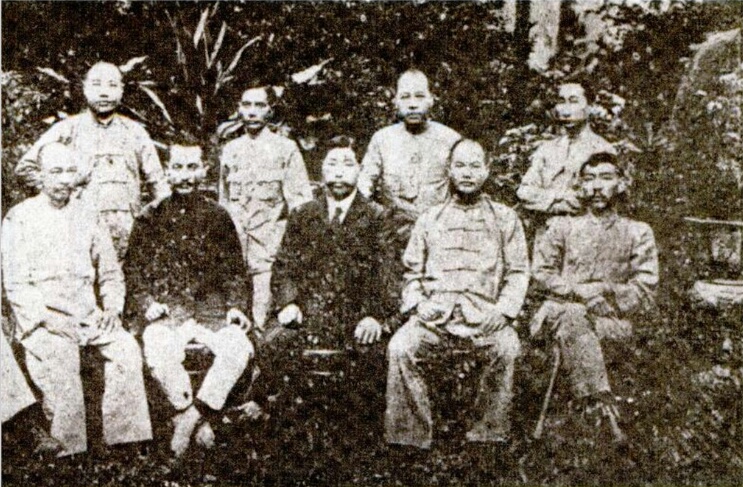
孫中山先生與黃興等革命軍攝影.Those who had earlier taken part in the 1910 Penang Conference also featured in the picture: Deng Zeru of Kuala Pilah, Huang Xing and Li Xiaozhang of Ipoh..........

Yellow Flower Mound Park..
.The Second Guangzhou (Canton) Uprising, known in Chinese as the Yellow Flower Mound Uprising or the Guangzhou Xinhai Uprising, was a failed uprising took place in China led by Huang Xing and his fellow revolutionaries against the Qing dynasty in Canton (Guangzhou). It is honored in Guangzhous Yellow Flower Mound or Huanghuagang Park..
At this time Malaya, which included what is now Peninsular Malaysia and Singapore, had the largest Overseas Chinese population outside of China itself. Many of them were rich and carried out activities for the revolutionaries. On November 13, 1910, Sun Yat-sen, along with several leading figures of the Tongmenghui, gathered at the Penang conference to draw up plans for a decisive battle. The following day on November 14, 1910, Sun Yat-sen chaired an Emergency Meeting of the Tongmenghui at 120 Armenian Street (now the Sun Yat-sen Museum Penang) and raised Straits Dollars $8,000 on the spot. The planning events are known as the 1910 Penang Conference. [1] Originally planned to occur on April 13, 1911, the preparations on April 8 did not go as planned, delaying the date to April 27.
.Huang Xing and nearly a hundred fellow revolutionaries forced their way into the residence of the Qing Viceroy of Guangdong and Guangxi provinces. The uprising was initially successful but Qing reinforcements turned the battle into a catastrophic defeat. Most revolutionaries were killed, only few managed to escape. Huang Xing was wounded during the battle; he lost one of his fingers when it was hit by a bullet. 86 bodies were found (but only 72 could be identified), and the bodies of yet many others were not found. The dead were mostly nationalistic, revolutionary youths with all kinds of social backgrounds -- former students, teachers, journalists, and patriotic overseas Chinese. Some of them were of high rank in the Alliance. Before the battle, most of the revolutionaries knew that the battle would probably be lost, since they were heavily outnumbered, but they went into battle anyway. The mission was carried out like that of a suicide squad. Their letters to their loved ones were later found.
.
.